Secret Fire explained: what is it in Lord of the Rings?
Tolkien's Flame Imperishable lit the world, defeated Melkor's search, and now sets Gandalf on a mission of mercy in The Rings of Power
 Film Paradise (AI-assisted)17 November 2026Editor: Digital Fox Talent Editorial TeamOn YouTube since 2023 · more than 58,000 subscribers
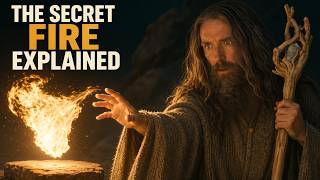
The Secret Fire might be the single most powerful thing in all of Middle-earth, and somehow most of us never learned what it is. It lit the stars and breathed life into every soul in Arda. Morgoth would have burned the world down to get it, and he never could.
Here's what the Secret Fire is, why Gandalf throws it in the Balrog's face on the bridge, and why The Lord of the Rings: The Rings of Power built Gandalf's season around the moment it finally speaks to him.
The Secret Fire is Eru Ilúvatar's power of creation
Tolkien gave this thing two names, and once you know them, it all clicks. He called it the Secret Fire, and he called it the Flame Imperishable. It's the same power under two names, and it has nothing to do with magic swords or spells you can study. It is the raw power of creation itself.
The cleanest way to think about it is this. Eru Ilúvatar is the one god sitting above the Valar, the Maiar and everything else. The Secret Fire is his power to take an idea and make it real. It's the spark that turns a thought into a living, breathing thing. Strip it away and you can dream up a whole world in your head, but you can never make it stand up and breathe.
Tolkien told Clyde Kilby the Secret Fire is the Holy Spirit
This is the part real Tolkien fans love, because he meant it. Tolkien was a devout Catholic, and he told the scholar Clyde Kilby plainly: "The secret fire, the flame sent to burn at the heart of the world is the Holy Spirit." So this is not a throwaway bit of lore. This is Tolkien hiding his own God in the center of Middle-earth, tucked inside a fire almost everyone reads straight past.
You can see this fire at work in the Ainulindalë, the Music of the Ainur. Before anything existed, Eru gathered the Ainur, the great spirits he had made, and had them sing. That song, carried on the Secret Fire, is what became the world. Arda, the seas, the stars and every living thing all started as music lit by this one flame.
So don't think of a campfire. Think of the one power that switched the whole universe on. Once it clicks how big that is, you understand why the most dangerous being who ever lived wanted it so badly.
Why Melkor could never steal the Secret Fire
Before Sauron was ever the big villain, there was Melkor, the mightiest of the Valar and the first of them to fall. One hunger drove him above everything. He wanted to create life of his own, to be a god in his own right, a maker instead of a follower. But there was one wall he could never break, and it's the heart of all this. To make real life, you need the Secret Fire, and Melkor didn't have it.
So he went hunting for it. He walked out into the Void, the empty black outside the world, searching for the Flame Imperishable and sure he would find it lying there to take. He never found it, not even once. The most powerful being in creation searched forever and came back every time with nothing.
That's because the Secret Fire was never out there to grab, and it was never locked in some vault he could crack open. It lives with Eru as a part of Eru. You can't steal the power of God, because that power never sits apart from him for a second. It simply is him.
You can hear Melkor's failure in the music, too. When the Ainur sang the world alive, he forced his own theme over the top, loud and angry, trying to drown everyone else out. But he had nothing real to add, because he carried no fire of his own. All he could do was turn a beautiful song into noise. That's Melkor in one image: endless power, nothing true to build with, forever wrecking a melody he could never write himself.
Aulë and the dwarves show what the Secret Fire adds
For proof of how hard that wall is, look at Aulë, the Vala of smithcraft. He got so impatient waiting for the Elves to wake up that he built the first Dwarves himself, in secret, under a mountain. He shaped them perfectly, and they just stood there. They only moved when he thought about moving them, like puppets on a string, because he could give them a body and nothing more.
When Eru called him on it, Aulë did the exact opposite of Melkor. He lifted his hammer to destroy his own work, and the Dwarves flinched and begged for mercy. That flinch is the Secret Fire. Eru had already taken them as his own and lit them from the inside.
One of the two humbled himself and walked away with a living people. The other demanded the fire as his right and walked away with nothing but broken copies. That difference is exactly what makes Gandalf's move on the bridge so bold.
What Gandalf means by "servant of the Secret Fire" on the bridge of Khazad-dûm
You know the scene. Gandalf stands alone on the bridge in Khazad-dûm with Durin's Bane bearing down on him and the whole Fellowship behind him about to die. He plants his staff and says, "I am a servant of the secret fire, wielder of the flame of Anor." For years, most of us took that as an awesome thing to yell at a Balrog. It goes much deeper.
Think about what the Balrog is. It's a Maia who followed Melkor, made of the dark fire, the stolen, broken kind of power. When Gandalf names himself a servant of the Secret Fire, he's telling this demon exactly who he answers to. He serves the real thing, the power that lit the stars, the one thing Melkor chased his entire existence and never caught.
The rest of the line hits even harder. He calls the Balrog's power the dark fire, the flame of Udûn. He's drawing a hard line between two fires: the true, creating flame straight from Eru, and the burning, destroying kind that Morgoth's servants carry. Gandalf is looking a Balrog in the eye and telling it that its fire is the cheap, stolen one, and the real fire is the one now blocking its path.
That's why "You shall not pass" lands the way it does. Strength was never the point of that standoff. It's a servant of God standing in front of a servant of the thief, and the thief's fire means nothing next to the real flame. Gandalf means every word. He's pulling rank on a Balrog, and he has earned the right to.
Where Gandalf's certainty came from is a gap Rings of Power stepped into
Something about that line should quietly nag at you. Gandalf says it in the films like someone who has known it his whole life. So where did that certainty come from? When did a wandering wizard first learn that he serves the fire that lit the stars? For 70 years, the books never showed us that moment, and that's the exact gap The Rings of Power walked into.
Season 2 already gave us the Stranger, the one we all called years ago: the wizard who crashed out of the sky in a ball of fire is Gandalf. Season 3 gives him his job. In episode 3, titled The Secret Fire, the show does something it has never had the nerve to do. It puts Eru himself, the god of this universe, on screen.
Rings of Power puts Eru on screen for the first time
Putting Eru on screen is a genuinely big swing. In almost 90 years of Middle-earth, Tolkien's God has never been shown on screen. He's a presence you feel but never see. The show broke that rule for this one scene, which tells you how much weight they wanted it to carry. When the fire speaks, that's the author's own God stepping in to tell one tired old wizard what he's for.
It happens in the smallest, quietest way. Gandalf is out in Rhûn, the wildlands in the east, trying to find food, worn down and out of answers. A fire in a clearing calls him over. There's no booming voice from the sky, only a flame talking to him soft and close, the way the burning bush spoke to Moses. This is the Secret Fire, a living piece of Eru sitting down with Gandalf face to face.
The first thing it shows him is the bigger picture: five servants sent to save Middle-earth, and he's only one of them. That vision does a lot of work. In Tolkien's world, Eru and the Valar didn't meet the rising dark with an army. They sent five wizards, the Istari, walking Middle-earth as old men with their power deliberately dialed down. They came as guides. The whole point was to light a fire in ordinary hearts and help the free peoples find the strength to save themselves.
Pallando, the fallen Blue Wizard, is the dark wizard
Two of those five were the Blue Wizards, sent deep into the east into Rhûn, and for ages nobody knew what became of them. This episode is where we find out.
Think about where Gandalf's head is at. He walks in sure he already knows the job. There's an enemy out east, the Dark Wizard, drowning in shadow and raising an army to march west. Gandalf figures it's simple enough: find the Dark Wizard and beat him. So he asks the fire the only thing on his mind, how to defeat him.
The fire tells him who the Dark Wizard really is. His name is Pallando, one of those two lost Blue Wizards. He was good once, sent to protect the east, until he fell into the dark and murdered his own partner, the other Blue Wizard. That one act laid the whole of Rhûn to waste. Now Gandalf has a name and a crime, and he asks again how to bring him down.
The Secret Fire tells Gandalf his mission is to save his enemy
The answer knocks the wind out of him, and it's the part that flips everything. The Secret Fire tells Gandalf his whole mission has been upside down. He was sent to Middle-earth for something far harder than winning a fight. The enemy turns out to be a lost brother who has to be dragged back out of the shadow.
Gandalf came all this way for a way to destroy the Dark Wizard, and Eru tells him no: his real job is to save the very wizard he came to stop. That's a mission built on mercy, and it's the hardest thing you could hand a wizard walking into a war.
It also quietly fixes a mistake Gandalf had been making. Earlier on his road, he asked how he could become the master of the Secret Fire, as if it were a weapon to grab and wield. That's the same hunger that doomed Melkor, wanting to own the fire instead of serving it. This scene is where Gandalf gets it. You don't master the Secret Fire. You kneel to it and spend the rest of your days as its servant.
Mercy, Bilbo and Gollum, and Gandalf the White
This is the idea sitting under all of Tolkien, the thing he cared about most. His heroes win through mercy, through pity, through small, tired people choosing kindness at the moment raw power would be so much easier. It's the whole reason Bilbo sparing Gollum ends up saving the world many years later. The Secret Fire telling Gandalf to save his enemy is that same truth said out loud, straight from the source. Power corrupts. Mercy creates. And the fire that made the world only ever answers to the second one.
If you know how Gandalf's story goes, the scene lands even harder. Thousands of years later, Gandalf the Grey goes down off that bridge in Khazad-dûm and gives his life saving his friends, and Eru reaches down and sends him back as Gandalf the White because his work was not done. So in that clearing, Eru is doing more than handing Gandalf a quest. He's pointing at the servant he will one day pull back out of death. That's how much this one wizard matters to the being who made everything.
That means this tiny moment in a field is the birth of the most famous thing Gandalf ever says. The wizard who will one day stand on that bridge and call himself a servant of the Secret Fire is learning right here what those words cost. The show did more than explain the lore. It handed Gandalf the title he carries for the rest of his life, and it made him earn every letter of it.
The Secret Fire was never a weapon
The Secret Fire was never a weapon, and this episode is the first time the show truly gets that. Melkor spent his whole existence trying to grab it and came back empty every time. Gandalf only gets close to it once he stops trying to master it, and the first job it hands him is to go rescue the wizard who murdered his own partner.
Whether he pulls Pallando back out of the dark is a whole other fight. But the fire has already shown its hand. The power that made the world would rather save a fallen wizard than destroy him, and the only servant it wants is one willing to try.
What other creators are saying
More on The Lord of the Rings →I think the Four Shire Stone near Moreton-in-Marsh very likely inspired Tolkien's Three Farthing Stone, and that Sam's quiet dust-scattering there is one of the loveliest, most meaningful moments Tolkien ever wrote, showing that saving home matters more than epic battles.
Three Farthing Stone: the real Cotswolds marker behind it? →
Shooting in 3D ruled out the camera trick used on The Lord of the Rings, leaving Gandalf's actor alone with a green screen.
An ancient cosmic entity from Derry meets an immortal Maia who killed a Balrog, and experience decides it
The king whose reign was defined by The Long Winter earned his name with his fists
Who Was Helm Hammerhand? The Lord of the Rings King and His Feud With Freca →
Watch the original
@filmparadise · YouTube
Adapted with AI from Film Paradise's video of 16 November 2026 and checked against the video before publication. Editorial standards · Corrections
More from @filmparadise
All →


Make videos? Your next one could be an article here.
We turn your videos into articles under your name, linked back to the original. You keep 60% of what they earn, non-exclusive, and you can leave whenever you like.
Become a SubPlotter →