When did Goku really accept being a Saiyan? Not in Broly
The Kakarot line at the end of the 2018 film is a tribute to the old Broly movies. Goku's real acceptance came during his fight with Frieza.
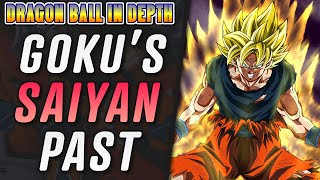
At the end of Dragon Ball Super: Broly (2018), Goku tells Broly to call him Kakarot. Many fans took that as Goku finally accepting his heritage and reclaiming his birthright as a Saiyan. That's not the case. Goku accepted who he was back in the early 90s, during the original run of the Dragon Ball manga and the Dragon Ball Z anime.
That scene was made by Tatsuya Nagamine as a tribute to the original Dragon Ball Z Broly films, because his mentors worked on those films. That's why Dragon Ball Super: Broly has so many small homages to the old school Broly. To understand when Goku really embraced his Saiyan side, what it meant for his character, and why it hit so hard, you have to go back to Raditz, Vegeta and Frieza.
The English dub of Dragon Ball Z is why fans think Goku has no arc
I've seen many people claim that Goku has no arc in Dragon Ball Z, that he doesn't learn anything, and that he's a flat main character. I feel like people who say that either haven't seen the series in many years or didn't pay attention when it was on the air, but what seems to be the most likely cause of this misunderstanding is the English dub.
No matter how much nostalgia you have for the original Dragon Ball Z English dub, and no matter how much you dislike the Japanese voices, the reality is that the dub butchered the Dragon Ball storyline. Every episode of the series had at least 35 to 55 dub changes that either changed the narrative, changed character motivations or added pointless dialogue, and this went on for the entirety of the dub. Because of that, Goku's acceptance of his heritage as an alien was butchered, and people seem to misunderstand his character entirely.
Check the English dub against the subtitles, or read the manga, and you'll notice an incredible number of differences. The Viz translation of the manga isn't perfect either, but the Funimation dub of Z destroys many of the subtleties and powerful moments in the series.
Raditz reveals Goku's Saiyan origins, and Goku denies them
Dragon Ball Z is only the second part of Toriyama's grand story. In the original manga it was Dragon Ball all the way through, including the part the anime called Dragon Ball Z. In the anime, the arrival of Raditz, Goku's older brother, marked the transition between Dragon Ball and Dragon Ball Z. The two are one big story.
Throughout Dragon Ball, Goku is a monkey boy and nothing more. He has abilities and powers, and it's hinted a couple of times that he isn't of this world, but it's not until Raditz arrives that Goku is told his backstory. That comes deep into his life. By then he had already saved the Earth, defeated the Red Ribbon Army, defeated Demon King Piccolo and become champion of the world by winning the 23rd Tenkaichi Budokai.
Now his whole world was turned upside down. He learned he was adopted, that Grandpa Gohan was not his biological grandfather, and that he belonged to a warrior race in space who, needless to say, were not great people. From the beginning Goku has a hard time accepting that he isn't an earthling. He keeps telling his brother he's not a Saiyan, even though he obviously is. Master Roshi confirms it, revealing that Grandpa Gohan once told him about finding Goku in a spaceship. The alien blood in his veins was no lie.
The fight with Vegeta shows Goku's primal love of battle
Fast forward to the fight with Vegeta, and Goku talks to himself about feeling a certain vibe, a certain desire to fight. Here we slowly see Goku enjoy himself and get excited about facing opponents, a recurring theme in Dragon Ball for years to come.
Goku was always fiercely competitive. Now we have a more primal reason as to why. But it wouldn't be until the Frieza saga that he truly accepted who he was.
Vegeta's death points Goku toward Frieza
Before that, another moment guided Goku in this direction: the death of Vegeta. It's another scene the English dub script butchered and took out of context.
In the original Japanese version, Vegeta tells Goku he despised being a slave to Frieza. Crying his eyes out, he realizes the only person left from his race who could defeat Frieza is Goku, Kakarot. This is the man Vegeta couldn't yet accept was superior to him, though he was beginning to, because Goku was a low class warrior and Vegeta was royalty from birth. It's a powerful scene, with Vegeta's pride shaken up, and he tells Goku that Frieza must die at the hands of a Saiyan.
Remember this was written in 1990, before Broly was even thought up. As far as anyone knew, Vegeta and Goku were the last ones left, and when Vegeta died, that was it. I know other Saiyans have appeared since, but those are retcons, and none of them were in the mix. Goku was the last one, and at that point he understands what he has to do.
Why the "hope of the universe" speech doesn't fit Goku
It's the battle with Frieza, the death of Goku's best friend and his transformation that make him truly accept who he is. In the English dub, that moment becomes the hope of the universe speech. At the end of Dragon Ball Z episode 96, Goku is dominating Frieza, and he delivers it.
The speech is well written, and I think it works, just not for Goku. It doesn't apply to Son Goku at all. It takes the entire scene, and Goku's entire arc, out of context and ruins the narrative.
It's hard to say exactly why there were so many dub changes in the 90s, except that the person responsible for most of them was producer Barry Watson out of Texas. He's no longer with Funimation, but he instituted many changes that would confuse audiences to this day and irritate purist fans who wanted the best dub possible.
Goku does several very heroic things, even in the original manga. But Toei's version of Goku in the Dragon Ball Z movies and filler was often played up as a Superman type of superhero, a positive role model. Toriyama wrote Goku as a flawed character multiple times. The English dub took superhero Goku and turned the dial as high as it would go. I do enjoy some of the things superhero Goku says, but it isn't the author's vision. So many dub lines play up superhero Goku, especially in GT, that I find it kind of sickening.
"I am the Super Saiyan Son Goku" is when Goku accepts his heritage
In the original context, this is the moment Goku accepts who he is, where he comes from and the importance of his bloodline. When Frieza asks Goku what he is, Goku asks whether he really doesn't know. He then talks about how amazing it is that Frieza can destroy entire planets and civilizations but can't beat one man, and ends by saying, "I am the Super Saiyan Son Goku."
Dragon Ball Kai portrayed this scene accurately. Sean Schemmel, after discovering and studying the original manga, insisted he be able to call Goku Son Goku here, and after discussing it with the producers he was allowed to. Dragon Ball Z: Kakarot got it right too. But the original Z dub has been seen by far more people, so there could be some confusion there.
Goku calls himself the Saiyan who came from Earth, and he says he was raised on Earth. He doesn't agree with what his race did; at one point he tells Frieza the Saiyans died because they paid for their sins. They're gone, but he is still one of them by blood. The English speech is well written, but the Japanese speech is more powerful to me because it's the true Goku telling the truth about who he is and what he represents. It's an absolutely beautiful moment in the series, and one I will always treasure.
What Kakarot means at the end of Dragon Ball Super: Broly
Plenty of people tried to explain the ending of Dragon Ball Super: Broly. Some got it right and some didn't. Goku tells Broly to call him Kakarot purely as a homage to the old Broly, who would always scream Kakarot, or Kakarot in the Japanese and Spanish versions.
That said, one could argue that Broly's appearance, and the challenge he posed for Goku and Vegeta, may have Goku rethinking his heritage and appreciating more how much power his race truly has. All hail the Saiyans, as they would say.
What other creators are saying
More on Goku →Doom Slayer has killed god-tier beings in his own lore, but Goku's Ultra Instinct speed and scaling put him ahead in this matchup.
Working through the reasoning behind Super Saiyan God, Super Saiyan Blue and the returning red haired form during the Tournament of Power arc.
Dragon Ball Super: why Goku keeps switching Super Saiyan forms →
Watch the original
@geekdom101 · YouTube
Adapted with AI from Geekdom101's video of 5 December 2020 and checked against the video before publication. Editorial standards · Corrections
More from @geekdom101
All →
Make videos? Your next one could be an article here.
We turn your videos into articles under your name, linked back to the original. You keep 60% of what they earn, non-exclusive, and you can leave whenever you like.
Become a SubPlotter →