Dragon Ball Super Beerus ep 7: does it fix Resurrection F?
The new adaptation trims the 2015 anime's slice of life material, darkens Frieza's punishment in the afterlife, and keeps Whis's early lesson on instinctive fighting
 Geekdom101 (AI-assisted)23 November 2026Editor: Digital Fox Talent Editorial TeamOn YouTube since 2015 · more than 780,000 subscribers

Dragon Ball Super Beerus episode 7 begins the Resurrection F, or Revival of Frieza, story arc, and I have a lot to say about it. The episode adapts the first act of the Resurrection F movie from 2015, and it keeps a scene I count among my favorite pieces of dialogue in all of Dragon Ball Super: Whis teaching Goku and Vegeta the principles of what will become Ultra Instinct.
Resurrection F has become many people's least favorite of the four modern era Dragon Ball movies. The 2015 anime version of this arc was very bad. It's my least favorite arc in all of Dragon Ball anime. I dislike it more than anything in GT or anywhere else. So the question is whether Dragon Ball Super Beerus can fix it and make it more presentable.
How long the Beerus arc runs in each version of Dragon Ball
Before moving on, I want to close out the Beerus story arc with the numbers. The original Battle of Gods movie runs 85 minutes. The director's cut is 105. The first 14 episodes of the 2015 anime come to 308. Dragon Ball Super Beerus comes to 110 minutes. These are approximate figures for how long it would take to get through the whole story in each format, not including intros and outros.
To me, the quickest and best way is still the movie. Whether you prefer the director's cut or the theatrical version is up to you. I think the director's cut has some cool material that isn't in the theatrical release, but the theatrical version has everything you could want and I think it flows better. The 2015 anime has tons of extra material that Toei added.
Believe it or not, the Beerus version is only five minutes longer than the director's cut. Still, I think the director's cut version of Goku versus Beerus is the best one. Reading the manga would be a different experience altogether.
Resurrection F was the first full script Akira Toriyama wrote for Dragon Ball anime
Whatever your opinion of Resurrection F, it made history. It was the first time Akira Toriyama wrote an entire script for anything anime related in his whole career. Not a single episode of Dragon Ball, Dragon Ball Z, Dragon Ball GT or Dragon Ball Super was written by Toriyama. He drew and wrote the manga, and that was adapted into Dragon Ball and Dragon Ball Z.
With Dragon Ball Super, he wrote an outline, a manuscript, for the anime staff to use for the Universe 6 arc, the Goku Black arc and the Tournament of Power. Toei took those manuscripts and fleshed them out into the rest of Dragon Ball Super's story. They added to them and changed some things, but the original manuscripts for those last three Super arcs have never been released to the public. The Moro and Granolah arcs are a different story, because Toriyama worked with Toyotaro directly on those.
That's why Toriyama is never credited as the writer on any episode of the Dragon Ball anime. He's always credited for the original story, from Weekly Shonen Jump. You'd be surprised how many people don't know this.
For Resurrection F, he wrote the entire script word for word and laid out bullet points for the anime staff to take over. He also designed the new transformations: Golden Frieza, Super Saiyan Blue Goku and Super Saiyan Blue Vegeta. It wouldn't be the last time. He also wrote the scripts for Dragon Ball Super: Broly and Dragon Ball Super: Super Hero. For Dragon Ball Daima he wrote an outline, but he also supervised many of the scripts and made edits whenever necessary. There were other times when he helped out, answered questions and sent notes, but Resurrection F is the first time an entire story was written by Toriyama.
Toriyama said Frieza's return was a story he always wanted to tell
Going into the movie's release, Toriyama claimed Resurrection F was a story he always wanted to tell but never got the chance to. During the Majin Buu saga, Toriyama was burnt out, tired and wanted to end the series. His editors confirmed that publicly on a podcast a couple of years ago.
I don't think Toriyama is lying. I think bringing Frieza back was probably an idea he was thinking about. But I feel the newer forms didn't come into place until after Battle of Gods, because that movie was Toriyama's first crack at any kind of god related form. The idea for Super Saiyan God came from Toei Animation, not Toriyama, who came in to revise it. Toriyama saw Super Saiyan Blue as the next evolution, the next step in Goku and Vegeta's ascension into the god forms.
Episode 7 cuts the 2015 anime's slice of life scenes
Dragon Ball Super Beerus episode 7 adapts the first act of the Resurrection F movie, but it uses assets from the 2015 Dragon Ball Super anime. Nothing is taken from the movies, no matter how good they look, which is why nothing from Battle of Gods appeared in the first six episodes either. The pacing and all the major bullet points from the movie are left intact, with a little extra.
I was one of many people who said the best part of the original Dragon Ball Super was the slice of life. I thought the Toei staff did a wonderful job coming up with things for the characters to do outside of battle. Unfortunately, nearly all of that is gone, at least the material added between Battle of Gods and Resurrection F. Episodes 15 through 18 aren't part of this version, with the exception of one training sequence between Goku, Vegeta and Whis.
If you were a fan of the Mr. Satan gag scene, Vegeta trying to impress Whis with food so Whis would train him, Goku trying to get trained by Whis after Battle of Gods, or Goku and Vegeta doing chores at Beerus's palace, all of that is gone. This version begins with training. Goku and Vegeta didn't have to earn anything, at least not on screen, which is how it played out in the movie. I did enjoy some of that extra material, but since they're trying to get closer to Toriyama's script, leaving it in wouldn't have done that.
Frieza's punishment in hell is darker than Toriyama's version
Like the movie, the episode opens with Frieza suffering in hell. This was darkened up quite a bit to match the tone of this series, but it isn't what Toriyama originally envisioned. Frieza being tortured in hell by teddy bears and fairies is Toriyama's idea of the ultimate punishment he deserves for everything he did.
So while the change may look cool, it does the exact opposite of what was promised, because in this case it isn't Toriyama's vision. Some of you will like it and some of you won't, but it is what it is.
Whis's symbol on Goku's gi makes him a student again
Whis putting his symbol on Goku and Vegeta's outfits to show he's their teacher is more meaningful than it looks. When Goku was headed to Planet Namek, the symbol on his gi was his own. That meant that at that point in the series, Goku was a master of the martial arts and had learned everything necessary.
Goku would later learn teleportation from the Yardrats and fusion from the Metamorans, but he never really had an instructor after King Kai. That held for the rest of the series until Resurrection F. Now that he's been introduced to god ki and god powers, he's humbly a student once again, and his sensei is Whis.
Sorbet's space battle, Piccolo and Pan, and the Pilaf Gang's wish
The scene of Frieza's forces fighting in space, led by Sorbet, is new. It takes what we saw in Dragon Ball Super episodes 18 and 19 and adds some sizzle to the steak. Piccolo babysitting Pan was in the movie, and it was good to see. Now it acts as a little foreshadowing of their relationship in Dragon Ball Super: Super Hero, which was a fine connection I made this time around.
The Pilaf Gang has finally found all the Dragon Balls, and they want to wish themselves back to being adults. Dragon Ball Super never explains how they became kids, at least not in the anime. Toyotaro drew a bonus chapter years ago of the Pilaf Gang accidentally wishing themselves to be kids again. So they were doing Daima before Daima.
Tagoma asks Pilaf to summon the dragon because he has his own plans. The dragon grants three wishes. That caused some confusion when these episodes first aired. I think many fans forgot that when Dende became the god of Earth, he upgraded the Dragon Balls to grant two wishes, then upgraded them again to three between the Cell and Buu sagas. Maybe even Toriyama forgot, because the movie has two wishes and the 2015 anime has three. However, a very powerful wish counts as two, as Dragon Ball Z explained.
Frieza's revival and the King Cold change
Despite being chopped into pieces by Trunks, Frieza is brought back to life when Sorbet uses one wish. Sorbet then ponders whether to bring back King Cold, Frieza's father. That's different from the movie, where Sorbet asks Frieza directly if he wants his father resurrected and Frieza rejects the idea. What a terrible son, right?
In this version, Sorbet wants to do it, but before they can decide, Shu and Mai jump in and ask for a million zeni and the best ice cream in the world. That uses up the last two wishes, and the dragon is gone. They did get what they wanted, though.
Unlike the movie, Sorbet comments that Frieza's vitality and their technology are enough to bring him back. They have 3D printing technology that takes the pieces of Frieza, reconnects them and gives him a new body. Because the empire only saw Frieza in his first form, and he only showed his final form to his family and to Goku and the others on Namek, there was no data for his final form. So it defaulted to what the computer knew: Frieza's first form.
Frieza's armor is part of his body
Toriyama revealed that the armor Frieza wears is part of his body, something none of us knew during the original run of Dragon Ball Z. Frieza's fourth form is his birth form, and the other three forms exist to suppress his power.
That means Frieza created those forms by figuring out how to mutate his body. I guess at some point he thought adding armor to himself would look cool. I don't know, but this was stated.
Tagoma and Sorbet's original designs before Toriyama's redesign
There's also a recent behind the scenes reveal: Tagoma and Sorbet's original designs, as first storyboarded before Toriyama came in and redesigned them. Sorbet looks a lot like Kiwi from the Namek arc, as if he were a different or similar species. Tagoma looks almost humanoid, almost like a raccoon type.
To be honest, I like Toriyama's designs way more than these. The originals look, I guess you could say, fanfictionish.
Whis teaches the principles of Ultra Instinct in Resurrection F
The next major scene existed in the original Dragon Ball Super, but it's worth remembering: Whis teaching Goku and Vegeta how Ultra Instinct works, all the way back in this arc. That means either Toei got incredibly lucky when writing it, or Toriyama had already told them his plans and they put it in as foreshadowing.
Either way, this was one of my favorite pieces of dialogue in all of Dragon Ball Super, because it gives you an appetizer for what Ultra Instinct becomes in the Tournament of Power and the arcs after it. Whis explains that they still lack speed, and to overcome that they have to let their bodies move instinctively and not think so much when they fight. He also points out some weaknesses they need to work on.
Later that night, Whis tells the Oracle Fish that Goku and Vegeta have to master god ki outside of transforming into Super Saiyan first, which will lead to the discovery of Super Saiyan Blue. From there, they can transform to access higher levels of power. I love all this. I also like that Whis explains that at this point they can sense god ki. Frieza is about to train for a few months, which gives Goku and Vegeta time to discover Super Saiyan Blue before the clash begins.
Akira Toriyama created the swirled poop shape in Dr. Slump
There's significance to the scene with the poop, too. The curly, pyramid shaped swirl was first introduced to the world by Akira Toriyama in Dr. Slump. Since then it has become a meme and an emoji all over the internet.
People use it every day without knowing it was a Toriyama creation that existed even before Dragon Ball. People who have never seen Dr. Slump or Dragon Ball see it all the time and don't know its origin. There are so many things Toriyama popularized that most people have no idea came from him.
Episode 7 should have been how the 2015 anime was paced
The episode ends with Frieza brought back. After all these years, F has been resurrected. This week's reconfiguration is simple: a few assets from episode 18 of the 2015 Dragon Ball Super, mostly material from episode 19, and nothing from episodes 15 through 17, which are all on the cutting room floor. This is the 2015 anime being brought closer to the movie, and we still have the movie version to fall back on if necessary.
Some of these changes can be polarizing, and I'm sure you'll like some and dislike others. But all I'm thinking is that the first Dragon Ball Super from 2015 should have been paced like this. Instead, they added a lot, and now they're taking it away.
Watch the original
@geekdom101 · YouTube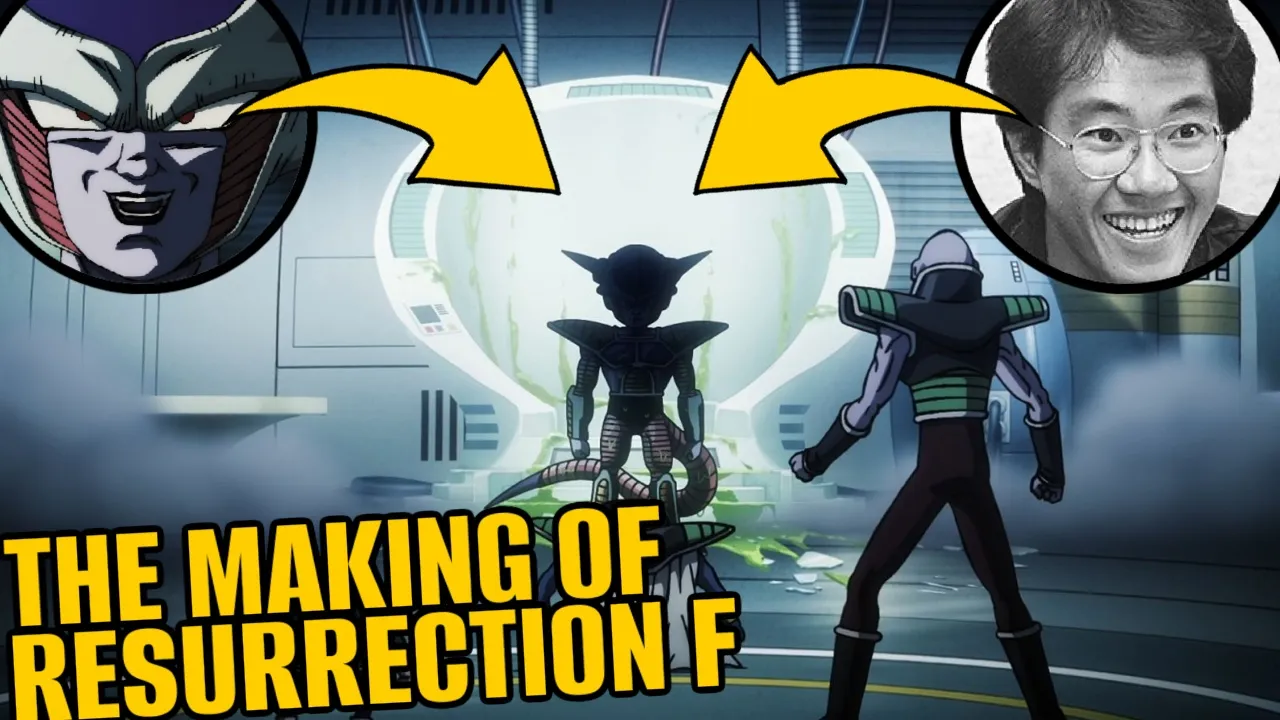
Adapted with AI from Geekdom101's video of 23 November 2026 and checked against the video before publication. Editorial standards · Corrections
Also on Dragon Ball Super Beerus
2 creators, 28 takes →
More from @geekdom101
All →

Make videos? Your next one could be an article here.
We turn your videos into articles under your name, linked back to the original. You keep 60% of what they earn, non-exclusive, and you can leave whenever you like.
Become a SubPlotter →