Dragon Ball Kai: Why Toei Recut Dragon Ball Z and Why It Ended After Cell
From HD reframing and cut filler to the blue Mr. Popo, a new English dub, a music scandal and an earthquake, here's how the Dragon Ball Z remaster came together and fell short
 Geekdom101 (AI-assisted)24 November 2026Editor: Digital Fox Talent Editorial TeamOn YouTube since 2015 · more than 780,000 subscribers

Dragon Ball Kai, the 2009 recut of Dragon Ball Z, has a history many people don't know. It wasn't a new series. It was a remastered, reframed and heavily trimmed version of the original, built for a new generation and for HD television. It brought a censorship controversy, a new English dub, a music scandal and an ending that had nothing to do with that scandal. If your only exposure to Kai is the version with the blue Mr. Popo, you haven't seen the right version, and you probably don't know half the story.
Dragon Ball Kai debuted in Japan in April 2009, the 20th anniversary of Dragon Ball Z's 1989 start. It came a year after the OVA from the 2008 Jump Super Anime Tour, a reunion of the original cast with a new adventure, new animation and an original score, made to make fans happy and remember the glory days. That OVA's popularity with hardcore fans proved there was interest in new Dragon Ball material.
Why Toei and Fuji TV turned to a Dragon Ball Z recut instead of a new series
Logic would tell you the OVA's success meant fans wanted new stories, and that enough time had passed since Dragon Ball GT for franchise fatigue to wear off. In an interview, Akira Toriyama's original mentor and editor, Kazuhiko Torishima, revealed that in the late 2000s Bandai of Japan was having trouble pushing Dragon Ball merchandise because it had been so long since the franchise was active. As a result, Toriyama, Fuji TV and Toei were approached about a new series to revitalize the brand and present it to a new generation.
The companies involved, Fuji TV, Shueisha and Toei, all wanted the same thing, which was money. Unlike GT, this time they wanted Toriyama more involved. But when the idea was pitched to him, he wasn't interested. So what would become Dragon Ball Super in 2015 was being discussed with Toriyama six or seven years before it materialized. He came back to help write the OVA, but he didn't want to commit to a new series at the time.
Fuji TV and Toei badly needed a new hit to fill the Sunday morning slot and celebrate the Dragon Ball Z anniversary. With Toriyama not on board, they chose not to make a new series without him, and went back to the past instead.
How Dragon Ball Kai remastered and reframed Dragon Ball Z for HD televisions
Simple reruns of Dragon Ball Z alongside One Piece, Toei's huge hit at the time, wouldn't have worked well. The main reason was technology. In the early '90s, almost nobody had widescreen TVs, and HD was a pipe dream, so virtually every TV show was made in the 4:3 full screen ratio. By the late 2000s, widescreen and HD sets were in more and more homes around the world.
Audio was another problem. Toei itself had discarded the original Dragon Ball Z audio masters years earlier, which is why the original broadcast audio is so coveted by hardcore fans. With home theater setups becoming common, the audio tapes in Toei's library wouldn't have sounded clear and crisp. On top of that, one of the biggest criticisms of Dragon Ball Z is that it's too long and has too much filler. Toei Animation and Fuji TV felt reruns wouldn't be special enough, while reanimating everything from scratch would probably be too costly for a story that had already been told.
So Kai became a recut, billed as a refreshed version for the anniversary. Toei took the original animation cels from the late '80s and early '90s and digitally remastered them for HD. In January 2009, a community member reported that Toei would also touch up and redraw portions of the animation to make it cleaner. Rather than simply chopping off the top and bottom for widescreen, Kai went through a reframing process, with each frame set up slightly higher or lower so nothing important was lost. Some call it reformatting, but whatever the name, better digital tools made it feel more like a new show than a 20 year old one.
Dragon Ball Kai still has filler, despite the marketing
Kai was promoted as the original Akira Toriyama cut, and in the United States many people called it all action, no filler. That's wrong. Some filler from Dragon Ball Z's original run is still there. Gregory, for example, was never in the manga, but editing him out of every frame he shares with King Kai and Goku would have taken an incredibly long time and wouldn't have been worth it, since he doesn't impact the story much.
What Kai did do was cut filler down significantly. Scenes were removed, moved around and in some cases sped up, so the pace is much quicker than Dragon Ball Z ever was. Entire filler arcs disappeared, including the Garlic Jr. saga, the fake Namek story and the Other World Tournament. That was done to stick more closely to Toriyama's manga, and also because kids in 2009 had shorter attention spans, so the action had to move faster.
Returning voices, Kenji Yamamoto's score and new opening themes
The audio had to be completely overhauled. The original Japanese cast came back to voice everything again, with some lines changed. Not everyone could return, since some had passed away and some had retired, but the majority did, including Masako Nozawa, Ryo Horikawa and Toshio Furukawa. Kai got new sound effects, new sound mastering and a brand new score from Kenji Yamamoto, a franchise veteran who had worked on the games and produced songs for Dragon Ball and Dragon Ball Z for years. Presumably he was brought in because Kikuchi, the Dragon Ball Z composer, had been retired for so long. That's what I had heard, but I've never been able to confirm it.
On March 20, 2009, at a special event at the Tokyo International Anime Fair, it was revealed that Kai would have new opening and closing music. Instead of Hironobu Kageyama singing "Cha-La Head-Cha-La", Takayoshi Tanimoto sang "Dragon Soul" and "Yeah! Break! Care! Break!". Those sequences were the only animation in Kai made entirely from scratch, along with the eyecatch bumpers if you count them. From my understanding, a very small handful of frames were also animated to smooth edits where shots from the Dragon Ball Z cut didn't match up. Most fans have had a hard time spotting them, but they're in there. There are no new sequences, only touchups to the old ones.
Kai fixed Vegeta's red hair and Piccolo's blood color
The recut gave Toei a chance to fix mistakes from the original run. The most notable is Vegeta's red palette in his early Dragon Ball Z episodes. Kai corrected it and gave him the color palette he's supposed to have. Strangely, Nappa still doesn't quite look the way he should. I don't know if they ran out of time or what happened there.
The other change people bring up is Piccolo's blood. It was inconsistent in Dragon Ball Z, and Kai changed it from red to purple to make it consistent. I don't believe that was actually a censorship issue.
The blue Mr. Popo and Dragon Ball Kai's real censorship
For years I've read people saying they hate Kai because they feel it's a homogenized Dragon Ball Z with less violence and strange censorship choices like a blue Mr. Popo. There's some truth to that, and some fiction. The blue Mr. Popo is not in the original cut of Kai or any home release. He and the other odd edits were exclusive to the CW's Toonzai version, which apparently feared that Kai was too controversial for some American audiences, much like Dragon Ball Z when it first aired in syndication in the mid '90s.
For some reason the CW was afraid to have Mr. Popo be black, I guess because they felt he might resemble a minstrel character. I understand where they're coming from in a sense. But he was never recolored in any other version of Dragon Ball Z that aired, including the heavily censored 1996 Ocean dub for syndication, so that fear is very weird. Mr. Popo has always been a strange figure in localization; Viz's manga, for example, made his lips smaller.
Kai does have a little more censorship than the original run, because 2009 Japan and 1989 Japan were very different. Some extremely gory moments in Dragon Ball Z, in some cases gorier than the manga, were toned down. Japanese broadcast standards had changed, and Dragon Ball wasn't the only show affected. The scene where Piccolo kills Raditz and Goku has far less blood in every version of Kai. Timing mattered too: Dragon Ball Z aired in prime time on Wednesday nights at 7 on Fuji TV, while Kai started on April 5, 2009, at 9 a.m., just before One Piece, as part of the Dream 9 block. That's a vast difference, so there's still blood, just not as much.
Kai replaced the late 2000s version of GeGeGe no Kitaro in that slot, and I find it interesting that the 2018 version of that show took over Dragon Ball Super's slot, bringing things full circle. There were different English edits for TV, whether Toonzai, Nicktoons or elsewhere. If you want the purest, most uncensored Kai, get the home release.
Funimation's Dragon Ball Z Kai dub was handled with more care
Toei distributed the series to markets around the world under the name Dragon Ball Z Kai. Many people think Funimation added the Z, but that was Toei's decision. In Japan it was always Dragon Ball Kai. On February 2, 2010, Funimation's license was announced. That was exciting for two reasons. First, fans got a true remaster of Dragon Ball Z, done correctly, on Blu-ray in high definition without importing, and it looked very good. Second, it got a redub.
The late '90s Funimation dub of Dragon Ball Z is still debated. Many fans have nostalgia for it, while others think it was poorly produced. Back then Funimation were rookies at dubbing, and producer Barry Watson made many unusual decisions that have been criticized over the years. By 2010, Funimation had become the leading anime dubbing and distribution company in the United States, and over a decade of growth had changed it tremendously.
Kai was produced in a completely different way, closer to Funimation's classic anime dubs: sticking to the original Japanese script, keeping the core themes and values, and staying as accurate to the Japanese version as possible. It was treated more like a serious teen and adult anime than the kids show Dragon Ball Z was treated as in the late '90s. Most of the English cast returned, with changes including Monica Rial replacing Tiffany Vollmer as Bulma, Chris Ayres replacing Linda Young as Frieza and Colleen Clinkenbeard replacing Stephanie Nadolny as Gohan. In my opinion, the Kai dub was handled with much more care and much more accuracy, and to me all the voice actors in 2010 were better than they were in 2000. That debate, to me, isn't really a controversy.
The Kenji Yamamoto music scandal that reshaped Kai's soundtrack
The real controversy came on March 9, 2011, with only a few episodes of the Cell saga left to air. Toei Animation posted an official statement saying it had discovered multiple suspicious musical pieces infringing on third party rights in Yamamoto's work. The alleged issue extended beyond Kai to some of the Dragon Ball games he had scored, which is why some releases of the old games have new music.
Toei moved fast. After a swift investigation, it redid the score for the final Cell saga episodes, replacing Yamamoto's work with old Kikuchi music from Dragon Ball Z, starting with episodes 96 and 97. Yamamoto's name was removed from Fuji TV's and Toei's staff listings, and Kai was taken off his company's page. It was a split of epic proportions. Many fans have speculated that Toei feared lawsuits from Hollywood producers, film companies and North American musicians, but we don't have a complete picture of what happened behind the scenes.
Because Kai was a different cut, the Kikuchi music landed in different places than in Dragon Ball Z, and many fans feel it was misplaced. I see where they're coming from; it fit better with Z than with Kai. Every later Japanese rerun uses the replacement score, so the only way to have heard Yamamoto's music on Japanese TV was the original broadcast. Early Blu-rays in Japan and abroad kept it, which created two versions of Kai's music. Funimation's May 2012 re-release of the early parts has the Kikuchi score. To this day, this is considered one of the biggest stories in the franchise's history, and it's a rare thing to happen to any franchise.
Why Dragon Ball Kai ended after the Cell saga
Kai's original run produced 98 episodes and ended with the Cell saga, even though the Buu saga was in the manga. Low ratings are often blamed. The series averaged a 9.4 rating, with a high of 12.3 and a low of 6.4. But in Japan, ratings aren't as important as many people think, and certainly not as important as in the West.
What matters is that Bandai, Fuji TV, Shueisha and Toei are intertwined and all benefit when Dragon Ball succeeds, and merchandise sales are one of the main measures of success. Kai merchandise didn't sell at the level Bandai had hoped, and presumably some within the company deemed it a mediocre failure. I don't know if I would go that far, but apparently some felt it was.
Blaming the Yamamoto scandal doesn't hold up at all. It's misinformation, because the series was already scheduled to end with episode 98. That episode never aired in Japan, but not because of Yamamoto. When it was due, an earthquake and tsunami hit Japan and television was filled with coverage of the disaster. With a new anime premiering in Kai's slot, the episode went to Blu-ray and DVD as a bonus instead of being pushed back a week.
Simply put, Kai failed to carry the momentum of the 2008 OVA. It wasn't the revival Toei, Bandai and Fuji TV hoped for, so they put Dragon Ball back on the shelf for a while. Was Kai ever necessary? Probably not. But it introduced a whole new set of younger fans who had never seen the original series, and it gave us a much more accurate English dub that many of the people who worked on it at Funimation, as well as the fans, completely adore.
Watch the original
@geekdom101 · YouTube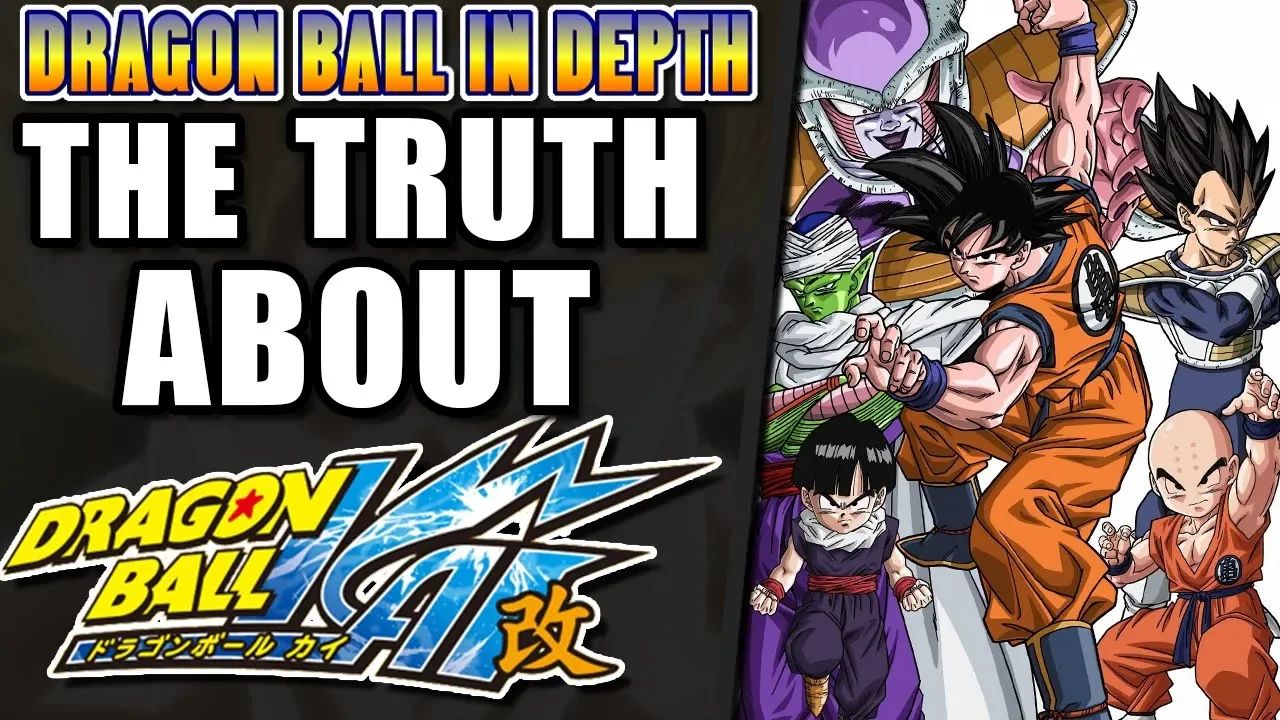
Adapted with AI from Geekdom101's video of 29 November 2018 and checked against the video before publication. Editorial standards · Corrections
More from @geekdom101
All →

Make videos? Your next one could be an article here.
We turn your videos into articles under your name, linked back to the original. You keep 60% of what they earn, non-exclusive, and you can leave whenever you like.
Become a SubPlotter →