The X-Men Original Trilogy: Easter Eggs, Hidden Details, and Behind-the-Scenes Stories from Three Landmark Films
A comprehensive breakdown of how the first three X-Men movies shaped superhero cinema, from casting decisions to visual symbolism
 Heavy Spoilers (AI-assisted)7 August 2026 · Editor: Digital Fox Talent Editorial Team
The original X-Men trilogy stands as a pivotal moment in superhero filmmaking, establishing the genre as a vehicle for exploring real-world themes rather than pure spectacle. The first film opened in 2000 with the 20th Century Fox logo deliberately lingering on the X, immediately signaling to audiences that this would be a different kind of superhero movie.
The First Film's Foundation
X-Men begins with Erik Lehnsherr's traumatic origins during the Holocaust, a bold narrative choice that grounded the franchise in historical reality. Producer Ralph Winter intentionally modeled Professor Xavier after Martin Luther King Jr. and Magneto after Malcolm X, two leaders with fundamentally different approaches to fighting discrimination. Sir Ian McKellen was drawn to the project specifically because of its focus on discrimination and human themes that resonated with his own life experiences.
The first film introduced audiences to Wolverine through an extended casting process. Russell Crowe turned down the role, and Dougray Scott was initially cast but became unavailable due to Mission: Impossible II commitments. Hugh Jackman received a callback nine months after his initial audition and ultimately secured the part.
Small details carried significant weight. Rogue's bedroom featured postcards foreshadowing the film's climax at the Statue of Liberty, as well as locations connected to her eventual escape to Canada. The character's boyfriend's name was changed from Cody Robbins in the comics to David as a shout-out to screenwriter David Hayter, who also appeared in the film as a museum cop and later became famous as the voice of Solid Snake in Metal Gear.
Visual Storytelling and Production Choices
Rebecca Romijn's portrayal of Mystique required 7 to 8 hours of makeup application daily, involving over 100 prosthetics and two layers of contact lenses that severely limited her vision. The intricate costume would later inspire changes to Mystique's design in the comics themselves.
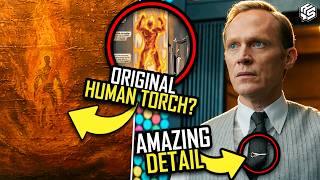
Ray Park's interpretation of Toad proved so dynamic that Marvel Comics updated the character in their source material to match his badass live-action portrayal. The mutant training uniforms were housed in glass cases throughout the mansion, a nod to Batman's costume displays, though the filmmakers avoided full spandex costumes to maintain the franchise's grounded aesthetic.
The X-Mansion was filmed at Casa Loma Castle in Toronto for interiors and Parkwood Estate in Ontario for exteriors. The climactic train scene involved physically ripping apart a real train car filled with extras, creating genuine panic when sparks rained down after the director yelled cut.
X2: X-Men United Expands the Universe
Released in 2003, X2 grossed $407.7 million globally on a budget of $110 to $125 million, nearly three times its production cost. The film's opening credits sequence, showing a cosmic star man with neural pathways transitioning into Cerebro, established symbolic connections to mutation and solar energy that may have influenced Kevin Feige's later work on the MCU's Eternals.
The film packed extensive Easter eggs into William Stryker's computer files, listing dozens of mutants from the comics including Deadpool, Gambit, Omega Red, and many others. The novelization revealed that Beast was originally supposed to transform into his blue form when Dark Cerebro activated, a scene ultimately cut from the final film.
Alan Cumming's Nightcrawler was originally auditioned for by Neil Patrick Harris and Ethan Embry, but Cumming's native German language skills made him the ideal choice. The character's famous teleport sequence into the White House notably avoided killing any guards, potentially hinting at his latent resistance to Stryker's mind control.
Halle Berry's flying sequences caused her genuine nausea, with the actress throwing up during filming. The production compromised by using practical effects for Colossus rather than full CGI in order to save money after investing heavily in the larger budget.
X-Men: The Last Stand's Turbulent Production
The third film's $210 million budget made it the most expensive movie of its time. Director Bryan Singer was replaced by Brett Ratner due to Singer's difficult reputation on set and former Fox CEO Tom Rothman's personal vendetta against the franchise. The production rush prevented Singer from concluding his trilogy as intended.
Multiple acclaimed directors turned down or left the project. Darren Aronofsky, Alex Proyas, Joss Whedon, Peter Berg, and Zack Snyder all passed. Matthew Vaughn initially accepted but quit after discovering that Fox executives planned to deceive Halle Berry into signing by showing her a fake script featuring her character saving an African village, knowing they would discard it immediately after her contract was secured.
The film employed the first major use of de-aging visual effects in a blockbuster film, with Lola Digital Effects using photographs of younger Patrick Stewart and Ian McKellen to create the opening scene of Charles Xavier and Erik Lehnsherr visiting the Grey household in 1986.
Ben Foster faced an ironic challenge playing Angel despite having a significant fear of heights. Initial Juggernaut wings designed for the flying scenes proved too heavy, requiring lightweight foam replacements.
Notable Casting and Cameos
Kelsey Grammer made his Beast debut in this film, replacing Steve Bacic's brief appearance in X2. The actor went through a formal audition process despite his established career. Sam Neill and Jason Flemyng were also considered for the role.
Elliot Page joined as Kitty Pryde, taking over from Sumela Kay and Katie Stuart in previous films. Page later expressed regret about the experience, citing Brett Ratner's unprofessional behavior on set.
Vinnie Jones' Juggernaut hated wearing his costume so intensely that he declined a cameo in Deadpool and Wolverine to avoid reliving the experience. Dania Ramirez played Callisto, originally intended as a different character before production changes.
Deleted Scenes and Alternate Endings
The film included numerous deleted sequences that altered the story's tone. A scene showed Rogue choosing not to take the cure because she was happy with her mutation, a more empowering conclusion than her appearing fully cured at the end. Storm was originally supposed to summon a gigantic wave against Magneto's forces before the climactic battle.
Logan had an alternative ending returning him to the Alberta bar from the first film. Beast was written to remain a teacher at the school rather than become US Ambassador. A deleted scene featured Pyro attempting to return to the Xavier School after the film's events.
Themes and Legacy
The trilogy's chess games between Xavier and Magneto served as recurring metaphors for their ideological struggle. Magneto sacrificing all his pawns reflected his willingness to use anyone as expendable, while his resignation at the end symbolized his defeat in their first major battle.
The franchise ultimately succeeded in establishing superhero films as legitimate vehicles for exploring discrimination, prejudice, and the nature of humanity. The 2000 film especially broke through industry skepticism following failures like Spawn, Ninja Turtles 3, Steel, and Batman and Robin, proving that mature, thoughtful storytelling could attract mainstream audiences to comic book properties.
Watch the original
@heavyspoilers · YouTube
Adapted with AI from Heavy Spoilers' video of 7 August 2026 and reviewed by Digital Fox Talent before publication. Editorial standards · Corrections
More from @heavyspoilers
All →

Make videos? Your next one could be an article here.
We turn your videos into articles under your name, linked back to the original. You keep 60% of what they earn, non-exclusive, and you can leave whenever you like.
Become a SubPlotter →