Blade (1998): why was Wesley Snipes not the first pick?
From other actors considered for the lead to a scrapped blood monster finale and a cut Morbius tease, the first Blade film hides more than its nightclub massacre suggests

The first Blade film is packed with casting near misses, hidden details, cut scenes and big departures from the comics. Blade (1998) starred Wesley Snipes, Stephen Dorff and Kris Kristofferson. It was written by David S. Goyer and directed by Stephen Norrington, with Snipes in his iconic role as the vampire hunter.
Wesley Snipes was not New Line Cinema's only choice for Blade
As loved as Snipes' Blade became, he wasn't the only actor considered. At one point New Line Cinema wanted to make Blade a white vampire hunter instead. Thankfully, Goyer immediately shot that terrible idea down.
After that, Mike De Luca, the head of New Line Cinema, had Denzel Washington, LL Cool J and Laurence Fishburne in the running before Snipes eventually won the role at Goyer's insistence. Fishburne would go on to his own iconic role as Morpheus in The Matrix a year after Blade's debut. It's clear 1990s Hollywood had plenty of faith in Fishburne fighting and looking good in sunglasses.
Vanessa Brooks' opening scene and Blade's very different comic origin
The film opens with Blade's mother, Vanessa Brooks, being rushed into the emergency room. Her wallet falls to the ground, giving a clear view of her driver's license. It shows she was single, five feet seven inches tall, weighed 128 pounds and was born on February 16, 1944. Her library card and her MasterCard fall past the frame too.
After a bloody baby Eric is taken away, Vanessa keeps her arm reaching upward as her flatlining is heard in the background. I think this was the film's clever way of giving a quick glimpse of her transformation into an undead vampire, because typically when somebody flatlines their arms go limp.
This is drastically different from the comics. There, Blade's mother was named Tara Brooks. She is bitten by a vampire while pregnant, but unlike Vanessa she doesn't survive. And while Vanessa's bite is why Eric can walk in daylight as a half vampire, half human hybrid, the comic Blade wasn't born a daywalker. He grew up as a normal human who was immune to vampire bites. Only after this film's success did Marvel Comics make Blade a daywalking vampire, courtesy of Dr. Michael Morbius biting him.
The human blood bags were meant to feed Deacon Frost's vampire planet
When Traci Lords' vampire Racquel leads her unsuspecting date across a factory floor of human meat toward the vampire club, he notices people in blood bags being carted away. That's one of the vampires' food sources, but those bags were supposed to play a bigger part originally.
According to the film's production designer, Deacon Frost was initially supposed to reveal massive storage of these human bodies, ready for the day he would use the blood god La Magra to turn every human on the planet into a vampire. If everybody on Earth is a vampire, that vampire planet needs a food source, or else everybody dies.
The blood rave reinvented vampires, and Blade himself
After the vampires get their blood bath through the sprinklers, the adult Blade finally appears with a look and personality not yet seen in the comics. Blade wasn't always this tough on the page. After these films came out, Marvel drastically altered the character in comic continuity to closely match Snipes' version, since Blade was struggling in popularity among readers at the time.
The nightclub is also the first look at this universe's vampires, which the producers made sure were radically different from the typically romantic vampires people knew. Opening with a blood bath in a club hidden inside a human meat factory, Goyer does a rather fantastic job of showing how unconcerned these vampires are with human morality, while also showing they enjoy the same recreation as people did then.
Having them look and dress like regular young people, rather than traditional Count Draculas or The Count from Sesame Street, made this universe feel much scarier to me, because these vampires can walk among society at night and blend in perfectly.
Hong Kong action, a crucified Quinn and an 88 vampire body count
When Blade arrives at the club in sunglasses at night, you can see how much the film was inspired by Chinese cinema. Snipes himself came into the project with a deep desire to make a superhero action film that felt as tough as the martial arts films being made in Hong Kong.
After Blade kills 22 vampires in the club, I like how the sequence ends with him essentially crucifying Quinn. Christian iconography like crosses doesn't kill vampires in this universe, but pinning Quinn to the wall like Jesus and burning him alive still nods to that traditional holy execution style. Unfortunately, also like Jesus, Quinn would return from the grave.
Blade apparently kills 88 vampires over the course of the film, so for the love of God, "give that man a good Yelp review." Also, when the police arrive to find Quinn burning, Stan Lee was originally supposed to cameo as one of the cops, but his cameo was cut.
The Batman influence on Blade, and Donal Logue's real hospital trip
I also enjoyed how Blade mysteriously disappears before the police arrive, in a very Batman way. It feels extremely intentional to me, because Goyer has said they looked very closely at the Batman movies for guidance, specifically Tim Burton's Batman and its realistically dark atmosphere.
Goyer's love for that world eventually landed him as the story writer for the Nolan Batman trilogy, and as screenwriter and executive producer on Batman v Superman. One of those things is a lot better than the other, but I won't say which. With both Blade and Batman being nighttime avengers, taking inspiration from Michael Keaton's Batman was a wise decision, especially since they purposely avoided the cheesy mistakes of the later Batman sequels, which toned down adult themes and violence to appease parents and reach younger audiences.
In the hospital scene, when a charred, resurrected Quinn attacks Karen, actor Donal Logue dislodged his jaw after his face accidentally hit the ground hard. Production ironically had to rush him from their fake hospital to a real one while he was still in the makeup of a dead burn victim, which freaked out pretty much everybody there.
Whistler's wedding ring and the comic mentor Jamal Afari
As Whistler checks Karen's bite wounds, he's still wearing his wedding ring. That hints he once had close family, before he reveals later that his wife and two daughters were brutally slain by vampires.
Abraham Whistler is an original creation for the film, a loose adaptation of comic Blade's original mentor, Jamal Afari. In the comics, Afari is an old Black vampire hunter who takes Eric in and teaches him everything he knows about making vampires run for their lives, or afterlives. I'm not sure why they felt the need to change that, and my hope was that Marvel Studios would include Jamal Afari in its own adaptation.
When Whistler tells Blade to steady Karen on the table, it's a great example of the hero's strength: he uses one hand to keep a convulsing Karen from shaking off it.
The vampire council's chairs and Deacon Frost's human roots
When the Council of vampires sits together at a glass table, the tops of their chairs are curved. I believe this was a direct nod to classic vampires like Count Dracula, who often wore capes with curved collars. Sitting back, the council members all look like they're wearing curved cape collars themselves. That was a great choice in my opinion, because they represent the classic vampires of old, who likely did have Dracula style wardrobes at some point in their extremely long lives as pureblood vampires.
Learning that Stephen Dorff's Deacon Frost isn't a pureblood, but a former human who was turned, very much reflects his personality and motivations in my opinion. Humans as a species have historically had strong tendencies toward conquering people they see as weak and consuming in excess.
It seems to me the filmmakers are heavily implying that Frost's evil is rooted in his human DNA. The council vampires were born that way, and they appear to lack his very human thirst for living beyond one's means and insatiably reaching out for more. They seem content to be left alone in the shadows while humanity rules the world. Frost is not about that.
The La Magra prophecy on Deacon Frost's computer screen
When Dragonetti confronts Frost while he's translating the sacred vampire text on a large CRT screen, the translation on the right seemingly tells the origin of vampires in this universe. The blood god La Magra once ruled a completely dark Earth as the god of all vampires, until an ancient force the old vampires called the Unholy One defied him, built a prison for the blood god, and supposedly created the day and night cycle.
That forced vampires into the shadows while humanity evolved and prospered. But the prophecy gives the vampires hope: it promises humanity will destroy itself by destroying its habitat, which is true, and that the blood god's return will turn all of humanity into vampires so they can reclaim the planet stolen from them.
Karen's sunny apartment, the hybrid gun, a director cameo and a Star Trek poster
When Blade drops Karen back in daylight and she returns to her apartment, I like how the set designers decorated her sunlit space with a little smiling sun and a sunflower painting. It all gives a false sense of solar security, which gets shattered by Officer Krieger, right before Blade shatters Karen's table with Krieger's body.
When Krieger runs, Blade pulls out an odd looking square gun. That machine pistol is two real guns combined: the trigger half is a MAC 11 and the front half is the casing of a MAC 10. During Blade's car chase with Krieger, director Stephen Norrington can be seen feeding on a woman on a street corner, which I thought was a fun little Easter egg.
As Blade and Karen prepare to enter the building Krieger went into, there's a boxing poster that was also featured in episode 12 of season 1 of Star Trek: The Next Generation. So technically Blade takes place in the Star Trek universe. Not really, but it's more fun to think it does.
Pearl, the Book of Erebus and Deacon Frost's casket bed
Behind a club full of sunglass wearing Japanese vampires, Blade and Karen find the enormous vampire Pearl hidden in the club's refrigerator. According to Norrington, Pearl got that big by eating human babies and infants, so don't feel too bad that Karen cooked him.
Five people were inside Pearl's body, which was made from 77,000 dollars' worth of silicone. Actor Eric Edwards was the head, one person worked the left arm, another the right arm, and two people puppeted the legs.
Next is the archive holding the pages of the vampire bible, the Book of Erebus. It's aptly named, since Erebus was the god of primordial darkness in Greek mythology. I also love that Frost's bed was designed like a high tech metal casket, since vampires famously sleep in coffins. The film uses it best in the Vanessa reveal, where the coffin opening points to her rising from the grave her son thought she was in all along. And at Frost's house party, a vampire girl has the Mortal Kombat movie on a TV, another New Line adaptation that came out a year earlier, in 1997.
Whistler's train tunnel disappearance and Deacon Frost's pitch to Blade
After Whistler helps Blade and Karen escape the archives, the three walk along a train tunnel. Whistler inexplicably vanishes after his bomb blast makes him lose his footing, then reappears without explanation in the next scene. How does a normal senior citizen survive falling onto the path of a moving train? Something tells me his original fate was probably to die here, and they probably changed it to make Whistler a vampire for a potential sequel. That's just a hypothesis for now.
I found the conversation where Frost holds a little girl hostage interesting, because it shows how similar he and Blade are as half blood vampires in their own ways. Frost tries to recruit Blade not only to get his special blood, but because he relates to not fully belonging to any one group. Both are powerful outcasts to humanity and vampires alike.
Frost extending that invitation despite everything Blade has done seems to reflect his hatred of being made to feel inferior by both the Vampire High Council and humanity. He reaches out to his fellow underdog, but ends up calling Blade an Uncle Tom when he refuses.
Whistler's death, the hybrid plant and "I must release you"
After Frost finds Whistler's hideout and mortally wounds him, Whistler hurls an insult at Blade about his mother. That's great foreshadowing in my opinion, because Blade's mother proves to be a vampire only minutes later. As sad as the scene is, Snipes apparently couldn't stop laughing. He found the image of himself lightly dabbing the wounds of a man bleeding all over the floor too funny, and I don't blame him, since the dabbing isn't doing anything.
In the following scene, Blade cuts the roots of the flower he's been caring for. That plant is a hybrid of two species, much like Blade. Cutting its roots symbolically shows his disdain for his own vampire roots after his quest to avenge his mother got his father figure killed.
He echoes that later when he tells his mother "I must release you" before killing her. I love that line, because it implies he's releasing her from her vampire corruption and also releasing her as the main motivation for his entire life.
The lobby fight, the scrapped blood monster ending, Morbius and Russia
Then comes a great lobby fight that strongly gives off the vibes of the lobby fight in The Matrix, though Blade predates The Matrix by a year, so it couldn't have copied it. It's just odd that Hollywood produced two action sequences of a man in sunglasses clearing out a lobby full of goons back to back.
The final sword fight between Blade and a powered up Frost wasn't in an earlier draft. A deleted scene had Frost transform into a massive, poor looking CGI blood monster that chased Blade around the room, but test audiences hated it so much that the ending was changed. Two human looking people fighting is much more interesting than a man fighting a giant red blob, which reminded me of Thor: The Dark World.
When Blade and Karen say goodbye in the sunlight, an alternate scene was supposed to tease Dr. Michael Morbius for Blade 2, standing atop a nearby building. When they realized the rights to Morbius belonged to Sony's Spider-Man deal, they scrapped the scene and their Morbius plans. They also scrapped Whistler's return: apparently one earlier plan had Whistler himself be the vampire Blade faces at the doors of the Russian club before the credits. That would have been great, but I think Blade had been traumatized enough for one movie, especially after his vampire mother tried to seduce him.
What other creators are saying
More on Blade →I think Mephisto will probably be the Midnight Sons villain, recasting Blade would be disrespectful to Ali, and Doctor Strange should fill that gap instead, but I still want Marvel to eventually make a Blade movie regardless.
Marvel Midnight Sons: is Mephisto the villain after Ghost Rider? →
A Nightmare on Elm Street, made for just $1.1 million, grossed $57.1 million and rescued the near-bankrupt New Line Cinema, turning it into the House That Freddy Built. That financial survival later let New Line produce Blade, which in turn helped revitalize a struggling Marvel and set the stage for the MCU.
Edward's mind reading, stone hard skin and immunity to classic vampire weaknesses make him dangerous, but Blade's experience tips the fight.
With the Blade movie cancelled and Mahershala Ali's future uncertain, reports point to Wong recruiting a supernatural team led by Ghost Rider against Mephisto
Watch the original
@heavyspoilers · YouTube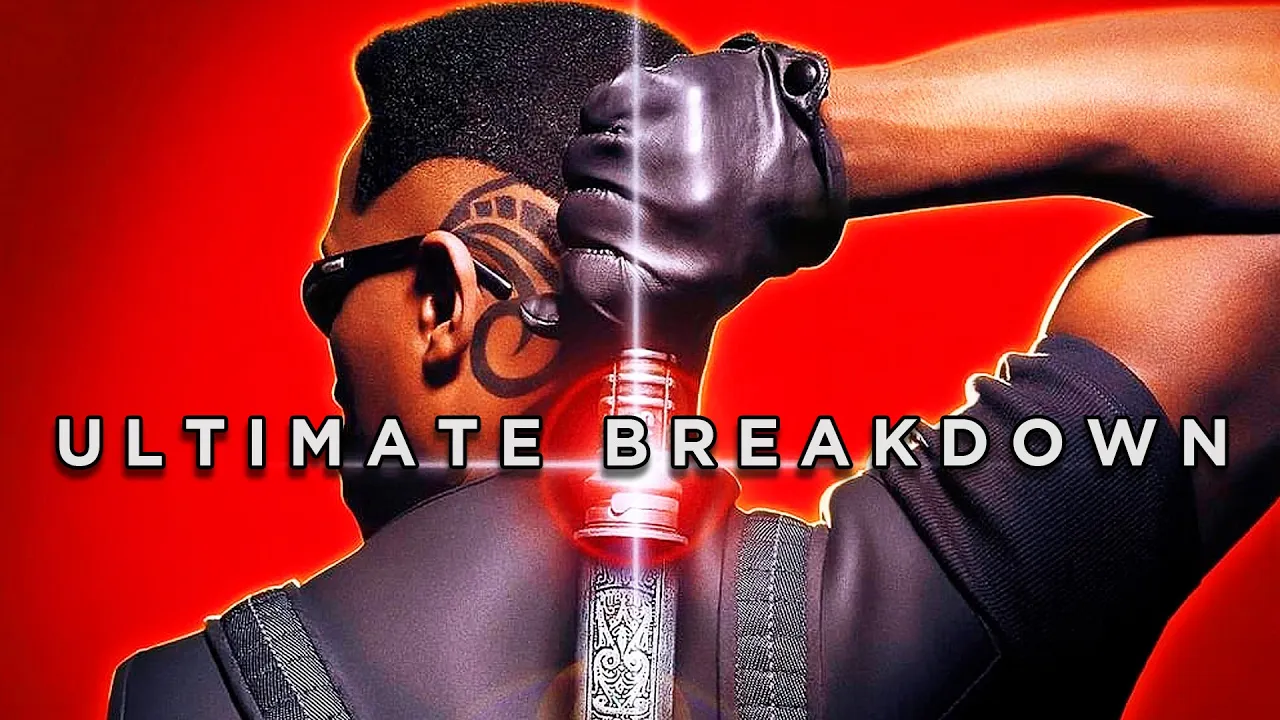
Adapted with AI from Heavy Spoilers' video of 27 November 2024 and checked against the video before publication. Editorial standards · Corrections
More from @heavyspoilers
All →

Make videos? Your next one could be an article here.
We turn your videos into articles under your name, linked back to the original. You keep 60% of what they earn, non-exclusive, and you can leave whenever you like.
Become a SubPlotter →