Day of the Dead: why Romero's gutted sequel still works
From a gutted $7 million script to Captain Rhodes, Dr. Frankenstein and Bub, the hidden details and symbolism in George A. Romero's 1985 sequel

George A. Romero's Day of the Dead (1985), starring Lori Cardille, Terry Alexander and Joseph Pilato, arrived seven years after Dawn of the Dead. It's widely considered the worst of Romero's Dead films, but I still think it's quite good. It had a tall order following two of the greatest horror movies of all time, and though it was slammed at the time, I think people have grown to appreciate it.
The zombies now outnumber the humans, and what remains of humanity scrambles to survive in an underground bunker. To me, the film brings the social commentary of the first two full circle and leaves us with some thought-provoking ideas.
How a Studio Deal Shrank Day of the Dead's $7 Million Script
When Romero sold Dawn to the United Film Distribution Company, he was locked into a three-picture deal. He liked the idea of revisiting zombies every decade to reflect on society, so he made Knightriders in 1981 and Creepshow with Stephen King in 1982. Knightriders flopped despite its high budget, and Creepshow was owned by Warner Brothers, who took the majority of the profits. That left Romero's company with virtually nothing, and the studio wanted no more passion projects.
He couldn't reuse Dawn's characters because of the rights, but the 1980s offered plenty: the Reagan era, the AIDS epidemic, the Cold War and the war on drugs. Romero saw trust in government getting worse, so he focused on a small group in conflict with the military. The Now Playing podcast described the original plan as Gone with the Wind with zombies, costing $7 million with thousands of extras. The studio wanted an R rating, Romero wanted it unrated, and he took less money. The script, reportedly around 200 pages, came in at 88, which is why most of the film is set in a cave. Romero said Day was his favorite of the series. I'm not sure I agree.
Sarah's Nightmare, Dr. Tongue and Tom Savini's Effects
The opening shows Sarah in a bare white room, like the walls of an insane asylum, representing the fear and isolation the survivors feel. She fixates on a calendar picture of people farming pumpkins, most likely remembering life before, and zombie hands burst from the wall, symbolizing that this life is no longer possible. The original script sets the story five years after Dawn.
She wakes in a helicopter with the unraveling Miguel, who grips a religious necklace, plus pilots John and McDermott, who I'd call the best characters in the movie. The helicopter calls back to Fran and Peter flying away at the end of Dawn. I also think the score is some of the best music in all the films; it was sampled on Gorillaz' first album, the first CD I ever bought. The city scenes were shot in Florida, which explains the alligators. A newspaper with headlines like "Whereabouts of President Unknown" shows that money and everything we valued now means nothing, a parallel to the consumerism of Dawn.
Dr. Tongue began as a head mold, and Savini accidentally ripped the jaw off while drilling into the face, which led to the tongue gag and mechanized eyes. After Dawn, Savini worked on Friday the 13th and 1984's The Final Chapter, then set up shop in his garage with friends, producing prosthetics for months. Many consider this his best work. The alligator was real, and the two zombies following it were the animal wranglers. Extras were paid with a hat, a newspaper signed by Romero and a $1 bill.
Miguel, the Wampum Mine and the Zombie Pen
Miguel looks off his rocker, but he's the most sane person there: he says it's insane that everyone acts normal, and he's right. He alone accepts there's no way back. His actor was Romero's best friend in Pittsburgh. Major Cooper has died, leaving 12 survivors, and I wondered if that plays into the religious themes of the 12 disciples. The chainlink fence suggests the base is a prison, not a safe haven.
The bunker was shot in the Wampum mine in Pennsylvania, once a bomb shelter and storage site for old Hollywood negatives, boats and government supplies. It had a mile-long underground lake, the crew never found its end, and Romero joked the Morlocks could live deeper in. People got sick after three months there, and a doctor nicknamed Dr. Feelgood gave them B12 shots because they rarely saw sunlight.
In the pen, sloppy record keeping shows order slipping. Romero presents the zombies as sad and helpless and the living as violent and unprepared, much like the tenement scene in Dawn. When Miguel loses his grip on a zombie, Sarah takes control. The soldiers then torture the zombies, and one female zombie sounds desperate rather than scared, looking to another for comfort. Later Miguel slaps Sarah twice before she sedates him; Lori Cardille told the actor to slap her for real.
Captain Rhodes and the Dawn of the Dead Theory
Fisher is played by John Amplas from Romero's Martin, and Rhodes by Joseph Pilato, who played a police officer in Dawn. Many believe Rhodes is that same man, but the Dawn credits give his character a different name; Romero simply rehired a good actor. Rhodes wears the same type of ring Roger wore in Dawn, a Police Academy ring per IMDb trivia, though it's most likely the same prop.
Rhodes is the only one clean shaven, clinging to order because it keeps him in power. Sarah is the only one who interacts with every faction, which is why she'll be one of the only characters to make it out alive.
Dr. Frankenstein, Bub and the Brain Theory
Dr. Logan, nicknamed Frankenstein, is introduced among bloody experiments, suggesting he's the real monster. Bub grabs at Sarah but then stares at her almost apologetically. The Now Playing podcast suggested he might send up the 1980s fascination with Gizmo and E.T. Logan explains the decay leaves only primal instinct, and I read that as Romero implying our violence comes from that instinct, calling back to Dawn's line, "When there's no more room in hell, the dead will walk the earth."
Sarah argues a 15-hour surgery isn't a practical solution. Logan can't let go of humanity, and in abandoning his own he can't solve the real problem. Then Sarah spots Major Cooper's jacket: the brain experiment is Cooper. The spilling guts were real pig intestines.
The Cafeteria Standoff and Joseph Pilato's Performance
McDermott nods to Dawn by noting the shopping malls are closed, and effects artist Greg Nicotero cameos. Rhodes orders Steel to shoot Sarah. John steps in front of her, and McDermott goes for his gun, showing both will risk themselves despite claiming otherwise. I wish we'd seen Cooper's rule, so Rhodes taking over felt like out of the frying pan into the fire. Logan says the zombies outnumber them 400,000 to one, and Sarah's mention of Washington shelters foreshadows Land of the Dead.
Critics called Pilato's screaming over the top, but Romero wanted Rhodes fanatic and loved it. Pilato said, "When you're dealing with living dead people, you got to get a little intense," which I think is a good point. Rhodes is still threatening court-martials with no government left. John tells Sarah, "People got different ideas concerning what they want out of life," spelling out what this trilogy has said all along: no one working together is the reason they'll never defeat the zombies.
John's 14-Mile Tombstone Speech in Day of the Dead
McDermott rescues Sarah from the fighting soldiers and takes her to the trailer he shares with John, complete with a God Bless Our Home sign and a picture of the beach where John wants to retire. Living this far out is more dangerous, John says, but it keeps him away from the trouble. In the end, that's the fate they choose: a dangerous paradise away from the government overreach found in places like this. John is the first man here to ask what Sarah thinks, and she lays into them both for eating the base's food and never lifting a finger.
John laughs it off. He points to the government records and movie negatives once stored in the cave and calls the bunker "a great big 14-mile tombstone." To me, his line about being punished by the creator is an excellent parallel to Peter's line in Dawn of the Dead about there being no more room in hell. Still, John and McDermott are in denial. They play house in their trailer, and John talking about restarting humanity shows he hasn't lost hope.
Dr. Frankenstein's Trauma and How He Trains Bub
Frankenstein tells Sarah the zombies can be tricked into being good little girls and boys, the same way we were tricked "on promise of some reward to come." He talks to them like small children, even switching off the light as he leaves, and the zombie looks around scared. It's a sign it's regaining its humanity. We learn he named Bub after his father, who told him he'd never be rich and was wasting his time with science. A later tape shows him punishing a zombie while talking to himself as his mother.
My read is that his quest to save humanity comes from the acceptance he looked for in his parents. If he can reverse the outbreak, he'll finally be rewarded. That's why he treats the zombies like children he can beat into submission, repeating the cycle of trauma his father gave him. He's even become the surgeon his father wanted, with his research more about dissection than study. His line "I let him continue to exist" shows a god complex.
Bub Reads Salem's Lot and Points a Gun at Rhodes
Bub mimics shaving with a razor and flips through a copy of Salem's Lot, proving he remembers his life and can control his urge for flesh. A zombie reading could be silly, but I think it makes things more terrifying, because the person is still trapped inside. Bub lays the groundwork for something The Bone Temple discusses. When Rhodes refuses Bub's salute, Frankenstein hands Bub a gun, and Bub points it at Rhodes and pulls the trigger. That foreshadows their showdown. In the cafeteria standoff, Frankenstein says civility must be rewarded or there's no use for it. I wonder if he's remembering what his parents said and cracking.
Miguel's Arm, Greg Nicotero's Head and Frankenstein's Death
Sarah hacks off Miguel's bitten arm with John's machete, an idea I think inspired some of The Walking Dead. Savini used a fake arm for the first hit, the actor's real arm with a cutout machete for the slicing, then a fake again. The moving hand sells it. Rhodes calls John "Fly Boy," Stephen's nickname in Dawn, and the moment lets John and McDermott finally choose a side.
The severed head of the soldier just shot in the pen is Greg Nicotero's mechanical head, built for a cut scene before the budget shrank, so they cast him and wrote the scene to use it. Frankenstein greets Bub in a southern accent like his father, and says "mother is very proud of you," which feels very Norman Bates. When Rhodes learns Frankenstein has fed dead soldiers to Bub, he empties his clip into the doctor and shoots Fisher too.
Miguel Opens the Gates and Rhodes Is Torn Apart
Personally, I think Bub escaping and bringing in the zombies would have worked better than Miguel. Miguel opens the gates, lies on the elevator and leaves his dog tags on the ground, which I think symbolizes accepting the new world. Rickles and Steel attack each other instead of working together, which seals their fate. Bub finds Frankenstein dead and breaks down, and I found that moment very sad. He doesn't eat the doctor, proving the theory, but the first thing he does is pick up a gun. Frankenstein's greatest success is also his biggest failure.
Bub shoots Rhodes, who crawls like a typical zombie while Bub walks upright, and then salutes him as the horde tears him in half. The pig guts in Joseph Pilato's fake stomach had rotted for weeks after someone forgot to plug in the fridge, and he gasped those fumes for hours. His "choke on them" line was supposedly improvised.
Why Day of the Dead Struggled in 1985
Many confused it with Dan O'Bannon's Return of the Living Dead, from the same year. The darker tone also disappointed people expecting Dawn's comedy, and Lori Cardille recalled booing at the New York premiere. Reviewer Rob Gonzalez reads the scientists as artists and soldiers as money men, writing that it "shows Romero at a low personal ebb, forced to cut down his vision to appease the guys with the money." I find that absolutely brilliant.
Is the Island Ending a Dream?
I take it they reached the helicopter and Romero wanted one last scare. But there have been some theories that the whole happy ending is a dream: Sarah's repeated nightmares set that idea up, the new calendar could be Romero's way of symbolizing a dream, and John's final line hoping someone refueled the helicopter, which nobody was seen doing, has led to the read that the group got eaten at the helicopter and the island is Sarah's dying vision. Yet in Romero's book The Living Dead, Sarah and McDermott did reach the island but eventually became zombies. Either way, I think the point stands: the world is damned and no one escapes.
Bub as Zombie Jesus and the End of the Dead Trilogy
Bub is more or less playing the role of zombie Jesus, resurrected on the cross he was chained to, and stripped of consumerism, he could lead the zombies toward a better world. Yet he learned violence and read Salem's Lot, so there's an equal chance he repeats the cycle. Night destroyed the family, Dawn the community, and Day makes zombies the victims. While Day was always my least favorite, I've grown to appreciate it, and I can see why Romero had it as his favorite.
Watch the original
@heavyspoilers · YouTube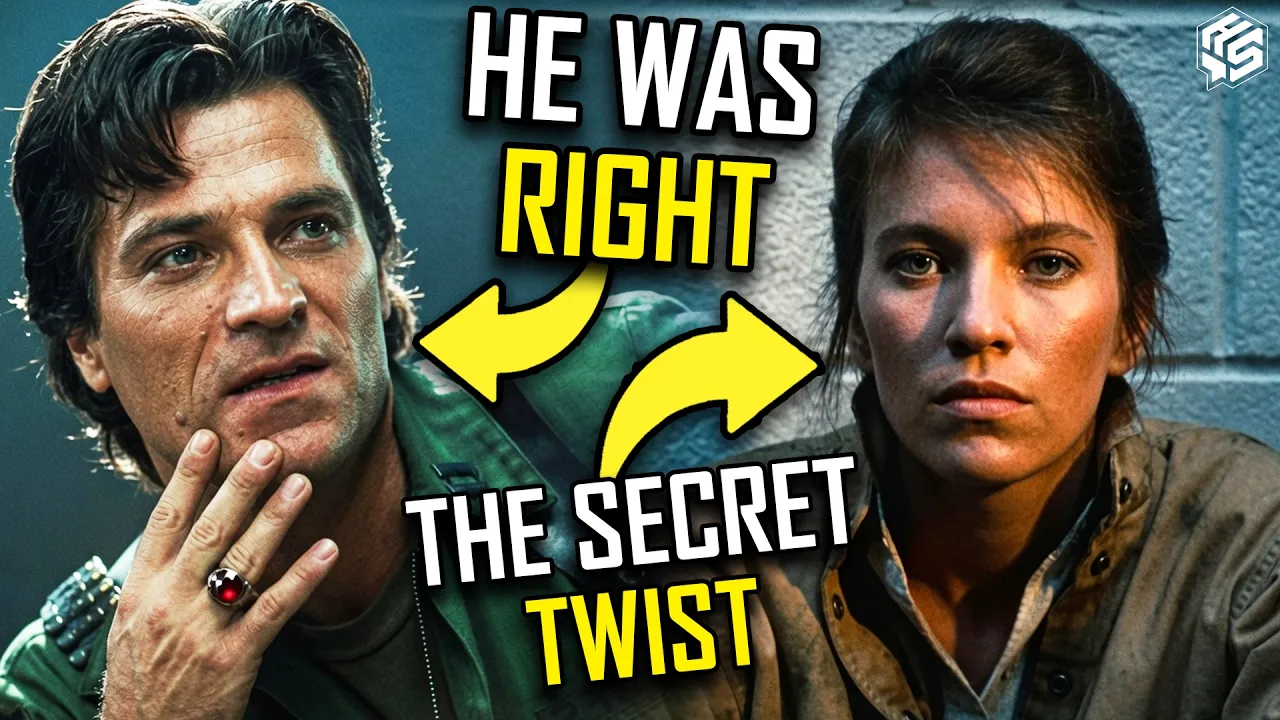
Adapted with AI from Heavy Spoilers' video of 24 June 2026 and checked against the video before publication. Editorial standards · Corrections
More from @heavyspoilers
All →

Make videos? Your next one could be an article here.
We turn your videos into articles under your name, linked back to the original. You keep 60% of what they earn, non-exclusive, and you can leave whenever you like.
Become a SubPlotter →