Supergirl's box office flop forces DC Studios to reconsider James Gunn's leadership
The superhero film underperformed expectations with a $38 million opening, raising questions about the future direction of DC Studios.
Supergirl landed far below projections this weekend, opening to just $38 million domestically, a significant disappointment for DC Studios' second major release under James Gunn's leadership. The film was expected to earn between $45 and $55 million, making its performance a major setback for the newly restructured DC Universe.
The Box Office Reality
The superhero film's opening represents one of DC's weakest starts for a major title, falling behind Marvel's lowest-grossing opener at $46.1 million. Industry analysts now project Supergirl will struggle to reach even $220 million worldwide, far short of the $315 million needed to break even when accounting for production and marketing costs estimated between $170 and $187 million.
Meanwhile, Disney and Pixar's Toy Story 5 dominated the box office, holding the number one spot with $70 million domestically in its second weekend. The film is on track to become the franchise's most successful entry to date, with a projected worldwide total of $585 million after just 10 days in release.
What Went Wrong
Multiple industry insiders point to fundamental problems with Supergirl's development and execution. The film deviated significantly from its source material, the beloved graphic novel "Woman of Tomorrow," alienating both longtime fans and the female audience the filmmakers hoped to attract.
The decision to cast lesser-known actor Matthias Schoenaerts as the villain instead of securing A-list talent failed to generate additional draw. Jason Momoa's inclusion as Lobo appeared to be a last-minute attempt to attract male viewers, suggesting a lack of confidence in the film's core appeal to female audiences. The approach backfired, women did not show up in expected numbers, while the film also disappointed male viewers over 25, its primary demographic.
Director Craig Gillespie's vision, while occasionally stylish, resulted in what critics describe as a "messy" and "underbaked" production. Some industry observers suggest the film's tonal inconsistencies stemmed from test screening adjustments that diluted what could have been a coherent, darker exploration of Kara's trauma and journey.
Questions About James Gunn's Leadership
Supergirl's failure has renewed scrutiny of James Gunn's position as co-CEO of DC Studios. While Warner Brothers has publicly backed both Gunn and co-CEO Peter Safran, unnamed industry insiders are questioning whether Gunn can survive this setback, particularly given the studio's recent pivot away from Zack Snyder's vision.
Gunn's communication strategy has drawn criticism as well. His frequent public statements, including recent comments about casting debates surrounding star Milly Alcock, have been seen as adding fuel to negative discourse rather than controlling the narrative. Industry observers note that his high-profile involvement in multiple projects, from Superman to directing the third major DCU film, reinforces perception that the universe exists primarily as an extension of his personal vision rather than a cohesive brand.
Additionally, reports of creative tension between Gunn and director Craig Gillespie, with Gillespie seemingly shifting blame for controversial decisions onto the executive producer, suggest internal discord that may have hampered the final product.
The Broader DCU Problem
Supergirl's underperformance compounds ongoing challenges for DC Studios. Peacemaker season 2 failed to generate significant viewership despite positive reviews. The strategic choice to launch the new DCU with lesser-known characters like Supergirl, rather than establishing the Trinity of Superman, Batman, and Wonder Woman, has proven problematic.
The studio's slate continues to face uncertainty. Clayface, budgeted at $30-40 million as a smaller-scale project, faces similar audience connection challenges. Lanterns, the upcoming Green Lantern series, has generated reports of behind-the-scenes turbulence. All of this places enormous pressure on Man of Tomorrow, currently in mid-production, to salvage the DCU's momentum.
What's Next
Industry insiders suggest DC Studios must fundamentally reconsider its approach. Rather than continuing with lesser-known characters and B-list properties, the studio should prioritize establishing Batman, Wonder Woman, and Flash alongside Superman. The current strategy of betting on side characters has not resonated with audiences fatigued by superhero films.
Regarding Supergirl's writer Anna Nagara and Wonder Woman's development, industry standard practice would involve bringing in new writers for subsequent drafts while ensuring the original screenwriter receives credit. The question remains whether Wonder Woman's development will be affected by Supergirl's failure.
For Gunn specifically, the coming weeks and months will test whether his vision can be salvaged. Man of Tomorrow must perform strongly to shore up confidence in his leadership. Failure to deliver on that front could trigger the regime change some insiders are already predicting, not unlike the transition from Zack Snyder's DC Extended Universe to the current era.
Watch the original
@kristianharloff · YouTube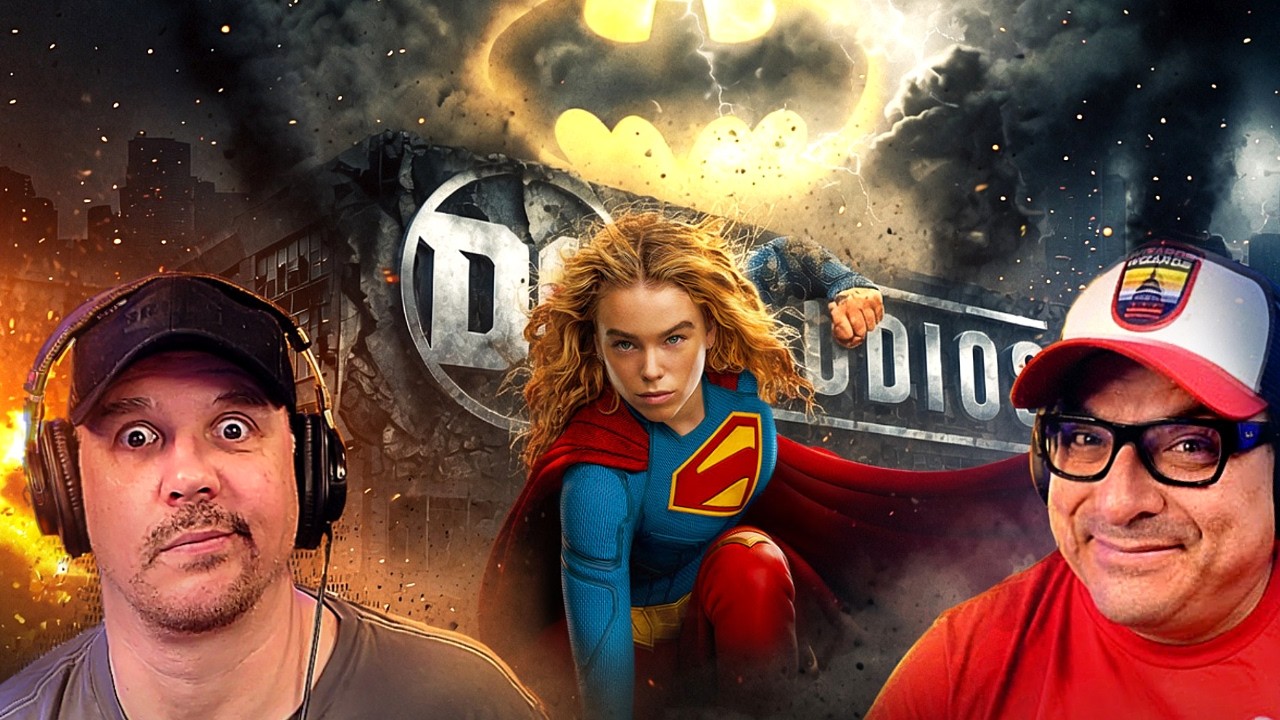
Adapted with AI from Kristian Harloff's video of 29 June 2026 and reviewed by Digital Fox Talent before publication. Editorial standards · Corrections
Also on Movies
3 creators, 52 takes →


More from @kristianharloff
All →


Make videos? Your next one could be an article here.
We turn your videos into articles under your name, linked back to the original. You keep 60% of what they earn, non-exclusive, and you can leave whenever you like.
Become a SubPlotter →