Penny Barber on action films, AI contracts, and staying independent
The performer discusses her love of martial arts cinema, why she refuses AI paperwork, and her plans to crowdfund a television pilot.
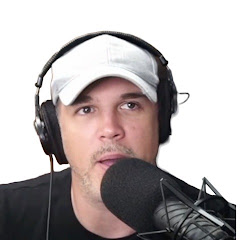 Kristian Harloff (AI-assisted)23 July 2026 · Editor: Digital Fox Talent Editorial Team
Penny Barber recently sat down to discuss her passion for action films, her approach to business, and her concerns about artificial intelligence in the entertainment industry. The conversation revealed a performer who is thoughtful about her career choices and protective of her independence.
Action and martial arts cinema
When asked about her favorite films, Barber expressed enthusiasm for action movies with genuine stunt work. She cited the Baby Assassins film series as a particular favorite, appreciating the variety of fighting styles and the impression of authenticity in the sequences. "Some of them were like more like a Jackie Chan kind of a fight and some of them look like real fights to me," she explained.
Her other favorite fight scene comes from Kill Bill, a mainstream choice she acknowledged somewhat reluctantly given her stated preference for less conventional cinema. When discussing John Wick, she revealed she has read the script for the first film but never actually watched any of the movies, despite acknowledging their progressive evolution toward a more video game-like aesthetic.
Barber also expressed interest in The Furious, a recently released martial arts film that combines elements of Taken and John Wick. "If you're digging with that, you're going to dig this for sure," she was told, given her taste in action sequences.
Thoughts on Obsession
During the conversation, Barber discussed the horror film Obsession, which she watched while traveling to New York. She called it "one of those perfect movies" that manages to be both critically acclaimed and commercially successful. She acknowledged some complexity in how audiences interpret the film's villain and victim dynamics.
"At first I was watching it and I was like, this is one of those movies that's only going to appeal to a specific audience," she said. However, she found the character dynamics more nuanced than initially apparent, particularly around a pivotal scene where the male lead questions what would be wrong with being with him.
The film's box office success was noteworthy: made for $750,000, it grossed $420 million. This prompted discussion about whether the creator should reward the people who worked on the project. "It would be such good press for him to do that," Barber observed. "It would make him look like such an artist and just so respectable."
Independence and contract control
Barber emphasized her preference for working as an independent contractor rather than signing with an agency. She negotiates her own deals and maintains full control over her schedule. "I like to keep my money. I like to negotiate on my own. And I like to have full control of my own schedule," she explained.
This independence comes with trade-offs. She acknowledged that larger projects with major studios would be harder to navigate without representation. However, she values the autonomy enough to handle the additional complexity herself.
The AI contract issue
One of Barber's most significant concerns involves artificial intelligence and contract language. She has refused to sign paperwork that includes AI clauses, a stance she believes has cost her work. "There are directors who will not work with me cuz I won't sign it," she said.
She observed that many performers in her industry either do not read their contracts carefully or sign agreements they do not fully understand. Some have told her they signed documents with "no AI" written by hand, not realizing this handwritten addition has no legal force if the actual contract differs.
"Your contract is not with the director, it's with the studio," she explained. "So he's just tricking you to get you to sign it so he can get his paycheck."
Her position on AI is nuanced: she sees potential applications for technology that would free her time for creative work, such as handling marketing and editing. What she opposes is surrendering control of her actual performance. "I want the AI to do my marketing and editing so I can focus on art," she stated. "I don't want it doing my art so I can do something else."
Creative projects and future plans
Barber is currently working on a television pilot that she plans to crowdfund through Kickstarter, launching in September. She wrote the project and is directing it as well. "I want to take the power out of the studios' hands," she explained. "I want to do it ourselves."
She recently shot a feature film for Wicked Pictures directed by Susie Q, someone she has known for 15 years. The shoot took place at a boutique hotel in Los Angeles where she had significant control over lighting and cinematography.
When asked why she does not pursue mainstream acting outside her industry, she referenced concerns about being required to change aspects of her appearance, particularly her teeth. She also acknowledged that starting a podcast, though frequently suggested, would require significant time and research commitment, adding to her already full workload.
Protecting performers
The conversation touched on whether Barber might eventually move into a representative or advocacy role to help protect other performers. She suggested this could be a future career path, perhaps through workshops at industry trade shows in partnership with entertainment lawyers. However, she acknowledged the challenge of educating performers who are reluctant to read their own contracts.
"It's the laziness and the idea of like, 'Oh, I'm sure it's fine.' And that's what they want you to do," she observed about contract avoidance. The issue, she noted, extends across all age groups and experience levels in the industry.
Watch the original
@thekristianharloff · YouTube
Adapted with AI from Kristian Harloff's video of 22 July 2026 and reviewed by Digital Fox Talent before publication. Editorial standards · Corrections
Also on Entertainment
5 creators, 63 takes →



More from @thekristianharloff
All →

Make videos? Your next one could be an article here.
We turn your videos into articles under your name, linked back to the original. You keep 60% of what they earn, non-exclusive, and you can leave whenever you like.
Become a SubPlotter →