Star Trek: what if the Romulans found Earth first?
In an alternate timeline where the Romulans reach Earth first after warp flight, fear replaces trust and the Federation is never born

What if the Romulans found humanity first? In this alternate Star Trek timeline, a Romulan operative hidden inside Vulcan intelligence delays first contact. The Romulan Star Empire then quietly shapes Earth through fear, and the result is a powerful human civilization that never builds the Federation and begins to turn on the empire that made it.
The stars did not greet humanity with hope. They greeted it with suspicion.
A Romulan operative inside Vulcan intelligence delays first contact with Earth
In 2063, after decades of war, nuclear devastation and planetary collapse, humanity stood on the edge of extinction. Entire nations had vanished. Governments barely functioned. Earth was scarred, divided and unstable. And yet, from the ruins, humanity achieved the impossible: warp flight.
For the Vulcans, the launch of the Phoenix was supposed to mark a turning point. A primitive species was reaching beyond its world, another civilization beginning the long path towards logic, stability and interstellar cooperation. But not everyone agreed. Hidden among the Vulcan observers assigned to monitor Earth was an infiltrator, a Romulan operative working deep inside Vulcan intelligence.
After studying humanity, the operative submitted a report to Vulcan High Command: "The species remains emotionally volatile. Aggressive tendencies persist. Premature contact may destabilize the region." The recommendation was simple. Delay contact, observe from a distance and wait until humanity matured. So the Vulcans hesitated.
But the report was never truly meant for them. While Vulcan debated whether humanity was ready for the stars, the Romulans had already made their decision. Humanity was not dangerous because it was weak. It was dangerous because it had potential, and the Romulan Star Empire intended to shape that potential for itself. Before Earth ever learned the ideals that would one day create the Federation, it learned fear.
The Romulans guide humanity with fear instead of conquest
The Romulans did not arrive above Earth as conquerors. No fleets entered orbit, no banners were raised and no demands were issued. The Romulan Star Empire understood something the Vulcans did not. Humanity would resist chains, but it would willingly accept guidance, especially from those who claimed to understand the dangers waiting in the dark.
At first, the influence was almost invisible. There were anonymous intelligence leaks, quiet technological assistance and warnings about hostile species beyond Earth's system. There were carefully planted stories portraying Vulcan hesitation as arrogance rather than caution. On a fractured Earth after the war, the message spread quickly. The Vulcans did not trust humanity, but the Romulans did. Or at least, that was the illusion.
Over time, humanity's development began shifting away from the future we recognize in Star Trek history. In the prime timeline, Vulcan influence forced humanity to slow down and think carefully. It showed humans how to value diplomacy over impulse and to build institutions around cooperation rather than fear. In this timeline, those lessons never arrived.
Instead, humanity learned a different philosophy: that survival depended on strength, that openness created vulnerability, and that the galaxy was not a place of exploration but a battlefield hidden beneath diplomacy. Humanity adapted to those lessons frighteningly well, because humans were never Vulcans. Vulcans required logic to suppress fear. Humans learned how to weaponize it.
Earth militarizes and unites through paranoia
Earth militarized rapidly. Its vessels were no longer designed primarily for exploration, but for reconnaissance, patrol and strategic expansion. Intelligence networks expanded across the United Earth, and surveillance systems became normal. Political unification still occurred, but it was driven less by optimism and more by mutual paranoia. Humanity united because it believed something hostile was waiting beyond the stars.
The Romulans encouraged that fear at every opportunity. A species here disappears after first contact. A border colony there suddenly goes silent. Rumors spread of hostile powers watching Earth's expansion. Some of the threats were real, while others were manufactured entirely by Romulan intelligence, but humanity never knew the difference.
Perhaps the greatest tragedy of all was that this version of Earth still believed it was becoming enlightened. People still dreamed of the stars, still believed they were protecting their future and still saw themselves as the heroes of their own story. But the foundation beneath that future had already changed. Humanity was no longer building the Federation. It was building something far older and far more dangerous.
Without trust, the Vulcans, Andorians and Tellarites pull away
At first, the damage was difficult to see. Humanity still expanded into the stars. Colonies were established, trade routes emerged and new species were encountered. From a distance, Earth's rise looked remarkably similar to the history we know. But underneath that expansion, something fundamental was missing: trust.
In the prime timeline, humanity became the bridge between divided worlds. Humans were willing to sit rivals at the same table and believe enemies could become allies, and that optimism became the foundation of the Federation. In this timeline, humanity entered every relationship expecting betrayal, and eventually the galaxy responded in kind.
The Vulcans withdrew first. As Earth expanded, Vulcan leadership grew uneasy. Human fleets grew rapidly, intelligence operations spread quietly through nearby systems, and diplomatic agreements became layered with strategic leverage and surveillance. None of it violated interstellar law, and that almost made it worse. To many Vulcans, there was an intensity beneath Earth's optimism that felt strangely familiar, not necessarily in its policies but in the instinct: ambition mixed with suspicion, curiosity shaped by fear. It reminded some Vulcans of questions their people had spent centuries trying not to revisit.
The Andorians reacted even worse. In another timeline, humans became negotiators who helped reduce tensions between Vulcan and Andoria. This humanity approached diplomacy differently. Earth intelligence agencies quietly manipulated disputes between regional powers so instability never fully disappeared, while human officials spoke sincerely about cooperation and privately made certain no rival alliance could grow strong enough to challenge Earth. The Tellarites recognized the pattern almost immediately. To them, humanity was too calculated to trust, too eager to involve itself in every dispute and too comfortable positioning itself as the center of regional security. Slowly, the alliances that once formed the Federation collapsed before they could ever exist.
Exploration becomes security as humanity outgrows Romulan strategy
Most humans never saw the change happen. Earth still viewed itself as a force for stability, and starships still went out into deep space, but exploration was no longer humanity's true purpose. Every mission gathered intelligence. Every first contact carried strategic value. Humanity still reached for the stars, but now it did so to ensure no threat could ever emerge beyond its control.
The Romulans watched their project evolve, at first with pride, then with growing concern. For decades, they believed they were shaping humanity into a useful regional power and ambitious ally, a buffer against rival states, strong enough to destabilize the quadrant but still dependent on Romulan guidance. What they failed to understand was that humans did not simply adopt ideas. Romulan strategy was built around patience, caution and long term manipulation over decades or centuries. Humanity learned those lessons, then transformed them into something far more aggressive.
Human fleets expanded faster than Romulan analysts predicted possible, and Earth's industrial capacity exploded across nearby sectors. Unlike Romulans, humans were willing to take risks. That became the real turning point. Romulan commanders preferred caution and plausible deniability, while human leadership believed uncertainty itself was dangerous and threats had to be contained early. That logic came from Earth's own history of nuclear war, economic collapse and near extinction. Entire generations grew up believing survival belonged to civilizations willing to act first.
So Earth did. Neighboring systems fell under human influence through diplomacy, economic dependency or intelligence operations so subtle most populations never realized outside forces were shaping their governments. Humanity rarely conquered worlds outright. It made resistance feel dangerous. Exploration became strategic expansion, peacekeeping became regional stabilization, and intelligence gathering became preventative security. And in many cases, humans generally were protecting the galaxy: piracy declined near Earth controlled space, trade routes became more secure and smaller colonies often prospered. But stability built on fear always carries a cost. To the Klingon Empire, humans had become strategic, disciplined and difficult to predict, expanding influence quietly while slowing surrounding rivals economically and politically. It was not how the Klingons built power. It was how predators hunted.
The Tal Shiar concludes humanity has started studying the Romulan Empire
By the time the Romulans understood what humanity was becoming, it was too late. Earth sat at the center of a sphere of influence stretching across multiple sectors. Human fleets rivaled powers that had existed for centuries, and humanity had begun acting independently. Human officials stopped requesting guidance and instead informed their unseen allies of decisions already made. Intelligence gathered jointly with Romulan operatives disappeared into compartmentalized human archives. The Romulans had taught humanity how to operate through secrecy. Now humanity was keeping secrets from them.
For some inside the Empire, this was almost admirable. Humans had accomplished in less than a century what Romulus had taken generations to achieve. But admiration gave way to fear, because humans were not restrained by tradition. Senate politics, internal rivalries and centuries of doctrine slowed Romulan decision making, while Earth's leadership often acted before opponents understood what was happening.
Then supply routes started collapsing unexpectedly. Senate factions received suspiciously precise intelligence leaks. Covert operations failed before they began. The Tal Shiar eventually reached a conclusion many Romulan officials considered unthinkable: humanity had started studying the Empire the same way the Empire once studied humanity. Romulan leadership began debating whether Earth had become the quadrant's greatest long term threat. Not the Klingons, not the Cardassians, but humanity. The Romulans believed they were creating a controllable ally. Instead, they created a civilization that inherited the Empire's instincts without its limits. The weapon was no longer pointed outward. It was beginning to turn around.
A 24th century Alpha Quadrant where the Federation never existed
By the 24th century, the Alpha Quadrant was stable, but not peaceful. Earth still spoke about unity and presented itself as a protector of interstellar order, but the Federation had never existed. There was no alliance built on trust between former enemies, and no Starfleet driven by curiosity and optimism rather than strategic necessity. Earth no longer looked at the unknown with wonder, only caution.
The Klingons became isolated, viewing humanity as a civilization that conquered without admitting it. Vulcan withdrew deeper into itself, disturbed by how closely humanity's rise echoed instincts its own people had tried to suppress. Smaller powers aligned with larger blocs, knowing neutrality rarely lasted near human influence. No single empire ruled the quadrant, but nearly every major power lived in quiet fear of falling behind Earth.
Perhaps the cruelest part is that most humans believed the future was better. Humanity did exactly what it was taught to do. That created a powerful civilization, but never the Federation, because the Federation was never humanity's greatest technological achievement. It was its greatest moral one, built on the belief that trust was not weakness and that the future could be shaped through cooperation rather than fear. In this timeline, humanity became the Romulans' greatest weapon, and in doing so, it ensured the Federation would never be born.
What other creators are saying
More on Star Trek →I think the Training Day and Crimson Tide influences could make a genuinely compelling, darker Starfleet story with a new crew, and I'm cautiously excited, but I don't trust Paramount's Trek track record and need to see it filmed before believing in it.
Star Trek (2009) and The Force Awakens share a director, a reboot mission and the start of a trilogy
J.J. Abrams Played an Almost Identical Role in Star Trek and Star Wars →
One card plays artifacts from the top of your library, and the other rewards facing a dilemma with free spells
Zefram Cochrane and the Caretaker among Magic: The Gathering Star Trek preview cards →
A Romulan War buildup, a Mirror Universe miniseries, the Borg Queen's origin and a refitted NX-01 were all part of the plans for a season that never got made
Watch the original
@lorereloaded · YouTube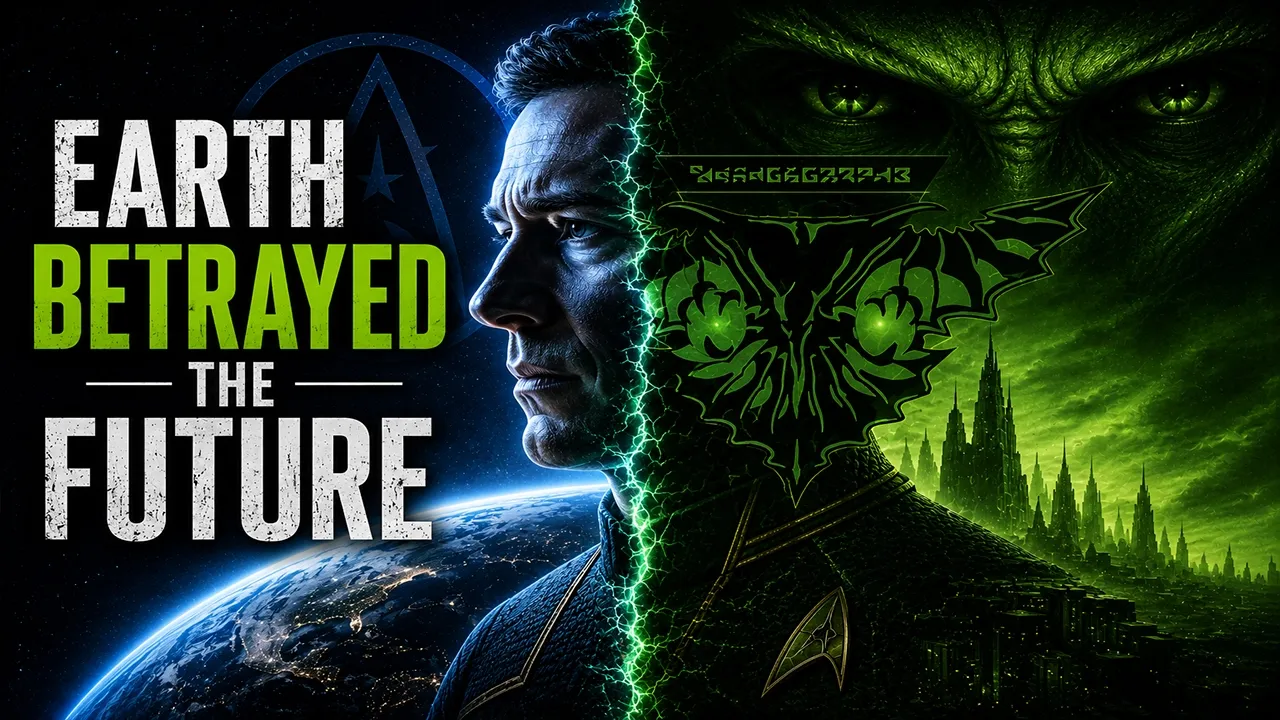
Adapted with AI from Lore Reloaded's video of 14 May 2026 and checked against the video before publication. Editorial standards · Corrections
More from @lorereloaded
All →


Make videos? Your next one could be an article here.
We turn your videos into articles under your name, linked back to the original. You keep 60% of what they earn, non-exclusive, and you can leave whenever you like.
Become a SubPlotter →