Star Trek: does the Federation really control the galaxy?
Borders, treaties and maps suggest order, but in Star Trek the people who act first in the gaps between empires decide what happens next

Star Trek tells you the galaxy is controlled by empires: the Federation, the Klingons, the Romulans. Borders are drawn, treaties are signed, and space is mapped as though everything is accounted for. For the most part, that's true, until something goes wrong. The moment a war starts, a ship goes missing, or a single system falls out of line, those borders stop meaning anything. The people who decide what happens next aren't the ones in charge.
Once you start looking at Star Trek that way, the galaxy stops looking structured and starts looking unstable. Power in this universe doesn't sit with the institutions that claim the map. It goes to whoever is present and willing to act first.
The Star Trek map shows consensus, not control
Star Trek presents the galaxy as if it has already been decided. The maps are filled in and the borders are defined. The Federation spans thousands of light years, backed by fleets, starbases and treaties that suggest stability. It feels organized, almost complete, as if every major power knows where it stands. "But that's not control. That's consensus."
The Federation doesn't patrol every system it claims. It doesn't respond instantly to every crisis, and in many regions its presence is symbolic more than physical. The same is true for every major power. The Klingons don't dominate every world within their borders. The Romulans don't see everything behind theirs. They claim space they cannot constantly enforce.
Most of the time, that works. As long as nothing disrupts the balance, the illusion holds. Trade flows, diplomacy functions, and starships move through space as if those borders mean something. But the moment something breaks, the illusion is exposed. A response is delayed, a ship doesn't arrive, or a system is left alone, and suddenly there is no authority, only absence.
In that absence, control doesn't return to the Federation or any other empire. It shifts to whoever is already there. Not the ones who claim the territory, but the ones who can act within it.
The Badlands and the Maquis show where Federation control breaks
If control is an illusion, it doesn't break at the center of power. It breaks at the edges: the Neutral Zone, the Badlands, and border systems no one fully commits to defending. These are regions that are claimed but not consistently enforced.
Star Trek shows this directly. In the Badlands, the Federation and the Cardassians both claim authority, but neither can fully enforce it. That gap is where the Maquis emerge. They aren't a government. They're a force that exists because control doesn't hold at the edges, and they act where no one else can respond fast enough to stop them. That gap between authority and action is where the real galaxy exists.
Out there, laws don't disappear. They stop being enforced. A treaty only matters if someone is there to uphold it, and a border only matters if someone is willing to defend it. When no one is, those structures don't collapse. They fade. A route goes unmonitored. A colony makes its own decision. A situation unfolds without oversight.
In that space, power becomes immediate. It belongs to whoever is present, whoever is willing to act, and whoever moves first. Empires run on structure, on protocol and on scale. The space between them runs on opportunity, and that's where power starts to shift.
The Ferengi, smugglers and the Maquis act before empires can
If the gaps are where power shifts, then the people operating in them aren't background characters. They're the ones deciding what actually happens. The reason they matter isn't simply that they're there. It's that they act before anyone else even knows there's a decision to make.
Star Trek frames power around institutions: Starfleet, the Klingon High Council, the Romulan Senate. But again and again, when outcomes change, it isn't those institutions making the first move. It's the people outside them. The Ferengi don't control territory when you think about it. They control access, trade, resources and information, things empires depend on but don't always manage directly.
Smugglers and independent captains operate even closer to the edge. They go where Starfleet can't, and they take risks that structured powers avoid. Because of that, they're often the first to encounter threats or exploit opportunities. Groups like the Maquis thrive here too. They aren't an empire or a government, but they're strong enough to destabilize entire regions, not by holding territory, but by acting in the space where no one else has control.
That's the pattern. These people don't dominate space or enforce borders, and they don't need to. They move resources, carry information, act without delay and make decisions first. Empires react. These people don't, and that's the difference. "Power in Star Trek isn't held. It's taken by whoever gets there first."
The Founders' infiltration shows how hesitation costs the Federation control
The illusion of control doesn't fail all at once. It breaks in moments: a delay, a missed signal, a situation that escalates faster than protocol can handle. When that happens, the system doesn't collapse. It hesitates, and hesitation is where control is lost.
Star Trek shows this most clearly during infiltration. By the time the Federation realizes the Founders are already inside its system, replacing officials, manipulating decisions and spreading paranoia, the damage is already done. The threat isn't outside the borders. It's already inside them. By the time Starfleet responds, it's responding to something that has already taken shape.
Once that happens, distance finishes the job. There is no fleet arriving, only whoever is already there and what they choose to do next. Empires are built on coordination, on the idea that they can respond fast enough to correct what went wrong. But space is too large, communication takes too long, and events move too fast. So when something breaks, control doesn't shift. It disappears, and whatever happens next is decided long before the Federation ever arrives.
The Dominion War began before it was ever declared
By the time an empire responds, the outcome is already decided, not officially but in reality, because the first action matters more than the final response. Before the Dominion War is ever declared, the Founders have already moved through the Alpha Quadrant. They've infiltrated governments, replaced officials and created instability from within. By the time the Federation understands the threat, the situation has already been shaped. The war doesn't begin when it's declared. It begins when control is taken.
Sometimes it's even smaller than that. A single event, constructed, timed and controlled, forces one of the most powerful empires in the galaxy to act. It doesn't act because it chooses to, but because the reality in front of it leaves no alternative. By the time the decision is made, it has already been enacted. That isn't power at the top. That's power underneath it.
You see it again in isolation. A single ship, cut off from the Federation without oversight or reinforcement, still shapes entire regions of space. It does so not because it holds authority, but because it's there, because it can act, and because no one else can respond in time. These decisions don't come from councils. They come from moments, from people acting before anyone else knows there's a decision to make. Whoever acts in that window sets everything that follows. "Empires don't create outcomes. They formalize them."
Star Trek's most important moments happen where no one is coming
On the surface, the galaxy does look controlled by empires. Starfleet charts the stars, the Federation signs the treaties, and the Klingons and Romulans hold their borders. It feels stable. But that stability only exists as long as nothing challenges it. The moment something does, control doesn't come from who owns the territory. It comes from who is there: who can act, who can decide, and who moves first.
That's why the most important moments in Star Trek don't happen in council chambers. They happen on isolated ships, in distant systems, in places where no one is coming. That's where the future is decided, not by the empires that claim the galaxy, but by the people who move through it. Once you see that, the map of Star Trek doesn't look like control anymore. It looks fragile, held together not by power, but by the people operating just outside of it.
What other creators are saying
More on Starfleet →I think the Training Day and Crimson Tide influences could make a genuinely compelling, darker Starfleet story with a new crew, and I'm cautiously excited, but I don't trust Paramount's Trek track record and need to see it filmed before believing in it.
Star Trek (2009) and The Force Awakens share a director, a reboot mission and the start of a trilogy
J.J. Abrams Played an Almost Identical Role in Star Trek and Star Wars →
One card plays artifacts from the top of your library, and the other rewards facing a dilemma with free spells
Zefram Cochrane and the Caretaker among Magic: The Gathering Star Trek preview cards →
A Romulan War buildup, a Mirror Universe miniseries, the Borg Queen's origin and a refitted NX-01 were all part of the plans for a season that never got made
Watch the original
@lorereloaded · YouTube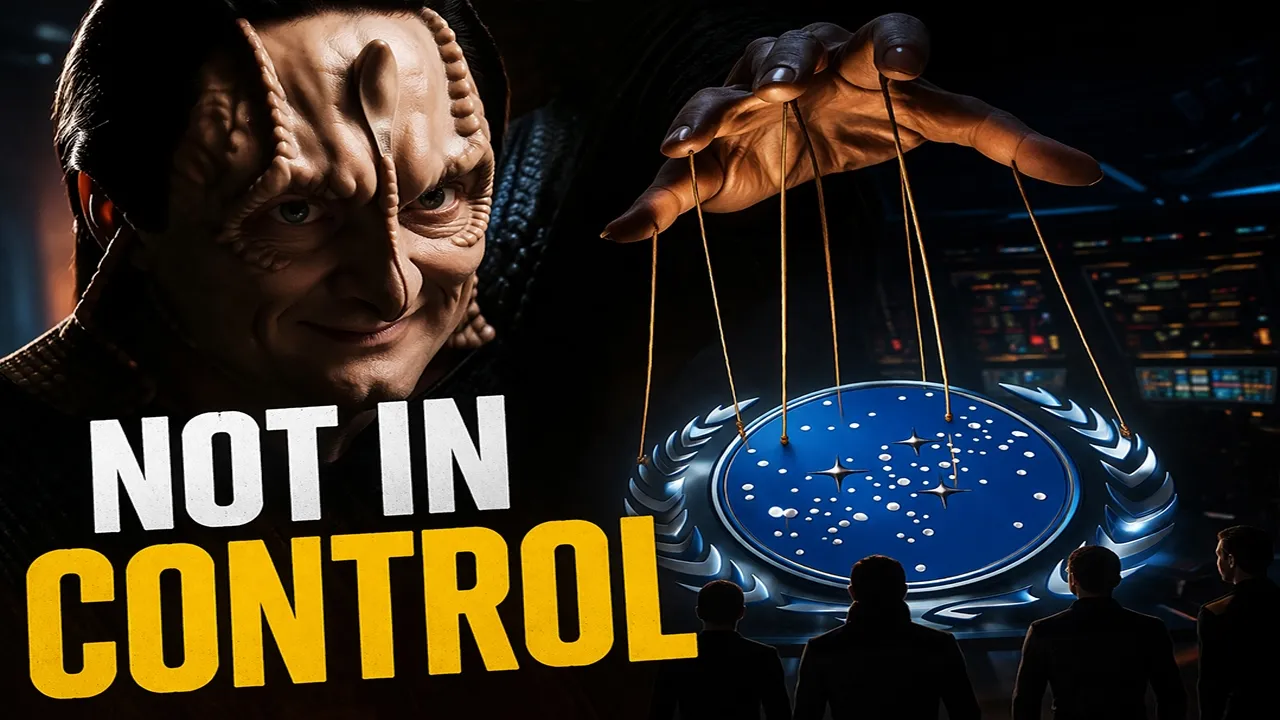
Adapted with AI from Lore Reloaded's video of 9 April 2026 and checked against the video before publication. Editorial standards · Corrections
More from @lorereloaded
All →


Make videos? Your next one could be an article here.
We turn your videos into articles under your name, linked back to the original. You keep 60% of what they earn, non-exclusive, and you can leave whenever you like.
Become a SubPlotter →