Starfleet's best captains break the rules: why it works
Picard, Janeway and Sisko show the contradiction at the heart of Starfleet: a system that teaches obedience but depends on the officers willing to step outside it

The best officers in Starfleet don't follow the rules. They break them. Not because they have to, but because at a certain point the rules stop working. That's the contradiction at the center of Starfleet: it teaches obedience but depends on disobedience. Jean-Luc Picard, Kathryn Janeway and Benjamin Sisko, the captains it celebrates, show that pattern again and again.
Starfleet's rules exist to stop power from becoming impulse
Starfleet was built on a simple idea. If you give people enough principles, enough structure and enough discipline, they will make the right choice when it matters. Not the easy choice, not the brutal choice, the right one. That's what the Federation believes about itself: its officers aren't conquerors or warlords but explorers, diplomats and scientists. The uniform isn't supposed to represent power. It's supposed to represent restraint.
That restraint is enforced through rules. The Prime Directive, chain of command, protocol, first contact procedures, and regulations on interference and escalation all exist for the same reason. They stop power from becoming impulse. They prevent a captain from acting like a king. They make sure that when Starfleet arrives over a weaker world, it doesn't become just another empire with better intentions. The rules create distance between Starfleet and the people it claims to be better than.
On paper, it works. Without those rules, Starfleet becomes something far more dangerous. The moment officers stop answering to principle, all that remains is judgment and personal will. Maybe that works when the right person is in command, but systems aren't built for the best person on their best day. They're built for everyone, including the frightened, the angry and the desperate. Rules exist because Starfleet understands what power does when no one tells it no.
Why Starfleet's rules stop working under existential pressure
But rules have a limit. They depend on time, on clarity, and on an enemy that behaves predictably enough for restraint to mean something. When those conditions disappear, when the situation becomes chaotic or existential, the rules stop feeling like safeguards. They start feeling like constraints.
That's where the contradiction begins. Starfleet teaches its officers to trust the system and to believe the rules will guide them through anything. The history of Starfleet tells a different story. When pressure is high enough, the officers who matter most are the ones who don't follow them. Not once, not rarely, but consistently.
If this were rare, it wouldn't matter. A bad day, a desperate call, an exception to the rule. But it isn't. The best officers in Starfleet bend the rules again and again in moments that define entire crises. And what's more uncomfortable is that they're usually right to do it.
Jean-Luc Picard reinterprets the Prime Directive when following it would cause harm
Picard is held up as the ideal: measured, a diplomat, a man who believes in the system more than almost anyone. And yet, time after time, he steps outside of it. He interferes when he isn't supposed to. He reinterprets the Prime Directive when following it would cause harm. He makes judgment calls that the rules were designed to prevent.
When it comes to a young Borg that one of his crew has given a name, he holds his ground: "Because it's young doesn't mean that it's innocent. It is what it is." He does this not because he rejects the system, but because he understands its limits.
Kathryn Janeway crosses lines because the alternative is failure
Janeway is even more direct. Stranded, isolated and cut off from Starfleet Command, she doesn't have the luxury of clean decisions. She forms alliances Starfleet would never approve of. She makes choices that risk entire species.
She crosses lines because the alternative is failure. Survival forces her to become something Starfleet never intended her to be.
Benjamin Sisko doesn't bend the rules, he breaks them
Then there's Sisko. He doesn't bend the rules. He breaks them, and not impulsively or recklessly but deliberately. He lies. He manipulates. He works with people Starfleet would rather pretend don't exist. In doing so, he secures outcomes the system couldn't have achieved on its own. Describing his decision, Sisko says, "I was going to bring the Romulans into the war." Those are outcomes that save the Federation.
This is the pattern Starfleet doesn't acknowledge. The officers it celebrates, promotes and builds its legacy around aren't the ones who follow the rules perfectly. They're the ones who knew when the rules stopped working. That creates a problem. If the system only works when its best people step outside of it, then the system itself isn't enough.
How hesitation and restraint fail Starfleet against the Dominion and the Borg
The problem isn't that Starfleet officers break the rules. The problem is when they don't. The moment Starfleet faces something it doesn't understand, something that doesn't share its values, the rules it depends on start to fail in very predictable ways. Not all at once, not dramatically, but slowly, in small decisions that add up to something much worse.
First comes hesitation. Starfleet is trained to assess, to communicate, to defuse, and to believe conflict can be avoided if handled correctly. That works when the other side wants the same outcome and there's something to negotiate. But against enemies like the Dominion or the Borg, hesitation isn't caution. It's an opening, and Starfleet gives it to them. Early encounters are misread, threats are underestimated, and warnings are dismissed because they don't fit the model Starfleet expects. The system assumes there's time to gather data and respond carefully. Some enemies don't give you time. They exploit the delay.
Then comes restraint. Starfleet holds back. It avoids escalation even when escalation is already happening, trying to preserve its identity against an enemy interested only in victory. Picard is told: "you will lower your shields and prepare to transport yourself aboard our vessel. If you do not cooperate, we will destroy your ship."
That restraint carries a cost. Ships lost, colonies overrun, entire worlds caught off guard because Starfleet was still trying to understand a threat that had already made its decision. By the time Starfleet adapts, the damage is done. The breaking point isn't a single moment but a realization that comes too late. The rules were built for a universe where understanding was possible, where communication mattered, and where both sides shared at least a baseline of logic. War doesn't work like that, and the officers who survive it are the ones who figure that out first.
Sisko's breaking point, and why Starfleet accepted it
Every great Starfleet officer reaches a moment, not when they're tested or afraid, but when they realize following the rules won't be enough. For Sisko, that moment is quiet. It doesn't happen on a battlefield or during a crisis. It happens in a room with no one watching, where the reality becomes unavoidable: he can't win the war the right way. The Federation is losing. Lives are being spent faster than they can be saved, and the system he was trained to believe in offers no solution that works in time.
So he makes a choice. Not because he's abandoned his morals, but because he's reached the limit of what those morals can accomplish within the system. That's what makes the moment different. It isn't desperation. It's clarity. Sisko understands exactly what he's doing and what it costs, and he does it anyway because the alternative is failure on a scale Starfleet can't survive.
In his log, he records that "the Romulan Empire formally declared war against the Dominion." Then comes the confession: "I lied. I cheated. I bribed men to cover the crimes. I am an accessory to murder." He concludes that "A guilty conscience is a small price to pay for the safety of the Alpha Quadrant," and then orders the computer to erase the entire log.
When it works, something changes, though not publicly and not in any official report. Starfleet doesn't punish him. It doesn't undo what was done. It accepts the result. That's the real breaking point: not when an officer breaks the rules, but when the system allows it.
Starfleet teaches obedience but depends on disobedience
By the end, the pattern is impossible to ignore. The rules are real and the system is real. Starfleet believes in them, teaches them and builds its entire identity around them. But when those rules are pushed to their limit and the situation becomes existential, something else takes over: judgment. Not the system, not the protocol, but the individual.
When everything is on the line, Starfleet relies on the people willing to step outside the rules, the ones who can see when the system no longer applies and are willing to carry the weight of that decision. Those are the officers Starfleet remembers. Not because they followed orders perfectly or upheld every principle without compromise, but because they achieved something the system couldn't guarantee on its own: survival, stability, victory, even if it doesn't look like it.
Starfleet builds a system designed to guide every decision, but its greatest successes come from the moments that system is ignored. It never fully acknowledges that, because doing so would mean admitting the rules aren't enough and that the Federation's greatest strength isn't its structure but the people willing to step beyond it when it matters most. That's the truth Starfleet can't say out loud. Its greatest officers aren't the ones who follow the rules. They're the ones who know exactly when to break them.
What other creators are saying
More on Jean-Luc Picard →From Star Trek: The Next Generation to X-Men and Logan, a look at what he meant to genre film, including his return in Avengers: Doomsday
Patrick Stewart dies at 86: Picard and Professor X remembered →
The actor behind Jean-Luc Picard and Charles Xavier died at his Los Angeles home following Alzheimer's disease and Lewy body dementia, his longtime spokesperson announced
From a heart surgery chosen out of pride to a rescue that left the Enterprise with a skeleton crew, these are the captain's worst calls, counted down
Star Trek (2009) and The Force Awakens share a director, a reboot mission and the start of a trilogy
J.J. Abrams Played an Almost Identical Role in Star Trek and Star Wars →
Watch the original
@lorereloaded · YouTube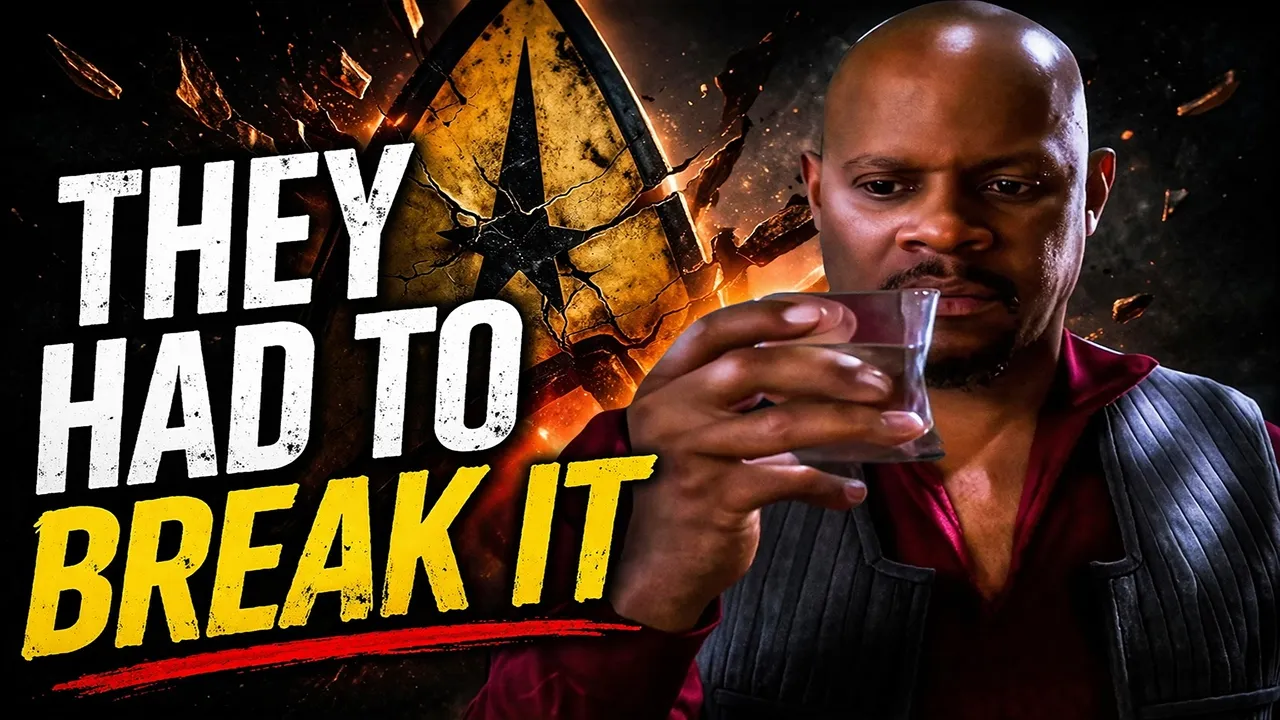
Adapted with AI from Lore Reloaded's video of 3 April 2026 and checked against the video before publication. Editorial standards · Corrections
More from @lorereloaded
All →


Make videos? Your next one could be an article here.
We turn your videos into articles under your name, linked back to the original. You keep 60% of what they earn, non-exclusive, and you can leave whenever you like.
Become a SubPlotter →