Dominion War: was it decided when the USS Odyssey fell?
From the USS Odyssey to Odo's cure, the timeline shows a war the Federation misunderstood from the very beginning

The Dominion War didn't start with an invasion. It started with a retreat, and by the time the Federation understood what it was facing, the outcome was already decided. Most people think the war in Star Trek: Deep Space Nine (1993), starring Avery Brooks, begins when Cardassia joins the Dominion or when Deep Space 9 falls. This wasn't a war that escalated. It was a war the Federation didn't realize it was already in.
If you follow the timeline, you'll see something most people miss. The Dominion didn't fight the Federation. They shaped it.
The USS Odyssey's destruction was the Dominion War's opening move
In 2370, the Federation believed it had just made first contact with a new power in the Gamma Quadrant, the unexplored region on the far side of the Bajoran wormhole. It looked like a routine mission: another unknown species, another step forward in exploration. That assumption was already wrong. When Sisko and his crew encountered the Dominion, they weren't discovering something new. They were stepping into a situation that had been unfolding without them.
The Dominion had been monitoring the wormhole and every ship that passed through it, studying behavior and forming conclusions long before Starfleet understood who it was dealing with. That becomes clear when the USS Odyssey, a modified Galaxy class starship and one of the most powerful vessels Starfleet had, is destroyed. It wasn't just defeated. It was deliberately annihilated. The ship was already retreating and the fight was over, yet a Jem'Hadar attack ship, piloted by soldiers bred only for obedience and combat, rammed it anyway.
That moment is usually remembered as a warning. It wasn't. It was a demonstration, a calculated statement sent back through the wormhole: this is what happens when you enter Dominion space. The Dominion wasn't reacting to the Federation. It had already evaluated it. The Jem'Hadar weren't improvising. They were executing a role they had been engineered for.
The problem is that the Federation didn't treat it that way. It didn't escalate and it didn't mobilize. It treated the loss like an incident, something to study, not something that had changed the strategic reality. But if one side is already testing you, and already willing to destroy a capital ship just to define the rules, you're not standing at the edge of a war. You're already inside it.
The Founders used infiltration and doubt while Starfleet hesitated
In the years that followed, the Federation had everything it needed to understand the Dominion and still failed to act on it. The destruction of the Odyssey wasn't ambiguous. The Jem'Hadar weren't defensive, and they weren't interested in diplomacy. They were part of a system, a military force enforcing control over an entire quadrant. Yet Starfleet did what it had always done. It observed, it reported, and it tried to understand before it acted.
That instinct had worked for decades. Here, it created a delay the Dominion immediately exploited. While the Federation hesitated, the Dominion moved quietly and, more importantly, invisibly. The Founders, the Dominion's leaders who are capable of perfectly imitating other species, began infiltrating Alpha Quadrant governments. They didn't come in large numbers or openly, just enough to introduce doubt.
Doubt was the real weapon. Starfleet didn't need to be defeated in battle if it could be made uncertain of itself. Alliances weakened, leadership became suspect, and every decision carried a new question: is this real, or is it another manipulation? By the time the Federation started taking the threat seriously, it wasn't dealing with an external enemy anymore. It was dealing with internal instability it couldn't fully see or control.
This is the part of the war most people overlook, because nothing major happens. There's no defining battle and no dramatic turning point. The Dominion didn't need a visible victory. It needed time to study, to destabilize, and to reshape the political landscape without firing a shot. It got that time because the Federation still believed it was managing a situation, not responding to an active strategy.
The Klingon invasion of Cardassia did the Dominion's work in 2372
By 2372, the Dominion still hadn't launched a full invasion, but the war had already escalated, not through fleets but through fracture. The Klingon Empire, one of the Federation's strongest military allies, launched a full scale invasion of Cardassia, a regional power already weakened by political instability. On the surface, it looked justified as a response to suspected Dominion infiltration. In reality, it was exactly what the Dominion needed.
The Dominion didn't have to start a war between major powers. It only had to make one seem necessary. The result was immediate. The Khitomer Accords, the foundation of the peace between the Klingons and the Federation, collapsed. Starfleet was now fighting the Klingons instead of preparing for the Dominion. Resources were diverted, focus shattered, and trust, already weakened by infiltration, broke completely.
This is often treated as a separate conflict. It was not. It was the Dominion shaping the battlefield without ever committing its own forces. The Federation's greatest strength, its alliances, had become its greatest vulnerability, and by the time those alliances began to recover, the damage had already been done.
Cardassia joining the Dominion in 2373 was a reveal, not a beginning
By 2373, the moment most people point to arrives. Cardassia, isolated after the Klingon invasion, aligned itself with the Dominion. Now the threat is real. Now the Dominion has territory and a foothold in the Alpha Quadrant. This is where most people say the war begins, but by this point it had already been decided.
Cardassia didn't shift the balance of power. It confirmed it. The Dominion didn't need to invade. It stepped into a position that had already been created, with shipyards, infrastructure and access, everything it needed, handed over through years of instability. When Starfleet finally began treating this like a war, it was reacting to a position the Dominion had already secured. This isn't the beginning. It's the reveal.
Deep Space 9 was lost over years, not in a moment
In late 2373 or the beginning of 2374, the Dominion takes Deep Space 9, the station controlling access to the Bajoran wormhole. For most people, this is where the war becomes real: a major loss and a strategic collapse. But nothing about it was sudden. By the time Dominion forces arrived, the outcome had been set. Cardassia had given them a staging ground, the Federation had been weakened by conflict with the Klingons, and infiltration had disrupted coordination.
Even Starfleet's response reflects that. Mining the wormhole to cut off Dominion reinforcements wasn't a move of strength. It was containment, an admission that Starfleet could no longer control the situation, only slow it. The fall of the station feels like escalation. It is not. It's consequence.
Sisko's Romulan deception and Section 31's virus show the Federation changing
By the time the Federation begins to push back, something has changed, not just in the war but in how it's being fought. Up to this point, Starfleet had been reacting, trying to apply old principles to a new kind of enemy. That stops working, because the Dominion isn't playing by the same rules, and eventually the Federation stops trying to either.
The shift doesn't come from one moment. It builds through loss, pressure and realization. Intelligence operations become more aggressive, decisions become more calculated, and the line between defense and manipulation begins to blur. Sisko's plan to bring the Romulans, another major power, into the war through deception isn't an exception. It's a signal that the Federation is changing.
At the same time, Section 31, a covert organization operating outside official Starfleet oversight, deploys a morphogenic virus against the Founders. It isn't used in battle or openly, but as a preemptive act of biological warfare. This is not adaptation. It is transformation. The Federation is no longer fighting as it was. It's fighting to survive.
The Founders' collapse, not a battle, ended the Dominion War in 2375
By 2375, the war reaches its conclusion. On the surface, it looks like victory. Allied fleets push forward, Cardassia becomes the final battlefield, and the Dominion surrenders. But that's not what ends the war. By this point the Dominion is already collapsing. The Cardassian rebellion fractures its control from within, resources are diverted, command breaks down, and at the center of it all, the Founders are dying.
The morphogenic virus spreads, and for the first time the Dominion isn't negotiating from strength. It's negotiating for survival. When Odo offers the cure, the war ends, not because the Dominion was defeated in battle but because it could no longer continue.
The Dominion War is usually told as a familiar story: a powerful enemy emerges, the Federation struggles, then wins. That version only works if you ignore how it happened. The war starts with a misreading, a failure to recognize intent and a delay that let the Dominion shape everything that followed, and it ends not with victory in battle but with collapse from within. Looking at the full timeline, this isn't a war the Federation fought and won. It's a war it misunderstood from the very beginning, and once you see it that way, it becomes a lot harder to hold on to the version you thought you knew.
What other creators are saying
More on Deep Space Nine →A weapon never seen on screen, an earlier name, and a close call in First Contact
Star Trek (2009) and The Force Awakens share a director, a reboot mission and the start of a trilogy
J.J. Abrams Played an Almost Identical Role in Star Trek and Star Wars →
One card plays artifacts from the top of your library, and the other rewards facing a dilemma with free spells
Zefram Cochrane and the Caretaker among Magic: The Gathering Star Trek preview cards →
A Romulan War buildup, a Mirror Universe miniseries, the Borg Queen's origin and a refitted NX-01 were all part of the plans for a season that never got made
Watch the original
@lorereloaded · YouTube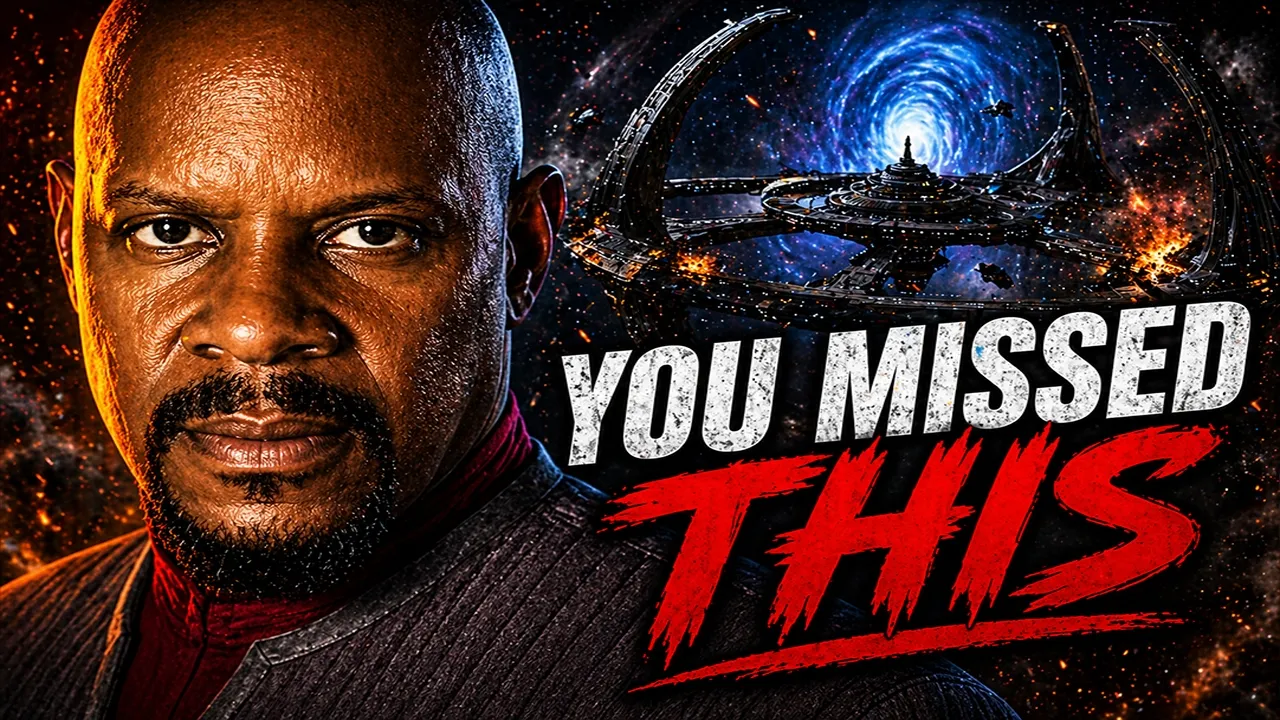
Adapted with AI from Lore Reloaded's video of 27 April 2026 and checked against the video before publication. Editorial standards · Corrections
More from @lorereloaded
All →


Make videos? Your next one could be an article here.
We turn your videos into articles under your name, linked back to the original. You keep 60% of what they earn, non-exclusive, and you can leave whenever you like.
Become a SubPlotter →