Star Trek theory: does Starfleet tell history like a victor?
From captain's logs to the Dominion War, the Federation's records may be true without being the whole truth

Starfleet's records aren't lies, but I don't think they're the whole truth either. Every mission report, historical record and defining moment of the Federation in Star Trek comes from the same place, Starfleet. Maybe that means Starfleet isn't lying, and is just telling the story the way the victors always do. The question isn't whether any of it is false. It's something much harder to answer: what if none of it is false, but it's still not entirely true?
A starship enters orbit, a crisis unfolds, and within hours it's over. The report is clean, the conclusion is certain, and history moves on. That's how Starfleet has always told its story, through logs, reports and the voices of people who were there. But those records aren't raw. They're written, edited and preserved, and every one of them comes from the same place: Starfleet.
Starfleet doesn't call it propaganda, but its logs and archives aren't the same as truth
Starfleet never uses the word propaganda. Propaganda is what enemies do. It's what authoritarian states produce when they need their citizens to believe in wars, leaders and borders that can't survive honest examination. Starfleet has logs, mission reports, historical archives, official inquiries and after action reviews instead: clean records written in precise language and preserved under institutional authority.
That distinction is comforting. A log sounds neutral, a report sounds factual, and an archive sounds permanent. None of those things are the same as truth. They are versions of events, structured, selected and recorded by the people with the authority to decide what mattered. A captain makes a judgment, an officer writes a report, and Starfleet Command files it away. Years later, that record becomes history.
Once something enters the archive, it gains a kind of gravity. It stops feeling like one person's account of a crisis. It becomes the account.
The Federation's power comes from framing events, not conquering worlds
The Federation isn't built like an empire of conquest. It doesn't usually annex worlds at phaser point, and it doesn't need statues of admirals in every conquered capital. Its power is softer than that, cleaner and more persuasive. It wins by becoming the framework through which events are understood.
A border dispute becomes a peacekeeping operation. A military intervention becomes a defense of stability. A strategic retreat becomes a necessary preservation of life. A disastrous failure becomes a lesson in Starfleet resilience. None of that has to be false, and that's what makes it powerful. The best version of history isn't always the one that invents events. Sometimes it's the one that arranges them: what comes first, what gets emphasized, what gets explained and what gets quietly left out.
Starfleet has always understood the value of that arrangement, because every great power needs more than ships. It needs memory. It needs future generations to look back and know not just what happened, but what it meant. In the Federation, that meaning is almost always moral. Starfleet doesn't merely survive crises, it learns from them. It doesn't merely win battles, it proves something through them.
Why the Federation's noble story is so hard to question
To be clear, it isn't a meaningless story. The Federation has done extraordinary good. It has ended wars, saved civilizations, stood against tyrants, and offered entire worlds a future beyond scarcity and fear.
The danger of a noble story is that it can become almost impossible to question. Once the institution is seen as fundamentally good, its failures become exceptions. Its violence becomes reluctant. Its mistakes become tragic necessities. Its enemies become the warnings. And ultimately, its victories become proof that the system was right all along.
So when we ask whether Starfleet records can be trusted, the answer isn't simple. The issue isn't that Starfleet lies. The issue is that Starfleet remembers like a victor, and victors don't have to erase the past. They only have to survive long enough to explain it.
The Dominion War is remembered as what Starfleet represents, not what it did
The Dominion War is often remembered as the moment Starfleet proved what it stood for. It's framed as an existential threat, an enemy that couldn't be reasoned with, a war forced on the Federation and endured through sacrifice, unity and principle. It's the story of how Starfleet held the line, adapted, survived and won. Again, none of that is inaccurate. But it's not the whole picture.
When you step outside the official framing, you start to see a version of the war that feels less certain and less clean. Starfleet doesn't just fight the Dominion. It compromises, quietly, strategically and incrementally. A forged data rod is used to pull a neutral power into the war. A captain makes a decision that trades truth for survival and records it as a necessary act. An entire shadow organization operates outside the law, attempting genocide against an enemy species not as a last resort but as a calculated strategy.
None of these events are hidden, but they aren't emphasized either. They exist without a defining narrative. The darker moments aren't resolved, they're contextualized, reframed as necessary deception, strategic inevitability, the cost of survival. Framed that way, they stop feeling like contradictions and start feeling like proof that Starfleet was willing to do what it had to and still remain itself.
That raises a difficult question. If the most morally ambiguous actions of the war can be absorbed into the narrative and reinterpreted as strength rather than failure, what would it take for anything to truly challenge that story? If every compromise can be justified and every line crossed can be explained, the story sustains itself. Not because it's false, but because nothing is allowed to stand outside it. That's why the Dominion War becomes a case study, not in how Starfleet fought, but in how Starfleet remembers fighting.
Captain's logs from Picard and Janeway are reconstructions shaped by hindsight
A captain's log feels like the closest thing Starfleet has to truth. It sounds immediate, personal and recorded in the moment. We hear the uncertainty, the tension and the weight of command, and it feels honest. But a log isn't a live transmission. It's a reconstruction. Captains record after decisions are made, after outcomes are known, after consequences begin to settle into something understandable. Every log is shaped by hindsight, by interpretation, and by the unspoken question every officer has to answer: how will this be remembered?
Captain Picard's logs are measured, composed, almost surgical in their clarity. Even in chaos they feel controlled, with events arranged into a narrative of discipline, diplomacy and restraint. That doesn't mean they're false. It means they're curated. Captain Janeway's logs carry a different tone: isolation, pressure, impossible choices. Her records often justify decisions that would never pass unchallenged within Federation space. Again, that doesn't make them lies. It makes them perspective under strain.
A log does more than document events. It explains them and assigns meaning. A battle is framed, a failure is contextualized, a compromise is justified. Once that framing enters Starfleet's official record, it stops being one officer's interpretation and becomes institutional memory. Future officers study it, historians reference it, and command relies on it. Over time the edges smooth out and the contradictions narrow into something more coherent and acceptable.
So the question isn't whether captains' logs are honest. Most of them are. The question is what happens when honesty is filtered through responsibility, through reputation, and through the knowledge that what you record today may define how Starfleet and the Federation are judged tomorrow. In that moment, you're not just writing a report. You're writing history.
Deep Space Nine shows how omission, not deception, shapes memory
Not every story needs to be rewritten. Sometimes it just needs to be incomplete. Omission is quieter than deception, cleaner and harder to detect. A report doesn't have to lie about a battle, it only has to focus on the victory. It doesn't have to deny civilian casualties, only frame them as unavoidable. It doesn't have to ignore failure, only move past it quickly: filed, acknowledged, then absorbed into a larger success. The event still exists, but it loses weight.
In Deep Space Nine, we see glimpses of the cost of the war that rarely make it into the broader narrative. Soldiers break under pressure, worlds are caught between powers, and people are reduced to strategic considerations. These moments aren't hidden, but they aren't centered either. They sit at the edges of the story, present but not defining.
That distinction matters, because history is shaped not just by what is recorded but by what is emphasized, revisited and taught. A decisive battle will be studied. A heroic sacrifice will be remembered. A moral compromise will be contextualized. A quiet tragedy that doesn't fit the larger narrative will fade, not because anyone erased it, but because nothing insisted that it remain. That's the difference between suppression and selection.
Starfleet doesn't need to control every detail of the past. It only needs to decide which details carry forward and become examples for the next generation of officers sitting in classrooms. The Federation doesn't just preserve history, it teaches it, and teaching requires clarity, clarity requires focus, and focus inevitably leaves something out. What endured was chosen. Not falsely, not maliciously, but deliberately. Even in a society built on truth, memory is still an act of design.
Starfleet wins battles, but the Federation wins the story
In the long run, power isn't only measured in ships or territory. It's measured in how events are understood by allies, by enemies and by the generations that come after. The Federation understands that better than most. It doesn't conquer through fear or rule through force alone. It persuades. It defines the language of conflict before the first shot is fired, so a war becomes a defense of stability, a protection of shared values, a stand against chaos.
Once that framing is accepted, everything that follows makes sense within it. Alliances form more easily, neutral powers lean one way, and even enemies have to respond to Starfleet's narrative as well as its fleets. If the Federation represents order, opposition looks like disorder. If it represents unity, resistance looks like division. If it represents progress, its enemies look like obstacles to the future. None of that requires fabrication, only consistency.
Inside the Federation, that narrative becomes validation, because without that meaning the cost becomes harder to accept. Over time it becomes a framework that shapes the story in real time, through expectation and identity, and through the understanding that whatever happens next will need to fit the version of the Federation history has already decided is true. At that point, the story belongs to the system that made victory possible in the first place.
It isn't propaganda in the way you think; it's how every society remembers itself
The obvious reaction to all of this is to call it propaganda and say it's all a lie. That's not what this is, not in the way you think. The uncomfortable truth is that this is how every society remembers itself. The difference is that the Federation might be one of the few that's trying to be better while it does it. It defines itself through ideals, and for the most part it lives up to them. That's real. But so are the compromises, the omissions and the way difficult truths are softened into something easier to carry forward.
Those two things aren't in conflict. They're connected. The stronger the ideals, the more important it becomes to protect them, in memory as well as in action. If the Federation saw itself as flawed, inconsistent or morally uncertain, every decision would carry more weight and every compromise would feel more dangerous. So the narrative holds, ensuring people inside the system keep believing in it, serving it and defending it.
If the story ever fully breaks, and the Federation stops seeing itself as the force for good it claims to be, it risks becoming something else entirely. Starfleet knows that. It isn't just documenting the past, it's protecting the future by choosing which version of the truth is strong enough to carry forward. The Federation doesn't need to be perfect. It only needs to believe it is trying to be. As long as that belief survives, so will the story, not because it's false, but because it's necessary.
What other creators are saying
More on Starfleet →I think the Training Day and Crimson Tide influences could make a genuinely compelling, darker Starfleet story with a new crew, and I'm cautiously excited, but I don't trust Paramount's Trek track record and need to see it filmed before believing in it.
Star Trek (2009) and The Force Awakens share a director, a reboot mission and the start of a trilogy
J.J. Abrams Played an Almost Identical Role in Star Trek and Star Wars →
One card plays artifacts from the top of your library, and the other rewards facing a dilemma with free spells
Zefram Cochrane and the Caretaker among Magic: The Gathering Star Trek preview cards →
A Romulan War buildup, a Mirror Universe miniseries, the Borg Queen's origin and a refitted NX-01 were all part of the plans for a season that never got made
Watch the original
@lorereloaded · YouTube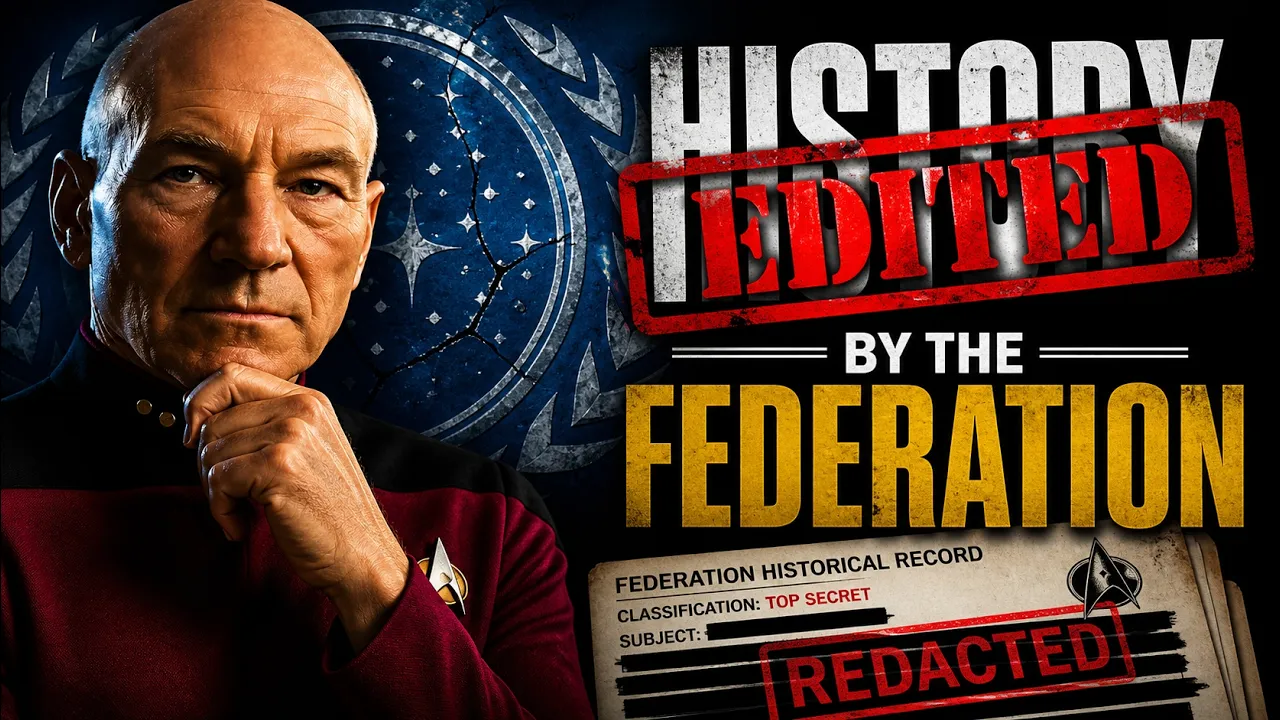
Adapted with AI from Lore Reloaded's video of 1 May 2026 and checked against the video before publication. Editorial standards · Corrections
More from @lorereloaded
All →


Make videos? Your next one could be an article here.
We turn your videos into articles under your name, linked back to the original. You keep 60% of what they earn, non-exclusive, and you can leave whenever you like.
Become a SubPlotter →