Intrepid class explained: why Starfleet built Voyager fast
Speed, independence and just enough firepower shaped the starship class behind USS Voyager, and Voyager's isolation became the ultimate test of that design
 Lore Reloaded (AI-assisted)18 November 2026Editor: Digital Fox Talent Editorial TeamOn YouTube since 2016 · more than 140,000 subscribers

The Intrepid class was Starfleet's answer to a galaxy where the next crisis might start anywhere, far from help, and already be underway before anyone noticed. It wasn't built to fight wars alone or to make a public display of strength. It was built to arrive first, stay on station alone, defend itself when it had to, and hold a situation together until the rest of the fleet could follow.
On paper, the class has a sustainable cruise velocity of warp factor 9.975, 15 decks, a crew complement of 141, and bioneural circuitry. One ship of the class is the USS Voyager of Star Trek: Voyager (1995), starring Kate Mulgrew. Voyager was eventually tested in a way no one had planned. To understand why the design held up, you have to start with the Starfleet that built it.
The Intrepid class was born from a Starfleet shaken by the Borg
By the early 2370s, Starfleet was no longer operating in the same galaxy it had known a decade earlier. Expansion had pushed the Federation farther than ever. New colonies were appearing along distant frontiers. Trade routes stretched across regions that had barely been charted, and exploratory missions were no longer brief trips beyond a secure core. Ships spent longer periods away from home, often where help was days or weeks away. Distance, once an inconvenience, was beginning to shape policy.
A single crisis exposed how fragile that sense of security was. The Borg reached Federation space and left a trail of destruction that forced Starfleet to face something it hadn't faced in generations: the reality that it could be outmatched, outmaneuvered and caught unprepared. That shock lingered long after the battle ended. Ship design, deployment patterns and command priorities all began to shift in response.
The frontier was also getting harder to define. Tensions simmered along contested borders, such as the one with the Cardassians. Unknown powers were testing the edges of explored space, and reports from deep range missions hinted at threats that didn't behave like traditional enemies. There was no single opponent and no clear war to prepare for, only a growing sense that the next major crisis might not announce itself until it was already underway.
Starfleet's answer was not a single ship but a new kind of thinking. Instead of building vessels meant to stay close to established territory, or vessels meant only to explore, planners began prioritizing flexibility. Missions were expected to last longer, ships to travel further, and crews to operate with fewer guarantees of support. The scale of exploration had changed, and the margin for error had narrowed with it.
A smaller ship that arrived quietly, built for unpredictable work
The Intrepid class emerged from that environment. It was smaller than the massive cruisers that once symbolized Starfleet's presence, but it carried a different kind of confidence. Its size reflected efficiency rather than limitation, and its mission profile suggested movement rather than performance. Everything about its introduction hinted at a fleet adjusting to new realities without fully abandoning the ideals that had guided it for generations.
Early assignments placed these ships at the edge of known space for scientific surveys, reconnaissance and long range patrols. One day a vessel might be charting a nebula, the next negotiating with a newly encountered civilization, and after that answering a distress call from a colony that had no one else to rely on. The distance from reinforcement was often measured in weeks. Exploration had always carried that risk. What had changed was the expectation that a single ship might have to handle whatever it found without immediate backup.
The class was introduced quietly, without the political weight attached to larger, more imposing vessels. It wasn't a dramatic declaration or a public display of strength. It slipped into service as part of a broader adjustment already underway. Its importance didn't come from a single battle or mission but from the work it was expected to do from the start: operate far from the center, move quickly between assignments, and stay effective when conditions changed without warning. It arrived neither as a symbol of war nor as a relic of peace, but as part of a transition.
Why the belief that danger would come to the Federation stopped working
For most of its history, Starfleet operated on one assumption: if danger came, it would come to the Federation. That belief shaped patrol patterns, deployment strategy and how ships were positioned. Defensive lines formed along contested borders, and heavier vessels stayed within reach of major worlds. Trouble was expected to be visible, whether a border crossed, a distress call sent or a confrontation unfolding in real time, and reinforcements would move to meet it. For generations, that model worked.
Then the nature of the threat changed. A conflict could begin and peak before Starfleet's response could organize. Soon after, deep range assignments started returning with reports of a powerful force controlling entire regions of space far beyond Federation territory. These weren't raiders or isolated aggressors. Other civilizations had already been absorbed, and their fleets already destroyed. The expansion was methodical, deliberate and sustained. Starfleet would come to know this power as the Dominion. In regions that distant, there would be no border to reinforce and no early warning line to hold. The ship already present would be the only response for a long time.
The Federation itself was also becoming harder to protect as one unified space. Colonies spread into distant sectors, and scientific teams operated weeks from the nearest support. A crisis could start at a remote outpost, along a shipping corridor, or in territory that had never needed defending. "The frontier wasn't a line anymore. It was everywhere." Exploration vessels were often the first to detect instability, the first to investigate and the first to respond. If they failed, there might not be a second chance.
Starfleet adjusted. Instead of concentrating strength along defensive borders, planners began valuing ships that could reach trouble quickly, assess it and stabilize it long enough for a larger response to follow. Coverage started to matter more than concentration. This shift formed the foundation of what became known as anticipation doctrine, built on a simple recognition: the next major threat might not come from a direction anyone was watching, and it might be discovered by a single ship on routine assignment. The Intrepid class fit directly into that thinking, assigned to wide patrol zones and deep range missions where uncertainty was part of the job.
Speed became a form of protection for the Intrepid class
Speed had always mattered in exploration, but for most of Starfleet's history its advantage was measured in scientific return and operational convenience. By the early 2370s, it carried a different weight. A distress signal could be sent while reinforcement was still days or weeks away, and the first ship to arrive often shaped what happened next. Arriving early meant time to assess the situation, assist local defenses, evacuate civilians or contain the damage. Even a short delay could let a threat entrench itself, spread to nearby systems, or disappear before anyone understood what had happened.
So Starfleet began building ships meant to "move first, see first, act first." Not to fight wars alone, but to keep small problems from becoming larger ones before the rest of the fleet arrived. Under those conditions, a slower response was often the same as no response at all. A ship was no longer just a platform for exploration. It was a rapid responder by default.
The Intrepid class was designed around movement. It was built to cover wide patrol areas and shift between missions without long refit periods or support stops. A vessel charting a distant region might be redirected to help a colony, then sent to investigate an anomaly, then tasked with delivering supplies to an isolated outpost. It didn't have to wait for a fleet to form or a command structure to assemble. Planners came to see speed as protection, not in the sense of armor or weapons, but as the ability to shorten the gap between the start of a problem and the arrival of help. The smaller that gap, the more likely a situation could be contained.
The Intrepid class was built to stay on station alone
Arriving first was only half the battle. Staying there alone was the real test. A fast ship that had to withdraw quickly would buy time, but not stability. If a crisis stretched on for days or weeks, the first responder had to hold position, adapt and keep operating without reinforcement. Independence was no longer just a trait of exploration; it was becoming an operational expectation. A routine survey could turn complicated, and a quiet patrol could suddenly place a ship between a colony and a developing threat, with nothing to draw on but what it carried.
That demanded crews who could handle multiple roles, commanders with the flexibility to make decisions normally made at higher levels, and equipment that served more than one purpose. The expectation wasn't specialization but adaptability. Larger ships could project power and absorb punishment, but they needed more resources, bigger crews and more structured support. The Intrepid class went the other way. Its smaller crew allowed tighter coordination and reduced logistical strain. Internal systems supported long duration operations without constant maintenance cycles, and departments were structured so the ship could move between scientific work, diplomatic contact, emergency response and defensive action without being reconfigured.
This kind of ship didn't replace larger vessels. It complemented them. Where a fleet could bring overwhelming force, an independent ship could bring presence. In regions with no permanent Federation presence, that single vessel effectively became the Federation for as long as it stayed on station, representing Starfleet policy, authority and capability. Decisions made in isolation could shape entire regions, and a crew might be the only line between a colony and a growing conflict.
Defense without turning the Intrepid class into a warship
Once a ship was expected to operate alone, another question followed: what happens when things turn hostile? Starfleet never set out to make every new design a combat vessel. Its identity was built on exploration, diplomacy and scientific discovery, and even in conflict its posture rested on presence rather than intimidation. But that balance was getting harder to keep. Some new threats could overwhelm entire defensive positions, while others expanded quietly, absorbing territory until resistance became impossible.
That created a design tension. A dedicated warship meant sacrificing the flexibility and range exploration needs, while a purely scientific vessel risked lives if caught unprepared. The solution was to build ships that could endure conflict without being defined by it. The Intrepid class carried enough defensive strength to protect itself, its crew and any civilians in its care, but it wasn't designed to dominate a battlefield. Its weapons were meant for survival, not conquest, and its shields and tactical systems let it stay in dangerous situations long enough to stabilize them rather than wage sustained campaigns.
War was no longer something separate from exploration. It could begin where a scientific vessel was the only Starfleet presence for light years, and if that ship couldn't defend itself, it couldn't defend anyone else. Surviving contact with hostile forces was becoming a baseline requirement. The Intrepid class answered that need without abandoning Starfleet's identity. Its strength was measured in resilience rather than firepower: ready for peace, but built to survive whatever came next.
USS Voyager's isolation proved the Intrepid class design
A theory can guide a design, but only experience proves whether it works. For the Intrepid class, that proof came through circumstance rather than a planned mission. A ship built for speed, independence and adaptability was cut off from support, separated from the Federation and placed in a region no reinforcements could reach. Without a nearby starbase, every system had to hold up over time. Repairs were made with limited resources, scientific equipment had to keep working through emergencies, and medical facilities became the primary line of care for a crew with no outside help. The ship held together.
Long range travel had always been part of the USS Voyager's role, but now it was a necessity rather than a choice. One moment required diplomacy, another defensive action, another scientific investigation. Voyager was built to adapt, and that adaptability became the difference between continuing forward and being stranded. Its speed let it avoid threats, reach potential allies, and choose when to engage, when to withdraw and when to focus on survival. Its independence mattered just as much. With no supply chain waiting beyond the next system, every mission meant careful decisions about resources and risk. A vessel built for short assignments would have struggled.
This wasn't how the class was meant to be used. It was built to operate alone for extended periods, but always as part of a larger network, not entirely cut off from it. Yet the design held. The same qualities that made it an effective early responder made it capable of enduring isolation, and what had been built as a forward operating ship became a long term survivor. That wasn't luck. It was the result of design choices made for a different purpose. The Intrepid class was created to reach the next crisis first, and Voyager proved it could do far more than that. What the ship endured wasn't an accident. It was the result of how Starfleet had already begun to think.
What other creators are saying
More on USS Voyager →From a stolen Klingon bird of prey to a converted nuclear missile, these are the ships I think shaped Starfleet history the most
Most important Star Trek ships ranked: which was number one? →
Star Trek (2009) and The Force Awakens share a director, a reboot mission and the start of a trilogy
J.J. Abrams Played an Almost Identical Role in Star Trek and Star Wars →
One card plays artifacts from the top of your library, and the other rewards facing a dilemma with free spells
Zefram Cochrane and the Caretaker among Magic: The Gathering Star Trek preview cards →
A Romulan War buildup, a Mirror Universe miniseries, the Borg Queen's origin and a refitted NX-01 were all part of the plans for a season that never got made
Watch the original
@lorereloaded · YouTube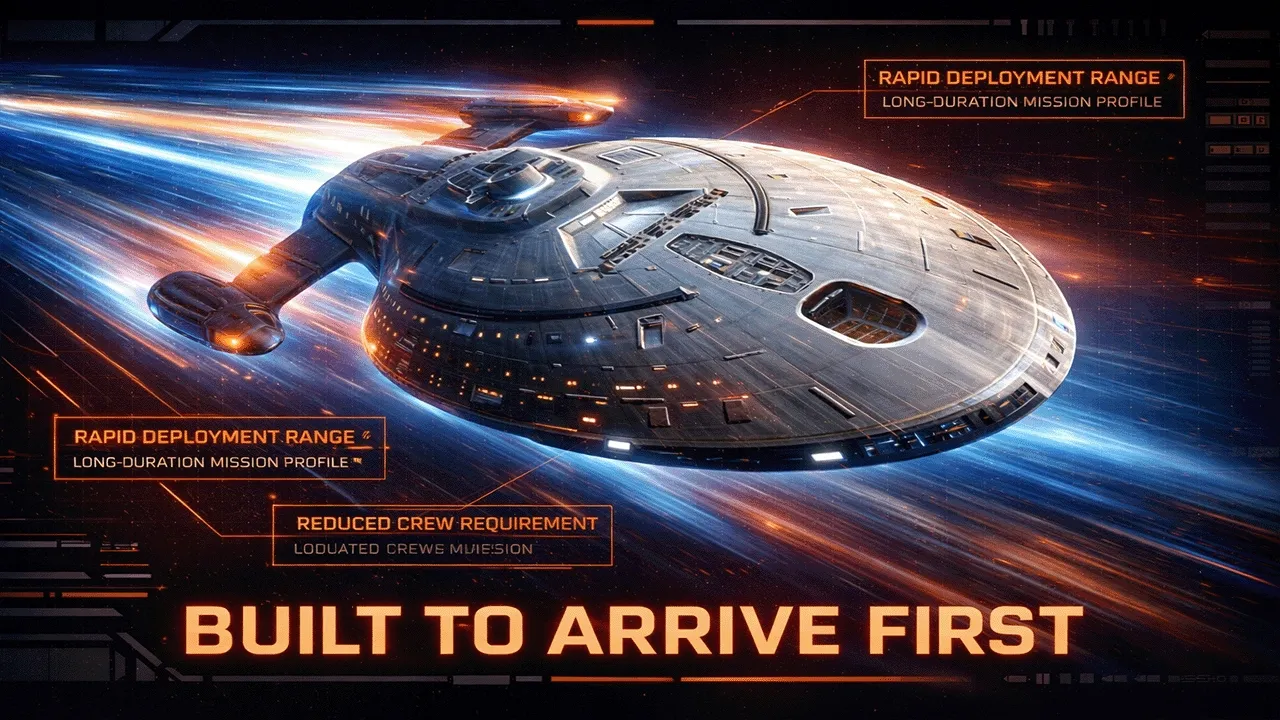
Adapted with AI from Lore Reloaded's video of 15 February 2026 and checked against the video before publication. Editorial standards · Corrections
More from @lorereloaded
All →


Make videos? Your next one could be an article here.
We turn your videos into articles under your name, linked back to the original. You keep 60% of what they earn, non-exclusive, and you can leave whenever you like.
Become a SubPlotter →