Borg vs Dominion: could the Founders beat the Collective?
Expendable clones, replaceable leaders and shapeshifting rulers could strip the Collective of its greatest advantages and turn any war into a race against time
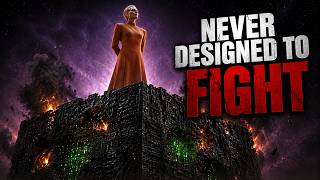
The Borg spent centuries perfecting one method of conquest, and I think the Dominion is one of the few powers in the galaxy that could take that method apart. Star Trek's Collective treats every civilization it meets the same way. It identifies strengths, adapts to defenses, assimilates people and takes everything useful. The Dominion, almost by accident, seems built to quietly undermine almost every strength the Collective relies on.
That doesn't mean I'm arguing the Dominion would inevitably destroy the Borg. Canon doesn't let us say that with any certainty. What I think is that the evidence points to something far more interesting. If the Borg ever tried to assimilate the Dominion, they might find themselves fighting on someone else's terms for the first time.
On paper, the Dominion looks like easy prey for the Borg
The Borg strategy worked so well that whole civilizations vanished without finding a way to stop it. Even the Federation, one of the most advanced powers in the Alpha and Beta Quadrants, survived only through luck, sacrifice and a handful of exceptional individuals. Against the Borg, history seemed to repeat itself, and resistance was close to futile.
At first glance, nothing about the Dominion suggests it should fare better. The Borg have vast numbers, superior technology and the ability to improve with every encounter. The Dominion sends cloned soldiers carrying mass-produced weapons, led by bureaucrats who can simply be replaced if they die. If any major power should be swallowed by the Borg, it's this one.
But the closer you look at how the Dominion is built, the stranger that assumption becomes. Almost every strength the Borg rely on is quietly undermined by the Dominion's own design. Assimilation becomes less valuable. Decapitation strikes achieve almost nothing. Even adaptation, without doubt the Borg's greatest weapon, starts to lose much of its edge. None of this happened because the Founders were preparing for the Borg. They almost certainly didn't know the Collective existed. Yet they built a civilization that looks uniquely suited to fighting exactly this kind of enemy.
What makes the Borg terrifying is adaptation, not cubes or firepower
It's easy to point to the cubes, the drones or the raw firepower. Those aren't what made the Collective one of the greatest threats in history. Plenty of civilizations have powerful fleets. What sets the Borg apart is that they don't just destroy their enemies. They improve because of them. Every battle leaves the Collective stronger, and every civilization becomes a new source of technology, biology, tactics and knowledge. Victory isn't measured in ships destroyed but in what is gained.
That's why conventional military thinking rarely works against them. Most powers assume that inflicting enough losses will eventually exhaust an opponent. Destroying a cube is only a temporary setback while thousands of others remain. Even a new weapon offers a brief advantage before the Collective adapts. Time is always on the Borg's side, because each engagement teaches them something new while weakening the other side. It's an enemy that learns faster than any other in the galaxy.
The Federation learned this firsthand. In one battle, Starfleet believed gathering every available ship into one defensive fleet gave humanity its best chance. Instead, the Borg tore apart 39 starships within hours. Later victories came at a heavy cost and often depended on conditions that couldn't be repeated. Hugh introduced individuality to a drone. Data took advantage of the Borg Queen's overconfidence. Admiral Janeway used technology from the future itself. None of these was a repeatable military doctrine. They were exceptional solutions to exceptional circumstances, and in a conventional war the Federation had no reliable way to stop the Borg from slowly adapting until resistance truly was futile.
The Borg win by removing a civilization's critical nodes
The pattern repeats across almost every civilization the Borg encounter, because most civilizations, for all their differences, are organized around the same assumptions. The first thing the Borg do is identify what holds a society together. Every society has critical points of failure. Governments have capitals, militaries have command centers, and economies depend on infrastructure. Remove enough of those key pieces, or better yet assimilate them, and the rest starts to collapse under its own weight.
That strategy has worked for centuries because most civilizations are built around people and institutions that can't be replaced. The Dominion isn't. The Founders sit at the top, but even they don't rule the way most empires do. They don't command fleets or oversee day to day logistics. They set doctrine, define long term goals, then disappear behind layers of administration. The Vorta handle diplomacy, logistics, intelligence and military coordination. The Jem'Hadar carry out those orders without question. Each layer exists to perform a function, not because any individual inside it is indispensable. That raises a bigger problem for the Borg: if they can't bring down the Dominion by removing its leaders, what exactly do they attack instead?
Why assimilating Weyoun or the Jem'Hadar gains the Borg so little
This matters more than it first appears. Imagine the Borg assimilating a respected Starfleet admiral. They gain tactical knowledge, fleet positions, security procedures and access to one of the Federation's most experienced officers. Assimilating a Romulan senator hands them political intelligence and strategic planning. Every important individual is a chance to harvest decades of experience.
Assimilating Weyoun 8 would certainly provide intelligence, but it wouldn't behead the Dominion's government. Before the Collective has finished processing what it learned, another Weyoun is already giving orders. The same principle applies even more dramatically to the Jem'Hadar. For the Borg, every assimilated drone is a permanent addition to the Collective. For the Dominion, every Jem'Hadar soldier is an expendable asset, bred to fight, trained for absolute obedience and expected to die if necessary. Losing thousands of soldiers isn't a political crisis or a social shock. It's an expected cost of war, and the Dominion can simply produce more.
That creates an unusual asymmetry. Every drone the Borg gain strengthens the Collective, but every Jem'Hadar the Dominion loses can be replaced through industrial production. The Borg were built to be optimal at consuming civilizations whose populations are hard to replace. The Dominion deliberately built an army where replacement is the foundation of its strategy. Perhaps for the first time, the Borg would face an enemy whose command structure doesn't truly collapse when individuals are removed. Assimilation still hurts the Dominion, costing ships, soldiers and information, but it doesn't trigger the cascading failure the Collective normally relies on. The Dominion was never designed to protect its people from loss. It was designed to make their loss irrelevant.
The Founders' Changeling biology could turn assimilation into a research project
There's one part of the Dominion the Borg would struggle with more than anything else: the Founders. Not because they're powerful or command huge fleets, but because they fundamentally break the Borg understanding of biology. Assimilation works because the Borg can take a living being, replace parts of its biology with cybernetic systems and link it to the hive mind. That has worked on humans, Vulcans, Klingons, Romulans, Cardassians, Hirogen and countless other humanoid species. Different physiologies may need different adjustments, but a drone is still an individual being whose nervous system can be wired into the Collective.
A Founder isn't. A Changeling has no fixed skeleton, no permanent organs and no conventional nervous system. Its body exists as a constantly shifting mass of shapeable matter that can become almost anything: a humanoid one moment, then a bird, a liquid, a cloud or mist, even a solid object. Unlike every species the Borg routinely assimilate, there's no stable anatomy for cybernetic implants to bond with.
That doesn't necessarily mean assimilation is impossible. The canon simply doesn't answer the question. Given enough time, perhaps the Borg could engineer a solution. They've adapted to extraordinary biological challenges before, and ruling it out would underestimate one of the Collective's strengths. But time is exactly what the Dominion tries to deny them. If the Borg finally captured a Founder, they wouldn't get a new drone right away. They'd get a research project. Whole cubes might spend months or years trying to understand it, and meanwhile the Vorta keep coordinating campaigns, the Jem'Hadar keep fighting and the shipyards keep producing warships.
The Dominion's obsession with control hides the pieces the Borg need
More importantly, assimilating a Founder might not deliver the strategic breakthrough the Borg expect. The Dominion is deliberately compartmentalized. The Founders shape policy, but they don't personally run every fleet movement, supply depot or deployment. Much of that falls to the Vorta. Capturing a Founder would certainly be valuable, but it wouldn't immediately dismantle the Dominion's command structure the way assimilating the leader of a more centralized civilization might.
Ironically, the Dominion's obsession with control becomes one of its greatest defenses. The Founders trust almost no one completely. Information is distributed on a need to know basis. The Vorta understand their own tasks, not necessarily the full machine, and the Jem'Hadar know far less. Every layer is designed so that if one part fails, the whole keeps working. Against almost every civilization, the Borg grow stronger by stealing the knowledge of those they conquer. Against the Dominion, they might discover that no single individual, not even a Founder, holds enough pieces of the puzzle to hand the Collective the victory it expects.
Borg adaptation turns any war with the Dominion into a race against time
Up to this point, it can look like we've found the perfect answer to the Borg: a civilization whose leadership can't easily be beheaded, whose armies are almost endlessly replaceable and whose rulers may not even be compatible with assimilation. If that were the whole story, the outcome would be simple. It isn't, because the Borg's defining trait was never brute force. It was adaptation. The Federation developed new weapons. Species 8472 proved biologically immune to assimilation. Countless worlds no doubt believed their technology or physiology would finally halt the Borg. Yet the Collective's history is one of patient problem solving. An obstacle isn't abandoned; it's studied until it stops being an obstacle.
There's little reason to think the Dominion would be different. Given enough time, the Borg would certainly start adapting to polaron weapons. They'd learn Dominion fleet doctrine, dissect Jem'Hadar genetics and search relentlessly for a way to assimilate the Changelings, or, if that proved impossible, develop entirely different ways to neutralize them. The Collective doesn't need instant answers, only enough time to find them. So the fight stops being about who is stronger and becomes a race against time.
Unlike the Federation, which often wins through brilliant individuals and one-off miracles, the Dominion was designed for long conflicts. The Founders don't need spectacular victories. They need sustainable ones. Every month the Borg spend researching Changeling biology is another month Jem'Hadar clones fill new fleets. Every destroyed cube delays the Collective's progress, and every failed assimilation burns resources without the exponential gains the Borg usually depend on. If adaptation comes too slowly, the Dominion doesn't need to destroy the Collective overnight. The real question may be whether the Borg can fight the kind of war the Dominion forces on them.
The Dominion wasn't built to defeat the Borg, but it may be the best design against them
So was the Dominion founded to defeat the Borg? Strictly speaking, no. The Founders never anticipated the Collective. Their empire wasn't designed around resisting assimilation, countering adaptive technology or preparing for a cybernetic invasion from the Delta Quadrant. They built it for one purpose above all: to make sure their rule endures no matter what. The Vorta exist so administrators can be replaced without disrupting government. The Jem'Hadar exist so soldiers can be spent without weakening the military. Information is compartmentalized so no single failure threatens the whole. The Dominion wasn't designed to win every battle. It was designed to survive every setback.
Those same principles strike at the Borg's greatest strength. The Collective thrives by finding a civilization's critical node and exploiting it: assimilate the leadership, adapt to the weapons, absorb the technology and repeat until resistance collapses. Against the Dominion, there may be no critical node to hit. Destroy a fleet and another is forming. Assimilate a leader and another takes over immediately. Wipe out thousands of Jem'Hadar and new soldiers emerge from the hatcheries. Even the Founders remain elusive targets whose biology may pose challenges the Borg have never faced. Perhaps for the first time, the Collective would find a civilization whose survival depends not on irreplaceable people, but on systems.
That doesn't guarantee a Dominion victory. The Borg remain one of the most frightening powers in the galaxy because they solve seemingly impossible problems, and given enough time they might eventually overcome every obstacle the Dominion puts in front of them. But enough time is exactly what makes this matchup different. The Dominion is one of the few powers that could deny the Borg the accelerating victories behind nearly every successful assimilation campaign, facing them with an adversary built to absorb damage, replace losses and keep fighting without heroes, genius commanders or miracle technology. Its greatest strength was never a weapon or a species, but the ruthless efficiency of a machine the Founders spent thousands of years building. No, the Dominion wasn't built to beat the Borg. But if you set out to design a civilization that frustrates every instinct the Collective relies on, it's hard to imagine a better design. The enemy the Founders never knew existed may have finally met a civilization that refuses to lose the way everyone else did.
What other creators are saying
More on Borg →A countdown of Star Trek: The Next Generation's most memorable antagonists, from recurring Klingon troublemakers to the collective that changed the franchise forever.
One card plays artifacts from the top of your library, and the other rewards facing a dilemma with free spells
Zefram Cochrane and the Caretaker among Magic: The Gathering Star Trek preview cards →
A Romulan War buildup, a Mirror Universe miniseries, the Borg Queen's origin and a refitted NX-01 were all part of the plans for a season that never got made
Tomorrow's Enterprise plays less like classic Kirk and Spock and more like Next Generation's All Good Things, and the people who made it are calling the future we saw continuity.
Strange New Worlds finale: the original series' lost ending →
Watch the original
@lorereloaded · YouTube
Adapted with AI from Lore Reloaded's video of 25 July 2026 and checked against the video before publication. Editorial standards · Corrections
More from @lorereloaded
All →


Make videos? Your next one could be an article here.
We turn your videos into articles under your name, linked back to the original. You keep 60% of what they earn, non-exclusive, and you can leave whenever you like.
Become a SubPlotter →