Stargate: how Earth never won a war but inherited the galaxy
From Dakara to the Ark of Truth, someone else finished off every great enemy, and Earth collected the Asgard's inheritance by still being alive

In more than a decade of Stargate, Earth never decisively beat a great power by force. The Goa'uld, the Replicators and the Ori are all gone by the end, and somebody else finished off every one of them. Earth kept showing up, outlived the lot, and collected the inheritance. Whatever the new Stargate series does, it starts in the galaxy.
The moment that sums it up comes when Thor beams onto an Earth ship and hands over his entire civilization: everything the Asgard have, all their most current technology, all their knowledge. It plays like a dying relative giving you the keys to a house you've never been inside. That's how the relationship ends, and the Asgard never really protected Earth in the first place. So how did Earth, the planet at the heart of Stargate SG-1 (1997), starring Richard Dean Anderson, Michael Shanks and Amanda Tapping, end up on top of the galaxy without winning the wars that put it there?
The Stargate scoreboard: Earth's fleets never finished off a great enemy
Start with a quick scoreboard. The Goa'uld empire was brought down by its own slaves using an Ancient weapon. The Replicators died to the same weapon on the same afternoon. The Ori were killed by a weapon Merlin built, and their crusade was ended by a box his people left lying around. Ba'al, the last System Lord and comfortably the smuggest man in the galaxy, went out at a Tok'ra ceremony with a lot of chanting.
The column for Earth fleets is empty, and that's not an oversight. Earth was in the room for nearly all of this, and Carter was usually the one who worked out which button to push. SG-1 doesn't remember it that way, though. When the team talks about defeating the Goa'uld and the Replicators, they say "we", and when Daniel Jackson and Ba'al get the credit for something, the point lands that Carter has earned that "we" more than anyone alive. So it's worth opening it up and seeing what's inside.
Dakara, not SG-1's kills, ended the Goa'uld empire
Yes, SG-1 killed Ra. They killed Apophis so many times the writers seemed to treat it as a hobby, and plenty of other System Lords went down with SG-1 standing nearby. None of that broke the empire, because the Goa'uld ran on a very simple business model. When one god died, another god moved into the empty office. Killing System Lords just reshuffled the org chart.
What broke it was Dakara and the episode Reckoning. The Replicators are chewing through Goa'uld space, Ba'al is losing to them badly, and while the System Lords are distracted, the rebel Jaffa take Dakara, their holiest world. Dakara happens to have an Ancient superweapon packed in a temple. Carter works out how to turn it into a wave that kills every Replicator in the galaxy, built from a device O'Neill put together with Ancient knowledge and an Asgard computer.
The catch is that the wave has to go through every Stargate at once, and the only person who knows how to make the gates do that is Ba'al. So the plan to save the galaxy involves asking Ba'al for a favor. He says yes, because the Replicators are eating his empire and he is nothing if not practical. For the record, then: the weapon was Ancient, its brain was Asgard, the gate network was rewired by a Goa'uld, and most of the calibration was done by Selmak, the Tok'ra who lives inside Sam's dad.
Earth's part was Sam Carter looking at a pile of other people's technology and seeing how it fit together. That's brilliant work, and it's the pattern for this whole story: Earth finds the lever, and the lever belongs to somebody else. The empire itself ends a few minutes later on Ba'al's ship, when he notices the room is full of Jaffa who've stopped believing in him. A god who runs from his own Jaffa isn't much of a god, and by the end of the episode Jaffa from all over the galaxy are joining the rebellion. Earth gave the Jaffa the belief that they could win and a plan to do it. The Jaffa did the winning.
The Jaffa should have been the big winners, until Adria destroyed Dakara
The Jaffa should be the big winners of this story. They overthrew their gods, they own the biggest gun in the galaxy, and by the episode Counterstrike, they're using it. When the Ori start converting worlds, the Jaffa High Council fires the Dakara weapon at those worlds and wipes out everything living on them. That's a dark place for the good guys to end up, and the man in charge is feeling great about it, declaring that the Jaffa have finally taken their rightful place as a true power in the galaxy.
That lasts until Adria shows up. One Ori ship deletes the temple, the weapon and the mountain it was sitting in, in the same episode where the Jaffa announced they'd arrived. By the end of it, Bra'tac is describing a council in disarray and a nation coming apart, and nobody from Earth lifted a finger to cause it. The Jaffa had been held together by one holy world and one common enemy, and they ran out of both.
Why Thor gave Earth the Asgard's knowledge anyway
The Asgard ran out of time in a much sadder way. They'd been cloning themselves into new bodies for thousands of years, every copy a little worse than the last, and by the episode Unending there's nothing left to fix. So Thor comes to Earth, and Daniel asks the question anyone would: why now, when the Asgard always said Earth wasn't ready? Thor's answer is "Indeed. Many Asgard still believe that."
I love that Thor is too polite to lie about this. He likes SG-1. He's vouched for them for years, and he still admits many of his people think Earth isn't ready. The handover happens anyway because the Asgard are dying, and Earth is the only one left at the bedside. Earth qualified for this inheritance mostly by still being alive.
Earth gets paid out immediately. Before the Asgard are even gone, they're down in the Odyssey's engine room wiring in their core, which is the galactic version of your grandpa rebuilding your engine the week before he signs his will. Then the Asgard blow up their own homeworld so the Ori can't have it, and the Odyssey, which was running for its life about three minutes earlier, turns around to take the new toys for a spin. One dead mothership. Earth doesn't keep the upgrade to one ship, either. Over in Pegasus, the Daedalus and the Apollo get Asgard beams too, and they go from trading fire with Replicator ships to deleting them in seconds.
Asgard beams didn't end the Ori war. The Ark of Truth did
So you'd figure the Ori war ends with an Asgard beam. Earth's flagship is carrying the accumulated knowledge of the most advanced race in the galaxy. Then, at the climax of Stargate: The Ark of Truth, the Odyssey is boxed in by Ori ships with nothing left to throw, and Mitchell makes the call: "This is Colonel Mitchell of the Earth ship Odyssey. We surrender."
Meanwhile, down in the Ori city, Teal'c shoots the leg off a table. The Ark of Truth falls open in front of the Doci, and an entire galactic religion comes apart in about 15 seconds. That's how the Ori war ends: an Ancient box changes what the enemy believes while Earth's flagship waits, very politely, to be boarded.
Ba'al's extraction in Stargate: Continuum was the Goa'uld's quiet end
The Goa'uld's actual last moment is somehow even less dramatic. In Stargate: Continuum, Ba'al is brought before the Tok'ra for extraction while the Free Jaffa fleet stands guard and SG-1 attends as guests. The movie then detours through a broken timeline, and once history is put back, the ceremony carries on. O'Neill's response is that he expected something more spectacular, and he's told that's the extraction ceremony right there. Thousands of years of fake gods, and it ends with a symbiote flopping around on the floor while Jack O'Neill thinks about lunch.
Earth's first instinct with Asgard technology was weapons
So Earth inherits the most advanced technology in the galaxy. What it reaches for first is where this gets uncomfortable. Go back to Unending. Right after the first Asgard kill, Landry is already thinking about the next phone call, saying the President is "going to want to know how quickly we can duplicate this new Asgard weaponry." The Asgard have been dead for one scene.
To be fair to Landry, there are Ori warships around and he's running a war, so wanting more guns is about the most reasonable thing a general can want. The problem is where that instinct goes when somebody less reasonable gets near the Asgard core. In The Ark of Truth, Marrick sneaks onto the Odyssey with secret orders to use the Asgard core to build a Replicator and set it loose on the Ori. A Replicator: the thing that chased the Asgard across two galaxies.
Mitchell, to his credit, asks what happens when it finishes with the Ori and comes back through the supergate, and nobody has an answer. Nobody in Marrick's organization needed to understand the Replicators or remember what they did to the Asgard. They described one, and the Asgard's own legacy built it for them. Put those moments side by side and you get an argument the show never quite says out loud. The Asgard and the Ancients spent thousands of years learning when to leave their toys in the box. Earth got the toys in an afternoon, skipped the learning, and its first instinct every time was to point them at somebody.
Why Earth still doesn't run the Stargate galaxy
There's an obvious question here: if Earth inherited all of this, why doesn't it run the galaxy? That's fair, and Stargate is pretty honest about where the inheritance runs out. Start at home. During The Ark of Truth, with SG-1 off in the Ori galaxy, Ori warships head for Earth and Colonel Ellis gives Landry the bad news. Landry's entire defense plan is hoping SG-1 turns up, which is entirely relatable.
Pegasus hits the same ceiling. Those Asgard-armed ships are devastating one on one, but when Carter counts the Replicator fleet, it's 30 ships against two, and she says flat out it can't be done. The win only comes when Sheppard goes shopping for allies: Wraith hives, Traveler ships, and a Replicator Rodney builds from Ancient blueprints. Earth organizes the fight, and the other people bring the pieces that decide it.
Then there's the vacuum the Goa'uld left behind, which fills up with exactly who you'd expect. By Stargate Universe, the Lucian Alliance, a gang of smugglers flying the Goa'uld's old ships, turns up at Icarus Base, the most expensive thing Earth has built off-world.
So this is the galaxy when the story stops. The Ancients have ascended, the Asgard are extinct, the Goa'uld and the Ori are finished, and the Jaffa are fractured. Taken together, that leaves Earth as the most capable power still active in the Milky Way, sitting on the Asgard's knowledge, an Ancient city and a superweapon in Area 51. It also can't hold off seven ships on its own, and leftover Goa'uld hardware can still run it off a planet. Earth inherited the top spot, but whatever was supposed to come with it didn't make it into the will. Earth is on top of the galaxy because it was the last one standing, and whatever Stargate does next has to decide if that's enough.
Watch the original
@lorereloaded · YouTube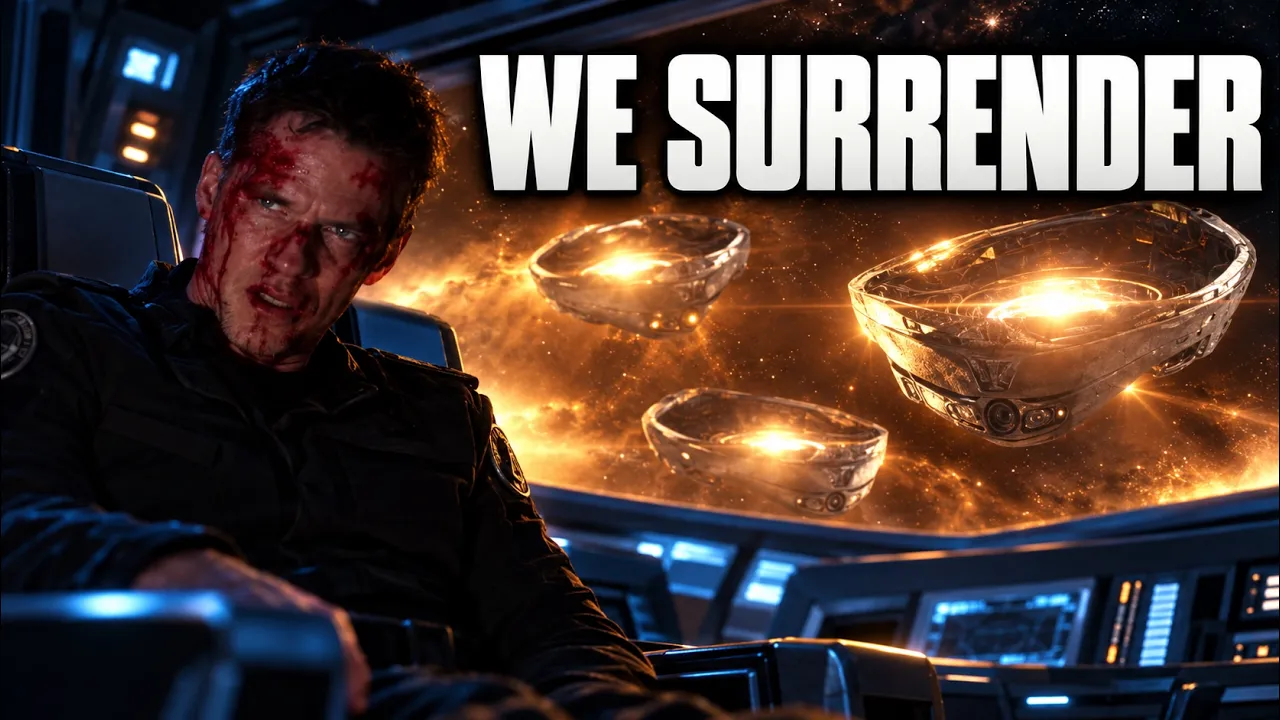
Adapted with AI from Lore Reloaded's video of 28 October 2026 and checked against the video before publication. Editorial standards · Corrections
More from @lorereloaded
All →


Make videos? Your next one could be an article here.
We turn your videos into articles under your name, linked back to the original. You keep 60% of what they earn, non-exclusive, and you can leave whenever you like.
Become a SubPlotter →