Raiders of the Lost Ark: how Indiana Smith became Indiana Jones
From a hidden C-3PO hieroglyph to a fake Nazi coat hanger gag, here are the production secrets and references behind the first Indiana Jones film
 New Rockstars (AI-assisted)22 November 2026Editor: Digital Fox Talent Editorial TeamOn YouTube since 2011 · more than 4.4 million subscribers

I'm taking a frame by frame look at Raiders of the Lost Ark (1981), starring Harrison Ford, Karen Allen and Paul Freeman, and pulling out the details you might have missed in the very first Indiana Jones film. There's a lot hiding in it, from Star Wars references and borrowed footage to a comic book that inspired the boulder trap.
How George Lucas created Indiana Smith before he became Indiana Jones
George Lucas first came up with Indiana Jones in 1971, after the release of his second film, American Graffiti, and before he started on Star Wars. Inspired by 1930s and 1940s serials such as Buck Rogers, Zorro's Fighting Legion and Spy Smasher, he wanted to tell the story of an archaeologist traveling the globe in search of a rare artifact. He originally named the character Indiana Smith. Indiana was the name of his Alaskan Malamute, the same dog who inspired Chewbacca, and Smith came from Steve McQueen's character in Nevada Smith.
In 1975, Lucas pitched the idea to writer and director Philip Kaufman, who suggested that Indy's quest be for the Lost Ark of the Covenant. Kaufman had first heard the story of the Ark from his childhood dentist. The Ark was the chest the Hebrews used to carry God's Ten Commandments. It was believed to hold special powers, and legend has it that any army that carries it is invincible. In the biblical story of the Battle of Jericho, God tells the Hebrews to march the Ark around the city's walls, and when they blow their horns, the walls collapse.
The project sat for several years until after Star Wars premiered in 1977. Lucas was terrified his space opera would flop, so he went to Hawaii to lay low, where he spent time with Steven Spielberg, who was recuperating after Close Encounters of the Third Kind. When Spielberg said he wanted to make a James Bond movie next, Lucas had a better idea. Spielberg suggested hiring new screenwriter Lawrence Kasdan, and in 1978 the three men outlined the story. Spielberg was also the one who pushed to change the name to Indiana Jones, because he was afraid Indiana Smith sounded too similar to Nevada Smith.
Tom Selleck, Danny DeVito and the casting that almost happened
Harrison Ford wasn't Lucas's first choice. He wanted an unknown and considered Bill Murray, Nick Nolte, Steve Martin, Chevy Chase, Tim Matheson, Nick Mancuso, Peter Coyote, Jack Nicholson, Jeff Bridges, John Shea, Sam Elliott and Harry Hamlin. Tom Selleck became his ideal Indy, but once CBS realized what a hot commodity Selleck was, it greenlit Magnum, P.I., forcing him to drop out. Spielberg loved Ford's Han Solo so much that he insisted on approaching him, even though Lucas didn't think Ford would be game.
Indiana Jones ended up being one of Ford's all time favorite characters. He eventually got sick of the Han Solo hype, but his love for Indy has remained. He chose to play the character as an academic first and an adventurer second, which I think was ultimately the best possible choice. My favorite almost casting, though, is Sallah: the production team initially wanted Danny DeVito for the excavator that John Rhys-Davies ended up playing.
Marion Ravenwood's name was inspired by Kasdan's grandmother and a Los Angeles street called Ravenwood Court. Lucas wanted a leading lady who would be an equal to the men, inspired by actresses Barbara Stanwyck, Irene Dunne and Ann Sheridan. Spielberg was impressed by Karen Allen's independent character in Animal House, and one of the first questions he asked her in her audition was, "how well do you spit," hoping to convey Marion's toughness.
Indiana Jones' jacket, hat and that unlosable fedora
Indy's leather jacket and khaki pants were inspired by Humphrey Bogart in The Treasure of the Sierra Madre and Charlton Heston in Secret of the Incas. Costume designer Deborah Nadoolman Landis dumped a box of hats on the floor one day and asked Ford to pick one, and the hat they chose gave Indy his recognizable silhouette.
Fun fact: Raiders is the only one of these movies where Indy doesn't lose his hat. Lucas and Spielberg wanted to emulate the heroes of their favorite 1940s serials by making sure the hat stayed on, because, I don't know, having your hat stay on your head is somehow more manly.
The Peruvian temple opening and its Scrooge McDuck inspiration
The Peruvian opening was shot in Hawaii, and the mountain the Paramount logo dissolves into is Kalalea Mountain on Kauai. Spielberg faded the logo into the scenery as an homage to the films he made in childhood, and he used the 1940s version of the logo to make the intro feel authentic to the period. It's 1936, and Indy is racing to find a golden idol for a museum against his rival, René Belloq, who has been scooping Indy's finds since grad school.
His guide Satipo is Doc Ock himself: Raiders was Alfred Molina's film debut, and certainly one of his most iconic roles. The crew struggled to make the tarantulas scatter off his back, so they placed a female tarantula on his chest to provoke the males to move. The other guide, Barranca, is one of two characters Vic Tablian plays in Raiders. After Barranca dies at the hands of the Hovitos, Tablian becomes the monkey man in Cairo, a character who gets no closure and simply vanishes.
The temple's booby traps were inspired by Scrooge McDuck. Issue number seven of Uncle Scrooge in 1954 featured The Seven Cities of Cibola, in which the Beagle Boys remove a mystical idol from a pedestal and are chased by a boulder. Indy faces a light sensitive spike trap, a never ending pit, darts triggered by the wrong floor tile and a collapsing lair, and the spikes reveal the corpse of rival archaeologist Dr. Forrestal. After the swing across the pit, we glimpse the Sunburst, the MacGuffin from Secret of the Incas, the 1954 Charlton Heston movie whose hero, Harry Steele, is a seedy American tour guide in Peru. I wouldn't call Dr. Henry Jones Jr. seedy, but I would say he's a hot professor moonlighting as a grave robber, which isn't exactly an entirely noble profession.
The idol's mechanical eyes were made to look like they follow Indy around the room like a creepy Scooby Doo painting, and the fertility idol was inspired by an Aztec sculpture of a goddess giving birth. After Indy finds the traitorous Satipo impaled on spikes, Belloq, played by Paul Freeman, steps over Barranca's corpse and takes the idol. Belloq worked with the Nazis to loot and steal from native cultures.
The Star Wars nods on Jock's seaplane
Indy escapes aboard a seaplane flown by his pilot friend Jock, with Jock's snake Reggie. On the side of the plane you can see OB CPO, an homage to Obi Wan Kenobi and C-3PO. The engine starting up is the same sound the Millennium Falcon makes when its hyperdrive fails, and John Williams' Raiders March plays here for the first time.
The plane crashed from a height of 20 feet on the first take because Ford's leg was dangling too close to the air flap. Ford did most of his own stunts and got injured a lot, but thankfully not this time.
Marshall College, the Ark briefing and the real Tanis
Marshall College is fictional and an homage to producer Frank Marshall. Its exterior was filmed at the University of the Pacific in Stockton, California, and the interior at the Royal Masonic School for Girls in Rickmansworth, England. The student with "love you" written on her eyelids improvised that, and it's now one of the most iconic moments in the film. Marcus Brody, played by Denholm Elliott, interrupts, and introduces Indy to two U.S. Army intelligence officers asking about his former professor at the University of Chicago, Dr. Abner Ravenwood.
They explain that the Nazis have been working with archaeologists around the globe to retrieve religious artifacts, and claim Hitler is obsessed with the occult. Indy says he fell out with Ravenwood about 10 years ago. He doesn't say why, but it definitely had something to do with a 27 year old Jones having some manner of inappropriate relationship with Ravenwood's 17 year old daughter, Marion.
Indy realizes the intercepted message means the Nazis found the lost city of Tanis. In real life, Tanis was never lost: it's northeast of Cairo, was first studied in 1798 and saw multiple excavations in the 19th century. The headpiece of the Staff of Ra is a medallion rumored to lead to the Well of Souls. Legend has it the pharaoh Shishak took the Ark from the Temple of Solomon to Tanis in 980 BC, and that a yearlong sandstorm wiped Tanis off the map, which many suspect was an act of God's wrath.
When Marcus warns him, Indy replies, "I don't believe in magic, a lot of superstitious hocus pocus." Ford repeated "I don't believe in magic" in the trailer for Indiana Jones and the Dial of Destiny. As Marcus warns that Marion is the least of his worries, we hear Marion's theme for the first time. The man spying on Indy from behind Life magazine on the plane to Nepal isn't Ronald Lacey, who plays Toht, as many fans thought, but special effects artist Dennis Muren.
Marion's bar fight in Nepal and Pat Roach's two deaths
At her bar, the Raven, Marion goes shot for shot with one of the biggest guys in the place, then punches Indy for dating her when she was a teen, which is fair. She claims she doesn't know where the medallion is, but it's around her neck. Toht and his Nazis arrive to steal it, and Indy returns to help.
Former pro wrestler Pat Roach plays the giant Sherpa who's set on fire and shot. He reappears as the German mechanic killed by the propeller, and he's the only actor besides Ford in all three original films. My favorite small detail is when a liquor barrel gets shot and Marion takes a swig of liquid courage before diving back in, exactly what I would do after watching a man get set on fire. Toht grabs the nearly molten hot medallion with his bare hands, imprinting one side of its markings deep in his flesh, while Marion smartly uses a cloth.
Filming Raiders in Tunisia, the Nazi monkey and the swordsman
The DC-3 flying over Asia is footage from the 1973 film Lost Horizon. The Egypt scenes were shot in Tunisia, where temperatures topped 130 degrees Fahrenheit. More than 150 crew members got amoebic dysentery from local food, while Spielberg, who brought his own water and packaged food, didn't. It took the animal trainer more than 50 tries to teach the monkey the Nazi salute, finally achieved with a grape.
In the marketplace fight, stuntman Terry Richards practiced for weeks for an extended sword fight, but because Ford was still extremely sick with dysentery, he decided to shoot his opponent and end the scene early. Marion's basket is loaded onto a truck of explosives, and Indy assumes she's dead.
Sallah explains that Belloq used a copy of only one side of the medallion. That side gives six kadams, or 72 inches, but the other side says to take away one kadam to honor the Hebrew God. Thrilled that Belloq is digging in the wrong place, Sallah sings "I Am the Monarch of the Sea" from HMS Pinafore, an 1878 comic opera. The actors' German was so bad that native speakers redubbed some dialogue for later DVD and Blu-ray releases.
The Well of Souls, the coat hanger gag and the C-3PO hieroglyph
Indy stumbles into the tent where Marion is being held prisoner but leaves her so as not to tip off the Nazis. It makes sense, but it's a cold move. Toht pulls out what looks like a torture device but is a Nazi coat hanger, a joke first used in a cut of Spielberg's 1941 and visible in that film's DVD deleted scenes.
The Well of Souls was filmed at Elstree Studios in England, where Spielberg insisted on 6,000 to 10,000 live snakes because fakes didn't look real enough. Shooting was delayed by too few snakes for his liking, a shortage of antivenom, and Stanley Kubrick's daughter Vivian reporting the production to the Royal Society for the Prevention of Cruelty to Animals. As the Ark's stone is lifted, you can see Raiders' most famous Easter egg, a hieroglyph of C-3PO and R2-D2. Ford wasn't afraid of snakes, but Karen Allen was, so Spielberg had animal handler Steve Edge shave his legs and wear a dress to stand in for her.
The flying wing fight and the Stagecoach inspired truck chase
The flying wing was designed for Raiders by production designer Norman Reynolds and artist Ron Cobb, inspired by World War II flying wings including the Northrop N1M and the Vought V-173. It wasn't built to fly; its only purpose was to kill Pat Roach again. One wheel ran over Ford's foot, but the Tunisian sun had softened the tires and he wasn't injured. With most stunt performers sick, Frank Marshall sat in as the pilot.
The horseback chase was inspired by 1939's Stagecoach, where stunt performer Yakima Canutt coordinated a single take of an Apache scout leaping onto the coach's horses before being shot and dragged beneath. That inspired Indy being dragged under the truck, and the Ringo Kid's leap onto the horse team inspired Indy's jump from horse to truck.
The Bantu Wind, THX 1138 and the Tatooine canyon
Aboard the Bantu Wind, Marion kisses Sallah goodbye and he sings another HMS Pinafore tune, "A British Tar," while the Ark burns through the swastika on its crate. The U-boat scene was filmed in La Rochelle, France, with a submarine borrowed from Das Boot, which was shooting there. Over the intercom, a number is read in German that translates to 1138, a reference to Lucas's THX 1138.
Indy confronts the Nazis with a rocket launcher in a canyon near Tozeur, Tunisia, the same place several Tatooine scenes in A New Hope were filmed. A fly landed on Paul Freeman's lip mid line, but it was too hot to keep stopping, so he kept going. It looks like Belloq swallows it, but Freeman insists the fly's departure was cut.
Opening the Ark and the warehouse ending
Indy can't bring himself to destroy the Ark. Inside, all that remains of the Ten Commandments is sand, and Hitler was going to be very unhappy, until the lights start failing. My guess is that Indy remembered 1 Samuel 6:19, in which God puts 70 people to death for looking into the Ark. Freeman was told to act as if something was coming at him and scream for his life. For the spirits, a Lucasfilm receptionist was suspended in a white robe against a blue screen. The lightning from Belloq's eyes matches Indy's earlier drawing, a wall of fire hides Belloq's exploding head to avoid an R rating, and Toht's melt was a deflating model head. There's a reason museums have so many do not touch signs, and this is the main one.
The Washington D.C. establishing shot comes from 1975's The Hindenburg. The government won't let Indy display the Ark, and its warehouse burial is an homage to Rosebud's fate in Citizen Kane; Kingdom of the Crystal Skull later revealed that warehouse is part of Area 51. After seeing a cut, Marcia Lucas, George's ex wife, pointed out there was no closure between Indy and Marion, prompting the final scene shot on the steps of San Francisco City Hall. Marcia also edited American Graffiti and A New Hope and suggested killing Obi Wan off, so we have a lot of nerdy ideas to thank her for.
What other creators are saying
More on Raiders of the Lost Ark →Tom Selleck was cast as Indiana Jones, but he was contractually tied to Magnum, P.I. after CBS greenlit the show once it saw him in demand. This forced him to drop out weeks before shooting, leading Spielberg to recast Harrison Ford.
Raiders of the Lost Ark: why did Tom Selleck lose Indiana Jones? →
From God light in the Peruvian temple to the melting faces at the Ark, the hidden layers of Raiders of the Lost Ark reward close attention
Raiders of the Lost Ark: do the Golden Idol's eyes really move? →
Indy stays in 212 BC with Archimedes, choosing to remain in the past because he feels he has nothing left to live for after his son's death, his divorce from Marion, and being forgotten by the world. Helena ultimately knocks him out and brings him back to 1969 before the time anomaly closes, and he reconciles with Marion.
Dial of Destiny ending: why Indy staying in 212 BC feels wrong →
Watch the original
@newrockstars · YouTube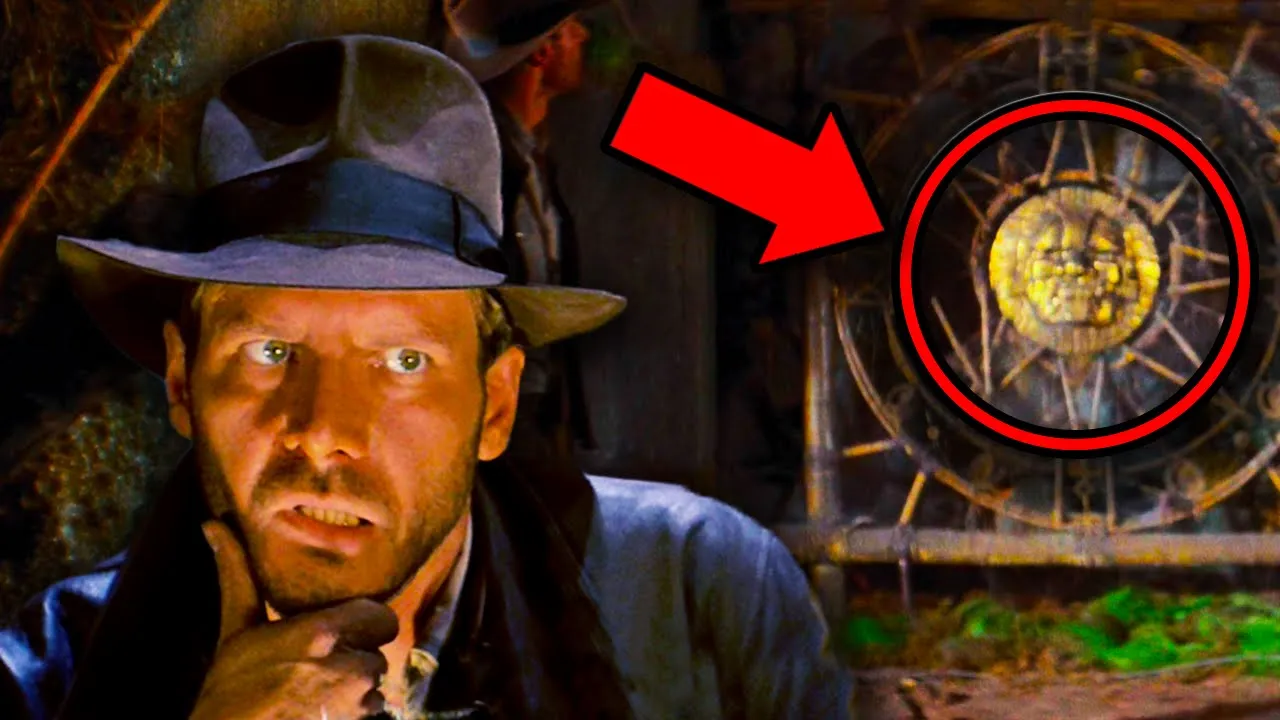
Adapted with AI from New Rockstars' video of 28 December 2022 and checked against the video before publication. Editorial standards · Corrections
More from @newrockstars
All →


Make videos? Your next one could be an article here.
We turn your videos into articles under your name, linked back to the original. You keep 60% of what they earn, non-exclusive, and you can leave whenever you like.
Become a SubPlotter →