Rings of Power premiere: what are the key Tolkien details?
From the Two Trees of Valinor to Finrod's dagger and the mysterious Stranger, the first two episodes hide deep Second Age lore and plenty of clues

The Lord of the Rings: The Rings of Power (2022), starring Morfydd Clark as Galadriel, adapts a stretch of J.R.R. Tolkien's Middle-earth that we know very little about apart from its ending. Even so, its first two episodes manage to weave in mystery and some stunning production design. Whatever reasons other people have for being angry at the show, they don't matter to me. To me this is all fantasy, I'm loving the ride, and what follows are the details I like most and the deeper meaning behind them.
The events of The Lord of the Rings take place in the Third Age of Middle-earth. This series is set during the little-known Second Age. Galadriel recapped the end of that age in her voiceover for the prologue of Peter Jackson's The Fellowship of the Ring, where Sauron tricked elves, dwarves and men into forging the rings of power while he secretly made the One Ring to rule them all. This series documents how those characters got to that point. The elder Galadriel was played by Cate Blanchett in the Jackson films.
Galadriel's opening line sets up Tolkien's idea that evil is forged
Episode 1 opens with Galadriel's voice: "Nothing is evil in the beginning." Before she even speaks, though, we hear singing. This is the song of Valinor, which Elrond describes later as a song whose memory all elves carry, heard when you cross over into a light more intoxicating than any sensation in Middle-earth. For the adult Galadriel, it's a haunting siren song and a warning that she can't go home again. Truly, none of us can.
With those opening words, the series taps into a core part of Tolkien's themes. Evil is not a constant absolute that always existed in the world. It is forged by decisions and concessions. Goodness still runs through all things, and while it can be corrupted, it is the one constant that was there before the sunrise, and it can always be found again. As Samwise will tell Frodo ages later, there is some good left in the world, and it's worth fighting for.
That pre-sunrise light comes from the Two Trees of Valinor, Laurelin and Telperion. Valinor is the ethereal Undying Realm across the sea from Middle-earth, created by the Valar, who are something like the archangels of this universe. The High Elves were originally awakened in Middle-earth and then brought to Valinor, though not the Silvan Elves, who stayed behind in Middle-earth.
Finrod's paper boat and dagger foreshadow Galadriel's whole journey
Young Galadriel folds parchment that becomes an elven swan boat. That foreshadows her own voyage at the end of the episode, including how she doesn't complete it. The paper boat transforms midstream, just as Galadriel will finally understand her brother's wisdom while she is mid-voyage. Her brother Finrod lifts the boat out with his dagger, the same dagger that later becomes hers when she takes on his mission to hunt Sauron.
Finrod turns the boat into a parable. Stones sink because they can only look downward, whereas boats fix their gaze forward toward the light. He whispers a secret about how the boat knows where to go, revealed at the end of the episode: "sometimes we cannot know until we have touched the darkness." That's another important theme. We know the distant future of this story ends with Frodo leaving with the elves, including Galadriel, on a ship to Valinor. Before any of us can earn that final passage, we must touch the darkness.
The First Age prologue shows the Two Trees, the Silmarils and the War of Wrath
Galadriel explains how the Two Trees were extinguished by the forces of Morgoth, plunging Valinor into darkness. This is the First Age material documented in The Silmarillion: the wars of the jewels, the Silmarils, which were crafted from the light of the Two Trees. In the book, the trees were destroyed by Melkor and the spider Ungoliant. Here we see the trees turn black as if poisoned, which may be the same black bile that later oozes from the cow and inks through the leaf King Gil-galad catches.
As the elves return to Middle-earth, we see a huge battle that includes eagles fighting fell beasts. To anyone who thinks they were the first to spot the plot hole of why they didn't just take the eagles to Mordor, this is why. Sauron later had Nazgûl riding fell beasts. The eagles weren't the only things that could fly, the skies weren't safe, and you can't blame the eagles for not wanting to die like this. When your enemy has aerial firepower, you have to walk the long way with a couple of hobbits and Gollum.
I love how Finrod skewers two orcs in one stab while shouting in Quenya, one of the elvish languages. His battle cry translates to "by the light of the Valar," followed by a line meaning they will die. We then see bodies on spears floating in the water. This is the aftermath of the War of Wrath, the final war, which defeated Morgoth but sank the landmass of Beleriand.
Galadriel's hunt for Sauron in the Forodwaith points the wrong way
Avenging her brother, Galadriel hunts Sauron for centuries, up to where we catch up with her in the Forodwaith. She uses Finrod's dagger to stab the ice wall. Before, he used it to fish her paper boat from a stream. Now she uses it to plunge deeper into a frozen one. When one of her companions asks how long living flesh can endure where even sunlight fears to tread, she answers that they are losing the light. They mean literal daylight, but Galadriel sees this metaphorically as an existential battle between light and dark. She seems far more alive in the darkness of this sequence than in the light at the end of the episode.
In Morgoth's old stronghold they find a hidden room where orcs were meddling with the powers of the unseen world. Presumably these orcs aided Sauron in a ritual, maybe to exile him to the void or to help him shape-shift into whatever new form he takes in this series. I think Galadriel is wrong to believe he went further north. He's more likely in the Southlands, right under their noses. His symbol still burns hot, sizzling the snow as it lands, similar to how the writing on the One Ring was revealed in heat while the ring itself stayed cool.
The Harfoots, Nori Brandyfoot and the hobbits' origins
We glide into a map of the Rhovanion wilderlands, and its contours dissolve into the live-action hillside, which I find widely satisfying. Two hunters wearing moose antlers pass a group of camouflaged Harfoots, the ancestral predecessors of hobbits described in Tolkien's "Concerning Hobbits" prologue to The Fellowship of the Ring. They're led by Sadoc, the elder and trail finder, who tracks the stars in his book to guide their migration.
Our focal character is Nori Brandyfoot. The Brandyfoot name is most likely a mix of later hobbit family names such as the Proudfoots, who are likely descendants of the Brandyfoots. The story goes that Tolkien started with the sentence "In a hole in the ground there lived a hobbit" and built his whole fiction from there, so I love seeing these Harfoots emerge from holes. The berry patch that Nori and Poppy lead the kids into is patrolled by a wolf creature, likely the same one that cleared the field and left those two hunters empty-handed.
Later, Marigold tells Nori they are all ripples in a long, long stream, their path set by the past and the seasons. It's interesting that high elves like Galadriel see themselves as a boat on a stream, whereas the Harfoots see themselves as its ripples, and find that freeing. It's a freedom Galadriel gives herself when she leaves the boat and becomes the ripple.
Elrond, Gil-galad and Galadriel's exile to Valinor
Elrond, the half elf who becomes a leader of the elves and was played by Hugo Weaving in the Jackson films, is played here by Robert Aramayo, who played young Ned Stark in Game of Thrones. As the king's herald, he is writing the speech Gil-galad later recites. When Galadriel and Elrond talk, the camera stays tight on their faces. That's a recurring visual from director J.A. Bayona, and an interesting contrast with the sweeping landscapes, including an overhead shot of them above crashing waves, as if the sea is beckoning Galadriel to leave Middle-earth behind. Even though she doesn't reach Valinor, her destiny stays on the seas, because that is where she meets Halbrand.
When Gil-galad honors Galadriel and her company and crowns her, there's a look of defiance in her eyes. She knows that being sent to Valinor isn't really an honor. It's more like exile. Gil-galad later admits that the shadow of the past still exists; he does this because he worries her hunt will further incite its rise.
Galadriel visits a grove honoring fallen elven figures. The first is her brother Finrod, but there's also a female carving that is likely Lúthien, Elrond's ancestor who fell in love with the human Beren and is famous for beating Morgoth at one point. Beside her is her hound, Huan. Elrond warns that if Galadriel refuses the call of Valinor, she will linger as an outcast poisoned by dark whispers. She rightly says that eternal paradise would drive her mad, keeping the horrors of war alive in her forever. She'd rather live on as the bark of a tree than live forever with regret.
Arondir, Bronwyn and the Southlands as the possible origins of Mordor
In the Southlands we meet Arondir, a Silvan Elf serving as a soldier patrolling the area. Years ago, many Southlanders stood with Morgoth. Their side lost, and many still haven't gotten over it, including a drunk in the tavern who says their true king will return and the south will rise again. That raises an interesting theory about who this king is, which I come back to below.
The map section showing the Southlands, with a range of mountains to the west, matches the region where Mordor is located later in history. It's possible we're seeing the origins of Mordor in this series. Maybe those orcs digging under everything are terraforming the land.
Bronwyn gives Arondir alfirin seeds. He hasn't seen that flower since he was a child, because he grew up in Beleriand, the landmass that sank in the War of Wrath, so these flowers would be very hard to find. A fellow soldier notes that only twice in known history has a pairing between elves and humans been attempted. One was Lúthien and Beren. Another was Tuor and Idril, whose son Eärendil the Mariner fathered Elrond and his brother Elros, whom we were going to meet in episode 3.
Theo's broken sword and the question of who is Sauron
Most likely, Arondir and Bronwyn realize the poisoned cow came from Hordern, and they head off. Theo sneaks into his hiding place to check an ancient broken sword marked with Sauron's sigil and gets a vision of flames, just as touching the One Ring would flash the Eye of Sauron.
One big mystery is which character might be Sauron in disguise, since the series promises his return. Could it be the stranger who arrives in the meteor? Could it be Halbrand, the Southlander castaway from episode 2? I don't know if we've met the character who will be revealed as Sauron yet. We might not even meet him in the first season. Sauron could live on in this broken sword, looking for a host to corrupt and possess. In episode 2, Theo gives some of his blood to help the sword reform. Could Theo become Sauron, or maybe one of the Nazgûl, a Southlands king who becomes one of the nine men carrying the nine rings?
As for which sword this is, I wonder if it's Angrist, the blade that cut a Silmaril from Morgoth's iron crown and then shattered, with one of its shards supposedly lodged in Morgoth's body.
Galadriel's turn back from Valinor and the meteor as Finrod's stone
Bronwyn leads Arondir over a hill in a shot paralleling Finrod's arrival in glorious Valinor in the opening scene, but this time the town is in flaming ruins. As Galadriel and the others approach Valinor, birds greet them and the warriors hear its song. It all feels very culty, but still beautiful. The passage takes the form of a blinding rainy mist, which adapts Tolkien's description of the gray rain curtain and the far green country from Frodo's dream in the house of Tom Bombadil, called back at the end of The Return of the King. Peter Jackson reassigned that description to Gandalf when he talks to Pippin in The Return of the King.
As Galadriel remembers Finrod's wisdom about the sinking stone, we cut to a meteor crashing from the sky, finally linking all these characters, including a family of ants with a parent clutching its young. The meteor is the metaphorical stone that contrasts with Galadriel's boat from the opening. It represents the darkness and mystery she must touch before she can pass on. Maybe it's a coincidence, but as the gate to Valinor closes, the slit it forms resembles the Eye of Sauron, the returning evil that awaits her in Middle-earth. It also links her visually with another eye shape: the Stranger's crater.
The episode 2 opening credits and the nine, three, seven and one
Episode 2 brings an opening credit sequence I find excellent. Grains of sand and rock converge first into nine rings for men, then three for the elves, seven for the dwarves and one more. We see the Two Trees with their branches facing each other, and the eight pointed Fëanorian star, which is also the sigil of Númenor. When the black sand snakes in, it takes the shape of just one ring.
The countless grains of sand transition into the countless stars Galadriel sees. That parallels the way the Stranger uses fireflies as stand-ins for stars to form his constellation. With Galadriel, some stars stand out, likely the constellation she uses to navigate.
Is the Stranger Gandalf, a Blue Wizard or Saruman
At the crash site, Poppy causes Nori to tumble in, and heat matters. It's similar to the torches in Morgoth's castle that produce no heat because of the evil there, or the way the One Ring's writing is revealed in fire while the ring stays cool. What is it about evil being endothermic? The Stranger grabs Nori and screams, releasing wind and levitating rubble, which suggests he carries some kind of sorcery.
The popular theory is that he's Gandalf, though that would contradict Tolkien's timeline, in which Gandalf and the other wizards were sent by the Valar during the Third Age to help fight Sauron. Still, the way the Stranger whispers to the fireflies resembles Ian McKellen's Gandalf whispering to the moth. His stick snapping in the dirt syncs up with the breaking of Nori's father's ankle. His time with the Harfoots could explain Gandalf's later affection for hobbits. Others speculate he could be one of Tolkien's Blue Wizards, believed to have arrived during the Second Age when the One Ring was forged. But since the series calls him the Stranger, the producers are clearly setting him up as a well-known character with a new origin. So I'm thinking Gandalf, but maybe also Saruman, who would have been the first wizard sent by the Valar if they're sticking with that origin story at all.
Later, the Stranger repeats words that mean "what is" and "heat." If he's asking what heat is, that connects with the crash site being cold. Maybe he's unfamiliar with heat and comes from somewhere with no warmth at all, or he's someone forged in fire whose memory has been wiped.
Celebrimbor's tower and Durin IV in Khazad-dûm
In Eregion, the elven smith city, Elrond marvels over Fëanor's hammer, the tool that made the Silmarils. Fëanor was Celebrimbor's grandfather, and those three jewels were fought over in the wars of the previous age. Celebrimbor has apparently learned nothing from history and wants to build a Tower of Babel style tower housing a forge, clearly the forge that will create the rings. He needs it completed by spring. Why the deadline? I'm guessing he may already have been approached by Annatar, Sauron's disguise during this era.
In the dwarven kingdom of Khazad-dûm, Elrond is denied passage, so he invokes the rite of Sigin-tarâg, which translates from Khuzdul as the rite of the longbeards. It's a test of endurance between Elrond and his old friend Prince Durin IV. I love seeing the city as a thriving kingdom; we saw it as ruins in Fellowship, but here plants are fed by beams of light directed by mirrors, beams Frodo saw when the Fellowship camped in one of the halls.
After the challenge, Durin reveals why he's so angry: "I've lived an entire life in that time. A life you missed." Elves live far longer than other races, and the producers are condensing time so events happen faster and we don't have to kill off the humans every season. I like that they keep the sentiment of that conflict, because elven time dilation makes elves detach from other races, one reason others don't trust them. Durin's wife Disa describes resonating, singing into a mountain so it tells you where to mine and where to leave it untouched. Like the Harfoots, dwarves have a sensitivity toward nature. Later, Durin's father, King Durin III, worries Elrond came to ask about a secret resource glowing in a chest, Pulp Fiction briefcase style. I'm wondering if it's mithril, which we see Durin IV holding in the trailer and which later makes Frodo's chain mail.
Halbrand's necklace, the Hordern orc fight and the seafarer
Galadriel swims up on some wreckage with the castaways, and the sea worm strikes again. I love the single take of Galadriel swimming toward the camera while Halbrand pushes off in the background and the worm takes the others, with the shot diving underwater as one is eaten. Galadriel spots a necklace with a mysterious symbol that Halbrand hastily tucks away. She thinks it's the sigil of his king, and it's similar to the runes we see in the Southlands right after. I wonder if he could be Theo's long-lost father and, like Aragorn, the king they want to return.
The tunnels beneath Hordern are filled with orcs. Some snatch Arondir, and another turns out to be the mice Theo has been complaining about under their home. Bronwyn throws the orc the powdered fire root she warned Theo about grinding too quickly in episode 1, and breathing it makes the orc convulse. She decapitates it and slams its head on the bar, blood flying, which I love.
Back in the storm, lightning smashes the mast and sends Galadriel sinking like the stone in Finrod's parable. Yet the memory of Finrod saves her, as Halbrand uses Finrod's dagger to cut her free. She touches the darkness and ends the episode finding light again as it blinds her from seeing the seafarer who finds them. I'm thinking it's Isildur, the Númenorean who will one day tell Elrond no. After these two episodes, I'm really digging this series.
What other creators are saying
More on Galadriel →I don't think season one was a total failure, though its pacing, a Galadriel arc that never earns sympathy or shows real consequences, and a purposeless Harfoot plot badly hurt it, while Elrond and Durin's friendship, built on genuine consequence and a strong moral dilemma, is the show's emotional heart.
Missing polenta, no scales, out of date flour and a stubborn tin: my attempt at lembas bread from a book of recipes from the world of Tolkien
Tolkien lembas bread recipe: Alex's baking attempt goes wrong →
A breakdown of why raw spellcasting is not the full story in this wizard duel
Watch the original
@newrockstars · YouTube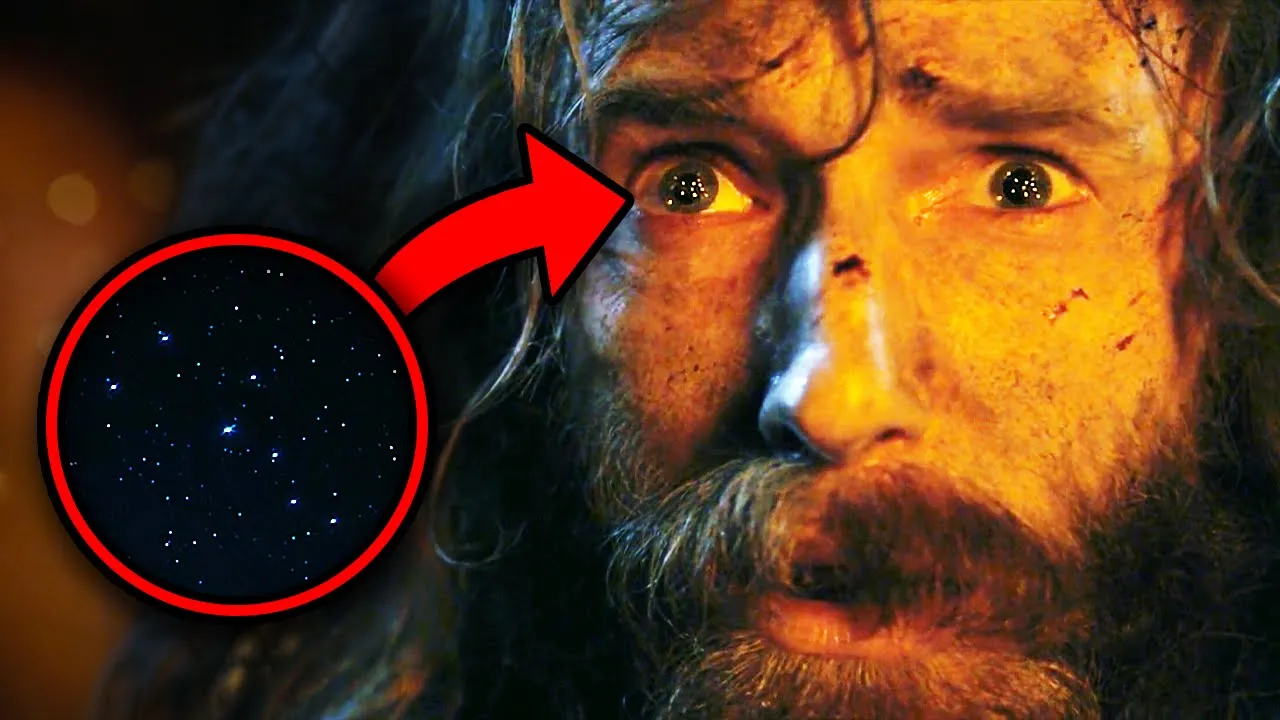
Adapted with AI from New Rockstars' video of 7 September 2022 and checked against the video before publication. Editorial standards · Corrections
More from @newrockstars
All →


Make videos? Your next one could be an article here.
We turn your videos into articles under your name, linked back to the original. You keep 60% of what they earn, non-exclusive, and you can leave whenever you like.
Become a SubPlotter →