The Batman: why Matt Reeves' Batman, Catwoman and Riddler work
How Bruce Wayne, Selina Kyle and the Riddler drive Matt Reeves' 2022 film, and what DC could learn from its authorship
 The Gold Man (AI-assisted)17 November 2026Editor: Digital Fox Talent Editorial TeamOn YouTube since 2014 · more than 170,000 subscribers

A year on, I think The Batman is phenomenal, and of every Batman story I have seen, it has done the best job of building characters. Matt Reeves' 2022 film, with Robert Pattinson behind the mask alongside Zoë Kravitz and Paul Dano, draws its strength from three characters: Batman, Selina Kyle and the Riddler.
I'm familiar with Batman but not a diehard fan, so I didn't know what to expect. Some versions of the character are borderline universally beloved, some universally hated, and some draw mixed but strong opinions. Matt Reeves is one of my favorite working directors, and his Planet of the Apes trilogy is one of the most underrated trilogies ever made, so I was optimistic. Big Batman fans I talked to after the release loved that this was the most detective Batman on the big screen. They loved the tone of Gotham, that this Batman was maybe more brutal than any before, and that he wasn't killing people. I couldn't disagree, because I'm not the most familiar with the lore. What I am familiar with is movies and stories, and whether or not this is a great adaptation, the movie is great.
Bruce Wayne wants to protect Gotham, but being Vengeance isn't working
Bruce goes on a typical character arc: he begins one way and ends a changed man who has learned a valuable lesson. The arc is fairly generic, but Matt Reeves perfected the Batman story and gave him one of my favorite character arcs of 2022. An arc like this needs four narrative elements: the want, the ghost, the lie and the need.
The want is usually an external goal tied to the plot. Bruce wants to protect Gotham and its people, but as he says in his opening monologue, his tactics aren't working. In his two years as Batman, his presence has been felt. The opening shows a handful of unrelated crimes in different parts of the city, and the criminals look into the dark, wondering if he will be there. Most of the time he isn't, but they have heard stories and they fear him.
Cross his path and you feel his wrath. This Batman is far more brutal and unhinged than previous versions; I would say only Ben Affleck's Batman rivals him. There's something raw and powerful about his punches, and when he's done he proclaims not that he's Batman or a hero, but that he's Vengeance. That word is key to the whole movie. Being Vengeance has brought Gotham no peace, so why does he keep doing it?
The death of his parents is the ghost behind this Batman's brutality
The answer is his ghost. Giving a character a flaw is easy; giving a reason the flaw exists is not. Almost every aspect of who adults are stems from something in their past, often something broad like family or culture. In stories, and especially this one, the ghost is a singular event that haunts the protagonist. For Batman, it's the death of his parents.
That's in nearly every Batman story, but I would argue this movie portrays the trauma better than any other Batman movie. At its core it's about children who have been wronged by the world. He's so violent because every criminal takes him back to the man who murdered his parents, and he wants to hurt them as much as he's hurting. There's no charming playboy alter ego here, just Batman, just fear, just a boy wronged by the world. I love the moments where Bruce stares at a kid who just lost his father, with no words spoken. Bruce doesn't just see himself in this kid; he is this kid.
Early on, Bruce doesn't talk about hope; he doesn't think Gotham will change. He fights what he sees as a losing battle because of guilt. He blames himself for his parents' death and acts to honor them in his own way. Gotham sees their legacy in the renewal foundation, started to make a better Gotham, but it has become corrupt. Bruce goes after criminals on the streets instead. Every punch he throws is a punch at the man who killed his parents.
Selina Kyle exposes the lie Bruce believes about Gotham
The ghost feeds the third element, the lie. Bruce believes there's no hope for Gotham and that the only way he can make a difference is by being Vengeance, because he sees every criminal as just like his parents' killer: evil, and deserving vengeance. That starts to change when he meets Selina. At one point he even sees the world through her perspective, when she wears the contact lens with the camera. Both share the pain and anger of losing a parent, but unlike Bruce, she has had to worry about living somewhere unsafe, her next meal and the rent.
Maybe the most important scene between them is on the top floor of a building, where Selina says she doesn't know who he is, but Batman must have grown up rich. The movie critiques the wealthy without conveying a message against wealth. Rather than making Bruce clueless because he grew up a billionaire, it gives him a flaw that would reasonably come from such wealth. Selina tells him most people don't choose crime. Some are born into it, and others are forced into it, by starving or, like Selina's mother, by other means.
Bruce was brutal because he believed criminals choose to be evil. That's true for many, but not everyone, and he begins questioning things. When she tells him Falcone is her father and that her mother was murdered, he understands her rage. That pays off when Bruce stops Selina from killing Falcone, telling her she's suffered enough. For the first time, he actively helps someone in pain instead of hurting someone who caused pain.
"I am Vengeance": the moment Batman discovers what he needs
Falcone is arrested and Selina is no longer bloodthirsty for revenge, but the Riddler is still out there, and Bruce still believes Gotham can't be saved. Bruce had feared the Riddler knew his identity, but the Riddler says it doesn't matter who is behind the mask: the Batman is who this person really is. Putting the mask on reveals Bruce's true self, not taking it off. I love that line because it's a great way to describe the character.
In the final battle, the people of Gotham are inside Gotham Square Garden, ready to be annihilated by the Riddler's henchmen. Batman goes back to beating people up until he almost kills the last henchman and Gordon stops him. Unmasked and asked who he is, the man says, "I am Vengeance." Everything clicks. The Riddler thought he and Batman were working together, and Bruce learned the Riddler only exists because of Batman. Crime hasn't gone down because Batman inspires others to be Vengeance too.
That is the fourth element, the need: he must be a leader, a beacon, a dark knight Gotham can look up to. Bruce falls into the water and emerges reborn, like a baptism. He can't stop the flood or all the crime, but he can save Gotham's people. He takes the hand of the scared boy he's been watching all movie, takes a torch and leads people through the flood. He carries a woman to safety, something he wouldn't have done at the start.
Realistic consequences give The Batman its message
My cardinal rule of storytelling is that actions must have realistic consequences, and a flaw needs them as much as a character needs a flaw. Bruce realizes his actions are why crime has gone up and, arguably more importantly, why the Riddler exists at all. Having the villain's existence stem from the hero's actions was a brilliant decision, and Bruce must change to redeem his wrongdoings.
At the end, Selina repeats his early view that Gotham can't be saved, and this time Bruce disagrees. He hasn't overcome his trauma; it still haunts him and always will. He's far from perfect, but he's taken the next step to being a hero. I love that this is a great arc for the first movie in a series, leaving room to grow. The message is that "you can't fight what you hate you have to save what you love." Don't feed into the darkness: be a hero, a leader, a light in the night.
Catwoman shapes Batman's arc while going on her own
I'm borderline clueless about Catwoman lore, but Selina is a fantastic supporting character. A supporting character this prominent should either help the protagonist on their arc or go on an arc themselves because of the protagonist, as in a flat arc. Selina does both. She lost her mother as Bruce lost his parents, but she grew up without someone like Alfred to protect her. That lets her show Bruce that not everyone in crime or gangs chose that life. Without her, Bruce would never have gone on this arc.
Her key trait is revenge, against the people who murdered her friend Annika and against Falcone. She wears her own mask too, a wig and a revealing outfit on missions, a neat detail showing both hide their trauma behind masks. When Bruce stops her killing Falcone, she learns revenge won't make her feel better. He showed her what being there for someone means, so although she tries to leave, she goes back to fight alongside him.
She also has agency. She disobeys Bruce by taking off the camera contact; she'll help, but her mission comes first. Agency makes supporting characters feel like real people. She's a three dimensional character and a great counterpart to Batman, and at the time I hoped to see more of her in the sequels.
Paul Dano's Riddler cancels out Batman's two biggest strengths
This Riddler may not be as iconic as the Joker or Bane, or as fun to watch, but he's a fantastic villain who complements Batman perfectly. A villain should nullify the hero's biggest strengths, and Batman excels at physical violence and detective work. The Riddler poses no physical threat. They're only close at Arkham Asylum, where Batman punches the glass and still can't reach him; otherwise they talk by phone.
A detective's job is to solve riddles, puzzles and mysteries, so a villain called the Riddler suits a detective Batman perfectly. Batman keeps solving the riddles, but when the Riddler realizes Batman hasn't figured out the final piece of his plan, he gains the upper hand. Locked behind bars, he still wins.
The Riddler has a point, and Bruce could have been him
I love the trope where the villain has a point. In Infinity War, Thanos tells Doctor Strange half of life must be erased because of his experiences growing up; we empathize, but he lacks a valid point, because not once in the MCU has a shortage of resources been a concern. The Riddler grew up an orphan, and after Thomas Wayne died, the renewal project became a hive of corruption where money meant for orphans was stolen. We reject his conclusions but acknowledge his point about elite corruption hurting the less fortunate.
That forces the hero to change, because conclusions are what separate heroes from villains. Batman has no solution to corruption by the end, but he has changed, and Gotham is probably on the path to ending it. Maybe kids who are victims of corruption will look up to Batman instead of following the Riddler. Bruce can also sympathize: both were orphans, and you could argue only privilege separates them. Had Bruce not been Thomas Wayne's son, he could have ended up in that orphanage. Realizing that makes it personal, and the movie does the same with Catwoman.
Maybe most important, both fight for the same goal: stopping criminals harming the less fortunate. The Riddler acts out of revenge toward the elite, but Batman starts out selfish too, driven by guilt and rage. By the end he proves the way to help Gotham isn't murdering the elite but showing ordinary people something better.
Was blowing up the sea wall out of character for the Riddler?
Many argued the sea wall plan was out of character, since he'd spent the movie exposing the elite. That's fair, but he's a bad person who has suffered a lot, and people like him usually want everyone else to suffer exactly as they did. If more people share his hopelessness, maybe they'll agree with him. People like the Riddler, Bruce or even Selina want their pain acknowledged and justified, which is why Bruce tells Selina she's suffered enough and why the Riddler wants everyone to suffer. I don't feel the plan was out of character.
What DC can learn from The Batman: authorship
A lot changed for DC after release. I'm as casual a DC fan as it gets, but I know fandom, and at the time of writing DC was as divided as ever. Zack Snyder fans wanted his final two movies, his critics welcomed James Gunn's total reboot, and those in the middle were frustrated with the mess. Announcing Henry Cavill's return as Superman and removing him a month later was a PR disaster.
People point to a lack of consistent vision, which has plagued DC, but I think authorship matters more. I'm not the biggest Zack Snyder fan, but his three DC films undoubtedly have it, and I deeply admire him sticking to his guns. The same goes for Christopher Nolan's films. A movie can lack authorship and still be good, but I feel such films are destined for apathy: plenty enjoy Aquaman, yet few passionately love or hate it. DC needs someone with a voice, James Gunn or someone else, because the chances of being passionately loved rise too. The Batman has that, as does Todd Phillips' Joker, and I feel that's a big reason people are excited for more. Time will tell, but if DC lets Matt Reeves do his thing, I think the Robert Pattinson Batman universe is destined for greatness.
What other creators are saying
More on Catwoman →Selina delivers Batman to Bane, yet Bruce Wayne trusts her again and retires with her in Italy.
Catwoman Didn't Earn Her Redemption Arc in The Dark Knight Rises →
A new report claims HBO has passed on two more DC Studios projects, and I break down with my co-host Chris Carr why the 2023 slate looks shakier than ever three years later.
With Reeves needed in Los Angeles for a family matter, Soderbergh offered to complete the London shoot, and I see both good and bad in the move
The Batman Part II: why is Soderbergh finishing the shoot? →
Gunn answers only to David Ellison after the Paramount Skydance merger, but Reeves has stepped away from his Batman sequel for what is being described as a personal family matter.
Watch the original
@thegoldman25 · YouTube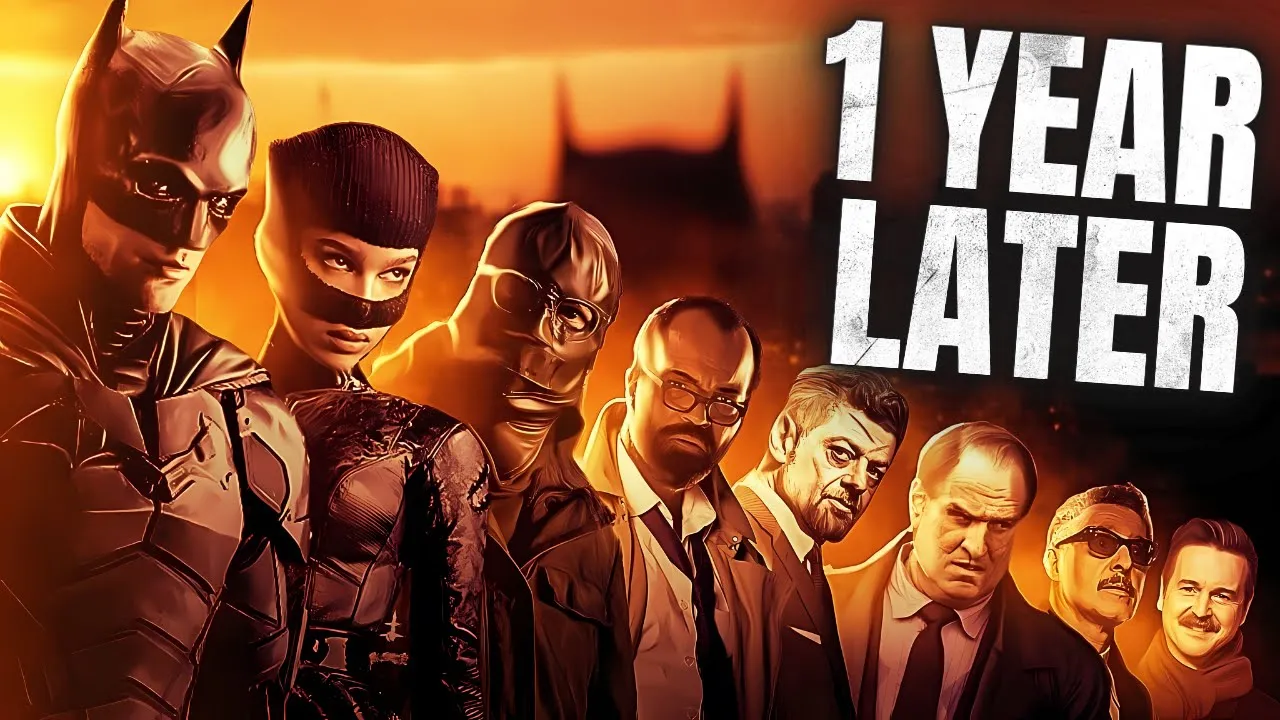
Adapted with AI from The Gold Man's video of 6 February 2023 and checked against the video before publication. Editorial standards · Corrections
More from @thegoldman25
All →


Make videos? Your next one could be an article here.
We turn your videos into articles under your name, linked back to the original. You keep 60% of what they earn, non-exclusive, and you can leave whenever you like.
Become a SubPlotter →