Robert Pattinson as James Bond: why Amazon broke a 60-year rule
For six decades Bond turned unknowns into stars. Amazon has gone the other way with the actor already playing Batman, and that choice comes with real tradeoffs.
 Breakdowns & Blockbusters (AI-assisted)19 November 2026Editor: Digital Fox Talent Editorial TeamOn YouTube since 2023 · more than 240,000 subscribers

For more than 60 years, the producers of James Bond followed a simple philosophy when casting 007. Find a relatively unknown actor, turn him into one of the biggest movie stars in the world, and make sure audiences associate him with Bond above anything else. Amazon has thrown that philosophy out the window by casting Robert Pattinson, who's currently playing Batman in The Batman (2022) and has now been cast as another iconic character.
Pattinson is unquestionably a terrific actor who might make a fantastic James Bond. But his casting raises an interesting question. Why did Amazon abandon a formula that had worked for more than 60 years in favor of an actor who's already an established star?
Why James Bond producers usually cast unknown actors
One of the most remarkable things about James Bond is that for more than 60 years, the character was usually a much bigger star than the actor playing him. When Sean Connery was cast in Dr. No in 1962, he was a former bodybuilder and unknown actor. He was so far removed from the sophisticated secret agent Ian Fleming had envisioned that the author famously dismissed him as an "overgrown stunt man." Fleming would eventually come around to him, and even incorporated Connery's Scottish ancestry into the character's roots.
His successor, George Lazenby, wasn't even an actor. He was a male model whose only real experience in front of the camera was appearing in commercials. Timothy Dalton was primarily known for his work in theater and small film roles.
There were two exceptions. Roger Moore and Pierce Brosnan were both relatively famous from their television shows, The Saint and Remington Steele, where they played suave, sophisticated characters remarkably similar to Bond. It was largely because of those performances that both men became front runners. But neither was an established Hollywood movie star associated with other major film characters. The same was true of Daniel Craig, who was primarily a character actor before Casino Royale. He starred in Layer Cake the year before, but unless you were one of the few people who saw it, the general public didn't know who he was.
The Bond casting philosophy was deliberate, and it saved money
This approach was entirely deliberate. The producers wanted audiences to associate these actors with James Bond above anything else. Brosnan was reportedly prohibited from wearing a tuxedo in any other movie while he was playing Bond, which is why he wore an unbuttoned white bow tie in The Thomas Crown Affair.
The approach also made financial sense. By casting relatively unknown actors, the producers could sign them to multi-picture deals without paying the enormous salaries commanded by established movie stars. That's what made the franchise so unusual. Rather than relying on movie stars to sell tickets, James Bond was a franchise that turned actors into movie stars.
How Barbara Broccoli fought for Daniel Craig in Casino Royale
For decades, Bond was overseen by producer Albert R. "Cubby" Broccoli, who helped launch the series on the big screen with Dr. No in 1962 before handing the reins to his daughter Barbara Broccoli and stepson Michael G. Wilson. They were notoriously protective of the character, maintaining creative control over practically every aspect of the films, including who got to play Bond.
Perhaps the best example was Barbara's decision to cast Daniel Craig. At the time, Craig was hardly the obvious choice. He was a relatively unknown character actor who didn't look anything like the traditional Bond, and that's precisely what Broccoli wanted. She was looking to reinvent the character as a grittier, more dangerous secret agent, and believed Craig was the perfect actor to pull it off. After seeing him play a Jesuit priest in Elizabeth, she said: "You just can't take your eyes off him when he's on screen." That's an inspired casting choice: to see Craig with blond hair play a Jesuit priest and think that guy would make a great James Bond.
Had a studio had creative control, it likely would have gone with a much safer choice, and that's nearly what happened. Sony, which owned MGM and was financing and distributing Casino Royale, reportedly preferred Clive Owen. When Craig's casting was announced, fans hated it. They complained he was too blond, too rugged, and lacked the sophistication traditionally associated with Bond. There was even a website calling for audiences to boycott the film. Broccoli stuck to her guns, and Craig ultimately delivered one of the most acclaimed performances in the franchise's history.
Amazon takes creative control of James Bond
When Amazon acquired MGM, it inherited the distribution rights to the Bond franchise. But the Broccolis still controlled creative decisions, which understandably created tension, considering Amazon had spent billions acquiring a studio whose most valuable franchise it couldn't control.
So in February 2025, Amazon paid Barbara Broccoli and Michael G. Wilson in cash to take over creative control of James Bond, along with back end participation on future films. For the first time in the franchise's history, the decision over who would play Bond was no longer in the family's hands. It was in Amazon's.
The timing problem: Pierce Brosnan, Henry Cavill, Michael Fassbender and Idris Elba
Since a new Bond is usually only cast every 10 or 20 years, the producers are at the mercy of whichever English actors happen to be available when the role opens up. Somebody might be perfect for Bond in their early 30s, but if the current Bond is still making movies, there's nothing they can do. By the time a replacement is needed, that actor might be too old, too expensive, or committed to another franchise.
This happened to Pierce Brosnan, who was originally supposed to replace Roger Moore in 1986. Remington Steele, which was supposed to be cancelled, was unexpectedly renewed, preventing him from accepting the role. Timothy Dalton got the part instead, and Brosnan had to wait almost another decade before becoming Bond in GoldenEye.
Perhaps the best example is Henry Cavill, who auditioned for Casino Royale in 2005 when he was just 22. According to director Martin Campbell, Cavill delivered a fantastic audition but was considered too young. By the time Craig retired 16 years later, Cavill had become a major Hollywood star and played Superman. He might have been the perfect age around the time he starred in The Man from U.N.C.L.E. playing another spy, but by the time the role was available again, he was in a completely different position in his career.
Then there's Michael Fassbender, who fans thought would make a perfect Bond after seeing him play a suave, Bond-like Magneto hunting down Nazis in X-Men: First Class. Like Cavill, he was stuck behind Craig, and by the time Craig retired, Fassbender was approaching 50. Idris Elba, another enormously popular candidate, was already in his 50s by the time the search got underway. Casting Bond isn't necessarily about finding the best actor for the role. It's about finding the best actor who's the right age and still available when the role comes up.
Amazon's Bond shortlist moved from Jack Lowden and Josh O'Connor to Robert Pattinson
Initially, Amazon's search appeared to follow the philosophy the Broccolis had used for decades. The leading candidates, Jack Lowden, Callum Turner and Josh O'Connor, were all talented British actors in their 30s who were recognized without being major Hollywood movie stars. As the process went on, it seemed the producers and filmmakers weren't entirely satisfied with those choices, and two considerably more established actors entered the picture: Nicholas Hoult and Robert Pattinson.
Amazon paid a ton of money to acquire MGM and gain creative control over Bond, so it had a significant financial interest in getting a return on that investment. Rather than simply letting the filmmakers decide, the audition tapes were reportedly flown by private jet to Los Angeles so Jeff Bezos himself could review them. When you think about it, that sounds like something a Bond villain would do.
It also raises an obvious question: what does Jeff Bezos know about casting actors? He's a businessman, not a filmmaker. Even after hiring one of the most acclaimed directors in Hollywood and some of the industry's most experienced producers, Amazon still felt its founder needed to be involved in choosing the next 007. The reason may be that Amazon was more comfortable with an established star who already had worldwide name recognition and a built-in fan base than with taking a chance on an unknown and hoping audiences would embrace him.
Robert Pattinson reportedly got fewer Bond films for a higher salary
Unlike most of the other candidates, Pattinson was already an established international movie star, having starred in the enormously successful Twilight franchise, The Batman, and a string of critically acclaimed films. There's compelling evidence Amazon was willing to pay a premium to secure him. According to reports, Jack Lowden and Josh O'Connor were required to commit to four Bond films, but Pattinson managed to negotiate that down to three while securing a much higher salary.
So Amazon was apparently willing to pay considerably more for an actor committing to fewer movies, which tells you how valuable it considered his star power. From a business perspective, I can certainly understand the decision. The last thing Amazon wanted was to launch its first Bond movie with an unknown actor and watch it bomb at the box office. Rather than relying on the Bond name to turn an actor into a star, it cast an existing star to help ensure Bond remained a box office attraction.
Why Pattinson breaks the formula that made Bond casting work
That decision also presents some significant problems. While Pattinson might make a fantastic Bond, he's the complete opposite of what made the franchise's casting philosophy work for 60 years. For starters, he's already Batman, so we're going to have the same actor playing two of the most iconic characters in movie history at the same time. That's before mentioning Edward Cullen from Twilight and the other major films he's appeared in, like Dune and Harry Potter.
What I'm saying is Pattinson comes with an enormous amount of baggage that previous Bond actors didn't have. There's no reason he can't play both Bond and Batman and make them distinct enough from one another. But there's something rather unimaginative about casting the same handful of Hollywood stars in every major franchise.
Ironically, Pattinson had been on Barbara Broccoli's radar years earlier, around the time of No Time to Die. Allegedly, Broccoli had expressed interest in him as a potential successor to Daniel Craig. When he was announced as the new Batman, she reportedly lost interest, which makes perfect sense given the Broccolis' long-standing philosophy of avoiding actors already associated with another major character. With Amazon now calling the shots, that apparently wasn't a dealbreaker anymore.
What other creators are saying
More on Robert Pattinson →Pattinson wasn't my first choice, but I'm thrilled he got the role since I think he makes the most sense, blending suave charm, dark intensity and comedic timing while boosting box office potential alongside Villeneuve, possibly even opening the door for Nolan down the line.
Robert Pattinson Will Play James Bond, and Why I Think He Makes the Most Sense →
I think casting Pattinson as Bond would be a mistake and unfair to other actors like Callum Turner, Josh O'Connor, and Jack Lowden who need that career boost. I believe he'll likely take Bond anyway given his Villeneuve connection, which settles it: The Batman Part II will be his last, and Part III won't happen.
I think The Batman is phenomenal and builds its characters better than any other Batman story, with Bruce, Selina and the Riddler working perfectly together, and I believe DC needs authorship like Reeves' to earn passionate love rather than mere apathy, so if DC lets Reeves do his thing this universe is destined for greatness.
The Batman: why Matt Reeves' Batman, Catwoman and Riddler work →
I think Robert Pattinson, worried about aging out of Batman, is looking for a Bond lifeline, and I think his broad appeal and star power could work despite breaking casting tradition, with timing and his asking price the main things that could still hold the deal up.
Robert Pattinson as James Bond: Five Thoughts on the Mystery Candidate Report →
Watch the original
@breakdownsandblockbusters · YouTube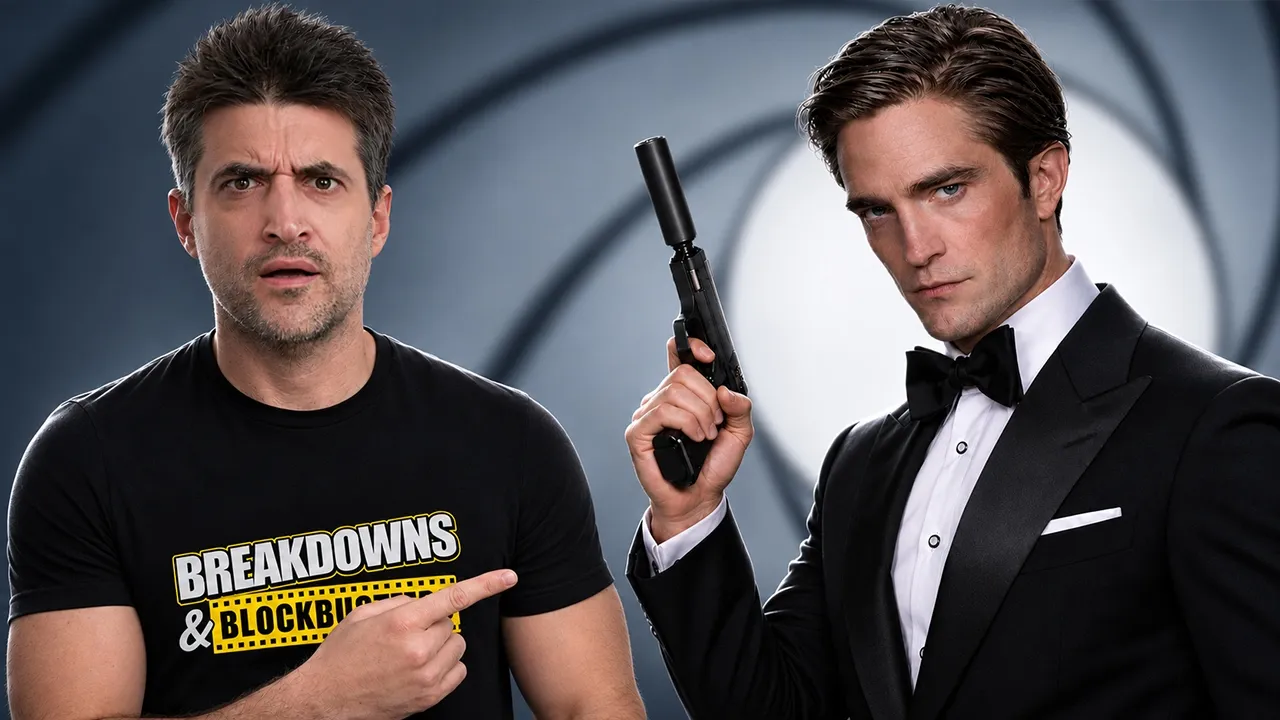
Adapted with AI from Breakdowns & Blockbusters' video of 18 November 2026 and checked against the video before publication. Editorial standards · Corrections
More from @breakdownsandblockbusters
All →

Make videos? Your next one could be an article here.
We turn your videos into articles under your name, linked back to the original. You keep 60% of what they earn, non-exclusive, and you can leave whenever you like.
Become a SubPlotter →