Captain America: Civil War review: has it aged well?
The Sokovia Accords drag the film down, the airport battle might be one of the most overrated in the MCU, and Steve's fight to protect Bucky still works and sets up his Endgame ending
 The Gold Man (AI-assisted)22 November 2026Editor: Digital Fox Talent Editorial TeamOn YouTube since 2014 · more than 170,000 subscribers

Captain America: Civil War has not aged as well as I would have liked. I don't like how the Sokovia Accords were handled, and I think the airport battle might be one of the most overrated fights in the MCU. The parts of the movie about Steve Rogers and Bucky still work for me, and they're the reason Steve's ending in Avengers: Endgame lands.
Civil War (2016), starring Chris Evans and Robert Downey Jr., closed out a trilogy that turned Steve Rogers into one of the most popular characters of the decade. For most of his history, Captain America wasn't a pop culture phenomenon. He was popular within Marvel Comics, but he was mostly seen as a piece of World War II propaganda. Within a decade, kids all over the world, not only in the United States, were wearing him on their shirts. Given the unfortunate state of the MCU at the time, what can Marvel learn from the success of the Captain America trilogy?
Civil War depended on Robert Downey Jr. returning as Tony Stark
The Winter Soldier was a big success for Marvel, so the studio pressed on with the rest of Phase 2 while plans for Phase 3 were already underway. That included Captain America 3. It was announced early in development that the Russo brothers would return to direct and that Christopher Markus and Stephen McFeely would return to write. That meant Markus and McFeely wrote the entire Captain America trilogy, and they went on to write Avengers: Infinity War and Avengers: Endgame.
Still, for the first time in nearly ten years, there was uncertainty behind a Captain America film. Marvel's Civil War comic run, released in 2006 and 2007, was heavily discussed in the comic book community, and whether to adapt it was always in the back of Kevin Feige's mind. After re-evaluating where the main characters would be after Age of Ultron, Feige and the Russo brothers agreed it was time to do Civil War.
There was one condition: Robert Downey Jr. had to return as Tony Stark. His contract didn't sign him on for a Captain America movie, so Feige and the Marvel executives had to convince him to join. Had Downey said no, a different storyline from the comics would supposedly have become the plot of Captain America 3. He agreed, and Civil War was underway.
Isaac Perlmutter pushed back, and Kevin Feige threatened to leave Marvel
Not every executive at Marvel was happy. Isaac Perlmutter, CEO of Marvel Entertainment at the time, didn't want Downey back because of how expensive it would be to have him in another film. Perlmutter insisted that Bruce Banner be the face of the pro Accords side, since Mark Ruffalo would be much cheaper than Robert Downey Jr.
Supposedly, the rest of the Marvel executives also wanted the movie to end with the Avengers fighting the Winter Soldiers. The Russo brothers and Feige argued that this wasn't the point of the movie, and that it had to end with Steve and Tony breaking up, for lack of a better term. Feige was furious with Perlmutter and the executives over this, so much so that he threatened to leave Marvel.
Because of this conflict, the parent company Disney did some restructuring. Feige would now report directly to the executives at Disney instead of Marvel, which meant he no longer had to report to Perlmutter. Downey was officially in Captain America: Civil War.
A Serpent Society decoy, a huge cast and the Spider-Man reveal
At Marvel's Phase 3 event in October 2014, Marvel initially announced that Captain America 3 would be titled Captain America: Serpent Society. That turned out to be a decoy to distract the audience, and Civil War was officially announced. The cast ended up bigger than Age of Ultron's. Thor and Bruce Banner wouldn't appear, but Civil War included the rest of the Avengers, the return of the Winter Soldier, Ant-Man, Black Panther and the highly anticipated MCU debut of Spider-Man.
The budget was growing by the day, but that didn't stop Marvel and Feige. The marketing focused heavily on the divide between the Avengers, even announcing early on which heroes would be on which side. The most famous part was the reveal of Spider-Man, which amplified excitement for a film many saw as Avengers 2.5. Captain America: Civil War was released in theaters on May 6, 2016.
The Sokovia Accords are the biggest problem with Civil War
Going in, there were plenty of concerns that this would be Avengers 2.5, and thankfully that's not the case. Tony Stark shares the lead, but the central conflict surrounds Steve and his relationship with Bucky. The biggest criticism of the movie is the misdirect of the Sokovia Accords. The marketing sold a big civil war between the Avengers, stemming from everyone's stance on the Accords.
The premise is interesting. A debate over the freedoms of the Avengers, and over who should be in charge of them, is a fascinating topic. If you follow Tony's and Steve's journeys up to this point, both stances make perfect sense. Tony had grown to learn the importance of accountability and control, while Steve's trust in institutions was shattered in The Winter Soldier.
But as the movie progresses, it becomes clear that's not what it's about. Civil War is about "how far Steve is willing to go to defend his friend." The First Avenger introduced Steve and his beliefs. The Winter Soldier challenged those beliefs to see if Steve would change. Civil War pushes Steve and his beliefs to the absolute limits. In the first two films he fought institutions he was never loyal to; here he faces individuals, the people he calls family. It's a great continuation of Steve's arc, but the disregard for the Accords does bring the movie down.
Why the airport fight might be one of the most overrated in the MCU
By the time we reach the airport battle, surprisingly few people care about the Accords. On Team Iron Man, Tony has a passionate opinion, and Natasha, Vision and Rhodey also have views. T'Challa doesn't care about the Accords; he's after Bucky. Peter is brought along as backup.
An essay by Pillar of Garbage titled Steve Rogers, the MCU and American Exceptionalism made an excellent point about Peter: if you sat Peter Parker down and explained the Accords to him, he would 100% side with Steve. The Accords are about superhuman individuals registering with an institution that decides when and how they can act. Spider-Man is about his neighborhood in New York and helping the little guy, and he even says as much to Tony. Peter also wants to stay anonymous. There's no way he would sign the Sokovia Accords.
On Team Cap, the only one of six really fighting against the Accords is Wanda. Steve is against them, but he's fighting because of the threat of the Winter Soldiers; earlier, he was almost willing to compromise until Wanda was brought up. Bucky is a fugitive. I'm convinced Sam will fight by Steve no matter what. I have no clue why Clint is there, since he never expresses his opinions, and Scott was recruited. Of the 12 people fighting, only five are fighting because of the Accords.
It doesn't help that the characters are joking around half the time. How am I supposed to take this fight seriously when best friends Clint and Natasha are joking with each other? The action is fun, but it "might be one of the most overrated fights in the MCU." There isn't much at stake: only one of the 12 gets hurt, and he's revealed at the end to be basically fine. While interesting, the Accords drag the movie down for me. They only exist so the film could be marketed as Civil War.
Steve protecting Bucky is the part of Civil War that works
The actual plot, Steve protecting his best friend Bucky, is great. I didn't realize it until a rewatch, but I had missed the importance of Peggy's funeral. It allows Sharon to give her speech about holding firm in your beliefs, but it also means Bucky is now the last person from Steve's past who is still alive. It makes total sense that Steve would risk it all for him.
Keep in mind that the UN isn't after Steve because of his stance on the Accords. It's after him because he's helping a known criminal. Steve has to ask himself whether he's willing to become a fugitive to save his friend, and that's such a great direction to take Captain America.
Is the final fight between Steve, Bucky and Tony a twist?
I have a take on the ending that many people probably don't consider. Having the five Winter Soldiers storyline serve as a cover for Steve and Tony to fight was a brilliant twist. The easy route would have been to market a battle between two popular heroes, devote the movie to their conflict, then introduce a third party that forces them to team up. That's the boring but predictable version. Ending on an internal conflict between Steve and Tony, with no evil third party, is brilliant.
Whether that holds water depends on whether you count it as a twist at all. Coming to the film fresh, I think it works. But if you saw it in theaters when it first came out, like I did, you might remember this moment from the trailers. If you paid an ounce of attention to the marketing, you knew something at the end would cause Steve and Tony to fight. I remember having that exact thought process. The reveal that Bucky killed Tony's parents, though, was another brilliant twist, and I didn't see it coming.
Twist or not, the fight is powerful. How far is Steve willing to go to save his friend? He's going to fight his other friend. I also like that Steve isn't painted in a perfect light. It was wrong of him to keep the truth about Tony's parents a secret, and telling Tony from the start would have prevented the entire conflict. But it was a human decision, and one that makes sense. Ending the trilogy with Captain America becoming a fugitive and abandoning his signature shield is such a bold thing to do, and one I love.
Civil War is why Steve Rogers' ending in Avengers: Endgame is so powerful
It's admirable that Steve would go through all of this to protect his one friend, and I think that's why his ending in Endgame is so powerful. A common reading is that Steve's and Tony's arcs mirrored each other perfectly. Tony started out selfish and ended with the ultimate act of selflessness. Steve began selfless and ended by making a selfish decision for once.
I feel people misrepresent that take, because an arc about becoming selfish doesn't sound like a good thing. It works because Steve constantly puts others before himself in all three films. In The First Avenger, he would have been fine if he'd stayed home like the military recruiters told him to. In The Winter Soldier, if he'd followed S.H.I.E.L.D.'s orders, Hydra probably wouldn't have gone after him. In Civil War, if he'd listened to Tony and signed the Accords, he would have been fine.
Civil War grossed about 1.15 billion dollars at the box office. It earned a 90% critic score and an 89% audience score on Rotten Tomatoes, making it the 11th highest rated MCU movie there, beating The Winter Soldier by decimal points. On IMDb it scored 7.8 out of 10, the ninth highest rated MCU movie on the site.
Steve Rogers keeps putting himself in danger to help others, and "if there is one guy who deserves to just walk away and prioritize himself for once it's Steve Rogers." That ending only works because of the Captain America films, especially Civil War.
What other creators are saying
More on Captain America: Civil War →Joe Russo said, "I'm hoping it feels like another profound shift," and Anthony Russo noted the unresolved story of Tony Stark and Steve Rogers continues to unfold.
Avengers: Doomsday: is it a Captain America: Civil War sequel? →
I think the Doomsday house is the same Endgame home relocated to a new universe, probably by Loki and TVA tech, and the farm setting is meant to contrast with Fantastic Four's retro futuristic city while setting up Doom confronting Steve over his choice to stay in the past.
Avengers: Doomsday teaser: is Steve's house the Endgame home? →
My theory was that the new Endgame scene would show Loki arriving after Steve and Peggy's dance to explain the TVA and Kang, move them to universe 828, and bridge into Doomsday, letting Steve work as the audience's way back into Marvel.
Endgame re-release scene: is Loki set to find Steve Rogers? →
According to the theory, yes. Old man Steve Rogers from the main MCU timeline was never confirmed dead, may be stationed on the S.W.O.R.D. base, and could be guiding Sam Wilson's Avengers as a behind the scenes commander, similar to Commander Rogers in the comics.
Avengers: Doomsday theory: is old man Steve Rogers leading? →
Watch the original
@thegoldman25 · YouTube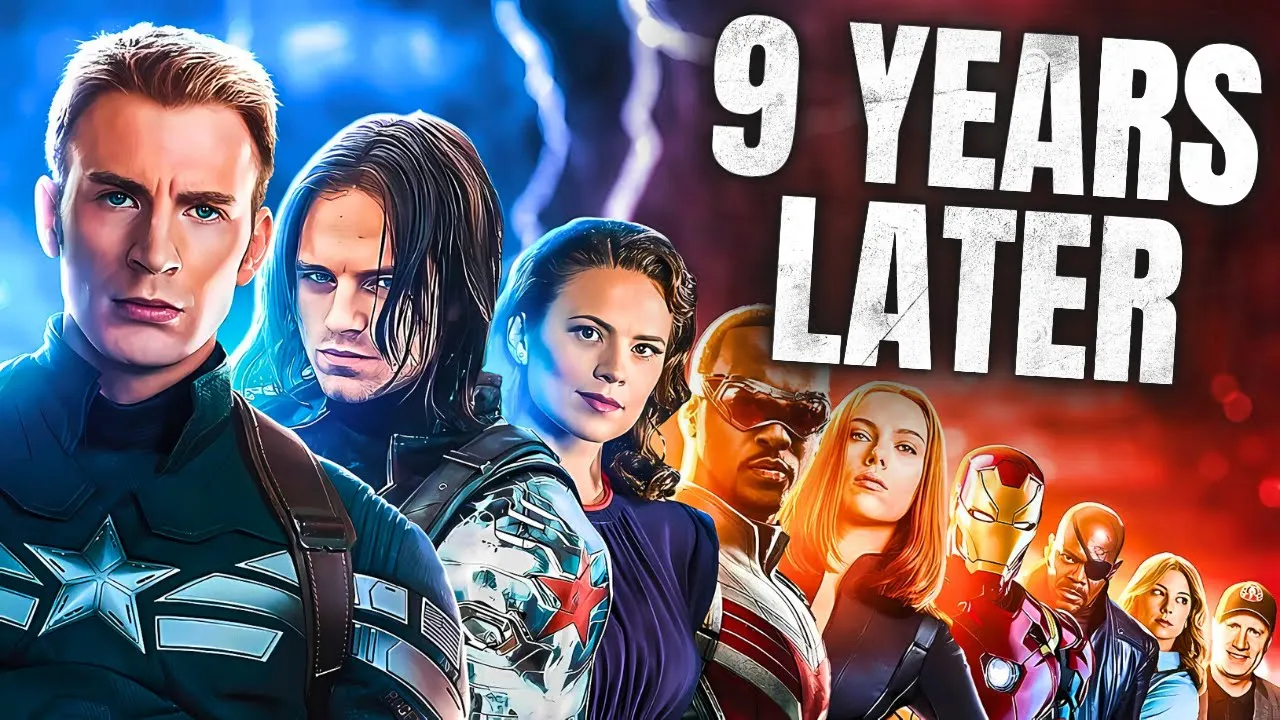
Adapted with AI from The Gold Man's video of 25 January 2025 and checked against the video before publication. Editorial standards · Corrections
More from @thegoldman25
All →


Make videos? Your next one could be an article here.
We turn your videos into articles under your name, linked back to the original. You keep 60% of what they earn, non-exclusive, and you can leave whenever you like.
Become a SubPlotter →