Strange New Worlds Finally Explains Where Scotty's Famous 'Factor of Four' Joke Came From
A new bottle episode about a broken Enterprise ties directly back to Scotty's famous line from The Search for Spock, reaching backward to build the man he becomes.
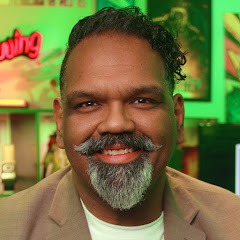 Mr. Know-It-All (AI-assisted)4 September 2026 · Editor: Digital Fox Talent Editorial Team
In 1984's The Search for Spock, Kirk catches Scotty padding a repair estimate and asks him straight out if he always multiplies his numbers by a factor of four. Scotty answers, "Certainly, sir. How else can I keep my reputation as a miracle worker?" That exchange has sat there for 42 years as a punchline nobody thought to explain, because, as I put it, "it never occurred to anybody that it came from anywhere." This week's Strange New Worlds finally gives that joke an origin.
My approach to this one is simple: I'm not telling anyone what to think about the episode. I said going in that I wanted to show what's actually in it, where it came from, and where I personally landed, and I said people are free to argue with that last part.
This Is a Bottle Episode, Not a 'Gimmick,' and Star Trek's History Backs That Up
The word everybody keeps reaching for is gimmick. I think that word is wrong every time it gets used. A bottle episode, where the ship breaks and the crew has to science their way out, is one of the oldest and most honest formats this franchise has. The Next Generation gave the format its blueprint with Disaster. Deep Space Nine did it with Starship Down. Enterprise did it with Shuttlepod One, which I still think is one of the best things that show ever produced. Picard did it with No Win Scenario, and this very show already did it with Memento Mori.
So when someone says an episode where the ship breaks and the crew has to think their way out is a departure from Star Trek, what they're actually telling me is that they haven't been watching Star Trek. I have more of that lineage than fits into this piece, one or two examples from every series including the animated ones. I'm not interested in arguing whether the show is allowed to make an episode like this, so I'd rather just lay out the list than host that debate.
Same Writer, Same Director as Season One's Standout Bottle Episode
This episode was written by Bill Wolkoff, who has been on Strange New Worlds since the pilot, was supervising producer for the first two seasons, and has been co-executive producer since. His credits include Ghosts of Illyria, the crossover episode with Lower Decks, and the musical episode Subspace Rhapsody. The man who wrote the musical wrote this one, and he also wrote next week's episode. It was directed by Dan Liu, who also directed Memento Mori, meaning the ship-in-peril hour of season four went to the same director as the ship-in-peril hour of season one.
That's not two production teams at war with each other. It's one group doing its job in different registers, which is what television seasons have always been to me.
Scotty Spends This Hour Angry at the Enterprise, and That's the Whole Point
The real story here is Montgomery Scott, and I'd call it the best work this show has ever done with him precisely because it isn't a competence episode. Scotty spends most of the hour angry at the ship itself, sealed in a Jefferies tube, running low on air, and convinced the machine is his enemy. He says it out loud: "This ship is supposed to keep us alive in the blackness of space, but it's doing just the opposite... We lost good members of our crew." Then, quieter: "After the star diver, I can't keep doing this."
That's a man who has already lost one ship watching a second one fail him and blaming it, which I think is a completely reasonable position for a human being to hold and also the exact wrong one for the job he's about to spend the next 40 years doing.
Pelia Tells Scotty It's Always the Ship's Fault, and Hands Him His Life's Work
The obvious move would be for somebody to tell Scotty it wasn't the ship's fault. Pelia refuses to do that. Instead she tells him it's always the ship's fault, then tells him to listen anyway: "Every ship glitches. Every ship, because starships are also capable of miracles... You have to hear what's happening in the bones of the ship, even when the computer fails to give you a critical warning. You have to be a miracle worker." That line about hearing what's happening in the bones of the ship is the entire character handed over as a work instruction, from a woman who immediately admits she never studied particle physics and asks him not to tell anybody. I could see where she was going about six seconds before she got there, and she still landed it better than I would have written it.
The payoff arrives when the hull is failing and the pilot says they're thirty seconds from a threshold that turns the ship into debris. Scotty says, "The Enterprise will hold. She'll keep us alive until we get to those neutrinos," and then, "She'll hold." That's James Doohan giving a captain an impossible number over and over for three seasons and seven films, and it never once occurred to me that it was a learned behavior rather than confidence. That's a man who decided to trust a machine that had already betrayed him twice, which sends me right back to 1984: padding the estimate by a factor of four isn't a bit or showmanship, it's a man who knows exactly what ships do when you push them, quietly building a floor under a crew whose captain is going to push anyway. Every safe number Scotty ever wrote down came out of a night like this one. That's what it looks like when a prequel reaches backward to build somebody.
Dr. Boyce Returns From 1964's The Cage, Played Completely Straight
The show runs a similar play in a different key with M'Benga and Chapel, and this time it tips its hand in the first five minutes. Joseph M'Benga is planning to leave the Enterprise and has already recruited his replacement without telling anyone, and that replacement is the man who had the chair before him. That character is Dr. Philip Boyce, from The Cage, the original 1964 pilot written by Gene Roddenberry and directed by Robert Butler, which didn't air on its own until 1988. Boyce was Pike's doctor, played by John Hoyt, described as an acerbic realist who never hesitated to tell Pike he was wrong and who carried a martini kit around the ship on the theory that a man will tell his bartender things he'll never tell his doctor.
This is a character from the very first thing this franchise ever shot, and the show isn't using him as a wave at the audience. It's doing him cold.
Boyce Takes the CMO Chair in a Single Sentence
The moment that proves it is when Ortegas goes down and Boyce takes the chief medical officer's chair inside one sentence over open comm: "Based on this information, I am now the CMO and I am telling you to leave. Remember your job. Put the patient in the best condition for nature to take its course, and that's it." That's the oldest line in medicine, handed to a nurse as permission to walk away from her friend. Chapel fakes a comms failure to disobey him. He knows exactly what she's doing and signs off on it with a courtesy that is somehow worse than shouting. I found it hard, correct, and unlikably written, and I loved it.
The Prequel Stakes Debate, and Why La'an's Arc Worked for Me
The argument this week is whether a prequel can have stakes at all, since we've known for 60 years who lives. I never believed for a second that Spock was in danger, and no amount of radiation was going to change that. What held my attention was La'an, who volunteers to go out on the hull after him, saying, "It should have been me in the first place. I'm more expendable than Spock." She's right, and that's the problem: she's the only person in that sequence who isn't protected by decades of plot armor. The episode didn't fail to generate tension, it just moved the tension onto the one person who could actually carry it, and for me, that worked.
The Ion Pod Callback and Spock's Mind Meld Save
The gear La'an climbs into is the ion pod, a name pulled straight from Court Martial in the first season of the original series, and it has a body count attached to it. The recovery afterward is the most elegant thing in the episode: the data chip isn't readable in the time available, so Spock hands over the reading from his own memory, and a mind meld becomes a storage medium because the hardware failed. Scotty's reaction to that might be the best line in the back half: "Trust a Vulcan's memory as much as any computer."
Where I Disagree: the Running Order Buries Scotty's Story
My issue is with the structure. The episode is built so Chapel and M'Benga are the A story, opening, carrying, and closing it, and that's clearly deliberate. For me it's inverted. Scotty is the more important story in this hour, and it isn't close. Putting him second costs the episode something it can't get back, because there are six episodes left in this entire series and there's no coming back for him after that.
The 'Bookshelf Problem': the Strong Force Neutrino McGuffin
The solution to this hour is a theoretical particle called a strong force neutrino, which repairs damaged tissue and conveniently makes fuel. It's a McGuffin, and that's fine, since Star Trek has never needed a reason to Star Trek. But the show doesn't trust that, and keeps wiring the particle back to M'Benga's old research from when his daughter Rukiya was sick, work he'd abandoned as fringe science nobody took seriously. Latching the device to that memory doesn't make it stronger, it just makes itself more visible. What does work is Scotty hearing a doctor describe a particle that repairs organic molecules and, within one breath, asking whether the same device could print a simple isotope like deuterium, which happens to be the fuel he's out of. That's very Scotty: the device holds up not because of where it came from, but because of what he does with it.
The Craft: Strong Physical Work, a Stiff Turbolift Beat, and a Naming Complaint
Setting the fan analysis aside, the craft here is the strongest thing on screen. It plays like it was shot on a gimbal, though nothing has been published yet about how it was made, so I'm reading the screen the same as anyone else. When the camera goes Dutch, the actors are already leaning into it, and selling weight and scale on a standing set is one of the hardest jobs in television. There's one beat in a turbolift with Scotty that looks stiff and staged, like an insert shot grabbed separately for a connective moment in the edit, but that's a small note against exteriors that are genuinely gorgeous.
The one naming choice that bothers me is calling the natural phenomenon in this episode a slipstream. Quantum slipstream drive is established Voyager technology from the season four finale Hope and Fear, developed by a species designated 116 and routed through the main deflector, which is 24th century hardware. Nothing here contradicts that, since this is a naturally occurring phenomenon a century earlier, but with the entire Star Trek vocabulary available, picking a word already sitting on the shelf is a needless collision.
Correcting Myself on the 24 Comparison
The first time through, I heard people comparing this episode to 24 and thought I was reaching for a reason to be annoyed, since a countdown clock isn't a genre, it's grammar, and Star Trek has been building dread out of ticking numbers for 60 years. But the split screens are a direct 24 borrow, used for the same reason they worked there: two people in different places, both halves of the conversation delivered at once. Then I caught the line "We have 24 minutes," not 20, not 30, and realized it was a deliberate wink. The people who called the 24 comparison were half right while I was half wrong. The core of the hour is still a bottle episode, but the grammar is borrowed on purpose and it's announced.
My Score: An Eight for the Story, a Seven for Production
As an hour of Star Trek, I'd give this an eight: a bottle episode built by people who've been making this show since the pilot, carrying the best Scotty material the series has produced, bringing back a character from the 1964 pilot and playing him cold, and moving its danger onto the one person who could actually carry it. "I had a good time and I'd watch it again tonight." As production, I'd give it a seven, and the entire difference is where the hour spent itself. The physicality and exteriors are excellent and the cast is doing some of the hardest work in television on a standing set, but with six episodes left in the series, putting the origin of Montgomery Scott's conviction in the B slot is a call I can't sign off on, and the stiff turbolift beat and the borrowed slipstream name didn't help either. That lands the overall score at a seven and a half out of ten.
Where did you come down on the running order: was the sickbay story really the A plot, or was Scotty's arc the one that should have led the hour?
Watch the original
@arealknowitall · YouTube
Adapted with AI from Mr. Know-It-All's video of 27 August 2026 and reviewed by Digital Fox Talent before publication. Editorial standards · Corrections
Also on Star Trek
4 creators, 88 takes →




More from @arealknowitall
All →


Make videos? Your next one could be an article here.
We turn your videos into articles under your name, linked back to the original. You keep 60% of what they earn, non-exclusive, and you can leave whenever you like.
Become a SubPlotter →