VisionQuest theory: is the man with Ultron's face a Horton?
A stolen notebook, a house sold in 1939 and a question about Vision's heart all point the same way going into the finale

The man in the hat who turned around in the closing minute of VisionQuest episode seven, wearing Ultron's face, isn't Ultron. I'm calling it now: he's Phineas Horton's grandson. By the next afternoon, fans had traced this client back to 1939, and the case they built rests on two things, a notebook and a house.
VisionQuest, the Marvel series streaming on Disney Plus, ended its second to last episode with James Spader's face on a man standing in Phineas Horton's old house. He had short hair and a little mustache, stylish if you ask me. Many people saw that face and stopped there, assuming it was Ultron all along. Others kept digging.
The man with Ultron's face in Phineas Horton's house
Episode seven gave us a memory of the woman whose mind now lives in Jocasta, with a man who has Ultron's face. Ultron works out that there was a sixth partner on her team, one nobody told us about. A man in a hat tells Jocasta, who is that woman's mind in a synthetic body, that he's her past and her future. Ultron laughs at him and calls him desperate and human.
Then, in the last minute, comes the face in Horton's house. One fan posted within two hours of the episode that the client is the human Ultron is based on, there to take hearts back from an AI that took his family, and a descendant of Horton through his daughter. Another pointed to the moment, around the 16:56 mark, where the client tells Vision he's giving him a heart to find his purpose, while giving Jocasta memories.
I'd raised the word grandson myself early on, but I said it could be and that I wasn't calling it either way. That first fan got there before me.
Why fans think the client is Phineas Horton's grandson
Across my last three VisionQuest breakdowns, 446 fans weighed in, and roughly a hundred of them landed in the same place: a Horton. Most said grandson, and the sharpest said through his daughter. The week before, about 65 had put the name Jim Hammond, the original Human Torch, on the client. Some of the biggest breakdowns out there landed on the grandson too, but nobody built the case the way these fans did.
That case starts in the cold open. Phineas Horton is selling his house to pay for a machine. His son James is three years dead. His wife and his daughter Victoria beg him to stop, and he says he has to finish Jim. On the way out, the daughter takes his notebook.
The most popular theory put it plainly: "His daughter Victoria stole one of his journals in the opening scene." Her son most likely found it, became as obsessed with artificial intelligence as his grandfather, found work in the field, met the woman whose mind now lives in Jocasta, fell in love and helped create the first successful modern AI consciousness.
The notebook Victoria Horton took is why I'm calling it
The family tree works on the numbers. One fan reasoned that the daughter was probably about 10 in 1939, and if she had a son at 25 to 30, he'd be around 60 today. James Spader is 66. I checked, and the math works out. That same fan pointed out the whole show is about a family, so the structure fits, and said the book has to come back into play somehow.
I'm with them on the book. You don't show his daughter walking off with his notebook and not have it be a thing, not in episode seven of eight. That's the second to last episode laying down its last pieces. The man with Ultron's face is Phineas Horton's grandson. The fans got there first, but I'll take it.
Was Phineas Horton the grandfather or great-grandfather of AI
A few fans went one step further, to a word the show uses for Horton. One said that in her TV interview after winning the Stark Award, the woman whose mind now lives in Jocasta calls Phineas the grandfather of the synths, which suggests her partner is his grandson. Another heard it the same way.
Longboy heard it differently, while admitting they might be misremembering. Their recollection is that she called Phineas the great-grandfather of AI in her acceptance speech, which would make the father of AI, the client, his grandson.
I'll be honest, I didn't catch that line. Grandfather or great-grandfather changes how many generations we're counting, so I'm going back to that speech before the finale. Either way, the notebook is enough for me.
Who bought back Phineas Horton's house
The notebook is, I think, only half of it, because some fans caught the problem with the grandson. One noted that we were told Phineas liquidated his estate for a reason. If he did, the family no longer owned the house, so the daughter couldn't have inherited it to pass on to her son. Another asked the question I kept asking myself: who bought the house from Phineas Horton?
Horton sells the house to pay for Jim in 1939. That's the first thing he does in the episode. Nobody in that family is inheriting it, yet today a man with Ultron's face is standing in it. So somebody bought that house back. A stranger could have bought it, and that's the part I had to sit with. But a stranger who bought it in 1939 doesn't have the notebook. The daughter does.
Two fans did the rest of the math. One suggested he kills her so they can sell to Stark, making her think she had her father's disease, then uses his fifth of the sale to buy back his grandfather's house. The other said that when his lover and business partner could no longer prevent the sale of their tech, he convinced the rest and used his newfound wealth to buy back the family mansion.
I've argued that Tony built everything on the back of the AI he got from her team. That's a payday. If you're Horton's grandson carrying his notebook with a payday in your pocket, the first thing you buy is the house your grandfather sold. The notebook says family. The house says somebody in that family came back for what Horton gave away.
Why the client probably isn't James Bradley's grandson
Brock went the other way, suggesting the client is the grandson of James Bradley. That one's on me. I'd pointed to Dr. James Bradley, Horton's partner on the original Human Torch in the comics, from The Invaders Volume 2 number 3, July 1993. He's the partner who walked out over the flaw that set the Torch on fire, and when he left in 1939 he took the unfinished second android with him.
One fan saw the problem before I did. Bradley would have the same timeline problem as Horton being in the 1930s. That fan thinks the show handled it with Horton's daughter grabbing his diary, which likely held his ideas and codes, passed along as a family heirloom.
That fan is right. In the comics, the one who walks out on Horton in 1939 carrying a piece of his work is the partner. On the show, it's the daughter. The show took Bradley's exit and handed it to the family. Bradley is still the comics. The heirloom is the show.
Why Ultron has the client's face
The family tree gets you to who, but many fans are stuck on a different question: why does Ultron have his face? Since Tony built everything on the AI from her team, that's where the voice can come from. But I think the face doesn't stick until Vision pulls Ultron's code into his own head. That's when it gets printed on him, the same way her face got printed on Jocasta. Everyone in the show is based on somebody.
One fan thinks it goes deeper, with the client's program for what would become Ultron buried deep in the code from the beginning, lying dormant while Banner and Stark built Ultron. Weapon X went back to Tony's habits: Jarvis was a service AI modeled on his father's butler, so for a global defense program aimed at peace in our time, who better to model it on than the man who said it first? That's a real pattern. Jarvis was named after the Starks' butler, Edwin Jarvis. Tony names his machines after people.
Then one fan, Casual, caught a detail I couldn't shake. When Vision and Jocasta received the client's sound frequency, their eyes fluttered, but Ultron was entirely unaffected despite being a synth. The client also couldn't see Ultron in the room and didn't know who he was on hearing his voice and seeing his face. If that holds, there's one machine in this story the client can't reach, and it's the one wearing his face.
Is the client giving Vision a heart or taking one
The fan who flagged the 16:56 moment, where the client says he's giving Vision a heart, earns full marks, but their own last line matters more: at the end, he wants the heart of Vision. The first fan I mentioned went the other way, saying he's there to take hearts back. Lesson took it further, suggesting the man behind the curtain wants to put his own consciousness in Vision and needs his body, as he did with the woman whose mind now lives in Jocasta, so he can be with her forever.
Another fan pointed to the code transfer. Once Jim Hammond lights the fireplace, he never goes back on fire. In that reading, the transfer of his fire is the missing code becoming part of Vision's code, the ability to feel, and only after that moment can Vision process the emotions of loss.
I'd said the one who gives Vision back himself is the burning man in the library, and that the man John Byrne took out of Vision in 1989 comes back to hand him the one thing Byrne's Vision never got back. I said it about the client. It turned out to be Jim. The client walked up to Vision's door selling a heart, and Vision went down into his own code and got one for free from the man on fire. He came back up feeling it. He told Tommy he's his son and that he loves him. Vision already has his heart, which leaves the client nothing to sell. My read going into the finale: the client came to collect.
Ultron and Jocasta's nanobots
The client isn't the only one in that house who wants a body. I'm leaning more and more toward Ultron getting one out of Jocasta's nanobots. I'd said before I'd lay money he has designs on them, and two fans were there first. One of them asked, after episodes five and six: "What if Ultron doesn't want a body, but all the bodies via the nanites?"
Another fan suggested that, secondary to the client, Jocasta will try to turn the nanobots toward controlling humans, while Ultron steals them along with adamantium to form a body. A third fan put both halves together, wondering whether Ultron uses reprogrammed nanites to take the body of Horton's grandson. That one would be wild.
The client wants Vision's body. Ultron wants one of his own. Jocasta is holding the nest. Which way those nanobots go in the finale is, I think, going to make a big difference in how this whole thing lands.
How fans scored VisionQuest episode seven
Fans who scored the episode landed close to my own view. Mark, with the lowest score, still said this episode had the best use of the show's AI metaphors and praised how the direction moved among the virtual locations and characters. He was a bit disappointed in the final reveal, but said if episode eight sticks the landing, it gets a pass. That's the whole bet for the finale.
Another fan gave it a 10 for an excellent script and put the grandson case on the ballot: the client is a Horton but looks too young to be in his nineties, and since the daughter takes the notebook, the client is her son.
I asked for a name. The answer was a family tree, a notebook and a house that had to be bought back, all traced to one front door in 1939. Vision got his heart back from the man on fire. The finale tells us who came to collect it.
What other creators are saying
More on Ultron →I think the grandson theory is the safer bet because it fixes the age and face problems, but the elder Horton version is the better story, and either way the client is the true source of everything, with his identity reserved for the finale.
This is a four star film that never bored me, with a disjointed rushed first act, underdeveloped Ultron hatred, standout Hawkeye development, an amazing Vision birth scene, and the Hulk versus Hulkbuster fight possibly my favorite sequence.
Avengers: Age of Ultron spoiler review: a four star film with a rushed first act →
I loved Immolation and think people are misreading its final scene. My theory is this Jim isn't really Ultron's buried memory of James Horton but a guilt-ridden fragment of Vision's own subconscious, built from Phineas Horton's fears, which means I don't think Ultron actually killed FRIDAY.
Thanos beats even Final Form Ultron. Strength and durability are a wash between them, but Thanos's energy manipulation, shown by draining opponents' energy, and his overall higher power level, put him above Ultron.
Thanos vs Ultron: does the Mad Titan beat Final Form Ultron? →
Watch the original
@arealknowitall · YouTube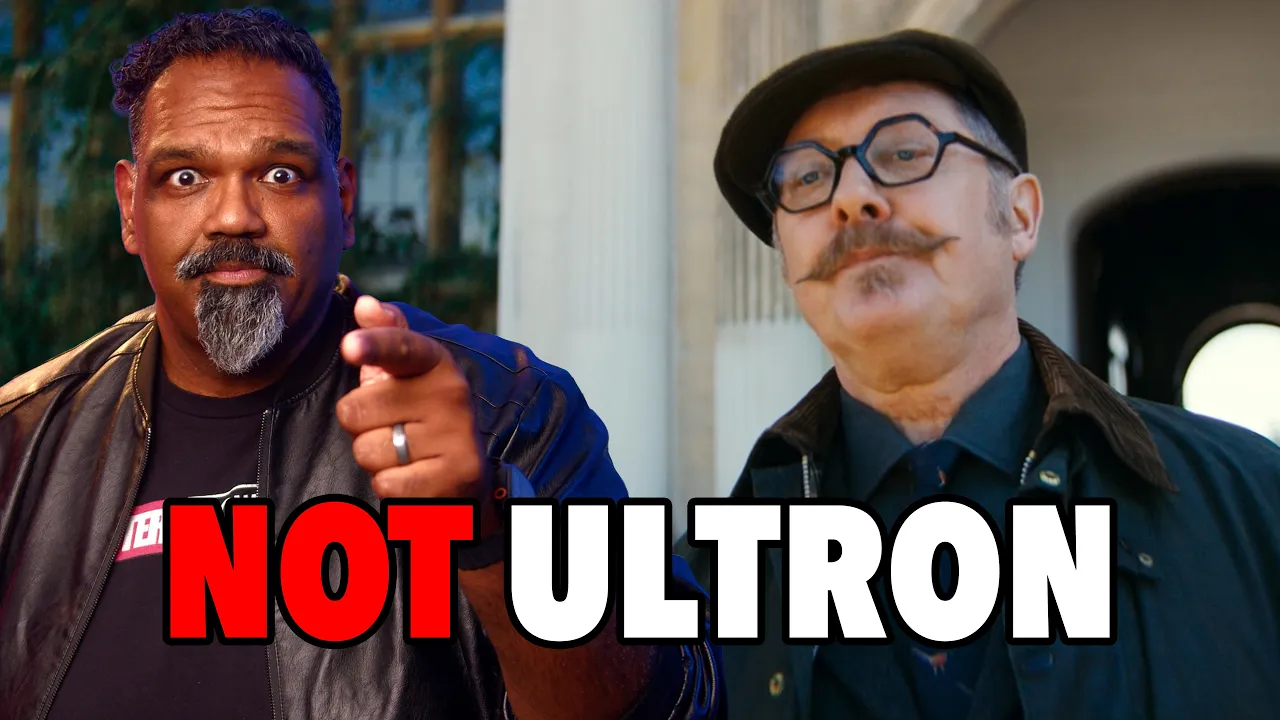
Adapted with AI from Mr. Know-It-All's video of 10 November 2026 and checked against the video before publication. Editorial standards · Corrections
More from @arealknowitall
All →

Make videos? Your next one could be an article here.
We turn your videos into articles under your name, linked back to the original. You keep 60% of what they earn, non-exclusive, and you can leave whenever you like.
Become a SubPlotter →