Spider-Man: No Way Home Nearly Had Venom, an Iron Man Suited Green Goblin and a Kraven Manhunt
From a grounded Kraven's Last Hunt thriller to America Chavez breaking the multiverse, here is the No Way Home that almost was
 Breakdowns & Blockbusters (AI-assisted)30 September 2026 · Editor: Digital Fox Talent Editorial Team
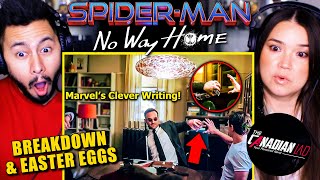
Spider-Man: No Way Home nearly featured Tom Hardy's Venom crashing the final battle, Green Goblin wearing an Iron Man suit, and America Chavez blending universes instead of Doctor Strange. There was even a version where Spider-Man and Doctor Strange battled across time through key moments from every previous Spider-Man film, and another that was not about multiverse chaos at all, but a brutal grounded showdown between Peter Parker and Kraven the Hunter.
Believe it or not, all of those things nearly happened, as No Way Home went through several changes before landing on the version we got. Here is how the film went from all of that to the movie we know.
The 2019 Sony and Disney split nearly pulled Spider-Man out of the MCU
When Marvel and Sony's partnership hit a breaking point in 2019, the future of Tom Holland's Spider-Man looked uncertain. The cross studio deal that allowed the webslinger to exist in the MCU was built on an unusual arrangement: Sony owned the movie rights to Spider-Man, while Marvel produced the films and was allowed to integrate Peter Parker into its cinematic universe.
That partnership had been successful for Homecoming and Far From Home, but Marvel's parent company Disney felt the deal was unfair, believing it was doing most of the work responsible for the box office success. Disney wanted to renegotiate, proposing a 50/50 financing split on future Spider-Man films to replace the existing terms, under which Disney got full merchandising rights and 5% first dollar gross.
Neither studio would budge, and talks broke down completely. By August, Sony called Disney's bluff and let the fallout go public, with headlines declaring that Spider-Man was leaving the MCU for Sony's own universe of Spider-Man characters. Tom Holland would be hanging out with Venom, Morbius and Madame Web instead of Doctor Strange, Ant-Man and Captain Marvel. For a few tense weeks, it seemed Peter Parker's time with the Avengers was over.
Tom Holland's call to Bob Iger helped keep Peter Parker in the MCU
Shocked and devastated, Holland drove straight to the home of longtime Spider-Man producer Amy Pascal to discuss the future of the franchise. The pair wondered, "How do we do a film without Marvel?" Among the options they weighed were Peter Parker falling through a portal into Venom's world, or a Kraven the Hunter film.
Frustrated and feeling his future as Spider-Man might be coming to an end, Holland decided to call Disney CEO Bob Iger simply to thank him personally for changing his life. What started as a brief thank you soon turned into an emotional plea as Holland poured out his feelings about the character and the future of the films.
Holland's sincerity and passion compelled Iger to call Sony leadership to find a solution. Eventually, a deal was reportedly made that saw Disney financing 25% of the film in exchange for 25% of its profits, and Spider-Man would officially remain in the MCU.
Jon Watts first pitched a grounded Kraven's Last Hunt thriller
Director Jon Watts pitched the first concept for Holland's third Spider-Man film: a grounded thriller inspired by the classic comic storyline Kraven's Last Hunt. In that arc, the mercenary Kraven sets out to prove he can defeat Spider-Man and become a better version of him.
In this version, Kraven would hunt Peter after Mysterio revealed his identity at the end of Far From Home, forcing Peter to go on the run. It would have been darker, more intimate and more psychological, far from the crowd pleasing crossover spectacle No Way Home eventually became.
But Sony had other plans. The studio was already developing a standalone Kraven the Hunter film starring Aaron Taylor-Johnson as a sympathetic antihero, which meant the character could not be the main villain. With Kraven off the table, the team looked elsewhere for a big hook. Reflecting on the phenomenal success of Into the Spider-Verse, writers Chris McKenna and Erik Sommers began experimenting with the multiverse, envisioning a movie that combined characters and villains from across Spider-Man cinematic history.
Tom Hardy's Venom was meant to crash the Statue of Liberty battle
One of the biggest what ifs from early development was Venom, already the center of his own universe as played by Tom Hardy. Hardy's version was originally planned to join the other villains during the climactic Statue of Liberty battle, though he would have been stuck in the Lincoln Tunnel and delayed before making a grand entrance.
Venom posed narrative problems. In the final film, a failed spell brings forward characters from different universes who had a history with Spider-Man, but Hardy's Venom had never met any version of him. To work around this, the writers envisioned the symbiote carrying latent awareness of other universes, sharing the memories of the symbiote that battled Tobey Maguire in Sam Raimi's Spider-Man 3.
That role never materialized. Venom's part in the multiversal chaos was reduced to the post credits scene of the second Venom film, where he is warped to the MCU, and a post credits scene in No Way Home where he is warped back after leaving a small piece of the symbiote behind, teasing where Spider-Man's story might go next with Holland finally donning the black suit.
Rhino, Mysterio and Vulture were all cut from the villain lineup
The original plan was to bring back every major antagonist from past Spider-Man films, including Paul Giamatti's Rhino from The Amazing Spider-Man 2 and Jake Gyllenhaal's Mysterio from Far From Home. Mysterio would have faced off against Doctor Strange in a mind bending cosmic showdown, a finale aiming to surpass Far From Home's visual spectacle by merging Mysterio's illusion based chaos with Strange's reality warping sorcery.
Michael Keaton's Vulture was also set to return, with Peter turning to him for help tracking down, capturing and rehabilitating the multiverse villains. His wing suit would have been made from junkyard scraps.
With all these villains in the mix, the initial aim was for each to have a roughly equal presence, with no single main antagonist. But once the team began trimming the returning characters, they realized Norman Osborn had to step into that central position. Willem Dafoe's chilling, unhinged performance and his tense relationship with Peter became the emotional core of the film.
Green Goblin was once imagined in Iron Man style armor
The creative team initially wanted to redesign all of the returning rogues with updated, MCU style looks to distinguish them from their original appearances. Green Goblin was imagined in Iron Man style armor, both to modernize his tech and to psychologically torment Peter by reminding him of Tony Stark's death. Doc Ock and Lizard were planned to have more comic accurate designs.
In the end, Kevin Feige pushed to preserve their original appearances and cash in on nostalgia. The one exception was Electro. Jamie Foxx only agreed to return if he did not have to be blue, and wanted the character to be a little more hip. Still, in one key moment when electricity surges through him, he briefly takes on the classic comic look, complete with the star shaped lightning mask.
Mary Jane, Aunt May and a bigger Matt Murdock role were trimmed
It was not just going to be Andrew, Tobey and their villains arriving in the MCU. Early drafts included appearances from Sally Field's Aunt May and Kirsten Dunst's Mary Jane Watson, but they were ultimately cut over fears they would overcrowd the film.
Charlie Cox's Matt Murdock also originally had a much larger role. Cox revealed he even shot a very tongue in cheek scene with Jon Favreau's Happy Hogan featuring a meta joke where Happy says, "I'm a little foggy on how this happened," referencing Favreau's role as Foggy Nelson in the 2003 Daredevil film.
A chase through past Spider-Man films proved too ambitious
One particularly wild sequence would have taken Doctor Strange and Spider-Man's mirror dimension chase across the multiverse itself. McKenna described Peter and Strange battling through iconic moments from previous Spider-Man films from different perspectives and orientations.
That chase would have passed through the wrestling ring where Bonesaw McGraw fought Tobey Maguire's Peter Parker, Gwen Stacy's tragic clock tower fall in The Amazing Spider-Man 2, and the church where Eddie Brock bonded with the symbiote in Spider-Man 3. It would have been "a dizzying roller coaster ride through Spider-Man's cinematic legacy," but the complexity and cost of rendering so many universes proved too ambitious, and the idea was shelved.
America Chavez was originally the one who broke the multiverse
One of the more significant changes was that America Chavez was originally supposed to appear, having already been introduced in Doctor Strange in the Multiverse of Madness, which was first planned to come out before No Way Home. Her role was not a quick appearance. She was central to the narrative and responsible for bringing Tobey and Andrew's Spider-Men into the story.
In this version, America is Doctor Strange's apprentice and desperate to prove herself. After Strange declines Peter's pleas for help, she offers to perform the spell herself, but her inexperience makes it go horribly wrong. When May dies, America brings in Maguire and Garfield as emotional support and guidance, since both had suffered similar loss and grief as Spider-Man.
When COVID-19 delays pushed back Multiverse of Madness, the release schedule flipped and No Way Home would come first. America had to be cut, and the writers transferred her magical duties to Ned, who inherits the sling ring and discovers the power to open portals to other universes.
Fan art forced Tobey and Andrew's entrance to change
That structural change also reshaped how Tobey and Andrew entered. The writers first envisioned them arriving through portals on a rainy rooftop after May's death, during an emotional low point for Holland's Peter Parker.
However, McKenna found fan art online that predicted that exact entrance. This caused a brief panic, as the team realized they could not do something fans had so easily predicted. They moved the introduction to Ned's grandmother's apartment in Queens, which they felt no one would predict, shifting the reveal from an emotionally resonant scene to a more unexpected comedic one.
No Way Home became something far bigger than anyone at Marvel or Sony first imagined: a once in a generation crossover that turned cinematic nostalgia into an emotional event. Through countless rewrites, delays and creative tugs of war, the filmmakers carried the responsibility to deliver a story worthy of the character's legacy and of the generations who grew up with all three Spider-Men.
Which of these abandoned versions of No Way Home would you most have wanted to see?
Watch the original
@breakdownsandblockbusters · YouTube
Adapted with AI from Breakdowns & Blockbusters' video of 29 November 2025 and reviewed by Digital Fox Talent before publication. Editorial standards · Corrections
Also on Spider-Man: No Way Home
7 creators, 35 takes →

More from @breakdownsandblockbusters
All →


Make videos? Your next one could be an article here.
We turn your videos into articles under your name, linked back to the original. You keep 60% of what they earn, non-exclusive, and you can leave whenever you like.
Become a SubPlotter →