Super Mario Bros. 1993: who almost played Mario and Koopa?
Before the 1993 film, the project went through a Rain Man style drama, a Shrek-like fairy tale, a dinosaur parody of New York City and a last-minute rewrite

What if Danny DeVito had played Mario, Tom Hanks had played Luigi, and Arnold Schwarzenegger had played King Koopa in 1993's Super Mario Bros.? What if the film had been a true journey into the Mushroom Kingdom, closer in spirit to The Wizard of Oz, or a road trip drama like Rain Man? Believe it or not, all of those things almost happened, before a late rewrite and the directors' reluctant decision to stay with it, which in hindsight sealed the movie's fate.
The film that finally reached screens starred Bob Hoskins as Mario and John Leguizamo as Luigi. Getting there took a string of very different scripts, directors and casting ideas, each of which pulled the project in a new direction.
Roland Joffé pivoted from prestige dramas to Super Mario Bros.
After directing the critically acclaimed The Killing Fields and The Mission, Roland Joffé found himself at a crossroads. He worried about becoming trapped in a cycle, expected to deliver the same kind of solemn prestige dramas over and over again. Rather than repeat himself, he wanted to do something no one would ever expect from him.
So he made a radical pivot from directing prestige dramas to producing Super Mario Bros. Against all odds, Joffé acquired the film rights from Nintendo, beating out multiple major studios in the process. His pitch was simple but wildly ambitious: make Mario live action, not a cartoon, and do for the Mario brothers what Tim Burton had just done for Batman. In other words, make it cool and aim it at young adults, not kids.
Barry Morrow's Rain Man style draft, nicknamed Drain Man
Joffé was a huge fan of Rain Man, the road trip drama about a selfish hustler forced across the country with the autistic savant brother he never knew he had. So he brought in that film's Oscar winning writer, Barry Morrow, to take a crack at the script. Morrow's draft leaned so hard into that template that the crew jokingly nicknamed it Drain Man, a nod to Rain Man and to the fact that the Mario brothers are plumbers.
His version established Mario as the older, pragmatic brain and Luigi as the naive savant, framing them as a blue collar, dysfunctional family rather than cartoon mascots. It worked as a straight origin tale set entirely in the real world, before the brothers ever left Earth for Koopa fighting adventures in the Mushroom Kingdom. The story was kicked off by something mundane: a ring lost down a drain, which pulls Mario and Luigi into the plumbing world and starts the journey that would eventually earn them their super status.
"It was game-like in silliness," Morrow later said. But the emotional spine was a serious brother relationship drama, not a slapstick comedy. While Joffé was intrigued by the character first approach, his producing partner wasn't, and wanted a four quadrant blockbuster that could sit alongside E.T., Ghostbusters, Terminator 2 and Batman. Morrow's script was seen as too earnest, too dramatic and not big enough for a major Nintendo adaptation. As Morrow recalled, the plug was pulled abruptly. He hadn't even finished the script when a courier showed up and took it away in the middle of the draft.
Parker and Jennewein's Wizard of Oz style fairy tale
The next major attempt came from writers Thomas S. Parker and Jim Jennewein, who tossed out Morrow's grounded, character driven draft and started over from scratch. Their guiding idea was simple and smart. Mario shouldn't feel like a serious drama at all. It should feel like a journey into another world, closer in spirit to The Wizard of Oz than Rain Man.
This version leaned fully into fantasy, aiming to satirize fairy tale cliches while still telling a sincere story about brotherhood. In hindsight, that approach feels eerily similar to what Shrek would successfully pull off a decade later. The tone was playful, self aware and colorful, constantly undercutting traditional fantasy tropes with humor rather than grim realism.
One familiar element did survive into the eventual film: the orphan princess. The story opens 20 years earlier, with a mysterious figure leaving a baby girl on the steps of a Catholic orphanage before dying of a heart attack when confronted by towering armored figures. From there it jumps to present day Brooklyn, where Mario and Luigi are broke, struggling plumbers deep in debt to a loan shark named Big Eddie. Mario is gruff, squat and perpetually angry at the world. Luigi is shy, awkward and childlike, far more interested in winning over Hildy, a flower shop assistant, than paying off debts. That emotional core, the brothers' bickering and Luigi's romantic optimism, would persist across nearly every version of the script.
Hildy, the ruby locket and King Koopa in the fairy tale draft
The fantasy kicks in when the brothers discover a ruby locket hidden inside a pipe while doing a free plumbing job at a church. Luigi recognizes it from a dream and refuses to give it up, setting off a chain of events that brings King Koopa to Earth, initially disguised as a human. Rather than immediately revealing him as a reptilian tyrant, the script plays coy with the fantastical, easing audiences into the weirdness. Koopa manipulates Hildy by claiming to represent her long lost parents and lures her away, so Luigi chases him and Mario chases Luigi.
Their pursuit leads them into a bizarre frog themed diner, where they find a massive pipe in the back room and are sucked inside. On the other side lies a Mushroom Kingdom described as something straight out of a storybook. There they meet Toad, a small mushroom creature sentenced to death by piranha plants, whom they rescue just as Koopa's massive flying warship descends from the sky. Koopa's plan is classic fairy tale villainy. He intends to marry Hildy in a ritual that will grant him control of the kingdom, and through enchanted chocolates he slowly brainwashes her and even begins transforming her into a female Koopa.
Spear wielding henchmen attack the brothers, only to bow in reverence when they see Luigi's locket. It leads Mario and Luigi to an underground rebel village, where they learn that Koopa slaughtered the royal family years ago, except for the king and the infant princess, Hildy herself. A prophecy claims the kingdom will be saved by warriors carrying the locket, though the wizard Walton stays skeptical and sends the brothers on a quest to prove themselves.
What makes this draft especially charming is that it never takes the prophecy too seriously. In a perfect comedic swerve, the locket turns out to be meaningless. Mario and Luigi succeed not because they're chosen ones, but because of Luigi's impulsive kindness and Mario's stubborn determination. Koopa falls to his death in a sea of lava, Walton reveals himself as the true king in disguise, and Hildy is freed as they all return to Brooklyn. The brothers are rewarded with riches and rebuild their plumbing business, and Luigi marries Hildy. Most importantly, the script was packed with game elements used creatively: Goombas, Koopa Troopas, Thwomps, Bob-ombs, Hammer Brothers, flying leaf power ups, lava flooded dungeons and even a cameo from Yoshi, here named Junior. It was a bold attempt at a whimsical fantasy, faithful in spirit if not literal detail. It wasn't dark, it wasn't cynical, and it wasn't embarrassed to be a fairy tale.
Why the fairy tale Mario movie fell apart
At first the project appeared to be settling into place. Greg Beeman, fresh off the teen comedy License to Drive starring the two Coreys, was attached to direct. But when his next film, Mom and Dad Save the World, flopped, Joffé lost confidence in him and removed him from the project.
The script had its own problem. CGI was still in its infancy, so most of the effects would have to be done practically, and there was growing concern that a fairy tale Mario movie packed with monsters, warships and lava dungeons could send the budget spiraling out of control.
Rocky Morton and Annabel Jankel imagined Dinohattan
That's when Joffé had an unexpected flash of inspiration. He found himself thinking about the strange, futuristic and aggressively cynical TV series Max Headroom. Its creators, the husband and wife directing team Rocky Morton and Annabel Jankel, had a reputation for bold visuals and subversive humor. After meeting them, Joffé became convinced they were the answer and hired them to direct.
Influenced by the darker tone popularized by Batman and the Teenage Mutant Ninja Turtles film, Morton and Jankel rejected the colorful fairy tale and wanted a movie for young adults instead of kids. Their son at the time was obsessed with dinosaurs, which inspired the central concept: dinosaurs were never wiped out, but shifted into another dimension, where humans evolved from dinosaurs and society was dominated by aggressive, primordial behavior and basic instincts. They wanted a savage parody of New York City, and dubbed the dinosaur metropolis Dinohattan.
Their initial vision also made the brothers' story more emotional. Having lost their parents young, Mario was forced to raise Luigi himself, becoming a stand in mother figure rather than the strong older brother Luigi wanted. That imbalance bred frustration and resentment: Luigi longed for a male role model, while Mario struggled under a responsibility he never asked for. At its core, that early version was about the brothers confronting that rift and growing into who they were meant to be.
The film was also meant to be a meta prequel to the game. The idea was that, like all myths, the truth gets distorted over time. In the original ending, Mario and Luigi return to Brooklyn as celebrities after saving Earth from King Koopa. Japanese executives from Nintendo hear the story of their adventure, but details get lost in translation, and many elements change during the game's development. That logic was meant to explain why the film didn't resemble the game, but it also created a massive emotional disconnect for audiences who just wanted to see the Mushroom Kingdom brought to life.
Dustin Hoffman, Danny DeVito, Tom Hanks and Arnold Schwarzenegger in the casting search
Dustin Hoffman lobbied hard to play Mario, even attempting to buy the film rights before Joffé did and produce it himself. Even after Joffé secured the rights, nobody felt Hoffman was right for the part. Instead, Danny DeVito was offered both the role of Mario and the director's chair in an effort to lure him aboard, but he passed.
For Luigi, the studio approached Tom Hanks, but after a string of bombs like Joe Versus the Volcano and The Bonfire of the Vanities, it lost confidence in his box office appeal and moved on. Arnold Schwarzenegger was the top choice for King Koopa, with concept art designed around him, but he passed to star in Last Action Hero instead. The producers then turned to Michael Keaton, who had no interest in jumping straight into another effects heavy franchise. Bob Hoskins and John Leguizamo were ultimately cast as Mario and Luigi, but the script they signed on to film would change, much to their chagrin.
Disney's demand led to a rewrite weeks before shooting
When Joffé went looking for additional financing, he turned to Disney. The studio felt the script was too dark and too mature for a family audience, and was only willing to come aboard if it was lightened up with broader humor, overt gags and a much more childlike tone. In other words, the exact opposite of the direction the movie had been heading.
That demand triggered a catastrophic chain reaction. The script was rewritten two to three weeks before shooting began, while sets were being built and costumes made for a completely different script. The directors were never told about the rewrite, and when they finally read it, they agreed it wasn't the movie they wanted to make.
They debated quitting, but realized that so late in production, no other director could understand the material well enough to direct it properly. Reluctantly, they stayed, convincing themselves they could somehow fix it as they went along. That decision, in hindsight, sealed the movie's fate, and it was only the tip of the iceberg, because the real story of how the production spiraled out of control played out on set.
Watch the original
@breakdownsandblockbusters · YouTube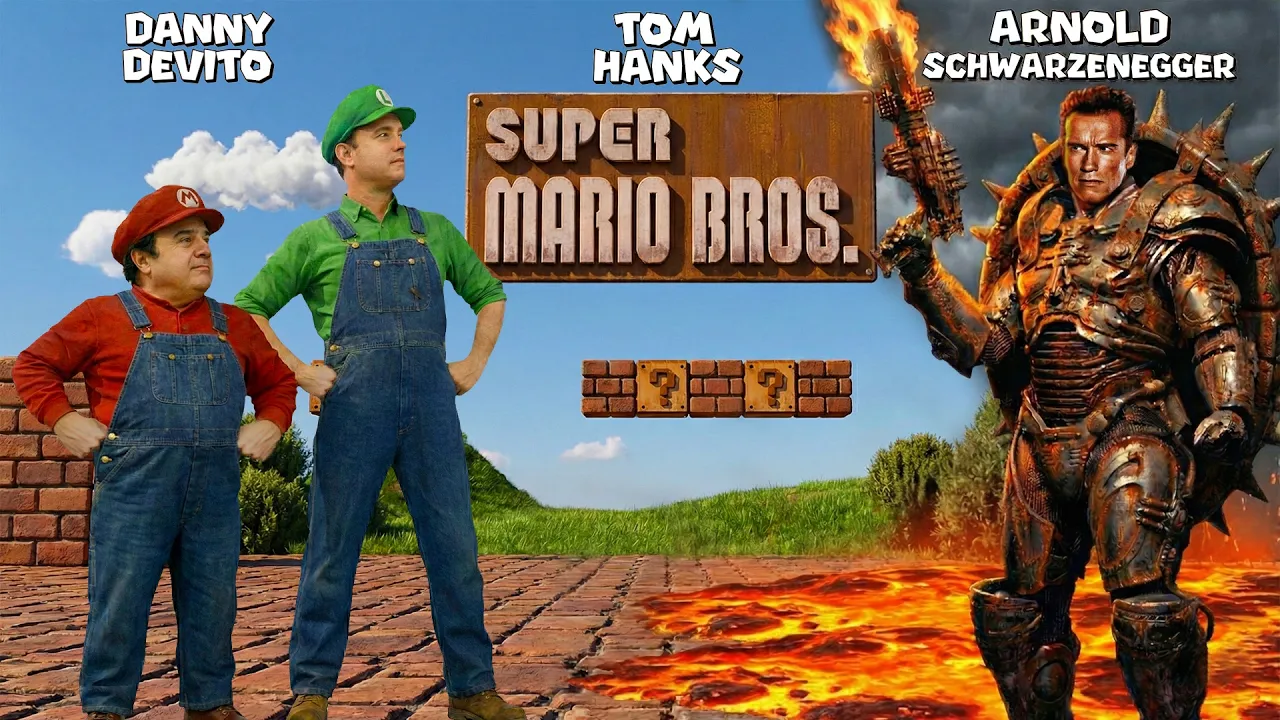
Adapted with AI from Breakdowns & Blockbusters' video of 21 February 2026 and checked against the video before publication. Editorial standards · Corrections
More from @breakdownsandblockbusters
All →


Make videos? Your next one could be an article here.
We turn your videos into articles under your name, linked back to the original. You keep 60% of what they earn, non-exclusive, and you can leave whenever you like.
Become a SubPlotter →