Robert Downey Jr: from prison to Iron Man and an Oscar
Addiction, arrests and a stint behind bars nearly ended his career before Marvel took a chance on him, and a Burger King meal, Mel Gibson and his wife Susan helped him get there.

In 1992 Robert Downey Jr earned an Oscar nomination for Chaplin, which cemented his status as one of Hollywood's most talented actors. Behind the scenes, though, his life was unraveling. By the late '90s he was making headlines for drug arrests and rehab stints, and he even served time in prison. He was fired from Ally McBeal, deemed uninsurable and written off by Hollywood.
Then, against all odds, he pulled off one of the greatest comebacks in Hollywood history with Iron Man (2008). He didn't just revive his career. He became the face of the biggest film franchise of all time and one of the highest paid actors in the world. So how did a rising star become a washed up actor no studio would hire, only to rise again as a global icon? Here's the rise, fall and rise again of Robert Downey Jr.
Robert Downey Jr's early career, from the Brat Pack to Chaplin
Downey's career started with promise, and it seemed like Hollywood had found its next big thing. He began acting young thanks to his father, Robert Downey Sr, an experimental filmmaker. But when Downey was just 6 years old, his father introduced him to marijuana. Downey Sr later regretted that decision, admitting it was a misguided attempt to bond with his son. It would set the stage for a lifelong struggle with addiction.
His natural charisma and talent showed early. By the '80s he was making a name for himself as a member of the Brat Pack, a group of young actors who dominated that era's teen films. His roles in Weird Science and Less Than Zero showcased his range. Less Than Zero earned him praise for playing a young man battling drug addiction, a role that foreshadowed his own struggles.
In 1992 Downey played the comedian Charlie Chaplin in Chaplin, and the role earned him an Academy Award nomination for best actor, a major turning point in his career. He learned the violin and painstakingly studied Chaplin's signature movements. The film was a success and his performance was nothing short of transformative. Beneath the accolades, however, was a young actor struggling to keep it together, and his demons would soon define the next chapter of his life.
Drug arrests and prison time derailed Robert Downey Jr in the late '90s
Downey's substance abuse escalated in the late '90s, leading to a series of high profile incidents. In 1996 he was pulled over for speeding in Malibu and found in possession of cocaine, heroin and an unloaded handgun. Just weeks later, while under the influence, he trespassed into a neighbor's home and was found asleep in their child's bed.
Those incidents marked the beginning of a downward spiral that included multiple arrests and stints in rehab. In 1999, after missing a court ordered drug test, Downey was sentenced to three years in the California Substance Abuse Treatment Facility and State Prison. He served nearly a year before being released on parole. Reflecting on his time inside, he said that you can't go from a luxury hotel suite to a penitentiary, really understand it, and come out a liberal, adding: "I wouldn't wish that experience on anyone."
Fired from Ally McBeal and deemed uninsurable
His troubles were far from over. In 2000 Downey joined the cast of Ally McBeal, earning critical acclaim and a Golden Globe for his performance, and it looked like his career was reviving. That comeback was cut short when he was arrested yet again, this time in a Palm Springs hotel with cocaine and methamphetamine.
The show's producers fired him, citing his unreliability and the difficulty of insuring him. These repeated incidents left him virtually unemployable in Hollywood, and many believed his career was over.
A Burger King meal, Mel Gibson and Susan Downey helped him get clean
While driving with a car full of drugs, Downey stopped at a Burger King. In his own words, he ordered a burger so bad it made him reevaluate his life. He decided then and there to toss his drugs into the ocean and commit to getting clean. Years later he referenced that moment in Iron Man, when Tony Stark, freshly released from captivity, asks for a cheeseburger from Burger King, a subtle nod to his own life changing moment.
Determined to change, he embraced sobriety and sought help, but he struggled to find work because no studio would pay for his insurance bond in case he relapsed during filming. His life raft came courtesy of an unexpected friend, Mel Gibson. Believing in Downey's talent despite his troubles, Gibson paid the insurance bond for The Singing Detective, giving him a chance to revive his career. That pivotal moment marked the start of his comeback.
What ultimately sealed the deal on his sobriety wasn't just rehab or hitting rock bottom. It was his wife, Susan Downey, who gave him a clear ultimatum: get clean or lose me. Unlike his past attempts to turn his life around, the stakes this time were different. Susan wasn't just another person in his life; she was his future. Realizing he had everything to lose, Downey took her words to heart and committed to rebuilding not just his career but his entire life.
Marvel's Iron Man gamble paid Downey half a million dollars
In 2008 Marvel Studios was far from the Hollywood juggernaut it would become. Iron Man was the first movie it was producing on its own without a Hollywood studio, a make or break moment for a company that was betting the farm on the film's success. Instead of playing it safe with a bankable star, Marvel cast Downey, an actor with a history of arrests, addiction and a reputation for being unreliable.
At the time Downey was not a major box office draw, and studios saw him as a liability. Director Jon Favreau fought for him, believing that Downey's personal struggles mirrored Tony Stark's journey from reckless playboy to hero. Marvel was so cautious that it paid Downey peanuts, just half a million dollars for the role.
The highest paid actor in Iron Man was actually Terrence Howard, who had just come off an Oscar nominated performance in Hustle & Flow. Howard, cast as James "Rhodey" Rhodes, was seen as the bigger name and was paid 3.5 million dollars, seven times more than Downey.
Downey improvised Tony Stark into the face of the MCU
Behind the scenes, the production was just as risky. The script was unfinished, with key scenes still being written while filming was underway. That forced the cast and crew to improvise heavily, creating an unpredictable and chaotic energy on set. For most actors that would have been a nightmare, but for Downey it was an opportunity.
His quick wit and natural charisma shaped Tony Stark's personality on the fly, turning him into the snarky, self assured genius audiences would fall in love with. Some of the film's most memorable moments, including Stark's iconic "I am Iron Man" reveal, were Downey's improvisations.
Despite all the uncertainty, Iron Man grossed 585 million dollars worldwide and proved Marvel's gamble had paid off. Downey, paid less than a million dollars, didn't just revive his career. He became the face of a bold new experiment, the Marvel Cinematic Universe. Casting him had been a risk, but Marvel was now attempting something even riskier: an interconnected franchise unlike anything Hollywood had seen before.
Iron Man 2 lost Terrence Howard and the Demon in a Bottle storyline
Just as everything seemed to be falling into place, it almost came crashing down with Iron Man 2. Terrence Howard, the highest paid actor in the first film, found himself pushed out of the franchise after a heated pay dispute. Howard later claimed that Marvel took the money promised to him and gave it to Downey, as the newly minted star demanded and received a major salary bump for the sequel.
Meanwhile, Iron Man 2 was rushing through production, with Marvel eager to expand its universe and cutting corners along the way. The film was originally set to tackle the Demon in a Bottle storyline, which explored Tony Stark's battle with alcoholism and is one of the most defining arcs in the comics. Susan Downey allegedly had reservations, feeling that if Downey immersed himself in a role centered on addiction it could lead him to relapse. Having fought so hard to rebuild his life and career, the risk was too great.
Instead the storyline was toned down, shifting the focus to Stark's palladium poisoning and government pressure rather than a direct struggle with substance abuse. The final product, while financially successful, was widely seen as one of the weaker entries in the franchise, weighed down by studio interference, underdeveloped villains and a rushed script. Even with its flaws, Iron Man 2 laid the groundwork for the MCU, teasing a larger world that would soon take over Hollywood.
Kevin Feige fought to keep Iron Man in Captain America: Civil War
Captain America: Civil War was a pivotal turning point for the MCU, expanding the franchise's scope far beyond what had come before. Behind the scenes, though, the movie almost didn't include Iron Man at all. Marvel Studios president Kevin Feige faced intense resistance from the higher ups at Marvel Entertainment, who balked at the sky high price tag that came with putting Downey in a Captain America film. By this point Downey had cemented himself as the face of the MCU, he knew his value, and he wasn't going to come back cheaply.
Marvel initially planned a smaller scale sequel that continued the Winter Soldier storyline, but Feige saw an opportunity to go bigger. Adapting the Civil War storyline meant Stark had to be at the center of it, setting up an ideological clash with Captain America. The problem was Downey's salary demands. The notoriously frugal Ike Perlmutter, then still overseeing Marvel Studios, refused to pay Downey what he wanted and ordered Stark written out. Marvel considered replacing him with the Hulk leading one faction of the Avengers while Cap led the other.
Feige, knowing the story wouldn't work without Iron Man, fought back, convincing Disney executives that the film would be the next level of world building for the entire MCU. He eventually won, securing Downey's return. Downey, who had once struggled to land a role, now held all the cards. He negotiated a big payday, and Civil War grossed over a billion dollars, proving Feige's gamble was worth it. Downey's earnings from Marvel alone surpassed 400 million dollars, making his comeback one of the most profitable in film history.
Tropic Thunder and Oppenheimer made Downey an Oscar winner
Downey wasn't just a massive earner. He had also risen back to the top as a critically acclaimed actor, proving his talent extended far beyond the MCU. He took a bold, multilayered role in Tropic Thunder, playing a pretentious Australian method actor portraying a Black soldier, a risky performance that earned him an Oscar nomination.
Then he won his first Oscar for his powerful, career defining performance in Oppenheimer, playing the calculating and vengeful Lewis Strauss. The actor Hollywood once wrote off as uninsurable had cemented his place as one of Hollywood's greatest actors.
What other creators are saying
More on Iron Man →I theorized Tony Stark would spend time on Nidavellir with Eitri, Rocket and Thor, where space time dilation could explain a jump from the Mark 50 to the Mark 85, with Eitri possibly providing Uru metal like Odin did in the comics for the destroyer armor.
Iron Man's Mark 85 theory: did Tony build it on Nidavellir? →
Tony Stark's future first cousin wears a suit with cloaking technology and no need for a cybernetic link.
Vision's phasing and Mind Stone make him dangerous, but Tony Stark's strength, durability and versatility in his final armor tip the fight in his favour.
From a Burger King cheeseburger to Big Lebowski Easter eggs, the 2008 film that launched Tony Stark is packed with clues, and with a lesson Marvel Studios later forgot
Iron Man 2008: hidden details and the lesson Marvel forgot →
Watch the original
@breakdownsandblockbusters · YouTube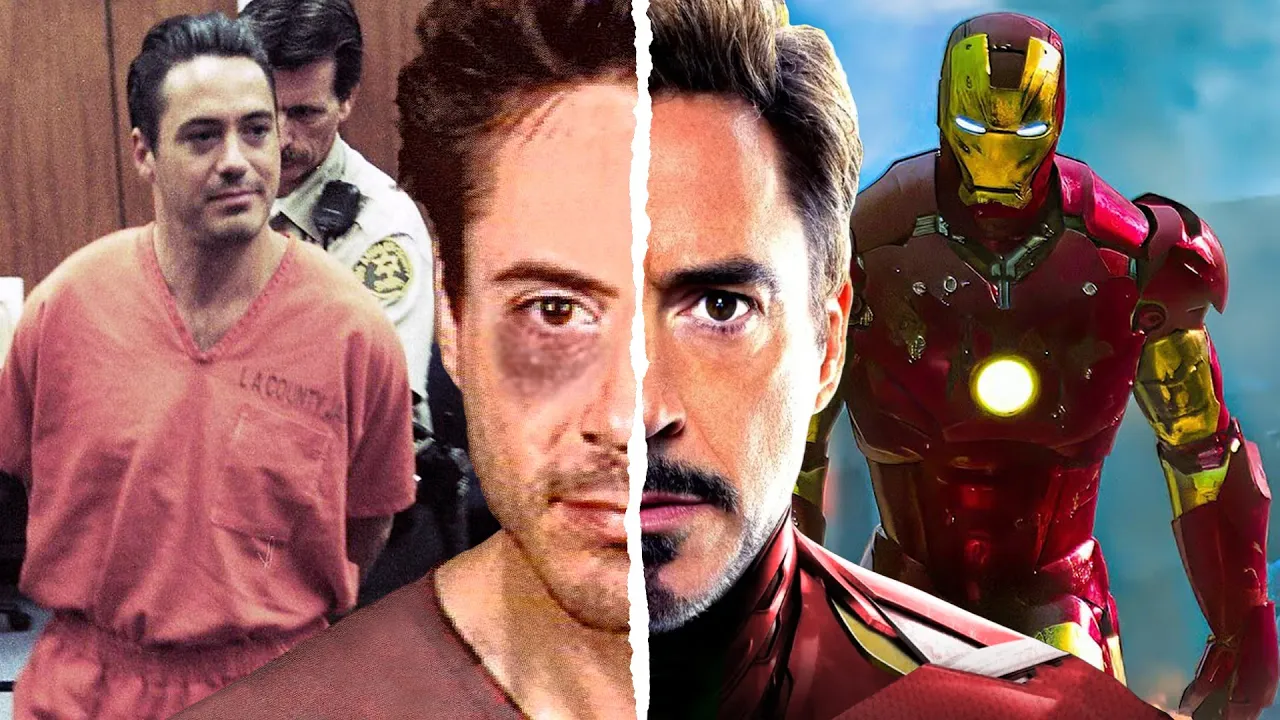
Adapted with AI from Breakdowns & Blockbusters' video of 12 February 2025 and checked against the video before publication. Editorial standards · Corrections
More from @breakdownsandblockbusters
All →


Make videos? Your next one could be an article here.
We turn your videos into articles under your name, linked back to the original. You keep 60% of what they earn, non-exclusive, and you can leave whenever you like.
Become a SubPlotter →