V Time 2: The 2006 Virginia FGC Tournament With Top Names, a Stage, and a Bracket I Could Not Trust
A Richmond tournament series had the production of a major and top players in attendance, but missing names, a rewritten paper bracket and entry money that did not appear to reach the pot buried it.
 Commentator's Curse FGC (AI-assisted)3 October 2026 · Editor: Digital Fox Talent Editorial Team
How does a fighting game tournament with Justin Wong, Sanford Kelly, Alex Valle, Combofiend, Perfect Legend and Marn in attendance end up forgotten? In 2006, Virginia had a tournament series called V Time, short for Virginia Takes Your Money Every Time, and its second event looked like the moment the state might become a serious stop on the FGC map. But I was there, and what I remember is not only the stage and the music. It is the bracket, the missing names, the registration money and the organizer sitting at the center of it all.
V Time 2 is not just under discussed. It survives in an old forum post, scattered memories, broken archives and stories only the people in the room can still explain. Later in this piece I will explain how I played six sets in Soulcalibur III before I ever reached round one.
V Time 1 proved players would travel to Richmond
V Time did not start as a giant production. The first one was held in a hotel conference room in Richmond, Virginia. Tekken 5 was the center of gravity, but Third Strike, Marvel vs. Capcom 2 and Soulcalibur 2 were also there. For a first Virginia event, the names were serious. Sanford Kelly and Justin Wong came, along with players from outside the state.
The tournament was promoted and organized by two people. One later became one of the most recognizable voices in the Mortal Kombat community. The other already had the confidence and presence to make people pay attention when he decided to run something. Together they gave V Time real scene gravity. The first event had its own controversies, but Virginia had shown it could get people in the room and pull names from outside the state. V Time 1 proved the concept: if the players had enough energy around the tournament, they would come.
V Time 2 brought stage presentation that felt ahead of its time
V Time 2 took that proof of concept and tried to make it feel like a major. It felt different the moment you walked in. A large projector showed matches to the crowd, a DJ controlled the atmosphere, there were multiple rooms, and indie game developers showed off their upcoming projects. That was not the normal setup where top players sat quietly in a corner while people crowded around a CRT.
When top eight started, players got introduced with music and entrances, walking out like they were part of a real show. I had my own top eight introduction, and it was a different time, so do not judge. But I was not standing in a random corner waiting for someone to call my match. I was on the stage being introduced, as if the tournament was trying to make the moment feel bigger than just another bracket.
For a Virginia tournament in 2006, that felt unusually polished. Today stage matches, vendors and walkouts are normal parts of major tournament production, but back then it gave V Time 2 a different energy. It felt like Virginia was trying to announce itself. The state already had players, but it did not have the same major event identity as other East Coast venues. New York, Philly and Atlanta all had stronger tournament identities or deeper history attached to them, and V Time 2 looked like Virginia's attempt to close that gap.
The bracket ran on a trust system controlled by one organizer
V Time 2 had the presentation of the future, but the tournament still ran on the trust system of the past: cash registration, paper brackets and one person with too much control over who got placed where. That person was not some quiet organizer sitting behind a table. He was one of the most notorious figures in the FGC, a top level Tekken 5 player, brash and confident, loud enough to draw attention and connected enough to make people care when he ran something. He was even getting recognition outside the local scene in gaming magazine coverage that year.
That notoriety helped V Time feel bigger than a normal tournament. He could generate interest, pull players into the room and make Virginia feel like it had something worth traveling for. But he also had enough control to make players outside his circle feel like the tournament was being shaped against them. From the crowd, V Time 2 looked like a spectacle. From the bracket, it felt a lot more dangerous.
That old system gave enormous power to whoever controlled the table. If your name was missing, you had to argue with the person who wrote the bracket. If the bracket looked strange, you had to hope other people noticed too. If the pot looked wrong, you had to ask questions in a room where local politics could follow you.
From my experience, he manipulated brackets in ways that protected himself and his friends from dangerous players. If he did not like you, your path could become brutal fast, and you could end up in the section where every serious threat seemed to be waiting. A bad seed can happen when an organizer does not know the players, but this felt different. He knew who was dangerous and who could threaten the people he wanted to protect. When certain players kept getting safer paths and others kept getting sent through the hardest part of the bracket, it stopped feeling random. A bracket is supposed to feel neutral, and once players stop believing that, every result gets harder to trust.
My Soulcalibur III run was six sets before round one
I felt that directly in Soulcalibur III. At the time I was one of the top Soulcalibur III players on the East Coast. He knew exactly who I was because I had beaten him numerous times before, and he knew I could threaten him and the circle of players he wanted protected. When the tournament started, my name was missing from the bracket. I had registered, I was supposed to be in, so I went to him to get it corrected. He supposedly fixed it. At least, that is what I believed.
Then I started playing. One set became two, then three, four, five and six. Depending on the bracket size, six wins should put you near the end, maybe winners finals or close to grands. Then I found out my name had just been put into the bracket at round one. After all of that, I was entering the real tournament for the first time.
That is when the scheme became clear to me. I had not been added back in properly. "I'd been used as the filter." The players I beat were others who had been left out of the bracket. They had paid, thought they were in, and were trying to get the same issue fixed. Instead of correcting the bracket honestly, he put us into a separate path, essentially a bracket before the bracket. The players inside it did not know that is what they were playing, and I did not know I was being used to eliminate them. Once they lost to me, their complaints disappeared, because they had lost before they ever reached the main bracket. "That wasn't old school confusion, that was control."
The paper bracket showed names scratched out and moved
The main bracket had problems too. After the tournament I started questioning my path, not because I minded hard matches, since those come with the territory for a top player. My path kept forcing me into terrible matchups, while his path seemed to keep changing in ways that helped him avoid the people he did not want to play. So I grabbed the paper bracket to see it for myself.
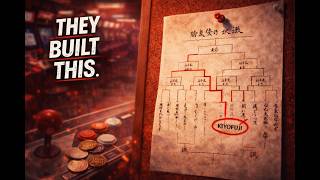
Once I had it in my hands, the picture got much clearer. Names had been scratched out and slots had been changed. His name had been moved away from bad matchups and into positions that favored him, multiple times. This was not something I had to guess from memory; I saw it on the paper. My name had been moved too, but into unfavorable slots, which explained why my path felt so strange. I was not just unlucky.
In the paper bracket era, the bracket was not a public link everyone could refresh. It was a physical object, and whoever held it controlled the path. They could scratch out a name, move a player and create new matchups without most players seeing the full picture. Unless someone got hold of it afterwards, the evidence disappeared with the paper. The playing path showed players being kept outside the real tournament, and the main bracket showed the tournament being adjusted from the inside. At that point the problem was the entire structure. If you came up in the start.gg era this probably sounds insane, but if you came from the paper bracket era, you know how easily something like this could happen.
Missing registrations made the V Time name feel too literal
The playing path connected directly to the registration money. He was notorious for taking money from players and then not putting their names into the real bracket. That made the situation bigger than bad seeding. Some players paid to enter and still had to fight their way into a tournament they were already supposed to be in, and the money from those entries did not appear to be reflected in the pot.
That is where the name took on a darker meaning. "Virginia takes your money every time" was supposed to sound like regional trash talk. Instead, it felt way too literal. Once that reputation attaches itself to an event, production cannot save it. Players remember if they could not trust the bracket and if their money did not seem accounted for.
That is why V Time never became what it could have been. It had the ingredients: a memorable name, a first event that pulled serious players into Richmond, and a second that added production, scale, music, vendors and stage presentation, with enough reach to make people outside Virginia pay attention. But a tournament becomes a pillar only when players trust it enough to return, and V Time never reached that level of trust. It became a warning about what happens when presentation grows faster than accountability.
Why V Time 2 was forgotten and why I am telling it now
A lot of V Time history is scattered now. Old forum posts survive in fragments, websites disappeared, images died, brackets vanished and results became incomplete. That happens often in the old FGC. Not every event had a clean results page, not every scandal had screenshots, and not every player story made it into a forum archive. Sometimes the only way to recover the story is for someone who was there to say what happened, and that is what this piece is: preservation.
The polished version of FGC history shows the majors, the champions and the moments people clipped and passed around, but it does not always show the events players warned each other about. Back then, the evidence was usually the people in the room, and if they stopped talking, the story disappeared. V Time 2 should have been remembered as Virginia's big swing. Instead, I remember six sets that did not count, finding out I had only been placed into round one, and holding that paper bracket and seeing names scratched out and moved around.
V Time 2 had "the presentation of the future and the accountability problems of the past." Today, players would not wait 20 years for a story like this to become history; they would call it out before the tournament ended. The famous events show you what the FGC became, and the forgotten ones show you what it had to survive. Sometimes, the bracket itself was the problem.
What is the worst tournament situation you ever personally saw?
Watch the original
@commentatorscursefgc · YouTube
Adapted with AI from Commentator's Curse FGC's video of 23 July 2026 and reviewed by Digital Fox Talent before publication. Editorial standards · Corrections
More from @commentatorscursefgc
All →

Make videos? Your next one could be an article here.
We turn your videos into articles under your name, linked back to the original. You keep 60% of what they earn, non-exclusive, and you can leave whenever you like.
Become a SubPlotter →