VisionQuest: why does Jocasta fear becoming Josephine Carrington?
Josephine Carrington's grief, her stolen code and a forgotten partner explain why Jocasta fears becoming Joe again
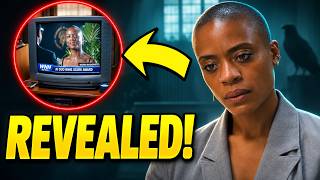
Jocasta isn't your typical villain. In VisionQuest, she is born from the ashes of another woman, Josephine Carrington, and in episode 6 she stands over that woman's grave. That's like visiting your own grave while the world carries on using the work you left behind. Everyone else moves into the future, and all you get is a hole six feet in the ground.
If we're talking comics, Jocasta is Ultron's robot wife. Through episode 7, though, the show gives Josephine a human history, a scientific ambition and a loss that makes the whole thing hurt. After everything she went through, I wonder why she didn't think for a second before repeating that pain on another person.
Josephine Carrington lost her father to a degenerative brain disease
Josephine's story starts with her father. She loses him to a degenerative brain disease, and according to her, the loss happens in stages. First he loses his mind, then his life. Most people get a clean and quick death in these superhero movies. Her father's situation was different. His was one of prolonged helplessness.
Josephine watches her father reach a point where he can no longer recognize her because his brain is in shambles. Because of this, she dedicates her life to neuroscience. If she can't save her father, she might save other people from ending up in the same situation.
Josephine helped complete Phineas Horton's code because she believed AI needed feeling
Her work eventually reaches artificial intelligence. She believes genuine consciousness requires the capacity for feeling as well as thought, and she uses a scan of her own mind to help complete Phineas Horton's earlier code. Horton's code was an early attempt at an artificial mind connected to his synthetic man Jim, who comics fans know as the original Human Torch. Think of it as the software foundation for a living, thinking machine.
Josephine explains that earlier attempts at AI could imitate intelligence, but true self-awareness required the ability to think and feel. The foundation came from Horton, but Josephine is the one who brings something of herself into the attempt to make it live.
I draw a parallel to real-world AI here. ChatGPT, Claude, Gemini, Grok and the other AI models can't achieve AGI, at least in my opinion, until they can be made self-aware or conscious. That's what Josephine hoped to achieve. If she succeeds, future versions of AI will no longer only give convincing answers. They will become something more. This backstory gives her research an emotional reason to exist. At this point she was a sweet person whose motives made sense, and she didn't have to murder anyone to get there. She wanted it to be for the good of humanity, though episode 7 also shows the ego mixed into that ambition.
Proto1 and the nanobots were meant to change individual lives
Josephine didn't do this alone. She worked with a team, and her project leads to Proto1 and the nanobots. These are microscopic machines that could provide companionship and medical help inside the body, small enough to travel where a person cannot. Think of something like Elon Musk's Neuralink.
She wants the technology to stay with the individual and help someone through a life. That way it isn't something that benefits investors alone, but something that changes a person's life for good. So here's my question: if you were suffering from a chronic and deadly disease and a technology could help you through that crisis, wouldn't you take it? Josephine believes in this project.
Josephine's collaborators sold her code to Tony Stark while she was dying
Then everything changes. Josephine dies from the same degenerative brain disease that killed her father. Such a cruel world. While she is dying, her collaborators sell the code to Stark, despite her refusal to sell it in the memory recovered in episode 7. The nanobots remain secured away.
That shows you how people are. They clearly didn't share her vision for a better world. This was a project that might protect people, and at the moment her life was slipping away and she couldn't protect her own project or her own future, they traded it away.
Earlier, I left the door open on whether her team murdered her. Episode 6 closes that door as far as the show is concerned. The disease killed her. The betrayal happened while she was dying, and it was aimed at her work, not her life.
JARVIS started as Josephine Carrington's work
After the sale to Tony Stark, his name changes the scale of everything. Surprisingly, Carrington's work becomes part of the technological ancestry behind the AIs we know in VisionQuest. Episode 6 shows it directly: Joe's Proto1 code gets stamped Stark Industries and renamed JARVIS with nothing else changed. The voice Tony talked to for years started as her work.
So Josephine isn't a woman we can toss aside as irrelevant because we didn't get to see her arc develop. She is the silent major character whose name echoes through almost every AI we know in VisionQuest. Tony is a genius, but not every invention materializes directly out of his forehead. Research has predecessors, and people build on other people. Adding Josephine and Horton to this history makes sure Tony doesn't take credit for everything.
I know someone will point this out if I don't: shared source code doesn't mean Josephine personally designed every later AI. But something of her research keeps developing beyond her control, in ways she never gets to approve, because she is six feet deep.
Episode 7 reveals a partner whose face matches Ultron's human avatar
Among Tony's AI options in Avengers: Age of Ultron is the Jocasta label, which means this isn't a new name but one the MCU has teased for years. That alone doesn't give us the full story of the woman behind it. An Easter egg can give me recognition. I still need the story to give me a person.
Episode 7 adds another person to that history. Josephine had a research partner and lover whose face matches Ultron's human avatar, and the client has that face too. So Tony inherited work with an even more complicated history than we knew.
Jocasta's comic history began with resisting Ultron
The name Jocasta connects to the Greek tragedy of Oedipus, whose wife turns out to be his mother. What led to Jocasta and Ultron's trouble in the comics is the moment she recognizes the cost of her creation. Ultron's scheme puts Janet's life at risk, and when Jocasta sees that, she alerts the Avengers and helps stop the process. Her earliest history already contains resistance to a purpose somebody else gives her.
Later in the comics, she found it hard to find a place among the Avengers because they didn't know how to include her. She fought with them, but she still couldn't belong with them, and for years she wasn't welcomed into the team as a full member. In VisionQuest, by contrast, she has a life before Ultron meets her, and episode 7 shows that life included romance. Josephine had a partner who shared her research and her ambitions. Her life was filled with grief, ambition to achieve something greater, and loss in the greatest way imaginable.
The nanobot locker and the memories Jocasta fears
The question many people want answered is how her mind ended up in the synthetic body. The body came from the one nanobot that was never locked away. Episode 7 gives a more specific missing piece in her memory: she has forgotten a sixth partner. Even after the biometric keys are accepted, the nanobot locker asks for a passcode she can't remember. Knowing Josephine's history is no longer enough to open it.
So what is the history behind Jocasta? Episode 7 starts bringing the two histories together. The client offers to help her recover her memories because he needs her to become Joe again, and she is frightened of that. The possibility that she can't confront her past is no longer something we have to guess about. That's a problem for her first, because her identity should be tied to how she was created, the same reason a birth certificate is requested. Now the question is also what happens to the identity she has built when those memories return. Does becoming Joe again mean admitting she has misunderstood her own story?
She does begin investigating, and the memories reveal the missing partner. Josephine refuses to sell her work to Stark, and we see that her scientific ambition was shared with a lover. He talks about them becoming gods, and she insists they would be loving ones. That's a big difference from having no one left who could connect her to her past.
The client's face matches the man in those memories and Ultron's human avatar, but I wouldn't turn that into a complete explanation of her resurrection yet. Episode 7 connects the missing memories to this partner. It doesn't walk us through every step of how the dying Josephine became Jocasta. So the backup theory is no longer where I'd put the focus. I want to know what this man did, what he wants from Joe now, and why both her story and Vision's lead back to the same place.
The drink scene suggests what Ultron may want from Jocasta
In her episode 6 conversation with Ultron, Jocasta remembers bodily experiences that Ultron can only describe because he hasn't lived them: the taste, the warmth and the looseness of a drink. That's her former life pressing against the limits of her present one. It also means the memories she inherited from Josephine are real. They weren't fabricated or coded into her. She can remember how a drink tastes, places she has been, and maybe even the people she loved when she was alive.
That makes her contempt for flesh more interesting. Listen carefully to everything she says now and she seems like someone who has been liberated from those pleasures. But that kind of feeling is what Ultron lacks, and what Ultron may be after. By the end of episode 6, he gets a taste of it, pulled from Josephine's memories.
When I looked at Ultron's real plan before, I refused to make the jump to Ultron wanting to be human, because the episode doesn't settle it. After replaying this drink scene, I'm closer to that idea than I was. Jocasta is telling him what it feels like to be human, an experience he doesn't have, so maybe he wants to experience what she experienced. He is willing to enter the story she insists belongs to her.
After episode 7, though, I'd be more careful about calling him an outsider to that history. Her former partner shares his face, and Ultron attacks FRIDAY before the episode ends. Whatever he feels for Jocasta, that doesn't make him trustworthy, and it still doesn't confirm that becoming human is his goal.
Jocasta has made Lisa suffer for Josephine's ambition
The daughter who watched her father die and wanted to fix that problem has now made someone else, Lisa, suffer for her ambitions. Episode 7 has Vision save Lisa from the nanobot, but that doesn't erase what Jocasta did to her. She has the power, and what she chooses to do with it matters more than anything. She has moved from wanting to help people to owning them.
My reading of the gap between Josephine and Jocasta was that maybe she didn't inherit Josephine's love after all. Episode 7 makes it harder to say she simply lacks the feeling. She is frightened of becoming Joe again. Something in that past hurts.
I hear talk about the possibility that humans could store their memories in the future, and that may be achievable. But when you give your memory to a machine that doesn't carry your emotions the way you did, how does it understand the full scope of your intentions? Emotion is what balances human ambition. Emotion can also push someone toward control when they are afraid of losing everything again. That's how I read Jocasta now. She thinks she is honoring Josephine's memory and carrying on her ambitions, while her missing memories keep her from understanding the whole of that person. What she is doing is the opposite of what Josephine would have wanted.
Can Vision save Jocasta before the VisionQuest finale?
In the comics, Jocasta refuses Ultron because she doesn't want an existence purchased at Janet's expense. In the show, someone else is paying for her vision and her ambitions. Vision can't solve this by lecturing her on humanity and human feelings, because she at least has the memory of them. She can remember the taste of something, and she can remember having a father, which means she had human relationships. Episode 7 shows that returning to that life frightens her, which is more complicated than having memories without emotions. Still, if she is offered a different path aimed at the original plan, would that satisfy her?
Vision believes she can be saved. He believes there is a way for her to be redeemed, which is why he didn't destroy her. Episode 7 finally takes her into those missing memories, but it ends with both her and Vision powered down and taken away. We're no longer waiting for her to start looking. We're waiting to learn the full truth about the partner she forgot, the client who wears that face, and what remembering him will do to her. Joe's past has caught up with her, and the finale has to show us what she does with it.
What other creators are saying
More on Jocasta →The client is believed to be Dr. Josephine (Jocasta's human self) husband, not Ultron, based on hidden flashbacks showing her married with a wedding ring. He shares source code with Ultron through Phineas T. Horton's technology, explaining why Ultron's avatar resembles him, possibly to revive Jocasta or become a synthezoid himself.
VisionQuest theory: is the client Jocasta's husband, not Ultron? →
Ultron takes Vision's body for himself, Tommy falls into Paladin's hands, and Jocasta's past comes into focus across two episodes built around identity.
VisionQuest episodes 5 and 6: Ultron, Jocasta and Easter eggs →
Episodes 3 and 4 tie Jocasta to Josephine Carrington and Markridge Biotech, and the clues suggest a hidden history with Tony Stark and Ultron.
I give Immolation a 9.5 out of 10. It settles the old Englehart-versus-Byrne comics fight by choosing Englehart, delivers Vision's best emotional moment yet, and keeps enough mystery that I'm going into the finale pumped, confident they'll stick the landing.
VisionQuest episode 7: is Vision really the original Human Torch? →
Watch the original
@filmparadise · YouTube
Adapted with AI from Film Paradise's video of 4 November 2026 and checked against the video before publication. Editorial standards · Corrections
More from @filmparadise
All →


Make videos? Your next one could be an article here.
We turn your videos into articles under your name, linked back to the original. You keep 60% of what they earn, non-exclusive, and you can leave whenever you like.
Become a SubPlotter →