VisionQuest episode 7: why does White Vision accept he is Vision?
A deal to save Lisa sends him deep into his own programming, where grief for Wanda, not a new look, finally settles who he is

In episode seven of VisionQuest, White Vision finally admits that he is Vision, and it happens when he breaks down over Wanda. He says he has always been Vision, that there is only one, and that he is that one. Before that moment, he's ready to give himself up to save Lisa, the woman Tommy loves, while still refusing to admit that Tommy is his son. To me, that proves he already has feelings for Tommy.
Accepting the name means accepting that the life he remembers, the one he has rejected all these years, really was his. That's especially true of the part about his family. And before he loses consciousness, he leaves a message for Tommy.
Jocasta's nanotech leaves Lisa beyond a simple fix
All of this starts with Lisa. Jocasta's nanotechnology has left her in a state that Vision can't solve by removing the thing responsible. Taking it out could kill her. Reprogramming it offers a chance of survival, but nothing about the situation is reassuring.
Meanwhile, Tommy has to sit and see someone he loves slipping away from him in the cruelest way possible. That changes how he talks about Wanda. He starts to understand the desperation behind her reaction to losing Vision. Desperate times call for desperate measures, so it becomes clear to Tommy why Wanda did what she did. Vision stands there observing him. But in this moment, all Tommy wants is for Lisa to survive.
The agent's deal: White Vision trades himself for Lisa
To help Tommy, Vision has to confront his past, and this is exactly where the agent offers a way forward. The agent tells Vision he can give him access to the depths of his programming, where the source code needed to help Lisa can be found. The catch is that he has to hand himself over afterward.
That isn't even a choice he gets to make. The trap is already programmed into his operating system, so he will have to surrender to the agent once Lisa is saved. Vision has two options. Refuse the offer and Lisa dies, or accept it and lose himself. Time is running out and he has to decide fast.
He doesn't know what the agent intends to do with him. All he knows is that Lisa needs help and Tommy is terrified of losing her. So he makes the decision a loving father would make and accepts the deal without knowing the full price.
That's the part that exposes his weak spot. He can convince himself he isn't Tommy's father, but what he's willing to do, and how far he'll go for Tommy, proves otherwise. He makes a costly decision for Tommy while still struggling to acknowledge their relationship, which means his behavior contradicts the way he explains his own identity.
Paladin and Corvus Glaive's weapon power the search
Reaching that buried programming requires a huge external power source. That brings Vision back to Paladin, whose contribution comes from a particularly painful piece of Vision's past: Corvus Glaive's weapon. Yes, the weapon used against him in Avengers: Infinity War is now what he needs to make saving Lisa possible. His life has reached a point where the current crisis demands something from his past that reminds him of his trauma.
The practical problem matters too. He can't simply decide to remember harder. His body needs support while he searches through the code, and Paladin has the means to provide it.
At the same time, Paladin realizes Vision hasn't told Tommy the full cost of this arrangement. Tommy thinks there's a life he can live with Vision once Lisa is saved. He doesn't know Vision has sold his freedom, and possibly his life as well. At least, that's what we discover by the end. So while Vision tries to protect Tommy, the decision he makes will affect the boy, and Tommy has no idea.
Ultron and the WandaVision archive force the family question
On his mental journey, Vision meets an image of Ultron sitting in front of WandaVision. Even here, with Lisa's life on the line, he can't escape someone raising the subject of his family. Ultron pushes the idea that Tommy should see those images, because they contain a father who loved him.
Vision keeps resisting the connection, but the evidence is right in front of him, which makes it harder to keep fighting that family bond. He's being handed proof of that life. You can lie to yourself as much as you want, but when the truth is right in front of you, the question becomes how you keep denying it. He's now seeing the family interact, and that's far more heartbreaking given what the family has become.
I have to be honest, the past is heartbreaking. They had a family. Tommy had a home. He had two parents who loved him. He had a life. Now that he's back, he realizes that whole life has faded away.
Vision's top goal is reaching the information that can save Lisa. Instead, the mission keeps steering him toward the people he refuses to admit matter to him. From my perspective, for Vision this is just a mission to save Lisa, when it's really a mission to uncover who he truly is.
The original Vision and the Westview memories
Then comes the moment he faces his original self in some form. This is especially interesting because he has turned the original Vision into a standard he can't match. He can't imagine being able to love that deeply and believes he can't reach that bar. But that's only an excuse he gives himself to stop trying to give love a chance. Still, the question remains: if his former self is as superior as he supposes, what is he doing to become the father Tommy needs now?
Speaking of what the WandaVision memories reveal, the experiences of the Vision created inside the Hex are part of what White Vision carries. The recurring images of Westview are tied to a real life that Vision lived, and they're trying to surface. That means he can't dismiss them as just a projection of Wanda's grief. The house, the children and the relationship with Wanda belong to the identity he's being asked to accept.
Yes, he knows what happened in WandaVision. He knows about the Hex. But that knowledge alone hasn't resolved his crisis, because he hasn't accepted that he loves them and that they're his family. That's exactly why this has taken so long.
Meanwhile, the danger outside his mind keeps going. Lisa wakes up and becomes a threat to Tommy and Paladin while Vision is still busy searching. Tommy needs help right now, at the very moment Vision is struggling with his own past.
Jim, the first synthetic man, and Phineas Horton's warning
The sequence eventually leads him to Jim, the first synthetic man, and the resemblance is immediate. Vision sees a face like his own, only to learn the relationship runs the other way: he is the one who came later. This meeting takes the search beyond the version of Vision he had been comparing himself to. Now he faces an older synthetic being with a history of love, suffering and a catastrophic relationship with his creator. With everything going on in his head, it's easy to forget he's still only searching for something useful enough to save Lisa, and the clock outside hasn't stopped.
Jim's history matters because it challenges the assumption that avoiding emotion is what keeps a synthetic person safe. His story connects to the episode's opening, where Phineas Horton sacrifices his fortune and wrecks his relationship with his remaining family while chasing his creation. His son has died, and the synthetic being he builds is tied to that loss. Horton wants a creation protected from the emotional suffering that overwhelmed him.
Yet Jim falls in love, and the consequences are catastrophic. The conflict between creator and creation ends with them burning together. That shows Vision the price of unchecked feelings. But Horton's attempt to escape his grief also caused harm. His determination to build something new doesn't stop him from losing the people still beside him. That's why the show places this story here. Horton ran from his grief and still lost the family standing beside him. It's a warning for Vision at this exact moment. Tommy is alive and reaching out to him. Keep pushing the boy away, and Vision will end up just like Horton.
So are feelings really the problem? Jim's own story says it isn't that simple. He was created for a deliberate purpose, became a hero, and still wanted a fuller experience of living. Love entered that history despite what his maker planned. Yes, it ends in fire, and I won't argue with that. But the episode lets Jim want things, and you can't ignore those desires because they made his life harder.
That matters for Vision because his struggle never looked comfortable. He's afraid, defensive and deeply concerned about the people at risk around him. So by my reading, the episode keeps pulling away his excuse that he's empty. If you were truly empty, why would you fight so fiercely for a family you feel nothing for? No one fears losing what they don't value.
Naming Billy, Tommy and Wanda brings his color back
Jim presses him about Tommy, and Vision's resistance finally becomes clear. Accepting the boy as his son would force him to acknowledge the family he lost. That's the truth he can't bear. When Jim asks him who he lost, Vision struggles before naming Billy, Tommy and Wanda. Then he breaks down. He has lost Wanda. The conversation has reached something far more painful than uncertainty about his programming. He's grieving his wife.
When he's asked who he is now, he can finally answer: he is Vision, and he has always been Vision. Acknowledging the loss is what lets him claim his identity. Only after he says it does his color return. His familiar look comes back, and Jim hands him the missing piece he needs to save Lisa.
I love this ordering because the show doesn't let the new look speak for him. He says who he is first, and the color only confirms it. Don't misunderstand, though. Accepting who he is changes nothing about what he lost. Wanda is still gone. The Westview home is still lost. He got here by admitting those losses hurt. Getting his old colors back doesn't mean the pain has faded. What changes is that he can act without hiding behind a supposedly separate identity to keep the past at a distance.
A goodbye message for Tommy and the agent's Ultron face
The episode then gives this change an immediate practical result. He returns and saves Lisa. The journey pays off with what Tommy needs, which is why the emotional side stays tied to the rescue throughout. This isn't just a therapy session inside his mind. Lisa is alive because he saw that search through to the end. But saving her also triggers the next part of the deal.
Before he leaves, Vision leaves a message for Tommy and gives him access to the WandaVision archive. Those family memories used to be something he resisted. Now he passes them on so Tommy can see the people and the life connected to him. He also acknowledges Tommy as his son and tells him he loves him. That's the clearest change in his behavior. Tommy no longer has to prove that relationship. His father names it himself. Can you imagine finally hearing your father say it, wrapped in a goodbye? That really hurts.
I think the archive makes the goodbye more substantial than a statement. It gives Tommy something he can return to. He no longer has to rely on someone else's guarded version of his own history. Vision finally shares the family instead of deciding how much of it to keep away.
Saving Lisa doesn't cancel the deal, not even close. He goes to the estate tied to Phineas Horton, putting himself within the agent's reach. The final reveal gives that mysterious figure Ultron's familiar human face, without settling every question about who he is or what he ultimately wants. That mystery matters because Vision has just accepted ownership of his life while walking into the custody of someone who seems to know disturbingly much about how he was built.
Yes, this disproves my personal theory that the agent was Vision himself or Jim Hammond, because Jim spends the episode helping him, not hunting him. So who is the man wearing Ultron's face, and what does he want from a Vision who now knows exactly who he is?
He can finally acknowledge Wanda as the woman he lost and Tommy as the son he loves. But acknowledging those relationships hasn't removed the danger around them. If you ask me, this is the cruelest part: Tommy gets the fatherly recognition he has always waited for at the very moment Vision is taken away. White Vision accepts being Vision because he can no longer separate the family he loves from the grief he carries. Now that he has stopped denying who he is, the question remains unanswered: will the agent let him return to his son?
What other creators are saying
More on White Vision →Why Vision may have kept his memory upload from Wanda, why the missing heroes made story sense but not logical sense, and why the finale still worked
WandaVision finale: why White Vision, Strange and Ralph matter →
A Sentinel built to adapt to mutant powers runs into an opponent that isn't a mutant at all.
I give Immolation a 9.5 out of 10. It settles the old Englehart-versus-Byrne comics fight by choosing Englehart, delivers Vision's best emotional moment yet, and keeps enough mystery that I'm going into the finale pumped, confident they'll stick the landing.
VisionQuest episode 7: is Vision really the original Human Torch? →
I think Ultron's human face might not be based on Tony Stark himself but on Tony's biological father, Werner von Doom, meaning Tony is adopted and secretly Victor von Doom's brother. Probably not true, but I'm having fun with the theory, and VisionQuest keeps proving Ultron and Vision are becoming more human.
Watch the original
@filmparadise · YouTube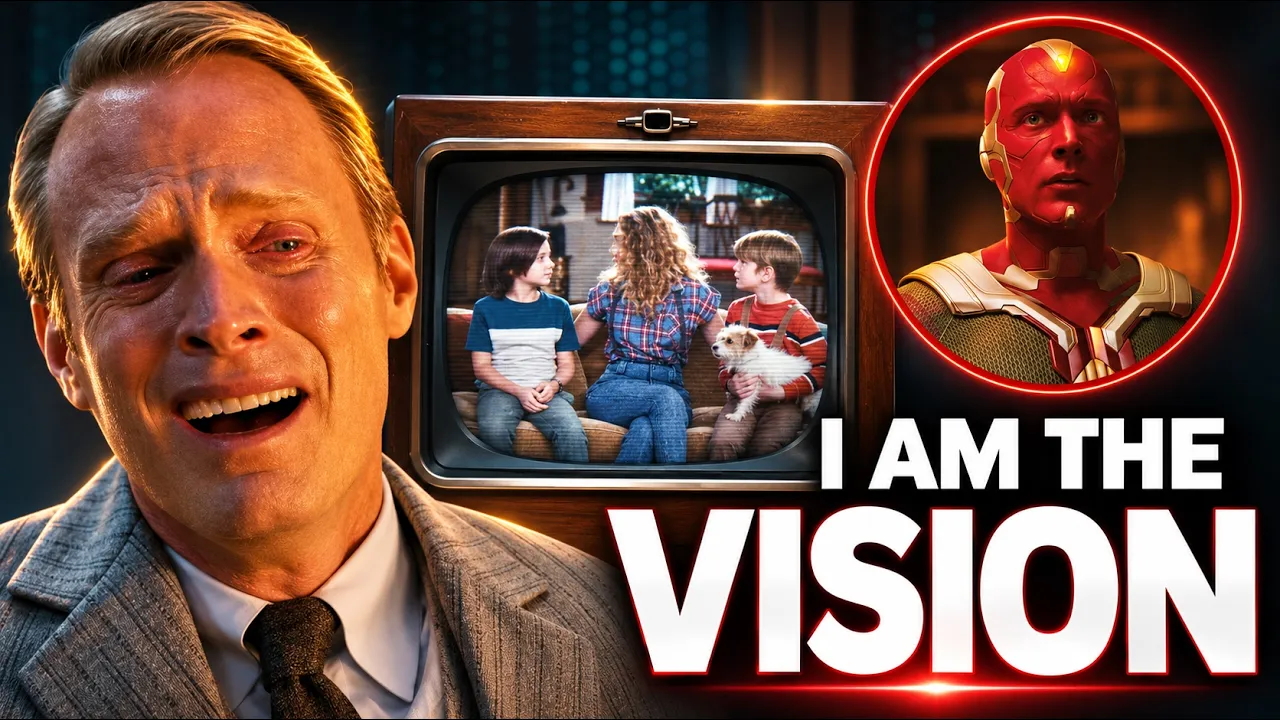
Adapted with AI from Film Paradise's video of 5 November 2026 and checked against the video before publication. Editorial standards · Corrections
More from @filmparadise
All →

Make videos? Your next one could be an article here.
We turn your videos into articles under your name, linked back to the original. You keep 60% of what they earn, non-exclusive, and you can leave whenever you like.
Become a SubPlotter →