Hunger Games: Sunrise on the Reaping review: strong but held back
The Haymitch prequel's propaganda story and performances land, but its arena feels sanitized and its prequel status limits the tension
 Heavy Spoilers (AI-assisted)20 November 2026Editor: Digital Fox Talent Editorial TeamOn YouTube since 2009 · more than 1.6 million subscribers

The Hunger Games: Sunrise on the Reaping is a solid movie and another solid chapter in the saga. I really enjoyed it. But for me, the games themselves are the weakest part, and being a prequel holds it back. The film takes place 24 years before the first movie and follows Katniss's mentor, Haymitch, as he competes. It's the 50th anniversary, which means a Quarter Quell, the special edition held every 25 years. This time the districts must send double the tributes, so there are double the players we normally get.
We know from the first movie that Haymitch survives. Still, there are plenty of twists and turns, and plenty of characters from the wider story. Joseph Zada plays the young Haymitch, and Woody Harrelson returns at the end.
The Sunrise on the Reaping cast brings back younger versions of familiar characters
Mckenna Grace plays twins Maysilee and Merrilee Donner. Maysilee is a District 12 tribute alongside Haymitch. In the book she owned the original Mockingjay pin that would become a symbol of rebellion. I did step out at one point, so I don't know if that detail made it in, but the 99% I saw didn't include it. Also joining Haymitch from District 12 are Ben Wang and one of his childhood friends, Molly McCann.
Jesse Plemons plays Plutarch Heavensbee, Philip Seymour Hoffman's character from the original films. Elle Fanning takes over Effie Trinket from Elizabeth Banks. Kieran Culkin plays Stanley Tucci's Caesar, and Ralph Fiennes plays Coriolanus Snow, the villain whose origin story was told in The Ballad of Songbirds and Snakes. Maya Hawke plays Wiress, originally played by Amanda Plummer. She won the previous year's games and mentors the new tributes. Kelvin Harrison Jr. plays Jeffrey Wright's Beetee Latier, and Lili Taylor takes over from Lynn Cohen as Mags Flanagan.
Haymitch's birthday is reaping day, and the opening mirrors the first Hunger Games
The film begins on Haymitch's birthday, which is also reaping day. That falls throughout his life, but until now he has never acknowledged the pain it brings. It becomes a reminder of everything he's lost, a celebration marked by death and dismay. The opening is very close to the first movie. He wakes up at home in District 12 with his little brother Sid and his mother, the way the first film opened with Jennifer Lawrence and Prim. Like that film, it's shot in a documentary style that gives the district a lived in feeling.
Where Katniss snuck off to hunt, Haymitch sneaks off to meet his girlfriend, Lenore Dove. The bird puns are there from the start, including the connection between Lenore and Edgar Allan Poe's The Raven. Life seems good, and although he's worried about the reaping like everyone else, he has a more optimistic outlook.
The tributes are chosen, with Woodbine Chance as the last. He flees and is shot, and his mother runs in to cry over his body. When the Peacekeepers arrive, Lenore rushes to stop them harming her, and Haymitch dives in to save Lenore. That gives the Capitol the perfect chance to rewrite the narrative, and they paint it as though Haymitch was drawn in the lottery.
Propaganda and performance drive the story, from Drusilla to Snow
The movie delves into propaganda and how those in charge serve it up to paint a narrative. They edit and restage the moment, even making Haymitch's family redo their approach because the cameras missed it the first time. It's such a good comment on reality TV. I remember plenty of shows growing up about how villains in a series were often simply edited to appear that way, while people still thought, well, I saw it, so it must be true. The film explores that at every opportunity, and ultimately it's what destroys Haymitch's character.
Glenn Close's Drusilla shows the idea of performance perfectly. When the cameras roll she's a delight, and as soon as they stop she turns into something else entirely. When I heard the name Drusilla, my mind went to the real Cilla Black and how she was off camera, a reference for UK readers. Either way, what they do with her is incredible, and the way her face is pulled back makes her very unnerving. "She absolutely steals the scene she's in."
Her opposite is Heavensbee, who uses his ability to frame and direct things to spare and save characters. He seems to work in the Capitol's favor while sparing those he's close to, but he's manipulative too, and is clearly gearing up to create a rebellion, which draws him toward Haymitch. Caesar shows another form of manipulation when he laughs during a bit and says they'll cut it.
At the parade, Haymitch agrees to be Louella's ally, but flares spook the horses, the chariots go off course, and she dies in the carnage. It's clearly inspired by Ben-Hur. Haymitch gives Snow a slow clap in defiance, putting himself in the president's crosshairs. Snow calls him to Heavensbee's estate. Not only has the chariot scene been edited to hide what happened, Snow has also poisoned everyone in charge of the operation, and poisoned himself as well to conceal it. He brings out a girl who will replace Louella in the games, a drugged and tortured double who is completely out of it.
Ralph Fiennes' Snow makes a promise that defines Haymitch's fate
Snow barely has any scenes, but all of them leave a big impact. Here he promises Haymitch that he must die in the games, and that if he doesn't, his family will suffer. That promise is very important and comes to fruition in the end. Snow also brings up Lucy Gray from The Ballad of Songbirds and Snakes, the only winner from District 12. She disappeared at the end of that movie, and the Capitol has rewritten the narrative to say 12 never had a winner. Fiennes does so much with so little here. You can still see an unrequited love for her that has turned into anger he inflicts on others.
The games exist to quell rebellion. Even the name Panem comes from the Latin phrase panem et circenses, bread and circuses, a political term for how civil unrest can be quelled through food and entertainment. The Capitol's most important weapon is propaganda that makes the masses hate those in the ring. Because 12 supposedly never had a winner, the mentors come from elsewhere: Wiress from District 3 and Mags from District 4. They don't do much in the story, but they represent the misery of victory. Both advise picking a pledge and sticking to it, and Haymitch doesn't want a long, drawn out death. From a certain point of view, that's what he ends up getting, and everything in the movie leads toward his spiral into alcoholism.
Beetee's plan to break the machine adds a conspiracy layer
Several characters discuss inevitability and how one day there won't be a sunrise on the reaping. There's the idea of breaking the machine: bringing down the games, which in turn would bring down the Capitol. That conspiracy layer comes from Heavensbee and Beetee. Kelvin Harrison Jr. gives the best Jeffrey Wright impression I've ever seen. Beetee plans to smuggle explosives in through the tributes' tokens. His son Ampert has been forced into the games, and Beetee has been given a front row seat to his death. He knows that blowing a hole in the arena's underwater facility could break the machine, and possibly the government's too. He has already accepted his son's death, but sees a way to bring down the system.
The movie is divided into parts, which from memory are the birthday, the rascal and the poster. Haymitch takes on the rascal persona and publicly joins Ampert's alliance against the Careers. But because of Snow's promise, he knows he's a danger to those around him and that the president will set the dogs on him in the arena. He pushes himself away from his friends and the other friendly players.
I absolutely love the opening hour of the movie. It's filled with outstanding scenes and acting, and it lays the groundwork for the games perfectly. Effie is brilliant, and there's a funny bit with Billy Porter, who shows up at the last minute with costumes and cares more about himself than anyone else.
Why the arena is the weakest part of Sunrise on the Reaping
Unfortunately, I think the games disappoint and aren't at the level the series has reached. There's a nice metaphor early on when Haymitch is poisoned drinking from a spring, which I read as a hint of how he'll turn to alcohol, though that might be just me. But I think they keep Haymitch's hands clean, which takes away some of the cost that should weigh on him. One tribute dies in a toxic pollen patch after they reunite, and Ampert, left alone after Haymitch descends into the base through a butterfly hatch panel, is killed by mutts that look like evil squirrels. Haymitch sets explosives and floods the underground network, causing a temporary power cut, and Snow retaliates with a volcano that destroys most of the map.
It's a great scene, but I felt the movie was a bit sanitized, showing little beyond Haymitch's own terror. He finds a pack of dead wolves, which is harrowing, but this would have been a great time to show the toll his actions took on innocent tributes. With so many people in the games, the on screen death count is pretty low. When the surviving Careers ambush him, Maysilee saves him with a poison blow dart. I see that as another missed opportunity: I'd have loved Haymitch's rivalry with them layered through the games, as the first film did. In the book, they meet more Careers and stumble across gamemakers working on the outskirts.
Haymitch and Maysilee find an exit and a factory he's determined to destroy, but it's surrounded by a force field. Maysilee is then killed by birds that clearly target only her. In the book that was retaliation for killing the gamemakers. Here it shows that being around Haymitch is dangerous, which works for the themes, but they pull their punches. In the book, Haymitch finds a tribute named Wellie starving and protects her, much like Katniss with Rue, before Silka kills her. The movie skips that: Silka uses a child's sounds to lure him out, and he leads her to the force field, where her axe throw backfires. Again, his hands are completely clean. He uses the last explosives on the force field, and though it works, he then wakes up back at home base.
I know they're limited by the book, but an adaptation needs to add or subtract things to work as a movie, and having most characters killed by the environment lowers the stakes. "The Hunger Games being the low point of a Hunger Games movie is something that I never thought I'd say, but I think it speaks to how strong the rest of the film is."
How the Capitol destroys Haymitch's reputation and life after victory
Snow knew about the sabotage, and the mentors and allies were tortured. Beetee confessed because he had nothing left to lose: as a previous winner he couldn't be harmed, and his son could no longer be used as leverage. He becomes an archetype for Haymitch, another winner who loses everyone close to him and can commit fully to the cause.
At the celebration, the Capitol's edit reframes Haymitch. He said he was an ally, but because he went off alone to protect his friends, he now looks selfish, a winner who pushed others under the bus. It's an excellent comment on how editing and narrative pushing happen day to day while people accept the story. I'm not a conspiracy theorist, but we've seen time and again how spin holds up those in power. Back in District 12, his home has been burned down with his mother and brother inside, and Lenore is poisoned at their reunion, making him promise to try to stop the sunrise on the reaping.
That heartbreak sends him to the Victor's Village and a drunken spiral. He lashes out at his old friends, the Everdeens. Plutarch visits and tells him few saw his defiance, but those who did realize they need to rise up. The rebellion will take decades, so Haymitch must mentor tributes year after year. One day he sees the Everdeens hunting with a baby named Katniss. The film then flashes forward to Woody Harrelson after the final film in the chronology, celebrating his birthday in the ruins of 12 with Katniss and Peeta, at last one not centered on a reaping. He finds peace where he and Lenore shared memories, caring for geese, recalling her words that we don't die but move to other worlds. A raven flies over her grave. He turned out to be the best tribute ever.
My verdict: a Force Awakens style prequel that looks the best in the franchise
I compare it to The Force Awakens. It replays the first movie almost beat by beat at points, feeling nostalgic for older audiences and new for anyone seeing a Hunger Games movie in cinemas for the first time. It adapts Suzanne Collins's book, and although The Ballad of Songbirds and Snakes came a couple of years back, it's been 14 years since the first film in 2012. That last one was a villain origin story, while this is a downtrodden, reluctant hero learning that victory often means loss, and I think the film does a cracking job of it. I even wonder if they might make more about other tributes leading into Katniss's story. But that also limits its scope, and I don't know if anything here will blow minds like the earlier film. As a prequel, it carries less tension, because Haymitch wins and doesn't dismantle the system.
Technically, it's probably the best looking film in the franchise. Some moments show scope and scale I hadn't seen before, like the shot panning out across the center of the arena and the landscape around it, which feels ripped from Midsommar and turned into a battle royale. Francis Lawrence, who's pretty much been behind all these films except the first one, is back, and I think visually this is the best work he's put out. The brutal deaths are staggered nicely, and I think these moments will shock many people. Joseph Zada balances young Haymitch's optimism with the weary man to come, and does a spot on Woody Harrelson impression at points. Culkin plays Caesar differently from Tucci but as someone who could evolve into him, and that holds for every character, thanks to the casting, writing and acting.
It's held back by being a prequel and by the PG-13 rating, which rules out the more extreme kills. Still, I'll be buying the Steelbook. It's the perfect film for the franchise right now, bringing in newcomers while pleasing older fans, a balance many franchises ignore when they burn their loyal fans chasing new audiences. I don't think it's the best in the saga, but it ticks many boxes, and if you enjoy these movies, I think you'll enjoy this one too.
What other creators are saying
More on Sunrise on the Reaping →Set side by side, Suzanne Collins' book and the film show Snow broke his deal with Haymitch Abernathy and let him win, and one missing scene makes Maysilee Donner's death about him
Sunrise on the Reaping: did Snow break his deal with Haymitch? →
Sunrise on the Reaping destroyed me emotionally and now ranks at the top of the Hunger Games films for me, with Glenn Close as a standout performance. My rating is catch it opening night.
Sunrise on the Reaping review: is it the best Hunger Games film? →
Yes. Joseph Zada carries the film as young Haymitch, nailing Woody Harrelson's cadence so convincingly that the transition between his portrayal and Harrelson's later version feels seamless, helping earn the movie four out of five stars.
Sunrise on the Reaping review: does Joseph Zada nail Haymitch? →
Finnick Odair is my strongest Hunger Games victor ever, with Katniss Everdeen a close second, though I think a good argument could be made for her at number one. I rank Haymitch Abernathy as easily one of the three most dangerous victors, while Woof and Cecelia land at the bottom since so little is known about their wins.
Hunger Games victors ranked: is Finnick Odair the strongest? →
Watch the original
@heavyspoilers · YouTube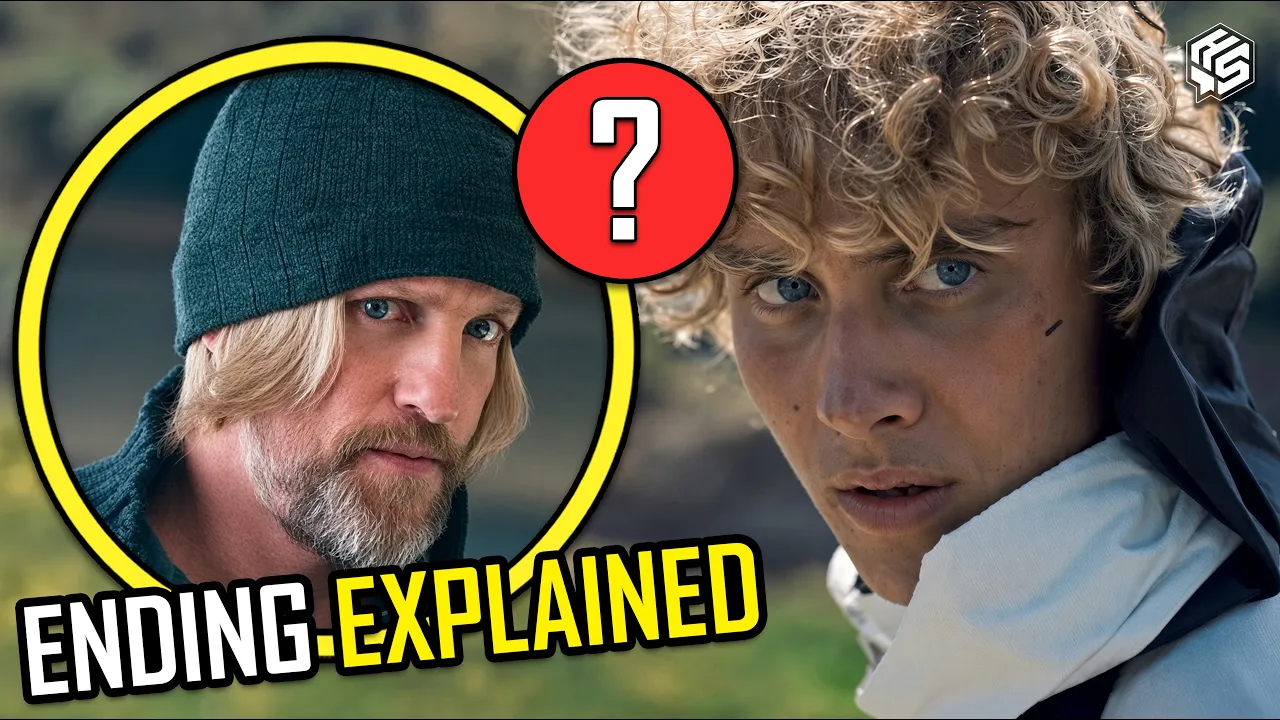
Adapted with AI from Heavy Spoilers' video of 19 November 2026 and checked against the video before publication. Editorial standards · Corrections
More from @heavyspoilers
All →


Make videos? Your next one could be an article here.
We turn your videos into articles under your name, linked back to the original. You keep 60% of what they earn, non-exclusive, and you can leave whenever you like.
Become a SubPlotter →