Rotten Tomatoes scores: why can a great film be rotten?
A simple thumbs up or thumbs down system lets mediocre films outscore beloved ones, and studios know how to work it

Rotten Tomatoes is one of those things you can't escape if you're a fan of movies. Even people who swear they never use it have a look once in a while to see if a movie is worth watching. Many people don't understand how its scores are compiled, though. I think it's a deeply flawed system, a double-edged sword that can class an amazing movie as rotten and push a mediocre one as fresh. And yes, I still use it.
Rotten Tomatoes began as a Jackie Chan review hobby and now dominates film debate
Rotten Tomatoes started in 1998 as a simple aggregator of Jackie Chan film reviews. What began as a hobby project for organizing critic opinions became a go-to resource for audiences who want a quick verdict on whether a movie or TV show is worth watching. It has grown into one of the most influential platforms in the film and television industry. Today it's owned by Fandango, which has caused its own problems.
As much as I try to avoid it, it's unavoidable, and it takes up much of the discourse around the quality of a film. People use it to back up their argument, or they dismiss it when it goes against them. Critic scores, fan scores, people being right, people being wrong: it can all be weaponized to paint one opinion as superior to others. Most people know Rotten Tomatoes is an aggregate that pulls together positive and negative reviews. What matters more is how those scores are compiled, and how mediocrity can often outperform movies that are beloved by a certain group.
How a film loved by half its critics can score lower than a mediocre one
Picture two films going head to head, movie A and movie B, each reviewed by 10 critics. For movie A, five critics say it's a 10 out of 10, one of the best films ever made. The other five say it's simply okay and give it five out of 10. That movie comes out with 50% on Rotten Tomatoes and is therefore rotten, even though half the group thought it was the greatest film ever.
Movie B, on the other hand, could be very mediocre. Four critics could call it a one out of 10, a terrible movie. The other six could say it's fine and give it six out of 10. That movie scores 60% and comes out with a fresh tomato. So a film considered incredible by a large part of the group and okay by the rest ends up with a lower score than a film a large part of the group thinks is terrible and the rest think is okay.
In both cases, a large section of critics thinks the film is okay. The difference is that on one side the remaining critics think it's amazing, and on the other they think it's awful. That one extra critic who says it's simply okay is what pushes the score over the line between rotten and fresh. I think this shows why aggregates in general don't work.
Why changing pools of critics and audience reviewers skew the score
You're also getting an inconsistent selection of critics every time. There are some movies I don't review, normally stuff I'm not interested in, and that's true across the industry. Not every critic is going to review every movie, so the selection of reviews is different each time. It's the same with audience scores, because not every person writes a fan review for every film on the website. You're getting skewed scores that don't paint the full picture, just a number that, rightly or wrongly, shows how many people from a select group enjoyed something.
To quote K from Men in Black, "A person is smart. People are dumb." A large group liking something doesn't indicate how good or bad it is. There are excellent movies on the site with very bad scores. I'm not going to get on my high horse about Man of Steel, but another excellent film with man in the title has a terrible score: Man on Fire with Denzel Washington. I think it's an incredible film, and it sits at 39%. Event Horizon is rotten. Jumanji is rotten. There are loads of films with very low scores.
Top critic status is also granted internally, based on output consistency and how many eyeballs a publication gets, so even that could be skewed. It's not something critics apply for. You have people behind the scenes deciding whose opinions to push to the top. I think Metacritic is a better way of doing things, because it takes a score from each review and calculates an overall score. Rotten Tomatoes is simply a thumbs up or thumbs down depending on whether a critic would recommend the movie.
How early TV episodes and review embargoes let studios shape scores
Rotten Tomatoes scores TV shows as well, and that creates another problem. Studios often send episodes out early for review. When critics like me get something early, it normally arrives weekly, maybe the episode on the Monday before a Sunday release, or sometimes just a couple of days in advance. Sometimes we get half the season first, but it's very rare to get an entire season all at once. That's why you see critics say they've seen the first four episodes and here's their review.
It's difficult to give a full review of something you're only halfway through, so those scores can be skewed too. There have been a ton of shows with excellent starts that then tapered off and got bad. Disney and Marvel used to be the kings of this. They'd often send out the first two episodes of a show, which would normally be very solid, so it would get glowing reviews and be certified fresh. With the MCU shows or Star Wars, though, I'm sure many of us agree things lose their way toward the end of the season. Those scores gave a skewed view of a season's reception because the studio picked and chose what critics could review. I think studios play the reviews to their advantage.
Even having social media embargoes and critical embargoes as two different things is crazy. Often the first set of reactions is positive and the second is less so. When Ant-Man and the Wasp: Quantumania came out, I saw people posting really positive reactions. Behind the scenes, Greg Alba and I were talking about how one person was texting me saying how bad it was while putting out a tweet calling it one of the best movies ever. When the review embargo lifted, the truth was revealed. Being owned by Fandango also means studios can pick and choose how much access critics get, which critics are approved in the first place, and which of them are pushed to the top.
Why audiences still want a simple fresh or rotten verdict
In a world of needing answers instantly, Rotten Tomatoes is convenient. It distills hundreds of opinions into an easy metric: fresh or rotten. With so much content, audiences are pressed for choice and don't want to spend time reading reviews to decide whether something is worth watching.
In my household, I often spend TV nights flicking through stuff to watch rather than watching it, so time becomes a factor. If you've spent ages flicking through shows, who wants to sit on the sofa and read an in-depth think piece when you can look at whether the tomato is red or green? It makes things very easy. Red tomato, let's start this. Green tomato, let's not waste our time. It instantly works things out for you.
Where Rotten Tomatoes helps smaller films and rewards quality
It isn't all bad. A certified fresh badge can help boost mid-budget and independent productions to a much wider audience. It helps with word of mouth, and smaller projects can stand out in a crowded marketplace. Obsession performed amazingly well because of the word of mouth attached to it. That movie didn't have much of a marketing budget, but people were talking positively about it, it was getting really good reviews and high scores, and it became a grassroots movement.
Rotten Tomatoes also incentivizes quality, because positive scores can be used in marketing on trailers, posters and Blu-ray boxes. Studios do weaponize them and pick and choose, but they do that with everything. When Moana was bombing, they were still putting out tweets calling it the number one movie in the world. Being number one doesn't mean anything if there's nothing else to compete against.
The nuance a thumbs up or thumbs down can't capture
The oversimplification lacks real context. There have been films critics wouldn't recommend in general but say are worth checking out if you have a personal preference. With Evil Dead Burn, I said I personally didn't like it, but if that's what you like, I'd recommend it for you, though not in general. That complicates things. A consensus driven system doesn't tap into the nuance needed for discussion around art, because everyone has their own tastes.
Critics often prioritize craft, originality and cultural significance, while viewers prioritize entertainment, spectacle and whether something is worth going out for. That leads to frequent gaps between critic and audience scores, and it's the start of many arguments. Scores also fluctuate heavily because of pre-release hype and limited screenings. A first wave of reviews hits, and it's days later before the others arrive. I've seen so many times a film's reviews come out on a Tuesday in the 90s, and by the Friday it's down in the 60s.
Then there are posts claiming that because the first reviews of something like Supergirl are 90% from 10 reviews, it's better than The Dark Knight with 85%. I've genuinely seen tweets comparing a brand new release with something that's been out for decades, saying a new Predator movie is better than the first Predator because it has a higher score. That new movie has barely been out, or isn't even out yet. You cannot compare those scores. Rotten Tomatoes has also been accused of deleting and silencing some reviews viewed as heavily negative, removing scores in the zeros as review bombing but not perfect 10 out of 10s. If someone can review bomb something to a zero, there could be people in the other camp giving it a 10 with no notes.
Why I treat Rotten Tomatoes as one data point among many
Fans also wield Rotten Tomatoes as a tool in cultural battles to hammer home their points, and it's a mess. That's why I feel it remains a double-edged sword. Its scoring system is quick and efficient and gives a fast overview of audience and critic opinion. But it's overly simplified, and its oversized influence damages as many films as it helps to boost.
I think you're better off picking a handful of critics you like and using their opinions to help inform yours. If you're using this number without the broader context, I think you're simplifying the conversation. Rotten Tomatoes is best viewed as one data point among many. Cross reference individual reviews, consider your personal taste, and recognize that no single percentage captures the full picture.
Ultimately, it's a deeply flawed system. Come Friday night, I know I'll be sitting there using it to decide whether to give something a watch. I'll be arguing online about movies I like, pointing to a fresh score to say people are wrong, and if I don't like a film, I'll be saying the critics are always wrong. That's what we've devolved into: arguments built on a binary system where an amazing movie can still be classed as rotten and a mediocre one can be pushed as fresh.
Watch the original
@heavyspoilers · YouTube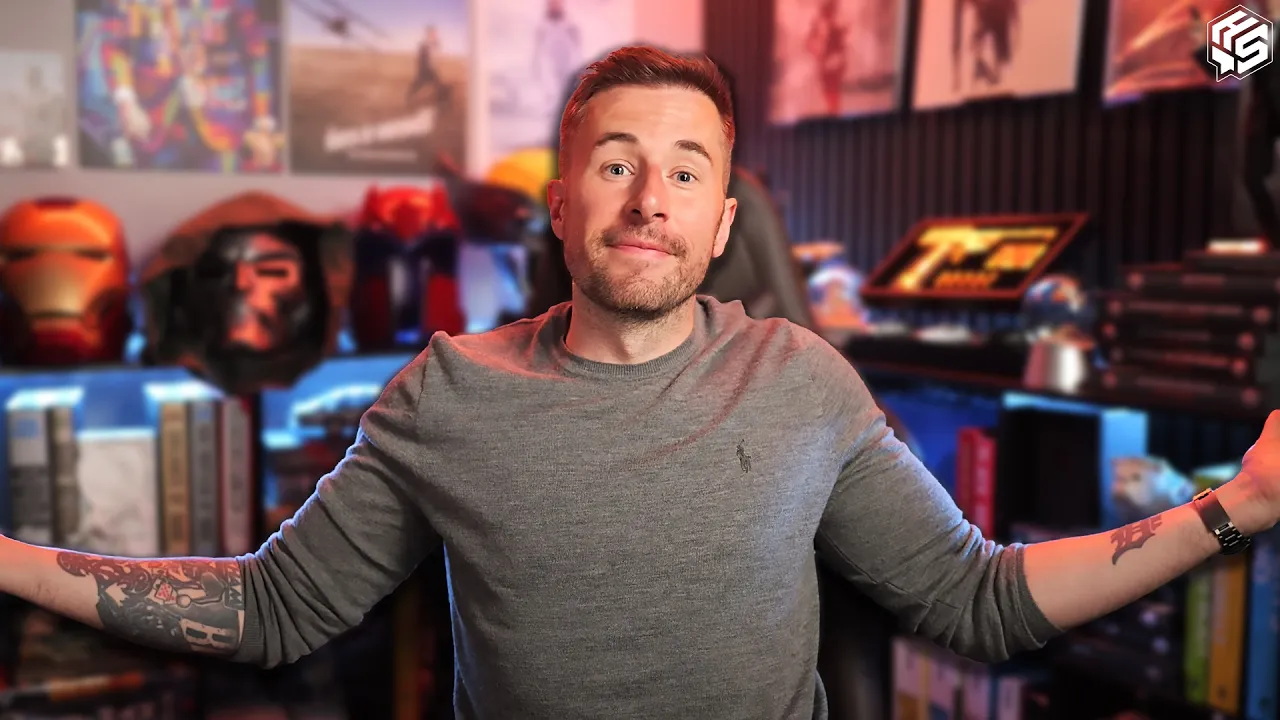
Adapted with AI from Heavy Spoilers' video of 22 July 2026 and checked against the video before publication. Editorial standards · Corrections
Also on Rotten Tomatoes
2 creators, 2 takes →
More from @heavyspoilers
All →

Make videos? Your next one could be an article here.
We turn your videos into articles under your name, linked back to the original. You keep 60% of what they earn, non-exclusive, and you can leave whenever you like.
Become a SubPlotter →