Why does Starfleet keep choosing trust over security?
From changelings to Section 31, the Federation's repeated security failures trace back to its founding ideals, and to a choice it keeps making on purpose
 Lore Reloaded (AI-assisted)27 November 2026Editor: Digital Fox Talent Editorial TeamOn YouTube since 2016 · more than 140,000 subscribers
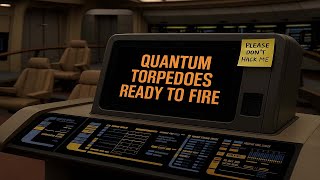
The Federation is a utopia, a shining beacon of cooperation, science and peace. But what if that dream is also its greatest vulnerability? Across Star Trek, Starfleet is blindsided again and again by spies, saboteurs and shape shifters, and the people who protect the galaxy often can't even protect themselves.
It's easy to say that's just the story, that it happens because the writers need it to. But that answer is too simple, and it misses something important. These recurring failures, the invasions, the blind spots, the betrayals, reflect something fundamental about the Federation itself. This isn't just a series of plot devices. It's a design flaw. The Federation wasn't built to fight. It was built to believe, and belief unchecked can become blindness. This is how the Federation's ideals became a liability, and why, despite it all, it chose to stay vulnerable.
The Federation was born after the Romulan War as a rejection of military power
The Federation wasn't born in peace. It was born in the ashes of a war it tried to prevent. Before it, there was the Coalition of Planets, an alliance between Earth, Vulcan, Andoria and Tellar Prime. What began as a partnership of diplomacy and trade became something more when the Romulan War erupted in 2156. The Romulans fought with no faces, no words and no mercy. The coalition held together under fire, and by the war's end in 2160, its members were more than allies.
In 2161 they chose a peaceful path. The United Federation of Planets was born not as a military superpower but as a deliberate rejection of one. Starfleet carried the same DNA. Its primary missions were diplomacy, science and cultural exchange, not warfare. That wasn't a mistake. It was policy. After the horrors of the Romulan War, the Federation didn't want to emulate its enemies.
To be fair, it never completely abandoned defense. In the original series, Starfleet had a far more militaristic posture. Uniforms resembled naval command, shipboard protocol was strict, and captains like Kirk were warriors when needed. By the 24th century that identity had shifted. The uniform was diplomacy and the weapon was the word. The goal was to believe war had become obsolete. Yet there were cracks, which is why Section 31 existed: never sanctioned by the Federation charter, but never stopped either. The Federation didn't build walls, but it quietly allowed someone else to do the dirty work. It wasn't naive. It was willfully hopeful. But hope, when it hardens into policy, can become something dangerous.
Infiltration is routine for Starfleet, from Conspiracy to Deep Space Nine
In a galaxy full of shape shifters, spies and saboteurs, openness isn't just risky, it's an invitation. Infiltration is one of the Federation's most persistent and catastrophic failures, and it isn't even difficult. In The Next Generation's Conspiracy, a parasitic alien species takes over Starfleet Command itself, with top brass replaced and no scans, vetting or countermeasures. In Data's Day, the trusted Vulcan Ambassador T'Pel is revealed to be a Romulan operative, walking freely aboard the Enterprise on nothing more than a forged identity and diplomatic status.
In Deep Space Nine's The Adversary, a changeling infiltrates the Defiant and nearly triggers a war with the Tzenkethi. In In Purgatory's Shadow, Dr. Julian Bashir is revealed to have been replaced by a changeling for weeks. He performed surgeries, issued commands and slept beside his crewmates, and no one suspected a thing. Starfleet systems don't just fail to stop infiltration. They don't even try. In The Next Generation's The Host, Beverly Crusher doesn't realize her patient is a joined Trill with a giant symbiotic organism inside him. That's not a rare oversight. That's an institutional flaw. Transporter pattern checks are inconsistent, biometric security is minimal, and suspicion is discouraged by both policy and culture.
The Dominion exploited that with terrifying precision. In Deep Space Nine's Homefront and Paradise Lost, just three confirmed changelings are enough to plunge Earth into panic. Cadets patrol the streets, schools close, and civilians are detained or required to give blood samples. Admiral Leyton stages false flag attacks and attempts to seize control of Earth, and it nearly works. All it takes is the suggestion of a threat to unravel the Federation's ideals. The greatest threat isn't just infiltration. It's what the Federation becomes when it's afraid.
The Dominion aren't the only ones. In Picard, the Zhat Vash sabotaged synthetic development, leading to the Mars attack: tens of thousands dead, the fleet destroyed, the Romulan rescue abandoned. That wasn't a battle. It was an inside job. In Strange New Worlds' Under the Cloak of War, a Klingon defector manipulates Starfleet's ideals. In Lower Decks, protocols are so lax they're played for laughs. In Prodigy, the Protostar carries the living construct, a weapon that nearly tears apart the Federation through its own networking protocols. These are policy consequences. The Federation doesn't want to become the Romulans or the Cardassians, so it chooses trust, and when it gets burned, it doubles down. Yet episodes like Homefront don't end with a coup. They end with a choice to stay open and resist paranoia.
Restraint is a deliberate choice, as The Drumhead shows
In most empires it's simple: protect the state at any cost, scan every life form, assume everyone is a threat. The Federation chose restraint. Starfleet doesn't screen every ambassador, tap every communication or demand retinal scans and DNA locks at every door, because it protects its citizens' dignity too. That's not a failure of planning. It's a deliberate act of philosophical defiance. The Federation was built by worlds that had survived surveillance states, war machines and cultural domination. Vulcans chose logic over conquest, Andorians chose alliance over isolation, and humanity had lived through centuries of secrecy, violence and control.
It's easy to build a police state. You just stop caring who gets hurt. Starfleet wants something harder: to remain open and idealistic even when it's not safe. That's why medical scans are limited and surveillance tech isn't installed by default. It's an act of faith that most beings aren't enemies and that freedom is stronger than fear. Restraint is harder than overreach, and when Starfleet stumbles, it doesn't overcorrect. It pauses and reaffirms its principles, because it remembers what unchecked power can do.
The Next Generation's The Drumhead is one of the best examples. A retired admiral launches an internal investigation into possible sabotage. At first it's justified, but it escalates quickly into accusations based on ancestry and private lives dissected. What stops it isn't the rules or the system. It's one man, Jean-Luc Picard, saying, "With the first link, the chain is forged." One exception becomes two, and soon your ideals are just slogans. On Deep Space Nine, Sisko, Kira and Odo walk the line between protection and oppression every day, and over and over they choose restraint.
Restraint does fail. In In the Pale Moonlight, Benjamin Sisko conspired to forge a lie that led to a senator's death because the truth wasn't working. He lived with it, but he never pretended it was what Starfleet stood for. Security is flawed and people have died, but the Federation would rather suffer betrayal than become a regime that no longer deserves loyalty. That's not idealism. That's courage. Still, that courage has a shadow, because even if the Federation won't cross the line, someone always will.
Section 31 is the Federation's invisible immune system and its greatest contradiction
Section 31 doesn't answer to any admiralty board, doesn't appear in public budgets, and has no uniform, headquarters or chain of command. It takes its name from Article 14, Section 31 of the Starfleet Charter, a clause allowing extraordinary measures in times of extreme threat. In other words, it was built into the system from the beginning, a legal gray zone written by idealists who quietly knew their ideals might not always be enough. It operates in the blind spots Federation values create, surveilling allies, manipulating enemies and eliminating threats before Starfleet knows they exist.
In Deep Space Nine's Inquisition, Bashir is kidnapped and interrogated by a man named Sloan, with no warrant, charges or oversight. Sloan explains, "We search out and identify potential dangers to the Federation. And once identified, we deal with them." Bashir calls it what it is, a terrorist operation flying the Federation flag, and he's right. In Inter Arma Enim Silent Leges, Sloan and Admiral Ross use him in a covert operation that alters the balance of power in the Romulan government, and he ends furious and betrayed. Bashir never condones Section 31, and that's what makes him a Starfleet officer.
At the Dominion War's peak, it's discovered that Section 31 released the changeling virus much earlier, a plague designed to exterminate an entire species. Starfleet never authorized it, but didn't stop it either. Section 31 exists so the Federation can keep its hands clean, and its people are often Starfleet's best and brightest, believing they protect something worth compromising for. Section 31 exists because the Federation is idealistic, and the longer it avoids building security infrastructure, the more it relies on the organization it's afraid to admit exists. Sometimes Section 31 works. But how many ideals can be bent before they break? How do you secure utopia without becoming its jailer?
Starfleet treats every breach as isolated and refuses to learn
You can forgive a mistake. You can't forgive repeating it. By the 24th century, the Federation had faced dozens of infiltration attempts, yet its security never seemed to change. It treats each breach as a fluke, not a flaw. After Data's Day, there was no biometric follow up. After Bashir's replacement, no systemic alert protocols. In Voyager's Meld, a Betazoid killer nearly drives Tuvok insane, and psychic profiling is never mentioned again. After the Mars attack in Picard season 1, AI research is banned but not reformed, and it takes nearly 15 years and extreme political pressure to lift the ban.
These are deliberate resets. Command codes are rarely rotated, and access is granted on rank and assumption, not verification. In The Next Generation's The Pegasus, Starfleet Intelligence secretly conducted cloaking experiments in violation of a signed treaty, and when the truth surfaces, Starfleet does nothing. In Picard season 3, changelings compromise the entire transporter network, and only in the final hours does Beverly Crusher recalibrate the system to detect them. Dozens of ships were compromised and hundreds to thousands died. To truly fix the system, Starfleet would have to admit that trust has limits. This failure even disrespects colonists abandoned during the Cardassian crisis. Lower Decks turns it into satire, and the jokes work because they aren't far from the truth.
Still, there are small signs of change. Cloaking technology is studied more seriously, transporter infrastructure is reexamined, and Section 31 is questioned more openly than ever. Some officers are beginning to understand that the future is about earned vigilance. But will it be enough next time?
Odo, Nog, Bashir and Sito Jaxa show why the Federation survives
Starfleet isn't made up of systems. It's made up of people, and when policy fails, people step up. Odo, a changeling, was followed by suspicion, especially once the Dominion war began. He stayed and enforced the law fairly because he believed in what the Federation claimed to be. Nog, the first Ferengi in Starfleet, stood his ground on AR-558 and lost his leg. When he returned he wasn't the same, and I would argue he was better: braver, grounded, the kind of officer Starfleet needed.
Bashir, once almost recruited by Section 31, could have disappeared into the shadow war. Instead he risked his career to expose it, because his oath mattered more than power. Sito Jaxa, a disgraced cadet given a second chance, accepted a classified mission along the Cardassian border. She didn't make it back, but she died proving redemption is something Starfleet's officers live. The system isn't perfect, but someone inside it refuses to let it fail, in the quiet moments when no one is looking.
The Federation can learn, slowly, from the synth ban to Wolf 359
For all its pride, the Federation learns, though rarely without cost. After the Mars attack it shut down synthetic research, driven by fear and not without prejudice, but it was a response. Years later, Starfleet reengaged with synthetic life with better oversight. By Picard season 3, transporters were adapted to detect changeling infiltration. It came too late for some, but it came. After Wolf 359, tactical doctrine changed and ships like the Defiant class were developed. Captain Shaw, traumatized by Starfleet's failures, still protects its ideals, and Admiral Janeway now defends the next generation with more transparency and restraint. That's growth, not perfection.
Every war and betrayal chips away at the Federation's belief, yet it endures. In a universe where every other empire becomes more ruthless to survive, its refusal to harden completely isn't naive. It's resistance. You don't strengthen Starfleet by discarding its values; you tighten protocols, learn from mistakes and screen for threats without becoming one. Abandon the ideals to protect the Federation, and you're just preserving the name. Security will always be a weakness in an idealistic society, but maybe that's the point. Hope in this universe is the most dangerous and powerful weapon of all.
What other creators are saying
More on Starfleet →I rank the Motion Picture refit Enterprise first, barely edging out the Enterprise D, with the Defiant, Enterprise E, and original Enterprise close behind, judging each ship purely on how it looks on screen rather than its crew or battles.
Star Trek ship design ranking: is the refit Enterprise best? →
A Romulan War buildup, a Mirror Universe miniseries, the Borg Queen's origin and a refitted NX-01 were all part of the plans for a season that never got made
Tomorrow's Enterprise plays less like classic Kirk and Spock and more like Next Generation's All Good Things, and the people who made it are calling the future we saw continuity.
Strange New Worlds finale: did it give TOS the ending it lacked? →
Watch the original
@lorereloaded · YouTube
Adapted with AI from Lore Reloaded's video of 30 May 2025 and checked against the video before publication. Editorial standards · Corrections
More from @lorereloaded
All →


Make videos? Your next one could be an article here.
We turn your videos into articles under your name, linked back to the original. You keep 60% of what they earn, non-exclusive, and you can leave whenever you like.
Become a SubPlotter →