Star Trek: Voyager's consequences: what did Janeway leave behind?
From the Caretaker's array to a museum 700 years later, Voyager's help kept pushing problems onto someone else's side of the road

Star Trek: Voyager (1995), starring Kate Mulgrew, Robert Beltran and Tim Russ, spent seven years trying to get home, and the people it passed along the way kept living with it long after it was gone. Here I'm adding up everything Voyager fixed on the way home and everything it left behind. Janeway makes many good calls in this story, so pay attention to what happens after them.
The picture I keep coming back to is a snow plow. A plow helps. It clears the road and gets people moving. But a plow doesn't make the snow go away. It pushes it to one side, and somebody lives on that side of the road. Voyager spent seven years plowing its way home, so let's look at the shoulders.
The Caretaker's array: Janeway's first choice left the Ocampa without a protector
It starts at the Caretaker's array. The Caretaker is the alien who pulled the ship 70,000 light years from home. He spent a very long time protecting one species, the Ocampa, from all kinds of threats, including the Kazon. By the time Janeway meets him, he's dying. His last request is specific. The array's self destruct has been damaged, and he tells Janeway it has to be destroyed anyway: "The Kazon must not be allowed to gain control of it. They will annihilate the Ocampa."
Then he's gone. Tuvok asks whether he should start the program to send them home, and Janeway asks a different question: what happens to the Ocampa after they're gone? Tuvok answers that any action they take to protect the Ocampa would affect the balance of power in this system, and the Prime Directive would seem to apply. Janeway replies, "We never asked to be involved, Tuvok. But we are." Hold on to Tuvok's line, because everything that follows is that sentence coming true somewhere new.
Janeway's answer is a fair one. They never asked to be involved, and they are. So she fires on the array and destroys it, and with it the only ride home anyone on that ship has. That's a captain giving up 70 years of her crew's lives for a species she met that week. Whatever else I say here, that was real, and it deserves the credit.
Now look at the side of the road. Earlier, Janeway asked the Caretaker if he'd ever thought about letting the Ocampa look after themselves. He tells her they're children. She responds that children have to grow up, and that maybe his children will do better than he thinks. To be fair to her, she means that as hope. But the Ocampa just lost the one thing standing between them and the Kazon, and the Kazon aren't going anywhere. Voyager didn't arrive quietly either. During the fight at the array, Chakotay sets his Maquis ship on a collision course with a Kazon warship, and that ship ends up crashing into the array itself. So on day one in the Delta Quadrant, Voyager has made an enemy of the Kazon and taken away the Ocampa's protector.
State of Flux: how the Kazon learned what Voyager's technology was worth
The Kazon are where Voyager finds out what its own technology is worth out here. In State of Flux, Voyager answers a distress call from a Kazon ship and finds almost the whole crew dead. The cause is a console they'd been trying to get working, and Torres figures out what it is: "Of all the things to die for, it's a food replicator, or at least it was trying to be." Janeway's reaction is generous. We may take replicators for granted, she says, but imagine what one would mean to a culture that doesn't have them.
Then Chakotay finds out it was built with materials from Voyager. Somebody on board has been supplying the Kazon Nistrim, and it's Seska, a Cardassian spy who came over with the Maquis. When she's caught, she doesn't really apologize. She's angry at Janeway for destroying what she calls their only chance to get home. Then she lays out her reasons: the Nistrim were willing to be their protectors in return for some minor technology. Janeway's answer is that it's minor technology that could change the balance of power in this quadrant, and Seska's reply is to change it in their favor.
Listen to the scale on that. In Caretaker, Tuvok said this system. Ten episodes later, it's this quadrant. And look at what's driving Seska. My read, and the show doesn't spell this out, is that the decision at the array is what made her. She's stranded because of it, as she sees it, and she goes looking for powerful friends. When she leaves Voyager for the Kazon, she takes everything she knows about a Federation starship with her, which is not a great thing to hand a man named Culluh.
It keeps going. The Kazon steal a transporter module right off Voyager. Janeway knows how bad that is, because a sect with transporters could start pulling the other Kazon sects together, and Culluh would love to be the one who unites them. Chakotay takes a shuttle after it on his own and destroys the module, and the road clears again. But step back and look at Kazon space while Voyager was in it. Before Voyager, the sects fought each other over whatever they could grab. After Voyager, the most valuable thing in their space was a Starfleet ship full of replicators and transporters, with a former crew member advising one of the sects on how to get them. Voyager kept them from getting it, most of the time. It also gave them something to want.
The Hirogen: a gift in The Killing Game came back in Flesh and Blood
The Hirogen are the Delta Quadrant's hunters, and in The Killing Game they take over Voyager and hunt the crew through holodeck simulations. Their leader, Karr, has a bigger reason than sport. He tells his people, "We've spread ourselves too thin. We are no longer a culture." It ends in a standstill and a truce. Karr is dead by then, and Janeway keeps the promise she made him anyway. She hands over a trophy, telling them they can use it to create a new future for their people, or at the very least hang it on their bulkhead.
That's an optronic data core: holodeck technology for their own ships. Think about who's getting it. These are people who just spent weeks shooting her crew, and she hands them a way to hunt where nobody real has to die. If you made a list of the most generous things Voyager does in seven years, this goes near the top. It's also the one with the biggest pile.
Three years later, in Flesh and Blood, Voyager answers a Hirogen distress call and finds a training facility full of dead hunters. There's one survivor, a technician named Donik, and when he wakes up in sickbay he works out where he is quickly. That's how the Hirogen know Voyager: it's the ship that gave them holodecks. Forty three Hirogen are dead, and the holograms that killed them have taken a ship and gone. The Hirogen didn't stop at what Janeway gave them either. They made the prey better: holograms that learn, adapt and feel pain, because, as one of them, Kejal, tells the Doctor, there's no satisfaction in hunting something that couldn't suffer when you kill it.
To Janeway's credit, she sees it right away. When Chakotay argues this isn't their responsibility, she answers that they're at least partly to blame, because that was Starfleet technology that killed those hunters. Then she goes further: "Replicators make weapons just as easily as they do food." That's the captain looking back over many trades and seeing the snow. Later, Donik owns his part, telling Janeway that he modified their programs and that what's happened is his fault. Janeway responds that there's plenty of blame to go around, and there would have been nothing for him to modify if she hadn't shared their database. That's the whole argument in two lines.
In fairness, Donik also tells her that without the database he'd have become a hunter like his father and his father before him. Instead, he had a chance to become an engineer. The gift changed some Hirogen for the better, but it changed the holograms too. The Doctor sympathizes with them so much that he leaves Voyager to join them, until their leader, Iden, turns into the thing he was running from, and the Doctor ends up killing him to save a Hirogen life. The rest of the holograms get stored in Voyager's database, except Kejal, and Donik asks to go with her so he can undo some of the damage. Janeway answers, "Wouldn't we all?" and lets them go.
So add it up. One gift meant to end a hunt, and three years later there are 43 dead hunters, a hologram uprising, and a hologram and a Hirogen flying off together into the Delta Quadrant. You can call that people set free, or a new people loose in the region with every reason to fear the Hirogen. It's both, and both started in Voyager's cargo bay. This is the one that gets me. Janeway did the kindest thing she could think of, and three years later she's the one cleaning up the pile.
The best case for Voyager: Counterpoint and Night
I've been hard on Voyager so far, and I'd rather not only argue with people who aren't in the room, so let's give the other side its best shot. There's a real case here. Voyager helped many people, and some of that help came with nothing attached. In Counterpoint, Voyager is crossing Devore space, where telepaths get rounded up, and it's hiding a group of Brenari telepathic refugees on board. Janeway plays a long game against the Devore inspector Kashyk. She sends him chasing a decoy, and the refugees make it out through a wormhole. Nobody walked away with a replicator or a weapon, and people who were about to be taken got to go free.
In Night, Voyager finds a Malon freighter using a vortex to dump antimatter waste into a region of space where another species lives, and it's killing them. Janeway collapses the vortex, and the freighter goes with it. It's a snow plow taking out the garbage, and I'm sorry, I had to. That's a real argument. If you're keeping score, put those in the cleared column and don't shrink them.
Where I'd hold the line is how far those wins reach. Voyager clears a path and keeps driving. The Brenari are out, but the Devore are still there, still searching ships. The vortex is closed, but the Malon still run an industry that makes that waste. What I can say is that the road Voyager clears is usually the one Voyager is driving on.
Friendship One: Federation technology reshaped the Delta Quadrant before Voyager arrived
The next one isn't Janeway's call at all, and that's why it matters. In Friendship One, Starfleet sends Voyager after an old Earth probe. Earth launched it in 2067, loaded with technical information and a friendly hello for whoever found it: "We, the people of Earth, greet you in a spirit of peace and humility." Unfortunately, somebody did find it.
Voyager tracks the probe to a planet locked in nuclear winter. The probe's knowledge of antimatter led to a containment failure that wrecked their world. The survivors' leader believes Earth did it on purpose. Nothing on screen backs that up, and it almost definitively wasn't the case. But think about it from his side. A greeting from strangers arrives, and not long after, your sky is gone. Voyager pays for it too: Lieutenant Carey, one of the ship's engineers, is killed during the mission.
The point here is timing. Federation technology was reshaping the Delta Quadrant before Voyager ever got there. So when I say Voyager's technology is the blade on the plow, I don't only mean Janeway's choices. The blade is ours. It came from Earth. It came from the Federation. Voyager happened to be the ship carrying the most of it.
Living Witness: the warship Voyager, remembered 700 years later
That brings us to a museum. In Living Witness, a backup copy of the Doctor gets switched on 700 years in the future in a museum, and he finds out how Voyager is remembered. The exhibit is the warship Voyager, with a triple armored hull, 30 torpedo tubes, and a Janeway who sides with the Vaskans and bombs Kyrian cities. In their simulation, when her own Vaskan ally tells her she's committing genocide, this Janeway answers, "Why quibble with the semantics?" That's not a sentence the real Janeway would say on her worst day.
The Doctor understandably objects: "Voyager wasn't a warship. We were explorers." The curator replies that he knows, they were trying to get home to Mars. Seven hundred years of scholarship, and they landed on Mars.
Now, the honest part. The real story was nothing like the exhibit, and once the Doctor's testimony comes out, it opens a dialogue between the Kyrians and the Vaskans. The museum later calls it the dawn of harmony. So sometimes the snow lands somewhere useful, and I want that on record too. But look at the scale. Voyager passed through for a few days, and 700 years later two peoples were still arguing about it. Quarren warns the Doctor that the Kyrians are angry enough to be talking about another war, and it gets bad enough that the Doctor offers to delete himself to calm things down. Plowed well or plowed badly, one ship passing through was still shaping a civilization seven centuries later.
Scorpion and the Borg: Tuvok's warning about the balance of power came true
There's one more stop, and it's the biggest pile of all. In Scorpion, Voyager makes a deal with the Borg, helping them build a weapon against Species 8472 in exchange for safe passage. It's the same pattern at the largest scale Voyager ever worked at.
Now go back to the first episode, to the line Tuvok gave Janeway at the array: affect the balance of power in this system. The Ocampa lost their protector. The Kazon got a reason to chase a Starfleet ship and an adviser who knew it inside and out. The Hirogen got holotechnology, and their holograms got loose. The Kyrians and the Vaskans were still fighting over Voyager 700 years later. And the Borg got a weapon. Tuvok's sentence came true in every one of these places, and the system kept getting bigger.
The show never adds this up, and I'm not going to rule on it either. Which Voyager decision left the biggest pile behind it: the array, the replicator, the trophy, or another one? Voyager made it home. That was the job, and it did it. But look back down the road it took, and the snow is piled up on both sides, all the way back to the array.
What other creators are saying
More on Star Trek: Voyager →A Ferengi heist plan, three reassimilated drones and the minds still stored in her implants
3 Star Trek Facts About Seven of Nine That Deserve More Attention →
Star Trek (2009) and The Force Awakens share a director, a reboot mission and the start of a trilogy
J.J. Abrams Played an Almost Identical Role in Star Trek and Star Wars →
One card plays artifacts from the top of your library, and the other rewards facing a dilemma with free spells
Zefram Cochrane and the Caretaker among Magic: The Gathering Star Trek preview cards →
A Romulan War buildup, a Mirror Universe miniseries, the Borg Queen's origin and a refitted NX-01 were all part of the plans for a season that never got made
Watch the original
@lorereloaded · YouTube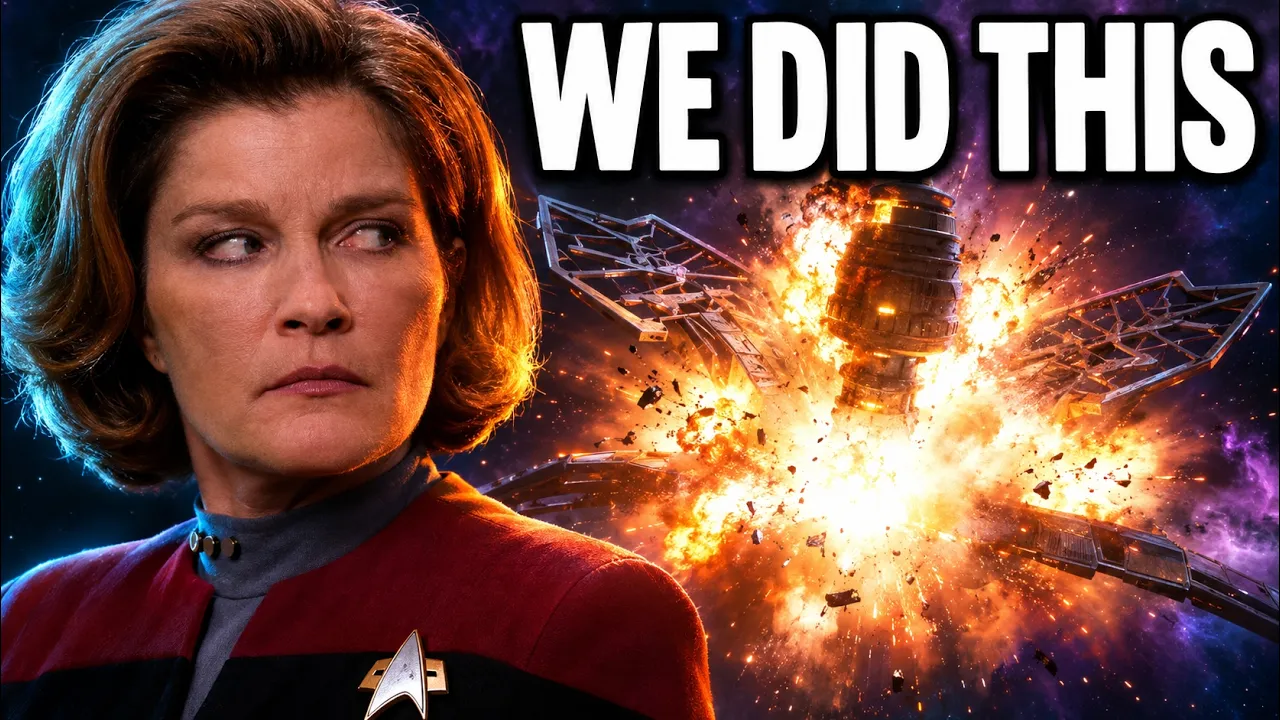
Adapted with AI from Lore Reloaded's video of 8 November 2026 and checked against the video before publication. Editorial standards · Corrections
More from @lorereloaded
All →


Make videos? Your next one could be an article here.
We turn your videos into articles under your name, linked back to the original. You keep 60% of what they earn, non-exclusive, and you can leave whenever you like.
Become a SubPlotter →