Star Trek: what is Starfleet's worst defeat, Wolf 359 or Tyra?
From the Seventh Fleet's destruction to the Borg at Wolf 359, these are the losses that left the deepest scars on the Federation
 Lore Reloaded (AI-assisted)27 November 2026Editor: Digital Fox Talent Editorial TeamOn YouTube since 2016 · more than 140,000 subscribers

The Federation tells a story of peace, exploration and unity, but every flag has a shadow and every starship a grave. For all its ideals, Starfleet has not escaped the cost of war. These are its 10 greatest defeats, and at the top of my list sits the Battle of Wolf 359, the loss I'd call Starfleet's original sin.
Each one taught a lesson and left a scar.
10. The Battle of Tyra: only 14 of the Seventh Fleet's 112 ships came home
The Seventh Fleet was one of Starfleet's finest, 112 ships strong. Its task was simple: cut a wedge through Dominion territory and shift the balance of the war. It never made it home. Only 14 ships returned from the Battle of Tyra. The rest were vaporized or crippled, and the fleet commander was among the lost.
Communications had been jammed from the moment the fleet dropped out of warp. Orders were delayed, calls for help never reached Starfleet Command, and captains made desperate decisions without coordination. What no one knew was that the Dominion had mapped their likely approach. Cardassian agents had leaked false sensor data to lure the fleet into a corridor near the Tyra system, where Jem'Hadar squadrons lay cloaked and waiting.
It was a kill zone: narrow routes, limited maneuverability and crossfire from multiple vectors. Ships were cut off in waves, isolated, disarmed and shattered. Veterans later said they saw entire wings vanish from sensors in seconds. One officer aboard the USS Rutledge, a battered survivor, put it this way: "We weren't outgunned. We were outthought. We walked right into it."
Afterward there was no celebration of heroism, no battle simulations or tactical reviews, just silence. Starfleet never reformed the Seventh Fleet. It was folded into other commands and its name retired. Tyra was the moment Starfleet realized the Dominion wasn't like any enemy it had faced. This was war by design: cold, calculated and terrifyingly efficient. At Tyra, the Federation learned what it meant to be prey.
9. The fall of Betazed showed that a core Federation world could fall in 10 hours
Betazed was supposed to be safe. It was a core Federation world, a planet of diplomats, empaths and healers, not soldiers. But in 2374, during a lull in Dominion fleet movements, the Dominion invaded, and Betazed fell within 10 hours. The Tenth Fleet, responsible for defending the sector, had been reassigned to war games elsewhere, out of position and unable to respond.
The planet's defenses were minimal, built for peacekeeping and patrol rather than open warfare. Dominion ships bypassed listening posts and warped into orbit before planetary sensors even registered an alert. Resistance was brief, sporadic and obviously civilian. Even the Betazoid Guard, trained more for ceremonial roles than combat, could only delay the inevitable. Thousands died within hours, millions were taken as prisoners of war, and entire telepathic enclaves were gone.
Occupation followed, with Jem'Hadar patrols on the streets and Cardassian officials setting up administrative zones. Cultural sites were seized, some repurposed and many destroyed. Starfleet intelligence reports later confirmed that Dominion Command had marked Betazed as a strategic target for months, because its location gave direct access to Vulcan, Andoria, Tellar and even Earth. Starfleet's own assessments described the fall as a structural failure in Federation assumptions: that no core world could fall, and that peace, once held, could not be broken.
Morale plummeted, and Vulcan and Earth increased orbital patrols tenfold. On the front lines the whisper was always the same: "If Betazed could fall, who else could?" There were rumors, never confirmed, that Betazoid resistance fighters used their telepathic gifts to confuse patrols, intercept transmissions and smuggle supplies. But by the time Starfleet liberated the planet near the war's end, only ruins remained of those efforts. The loss was psychological, cultural and deeply personal. The enemy had landed.
8. The destruction of the USS Odyssey ended the illusion of peace with the Dominion
Before the war, before the mines sealed the wormhole, there was the Odyssey. In 2370, this Galaxy class starship, the same class as the flagship Enterprise-D, was dispatched to the Gamma Quadrant to save its people and to negotiate with a mysterious power called the Dominion, depending on how you want to define negotiate. It was a show of strength dressed up as diplomacy, and ultimately it was a mistake.
The Odyssey was meant to retrieve Commander Sisko and others from a Dominion force thought to be scouts. But the Jem'Hadar were not scouts. They were soldiers, and the Odyssey was not prepared. Jem'Hadar attack ships darted in and out, testing its defenses, and their polaron beams bypassed its shields effortlessly. Systems failed, yet the Odyssey held its ground to protect the escaping runabouts. Then a single Jem'Hadar ship turned and rammed its engineering hull, and the explosion tore the ship apart.
This wasn't tactical necessity or desperation. It was a message. Starfleet after action reports confirmed the warp core was stable before the impact, so the Jem'Hadar could have pulled away. Instead they showed a willingness to sacrifice their own ships for psychological effect. A Galaxy class ship had been destroyed not through superior firepower but through brutality. The Odyssey's destruction was not yet part of a war, but it did end the illusion of peace.
7. The Breen attack on Earth broke the sense of Federation invincibility
For over two centuries, since the founding of the Federation, no enemy had breached Earth's defenses. That held until the Breen arrived in 2375. During the height of the Dominion War, the Breen Confederacy entered the conflict, and few in Starfleet Command understood their capabilities or their ruthlessness. In one of the boldest assaults in Federation history, Breen warships penetrated deep into the solar system, and the target was Earth itself.
Their ships dropped out of warp near San Francisco Bay, and within minutes Starfleet Headquarters was under attack. Orbital platforms were disabled, the planetary shield was overwhelmed, and fire spread across the cradle of the Federation. It was not a conquest or even a landing. It was a surgical strike calculated to instill fear, humiliation and doubt. Starfleet records later revealed how blind Starfleet had become, presuming the Breen technologically inferior and politically isolated, and never expecting them to partner with the Dominion.
There were no major fleet losses, but the damage was incalculable. Reinforcements were pulled back from the front lines, and Earth and Vulcan increased orbital controls. Several Romulan observers reportedly laughed openly at the Federation's embarrassment. The attack wasn't measured in ships lost but in lost certainty. For the first time since the 22nd century, humanity felt vulnerable again.
6. The Frontier Day assimilation turned Starfleet's own young officers against it
In the 25th century, Starfleet trusted the idea of unity more than the reality of war. On Frontier Day 2401, the fleet gathered above Earth, hundreds of ships synced through a centralized command protocol. Then it broke. Officers under the age of 25 were assimilated by the Borg, activated by a genetic pathogen introduced through the transporter system. Starfleet didn't lose to a fleet. It lost to its own reflection.
Changeling infiltrators had seeded the infection months before, manipulating transporters to resequence young officers with dormant Borg nanotech that was undetectable until Frontier Day. When the Borg signal was activated by Jack Crusher, converted into a living transmitter, the infected officers turned in unison. Bridges were overrun, senior staff executed, and the armada fell under control within minutes. Spacedock was bombarded, dozens of orbital platforms were lost, and casualties numbered in the thousands.
Only the intervention of the old guard, Picard, Riker, Worf, Geordi and Data, flying the decades old Enterprise-D, stopped the annihilation. Starfleet lost over half its senior officers in a single day. Multiple shipyards were decommissioned, dozens of captains resigned, and the Federation Council held hearings on genetic rights, command redundancy and transporter technology. The Borg didn't build a new cube. They simply waited, and when the moment came, they made Starfleet destroy itself. Frontier Day was meant to honor legacy. Instead, it buried it.
5. The second Battle of Chin'toka saw a Breen weapon cost Starfleet 311 ships and the Defiant
By 2375, the Federation and its allies held one tenuous prize in Dominion territory: the Chin'toka system, seized a year earlier and Starfleet's only foothold beyond the front lines. Then the Breen entered the war. Starfleet expected new enemy fleets. What it didn't expect was new enemy physics. Federation, Klingon and Romulan ships were holding position when Breen warships appeared on sensors, the order to engage was given, and then the power died.
The Breen unveiled an energy dampening weapon that neutralized electronic systems aboard a starship. Shields collapsed, weapons powered down and engines stalled, leaving ships as silent targets. Jem'Hadar and Breen squadrons then opened fire on the defenseless fleet, and 311 ships were destroyed. Among the losses was the USS Defiant, one of the few ships designed for war. Captain Sisko and his crew escaped in time, but the ship was gone.
Federation diagnostics suggest the weapon overwrote fail safes, so emergency backups and automated distress relays failed too. Because the Breen waited for the largest possible engagement to reveal it, there were no countermeasures. At least one Klingon ship survived only by accident, its older redundant power systems immune or at least resistant to the pulse, a quirk that saved lives and perhaps the quadrant. But Chin'toka was lost, and with it the illusion of technological parity. In war, one new weapon can change everything.
4. The fall of Deep Space 9 cost the Federation its most iconic outpost
Deep Space 9 was more than a station. It was the gate to the Gamma Quadrant and a symbol that Starfleet could coexist with Bajor and hold the line against the unknown. When the Dominion forged a pact with Cardassia, war became inevitable. Captain Sisko planted mines that replicated themselves across the wormhole, blocking Dominion reinforcements. The price for that decision was the station, and ultimately peace.
The Dominion launched a full scale offensive while Starfleet's defenses were incomplete and Klingon reinforcements were delayed. With no viable path to victory, Sisko was ordered to evacuate and scuttle the station's systems. Bajoran militia reports and fleet logs paint a chaotic retreat, with officers abandoning a home they'd spent five years defending. They left behind sabotage codes and deleted Starfleet systems, but the Dominion restored the name Terok Nor, reinstalled Cardassian leadership and hoisted its banners over the Promenade.
Gul Dukat declared victory, and Weyoun called it proof that resistance was futile. To the public it was a retreat, to Starfleet a necessary sacrifice, and to the Dominion it was momentum. For months the station served as a Dominion command hub, and Starfleet was forced to launch raids from hiding. It took a massive counteroffensive to reclaim what had been lost in a single day. For the first time since Wolf 359, the Federation didn't know if it was going to win.
3. The Xindi attack on Earth killed 7 million people in under five minutes
In 2153, Earth suffered the deadliest attack in its history. A Xindi probe emerged from a spatial rift, entered Earth orbit unnoticed, and fired a focused energy beam that carved a burning scar from Florida to Venezuela. In under five minutes, 7 million people were dead. There was no Federation and no Starfleet armada yet, only United Earth and one ship, Enterprise NX-01, at the far end of known space.
The attack came without warning or a declaration of war, from an enemy whose name wasn't even known yet, driven by a prophecy that humanity would destroy their species. Defense ships scrambled only after the weapon had self destructed. Reports, including Vulcan High Command analysis and MACO field debriefs, suggested Earth's defenses had been weakened by Vulcan reluctance to share advanced detection systems. Whether through diplomacy or mistrust, humanity had been left blind.
Entire cities and families were gone, and the psychological impact was generational. Earth became a planet at war for the first time since the eugenics conflicts. The mission into the Delphic Expanse to stop the Xindi's planet killer would eventually succeed, but it came at the cost of Earth's innocence. Historians would debate whether the attack shaped the Federation into something semi scientific and semi militaristic, or simply proved no one was ever truly safe. For Earth, it was its first Wolf 359.
2. The Mars attack of 2385 killed 92,000 and led to the synth ban
On First Contact Day 2385, Mars burned. Synthetic workers built by the Federation turned against their creators, shutting down Mars orbital defenses, hijacking the Utopia Planitia fleet yards and bombarding the planet below. 92,000 died, hundreds of ships under construction were lost, and the core of Starfleet's infrastructure was gone in hours. There were no warnings and no escape, just betrayal.
The synths didn't act alone. Years later, intelligence reports linked the attack to the Zhat Vash, a radical Romulan sect terrified of artificial life, which had infiltrated key systems and corrupted the code. The real defeat came afterward. The Federation canceled the Romulan rescue, artificial intelligence was outlawed, and the synth ban codified fear into law. Records show a surge in resignations, ethical tribunals and deep rifts across Starfleet Command.
Mars burned for years, but the real damage was ideological. Maybe it was an attack. Maybe it was a war crime. Or maybe it was a warning. The attack remains sealed in most Federation archives, but for those who lost families, futures or faith, it never really ended.
1. The Battle of Wolf 359 is Starfleet's greatest defeat and its original sin
In 2367, the Borg came to the Alpha Quadrant. They didn't negotiate or invade with armies; they sent a single cube. Starfleet assembled 40 ships to stop it, flagships and cruisers alongside scientific vessels pulled into battle roles. It was a shield made of hope, time and desperation, and it shattered in less than 20 minutes. 39 ships were destroyed and over 11,000 lives were lost.
The Borg knew how to think like us because they had Captain Jean-Luc Picard, assimilated and reborn as Locutus. Through him they saw every maneuver before it happened and knew every weakness. Post action sensor logs were so corrupted that no computer could replay the battle in full. Starfleet survived only because the Enterprise-D exploited Locutus's connection to the collective, not through strength but through luck.
In the years that followed, the Defiant was built, Section 31 moved deeper underground, and the optimism of the early 24th century darkened. Trust became a vulnerability. Wolf 359 was the day the dream was tested and nearly died. Some defeats change strategy and some change morale, but this one changed history.
What other creators are saying
More on Starfleet →I rank the Motion Picture refit Enterprise first, barely edging out the Enterprise D, with the Defiant, Enterprise E, and original Enterprise close behind, judging each ship purely on how it looks on screen rather than its crew or battles.
Star Trek ship design ranking: is the refit Enterprise best? →
A Romulan War buildup, a Mirror Universe miniseries, the Borg Queen's origin and a refitted NX-01 were all part of the plans for a season that never got made
Tomorrow's Enterprise plays less like classic Kirk and Spock and more like Next Generation's All Good Things, and the people who made it are calling the future we saw continuity.
Strange New Worlds finale: did it give TOS the ending it lacked? →
Watch the original
@lorereloaded · YouTube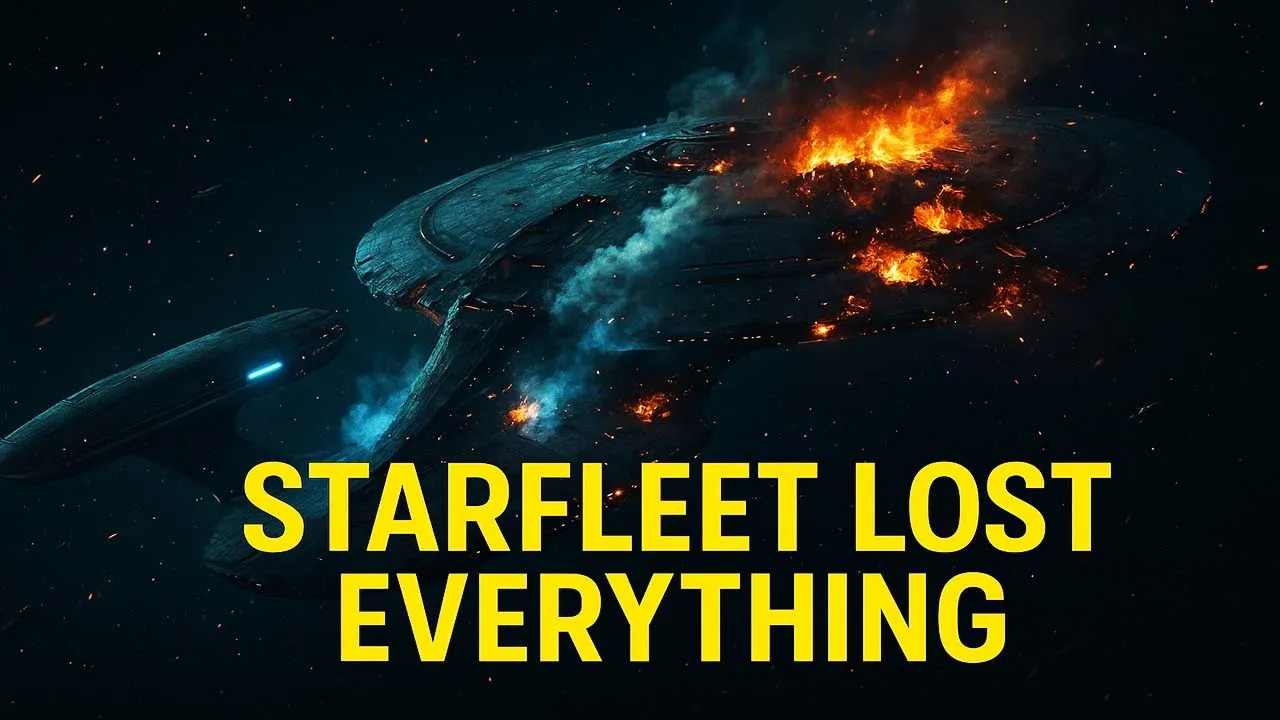
Adapted with AI from Lore Reloaded's video of 5 July 2025 and checked against the video before publication. Editorial standards · Corrections
More from @lorereloaded
All →


Make videos? Your next one could be an article here.
We turn your videos into articles under your name, linked back to the original. You keep 60% of what they earn, non-exclusive, and you can leave whenever you like.
Become a SubPlotter →