The Negh'Var: Why the Klingon Empire Built a Ship That Expects Obedience
Klingon power comes from competing houses, so a warship built to command them points to a kind of war the Empire was never designed to fight

The Negh'Var is one of the largest warships the Klingon Empire ever built, but its size isn't what sets it apart. What sets it apart is that it doesn't behave like a Klingon ship at all. It doesn't raid and it doesn't hunt. It commands, and in the Klingon Empire that shouldn't be possible.
Klingon ships aren't designed to command fleets. They're designed for warriors: fast, aggressive and independent. A Bird of Prey strikes where it chooses. A battle cruiser carries the strength of the house that earned it. They fight together, but they don't answer to each other. That raises a question the Empire itself never fully answers: why would a system built on independent power create a ship that expects obedience?
Klingon power flows through the houses, not a central authority
The Klingon Empire is not built like the Federation. It does have a central authority, with a chancellor, a High Council and even a unified military, the Klingon Defense Force. But it doesn't function the way we expect. Ships aren't assigned through a structured system, and they aren't distributed based on rank or standardized command.
Power in the Empire doesn't flow from an institution. It accumulates through houses, through alliances, victories and the ability to hold strength over time. Each house brings what it can to the Empire: its own warriors, its own ships, its own ambitions. What the Klingons call unity is not enforced. It's negotiated, and it constantly shifts depending on who holds power and who is willing to follow.
In a system like that, control has limits. A Klingon fleet is not a single machine. It's a collection of forces that have chosen, at least for the moment, to fight in the same direction. A commander can't simply issue orders and expect obedience. Authority has to be backed by reputation, by strength, and by the understanding that following you is more beneficial than challenging you.
The ships reflect that reality. Bird of Prey squadrons operate with independence. Battle cruisers carry the weight of a house's power. Even larger vessels follow the same rule, with strength tied to identity rather than to the Empire as a whole. When Klingon ships arrive, they represent who brought them. The Negh'Var doesn't. It doesn't move like a raider, it doesn't behave like a house vessel asserting its place in the hierarchy, and it doesn't rely on the assumption that those around it have chosen to follow. Command at that scale is supposed to belong to the houses and the shifting balance between them. The Negh'Var doesn't reflect that balance. It overrides it.
The Klingon Defense Force depends on the houses it is meant to unite
On paper, the Klingon Defense Force represents the Empire as a single, unified force. It answers to the Chancellor and carries the authority of the High Council. In times of war, it is supposed to bring the houses together under one banner, and when that unity holds, the Klingons are one of the most dangerous powers in the quadrant.
But that unity is not guaranteed, because the KDF does not replace the houses. It depends on them. Every ship, every crew and every commander ultimately traces its loyalty back to a house first and the Empire second. The KDF provides structure, but it doesn't enforce control. It assumes cooperation. It assumes that when the Empire calls, the houses will answer, and that they will keep answering in the same way.
Klingon power has never been that stable. Houses compete, rise and fall, and challenge one another for influence and position. Alliances shift and loyalties change. What looks like unity from the outside is often a temporary alignment of interests, held together only as long as it benefits those involved.
Why sustained war exposes the weakness in the Klingon system
A system like this works in raids, in border wars, and in moments where strength can be proven quickly and decisively. It works when individual commanders can act independently and houses can pursue victory in their own way while still contributing to the larger fight.
It begins to strain under sustained war: war that requires coordination over time, that demands consistency and not just strength, and where a single failure doesn't end the conflict but exposes the whole system to collapse. In that kind of war, independence becomes a liability. A house that hesitates creates a gap. A commander who acts alone can disrupt an entire strategy. A rival seeking advantage can weaken the Empire at the worst possible moment.
The KDF can call the houses together, but it cannot make them act as one. The Klingons have a military capable of incredible power, but not one designed for absolute control. That becomes a problem the moment the Empire faces a war it cannot afford to lose, because that kind of war needs something that doesn't ask for unity but enforces it.
For most of their history, the Klingons never needed to solve this. Conflict was constant but contained: border disputes, raids and honor battles. Even when fleets clashed, they did so in decisive engagements where strength, aggression and individual command could carry the day. Houses proved themselves, commanders earned their place, victory reinforced power, and power reinforced the Empire. The lack of central control wasn't a weakness. It was part of what made Klingon warfare unpredictable and dangerous. But it assumed every conflict would end quickly enough that the system never had to sustain itself.
The Cardassian invasion and the Dominion pushed the Klingons past their limits
By the late 24th century, that assumption begins to fail. The first signs appear when the Klingons launch a full scale invasion of Cardassian space in the Deep Space Nine episode The Way of the Warrior. This is not a raid or a test of strength. It is a campaign. The Klingons are committing fleets, holding territory, and trying to reshape the balance of power through sustained force.
Campaigns require things Klingon warfare has never truly depended on: consistency, coordination over time, unified objectives, and command that extends beyond a single battle. Success depends on who can maintain pressure, adapt, and keep fighting long after the first victory. That's where the fractures show. A house chasing its own glory can disrupt a larger strategy, and rivalries that once fueled strength begin to create instability. The independence that made Klingon forces dangerous in battle starts to make them unreliable in war.
Then the Dominion enters the quadrant. Now the Klingons face an enemy capable of sustained, coordinated war across multiple fronts, one that relies not on individual commanders proving themselves but on a system that functions as a single force. This is a war that has to be managed, directed and controlled, and the answer couldn't come from the houses or from the KDF. It had to come from something that could stand above both and assume obedience rather than rely on cooperation.
The Negh'Var arrived in The Way of the Warrior as an answer, not an experiment
By the time the Negh'Var appears, the Klingons already know the problem. They've seen what happens when houses act independently in a war that doesn't end, and they've felt the strain of coordinating fleets never meant to operate as one. So the Negh'Var doesn't arrive as an experiment. It arrives as an answer.
The first time it appears, the Empire is invading Cardassia, and the Negh'Var sits at the center of that operation. It isn't another battle cruiser joining the fight. It's the ship the fight organizes around. It doesn't strike independently and disappear into cloak like a Bird of Prey, and it doesn't represent a single lineage trying to prove itself. It stays, it directs, and it holds the center.
Once a ship becomes the center of a fleet, the fleet changes with it. Command is no longer implied through reputation or negotiated between houses mid battle. There's a focal point where decisions originate and strategy is maintained. The Negh'Var doesn't remove the houses from Klingon warfare, but it places something above them: a command structure that doesn't shift depending on who is winning in the moment.
That's why it looks the way it does: not just large, but anchored; not just powerful, but central. Where other Klingon ships emphasize aggression and mobility, this one emphasizes presence. It doesn't need to chase the fight. It becomes the place the fight returns to.
How the Negh'Var turned a collection of houses into an empire
Once the Negh'Var enters the field, Klingon war stops looking the same, though not all at once and not in a way the Empire would openly admit. The houses still command their ships, and warriors still seek glory. But for the first time, Klingon fleets have consistency. A Bird of Prey can win a battle and a battle cruiser can break a line, but neither can sustain a war. The Negh'Var stays, maintains pressure, and gives the fleet something stable to align around.
Orders no longer need to be reasserted through reputation every time ships regroup, and strategy doesn't need to be renegotiated between houses after every engagement. A fleet anchored this way starts to prioritize the campaign over a single fight. Movements become coordinated, pressure becomes sustained, and losses are absorbed instead of fracturing the force. That structure doesn't come from the KDF. It comes from a presence that makes unity unavoidable, where ignoring orders carries consequences for the stability of the entire fleet.
Before, Klingon war was driven by individuals proving themselves within a system. Now it begins to function as a system that shapes the individuals within it. That doesn't make the Klingons less dangerous. If anything, it makes them more so, because the aggression and willingness to take risks are still there, now applied with direction. Once the Klingons fight like this, they're no longer just reacting to war. They're capable of controlling it. That's a shift the Empire was never supposed to make, and once it does, there's no going back.
What other creators are saying
More on Star Trek →I still believe Star Trek United can happen, mainly because Sussman's have a little faith reply tells me he hasn't given up, even while he and Bakula work together on a separate Paramount detective show.
Star Trek (2009) and The Force Awakens share a director, a reboot mission and the start of a trilogy
J.J. Abrams Played an Almost Identical Role in Star Trek and Star Wars →
One card plays artifacts from the top of your library, and the other rewards facing a dilemma with free spells
Zefram Cochrane and the Caretaker among Magic: The Gathering Star Trek preview cards →
A Romulan War buildup, a Mirror Universe miniseries, the Borg Queen's origin and a refitted NX-01 were all part of the plans for a season that never got made
Watch the original
@lorereloaded · YouTube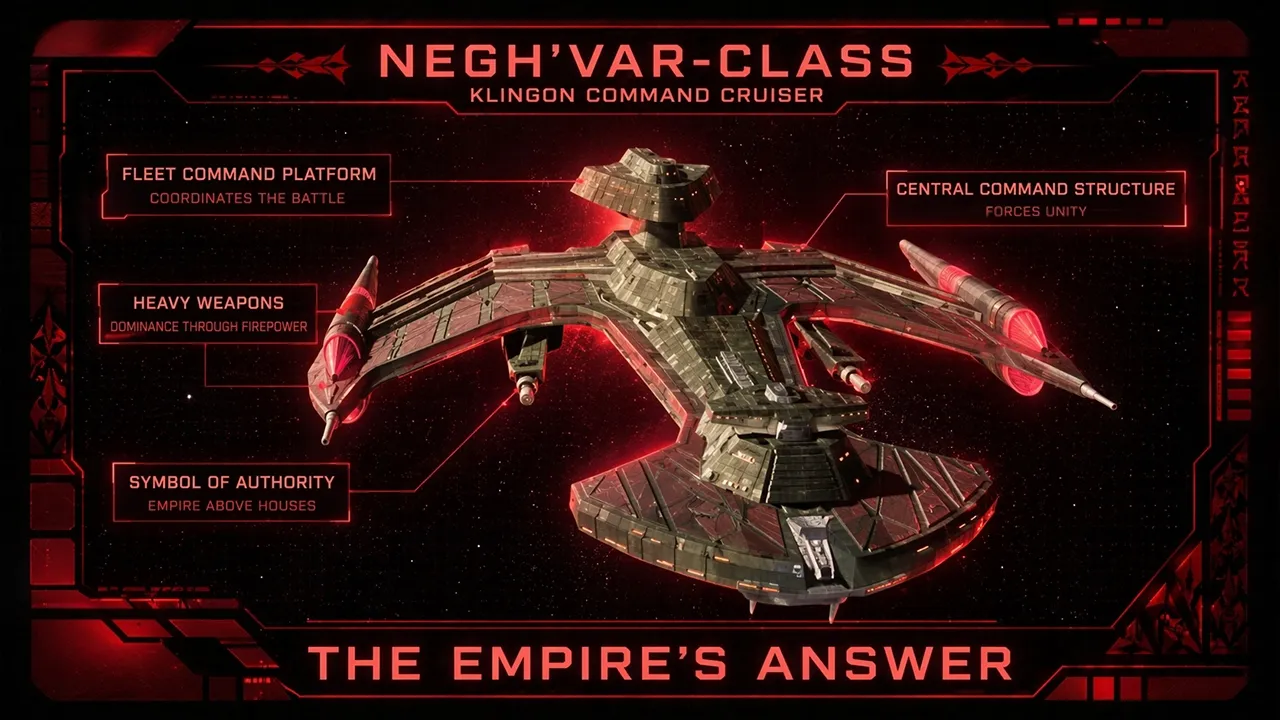
Adapted with AI from Lore Reloaded's video of 16 April 2026 and checked against the video before publication. Editorial standards · Corrections
More from @lorereloaded
All →


Make videos? Your next one could be an article here.
We turn your videos into articles under your name, linked back to the original. You keep 60% of what they earn, non-exclusive, and you can leave whenever you like.
Become a SubPlotter →