Lanterns Episode 7 Breakdown: The Jordan Boy's Legacy, a Planet Killed by Fear and the Case Against Sheriff Carrie
The penultimate episode reveals the secret Hal Jordan inherited from his father, sends John Stewart through a wormhole to a yellow world of fear gas, and puts Sinestro back in play before the finale.
 New Rockstars (AI-assisted)29 September 2026 · Editor: Digital Fox Talent Editorial Team
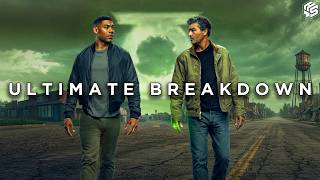
Lanterns episode 7, The Jordan Boy's Legacy, finally reveals the secret locked inside Hal Jordan's family: a note passed from father to son describing self destructive thoughts that ran through every man in the family. It also sends John Stewart through a wormhole to the dead home world of the aliens the Manhunter wiped out, where Sinestro is waiting. We were lucky to see this penultimate episode of season 1 early. I have not seen the finale yet, and my predictions have been all over the map this series, so I am saving all speculation for my theory segment, No theory shall escape my sight, at the end of this piece.
Young Hal Jordan's grip on a baseball foreshadows his grip on the ring
Episode 7 opens in 1975. A young Hal Jordan grips a baseball so tightly that he strains his hand muscles, even though nobody in the room is trying to take it from him. He is that paranoid the coach will grab it and he will lose it forever. This whole opening is designed to foreshadow Hal's adult life: threatened by replacement even when replacement might be the fair thing, because he is confident that he and only he can do the job. His grip on this baseball will parallel his grip on the ring.
His youth team is the Tigers and he wears number three, perhaps meaning he is the third of the generations of Jordans the episode deals with: his grandfather, his father and him. The coach chides him for not being a team player, and we see he has a shiner on his cheek. We also meet his father, Martin Jordan, the name of Hal's test pilot father in the 1989 Green Lantern: Emerald Dawn run. The fact that Martin is only meeting the coach now tells us how attentive he really is. If your son is the starting pitcher far enough into the season that the uniforms have come in, any proud dad would have met the coach at a game or practice. Martin is also clueless that he would only be called in like this for a disciplinary reason.
Young Hal says he was pitching a no hitter, his team was up by two with one out and nobody on base in the final inning, and the coach brought in a relief pitcher. At first I was totally with Hal, because a no hitter is such a huge deal. But I don't think we have the full story. I am guessing Hal had past incidents of being a jerk on the team, or was talking trash from the mound, or gave up foul balls that nearly went out. Also, this is Little League. If you played like I did, you know some teams are really good and everyone else is terrible, so a no hitter against them isn't that hard, and maybe the coach didn't want to demoralize the other kids. Then again, in 1975 coaches would have fed right fielders like me to a kid close to a no hitter. There is a reason the 1990 Pizza Hut commercial we all saw on the Teenage Mutant Ninja Turtles VHS celebrated the right field kid having one good play: America back then only loved winners. So I think the only reason Hal would be benched is if he was a total jerk and not as good as he thought he was.
Hal explains that after the reliever took a swing at him, the rest of his own team followed, and I love that he adds an unsure "I think" about both twins, as if he had been hit so many times he was seeing double. The scenario sounds a lot like the 1976 Bad News Bears, a film I love, when the Yankees pitcher holds the ball to spite his abusive dad. Here, the actor playing Martin does a great job evoking the more hostile side of Kyle Chandler's Hal, turning slowly on the coach to show where young Hal gets his attitude. Ultimately, I love that the scene doesn't give us enough evidence to know whether Hal deserved to be pulled, keeping us in the point of view of a dad deciding whether to side with his son or the coach. Both were probably behaving badly for it to get here, but Martin proves himself the worst of the three by escalating it to a fight. 1970s masculinity at its finest.
Martin Jordan's key passes down the Jordan boy legacy
We cut to an airfield where Martin now has a shiner just like his son, and they eat the most patriotic popsicles. Hal tells his dad to put the popsicle on his nose so it won't swell. Normally a dad teaches a kid that, and the fact that Hal is teaching his dad suggests the son has been in a lot of fights he never mentioned. Martin gives Hal a key necklace and asks if he is scared. There is that test again, the are you afraid test, meaning Hal had his own conditioning to make him fearless by the time the ring would come to him.
Martin explains that when his own father went off to World War II, he warned Martin he might not come back and gave him the key to a failsafe in his closet, its contents to stay between father and son. Martin is continuing the tradition. Hal rightly asks whether his mom should have it, and Martin says it isn't something she could carry. I thought I could relate, because I had a pilot father, but I cannot imagine any dark secret my dad would have shared with me or my brother over my mother. Now that I am a dad to a son, I would never give him burdens I would keep from my wife, though there are probably things I have inherited and may unconsciously pass down that I will discover in therapy in 15 years.
This is an interesting contrast with John Stewart's family, where it was his mother who passed down the tough love that ultimately was not good for her son, with secrets his father was not looped in on. In the Jordan family, it is a boys' club. We are seeing male generational trauma. Martin feels discovering his father's suicide note was so foundational that he must pass it on to strengthen his son, not realizing it is trauma that harmed him and harms his child, and that the stronger thing would be to let it die with his generation. He reassures Hal he will live to 100 flying Boeings from Coast City to Japan, which suggests he was planning to leave the Air Force for a civilian career. Instead he dies in his crash three months later, which is why Hal seems the same age at the funeral.
Martin also tells Hal he can throw the ball away, because he can't hold on to it forever: it is exhausting. It is really sad to think that if Martin had lived, he might have grown, taken back the key and never passed this legacy on. Instead, this might have been Hal's last memory of his dad, a core memory rather than one of many chats Martin could later have walked back. A cover of Bob Dylan's Don't Think Twice, It's All Right plays as a flapping American flag takes us to the funeral, where Hal ties his own tie, sits beside his mother as the coffin is lowered, and salutes the flyover.
The 2006 Hal Jordan hologram is warmer than the man who died
From that grave we transition to the hologram in 2026, linking the father's grave to the son's. At first the hologram defaults to the same anger 2016 Hal showed in episode 1, but his fury at John for wearing his ring gives way to a begrudging congratulations. It is another reminder that the 2006 Hal, when this hologram was backed up, is more complimentary than the 2016 version. When John lies that the funeral was well attended and the whole Green Lantern Corps lit up the sky, the hologram tests him by asking about the squirrel and about Mogo. Mogo is a sentient planet, which John should have known from Hal's passcode in episode 2. It tells us that even in 2006, Hal was not that friendly with the entire Corps.
John pulls the hologram back into the ring, not realizing sleep mode is not fully off. I love the detail that he calls his oldest brother Aaron for the $315,000 to pay the blackmail, even though they are on the outs, rather than his more trusted brother, who already wired him bail money the night before. He doesn't want that brother thinking he is draining huge sums from the company within 24 hours. Unfortunately, that brother is in the same room as Aaron when he calls. The hologram refuses to speak to open the vault box, not trusting John, and is surprised to learn he did prison time and fell for the local sheriff. He plays with the name Carrie a bit, maybe drawing a connection to Carol Ferris, who I assume Hal was dating in 2006.
The hologram calculates that the five percent charge left in the ring gives them about an hour. There are inconsistencies in how much charge these things have, but this hologram seems to last a while when it isn't doing strenuous physical activity. Flipping through radio stations, John passes a religious station citing John 16:13: "But when he, the spirit of truth, comes, he will guide you into all the truth." That feels like what John is going through with this spirit of truth hologram as they journey into a sort of hell. The hologram enjoys KC and the Sunshine Band's Shake Your Booty, calling back to Hal playing their Boogie Shoes in episode 1, and is so impressed John can use the ring without wearing it that he compliments him. John doesn't know how to react, since the Hal he knew was so stingy with praise.
At the Rushville Town Memorial, with the Guy Gardner signal beside it, the hologram learns about the 2016 Manhunter and assumes 2016 Hal killed it, but insists: "I don't kill, not even a manhunter." Hal said this in episode 5, and I will admit I got it wrong in saying Hal killed the alien in that episode. That alien was going to blow up anyway, and Hal just repelled him with a tornado. We have heard several times that Hal does not kill, so I wonder whether that extends to reprinted clones of himself, or to self harm. When the hologram keeps asking about Guy Gardner, the gold tooth gym teacher, John sings OutKast's SpottieOttieDopaliscious from 1998's Aquemini, calling back to him knowing the ATLiens lyrics in episode 3. Because operating the ring without wearing it needs his concentration, focusing on the lyrics makes the hologram fade. The blackmailer then makes John hand over his watch as collateral, the second watch he has given her.
Noah's hat ceremony shows the finesse of a future politician
Inside the gym for Noah's hat ceremony we see hats for the Naval Academy, Nebraska and later Michigan, all huge football programs where he would instantly be a national figure. The Rushville Pioneers wear green and yellow, the dueling colors of this series, and the banners for past athletic titles remind us Rushville won those because it benefited from the Manhunter's medical and nutritional benefits. Unlike young Hal, who went to war with his own team, Noah does his ceremony with his full offensive line beside him.
The way Noah works the packed gym shows the finesse of a future senator or presidential candidate. During this 2026 election season, there are guys who look like older versions of Noah working crowds just like this in the plains states. He says the town is overdue for something to celebrate, and the look he gives his mother suggests she is nervous he might bring up 2016, his grandmother, and the town's relationship with the Manhunter. He says he will announce his school after the big game tonight. Trailer shots have shown number 18, Noah, making a big play, so something big is going to happen during this game in the finale.
Billy, Noah's father, rushes at John for showing up, but Carrie defuses things and tells her former husband to come to the party afterwards and bring his dip. Then John's bank calls to confirm the $315,000 cash withdrawal, and when he has to repeat the figure louder, it is definitely loud enough for Carrie to hear, judging by the face she makes.
Carrie's guilt shows under the hologram's questioning
In the science lab, Carrie is stunned to see the 2006 hologram and touches his face. Earlier, John noted that this hologram has physical mass; he can touch and be touched. Her expression conveys a mix of heartbreak and, dare I say, guilt. The hologram asks whether they were close, whether they shared everything, and whether they talked about his father and how he died. At this point we don't know what the Jordan boy legacy is, but Hal is clearly testing whether Carrie is lying about how close they were. Then he asks who killed him, and she says it could have been anyone because the whole town hated him. Notice how she covers her eyes and breaks eye contact.
She does sound authentic passing on what 2026 Hal said about John: that he is the TV you yell at every Sunday but never miss because you are a big fan. Sunday is HBO's typical broadcast night, so it is as if the show is saying it is fine to have a love and hate relationship with it as long as you still make time for it. Carrie deduces that John dug up Hal's body for the ring because he needs Hal's voice to open the box. I think the moment the hologram suspects her is when she says she just needs to make an appearance and then they can all go to the storage unit together. She is suddenly nervous to meet his eyes, and back in the truck the hologram is convinced she killed him, saying he knows guilt when he sees it.
The dark matter manhole is an Einstein Rosen bridge to a dead world
They go to the storage unit without Carrie, and the hologram wonders whether Hal was not trying to keep people out but to keep something in. As we see, 2026 Hal was not closing off his life from the people he loved. He was trying to stop anyone with access to the dark matter manhole from the alien home world, particularly Sinestro, from reaching Earth through the box. The hologram finally explains it: a tunnel connecting two points in the universe, set up by whoever builds it. An Einstein Rosen bridge is the scientific term for a wormhole. Normally it would take an insane amount of energy to puncture spacetime, so presumably this dark matter sludge contains that energy.
I like how it bends light in a two dimensional warp around its edge, and later, beside the overturned water tower, the edge refracts the light of John's jacket sleeve in a really cool way. They relocate the manhole to the collapsed Rushville water tower, last seen in episode 5 when the Manhunter filled it with swirling darkness to engulf Hal and render his ring useless. Before stepping through, John tells the hologram to ask him if he is afraid, and answers that he is not. This is a giant leap for John: his first time off planet Earth.
Yellow means fear on the planet the Manhunter destroyed
Fear is the important word, because John arrives on a yellow desert flat and sees a glowing structure in the distance, and I love the sound design here. We later learn the structure is a fear gas atmospheric generator the Manhunter built long ago and left running in perpetuity, so I assume some of that gas is seeping onto the desert below. We are seeing a planet completely killed by fear, so it makes sense that it is fully yellow. If I have sounded crazy this season pointing out every instance of yellow, from the wildflowers around Hal as he talks to Carrie in episode 5 to the sunflower behind John in the diner in episode 6, co creator Tom King confirmed on the official after show podcast that they drew on the comics legacy of yellow as Hal's weakness, which later became a metaphor through Parallax, and that they are setting something up for the finale. King explained that yellow is symbolic of fear, that Sinestro's yellow ring is a mastery of fear, and that the fear to communicate running through this episode is a weakness that affects John and drives Hal's mistakes.
John vaguely recognizes the place because in episode 2 the alien crew used an empathy gun with a yellow glow to show him what the Manhunter did to their people. The hologram looks up to reveal their massive city. These flats are not necessarily scorched by the Manhunter but the natural environment, which is why they built above the surface. In episode 5 we learned the first words between the Manhunter and that alien were a warning not to look into this planet's twin suns, so maybe, like Tatooine, two suns produced a desert, and later over the lake we see two moons. John finds skeletal remains of people so affected by the fear gas that they turned on each other and jumped from the city. That is how the Manhunter killed this race: not with nuclear weapons or a plague but a cruel chemical fear toxin that destabilized their society. So we have to wonder whether this was the plan for Earth starting with Rushville, and whether any remaining Manhunter there means to continue it.
In the Constructing the Series featurette after the episode, Damon Lindelof revealed this species was in an unending civil war when the Manhunter found them, so the scorched terrain may have come from weapons they used on each other. We can assume the Manhunter ended that war and established a long peace before gassing them. The featurette also shows concept art and reveals the planet was shot at the Salton Sea in Southern California, using the natural calcified ground and replacing the distant hills with a VFX backdrop.
Fear rain on the lake forces John to face his father
John paddles a boat across the lake through mist as storm clouds thunder, meaning the moisture all around him is the fear toxin itself. That fear fuels an argument between John and the hologram about why John came to Rushville in 2016: he felt Hal owed him an apology for getting him kicked out of the Marines, driving a car off a cliff with him inside, crashing his rental car into a pole and leaving him to die. Realizing he won't get the apology from the Hal he needs it from, John silences the hologram with OutKast again. The toxin condensing into acid rain is likely why it was so effective in this drought climate, kind of like the Fremen of Arrakis in Dune. They must have been thrilled to get rain, and I imagine the Manhunter promised to restore their ecosystem with storm clouds if they let it build the generator.
Washed in fear gas, the episode becomes a surreal fear sequence like something from It: Welcome to Derry. Apples pop up in the water, reminding John of his parents' conditioning, and as someone who hates Red Delicious, the mushiest variety, hundreds appearing around me would trigger me too. John's father appears as a ghost in his Marine uniform. It is the first time in a while John has spoken with any form of his dad, since his real father is going senile and shooting out windows at his elderly care home and John refused to talk to him on the phone. His father puts an apple on his head and screams, asking if he is afraid. In episode 3, shooting the apple off his father's head was the test John failed; he could only shoot it off his mother's.
When John draws his gun, he faces his younger self, who screams that he is scared because he never wanted to be a Lantern and dares him to shoot. John is tackled into the water and pulled out by the hologram, who says he put the gun to his own head and almost pulled the trigger. Good thing it was the hologram, who despite being corporeal seems unaffected by the gas. This is what the gas did to the whole species: it triggered hallucinations that made them hate a part of themselves and try to destroy it, destroying themselves. I see this final act as a journey into the underworld, with the hologram as ghostly guide, the lake as the river Styx and Sinestro as Hades, though I don't think he considers this home. John now understands why the poncho was in the backpack and wears it for the rest of the trip.
The Jordan boy legacy is a note about inherited self destructive thoughts
Nearing the island, the hologram reveals what Martin kept in his failsafe: a note explaining he had self destructive thoughts his whole life, that his father did too, that all the men in the family had them, and that maybe even Martin's test flight crash was intentional. In Geoff Johns and Ivan Reis's 2008 Secret Origin run, Martin chose not to eject from his damaged plane to keep it from crashing into a populated area, so there is comic precedent for Martin intentionally downing his craft, but in the comics it was not as a result of some kind of suicidal family legacy. The Jordan boy legacy, as Hal now calls it, is a family curse. The note meant to explain oneself was the very thing that cemented the curse in the son's mind as a burden, opening his imagination in the worst possible way.
I think this further explains why Hal wrote his own eulogy. You could see it as his own note, maybe even a suicide note if that is how he went out, but I don't see it that way. I think that is why Hal was so obsessed with the turnout: he had no son, and he wanted as big an audience as possible to establish a proper legacy, perhaps in a way that could break the curse. This episode has me going back to rewatch John reading that eulogy at the funeral. Then the hologram admits: "I'm not fearless cuz I'm brave. I'm fearless cuz I'm broken." Both Hal Jordan and John Stewart had to be broken to be fearless, which tells us that being without fear is just not natural.
It recalls Carrie's episode 1 observation that Hal is not fearless but lonely, and it recontextualizes what Hal said on 60 Minutes in 1996: "Every kid's worst fear is losing a parent. Once that happens, there is nothing to fear anymore." John speculates that Hal's killer was Hal himself, and the hologram agrees that is possible, wondering whether Carrie found his body and threw the gun away to protect him. I think we can rule that out based on the trajectory and angle of the bullet wound. But I like how the two finally connect over their generational traumas, and when John apologizes, the hologram notes it is the first time John has called him Hal. Being called Hal instead of Jordan means as much to him as not being called Junior means to John. Call a man by his last name, or Junior, and he thinks of his dad; call him by his first name and he feels he has his own identity. When the hologram said he could feel things, these feelings are part of what he meant.
Sinestro is waiting on the island with Martin Jordan's words
The generator on the island looks like a fossil fuel refinery with blue flame erupting from its tower, still pumping out fear gas automatically. Sinestro grabs the hologram from behind, not knowing it isn't really Hal, and the hologram tells John they are playing their song, signaling him to think of the OutKast track and pull him back into the ring so he can surprise Sinestro with a punch. Sinestro rolls over and says John must be John Stewart. So this is where Sinestro was taken after being broken out of prison. Someone, probably some version of Hal, brought him to an even worse exile he is now trying to escape.
Sinestro compliments John's arm, the same thing Martin told Hal after he threw the ball over the fence. That makes another interesting comparison: John taught Noah to aim by imagining the football through a tire, but the Jordan boy value is heaving the ball as far as possible without caring where it lands. We end back in 1975, the night after Martin's funeral, to Queen's Father to Son, and young Hal never truly lets go of the baseball. Presumably this is right after he opened the failsafe under his father's workbench and found the note. The poor cursed boy thought he couldn't or shouldn't let go, and clinging to things too long, including rings, became his burden. Now we know why Hal is the way he is, and how meeting John might help heal that curse after his death. But is it after his death if Hal Jordan is still alive?
Theory: Hal Jordan is not fully dead
I mean, he can't be, right? I am pretty shocked this episode did not include the shot of a reprinted Hal on the floor of the Atlas Inc. slaughterhouse from the midseason trailer after episode 5, two weeks ago. It wasn't in episode 6 or 7, so it has to be a finale reveal. It is hard to read, because the showrunners have been very clear that Hal is dead on this series and we all need to move on. If that is true, I don't know why they put that shot in the trailer.
We might still end the season with Hal dead, resurrectable in the future maybe, but dead for now. I think we will learn that some reprinted version of Hal was part of the loophole by which Hal could have broken Sinestro out of prison while another Hal was locked up.
Theory: Someone exiled Sinestro to soak in fear gas
Whoever broke Sinestro out must have thought prison wasn't enough and took him to this torturous island exile, which, based on what he says, he desperately wants to escape. It has been a few weeks without the Guardians, and we are still waiting for answers, like which Guardian Sinestro killed and why. I am surprised we still haven't seen the scene with his line: "Show me a species that's fearless and I'll show you something on the extinction list." So we will get its context next episode. I imagine whoever brought him here meant to soak him in the fear gas, and I am starting to wonder whether someone who sees the Green Lantern Corps as defunct the way the Manhunters once were, or at least ill equipped to govern sector 2814, might be experimenting with a yellow lantern corps powered by fear, because on Earth fear may be a more powerful motivator than willpower.
The promo for the finale, titled Dirt and Stars, has Sinestro suggesting Hal didn't have to die in vain and that he knows a way, so maybe a clone resurrection happens in the future from where the characters are now. I don't know. The trailer also shows someone trying to burn Hal's house down with him inside, so maybe the slaughterhouse reprint already happened using some of the Manhunter Noah's blood, and afterwards Hal threatened to expose Carrie and Noah, which got him killed. Yet the trailer also seems to show Carrie really did find Hal already dead on the bleachers before it started snowing. And Sinestro's menacing tone on that line feels like a Parallax setup to me, because I keep coming back to Damon Lindelof saying at the start of the season that Hal means something to them too, and "let's see how you feel at the end of episode 8."
Theory: Noah the Manhunter and the case against Carrie
Noah has Rushville eating out of his hand. Notice the girl in the stands with a sign asking him to be her boyfriend; remember, a Manhunter uses seduction to manipulate society. His speech makes him such a natural politician that I am terrified to see how far he could go. I imagine he would want to become a senator and then president so he could spread a fear toxin across the planet, through ICBMs or perhaps an atmospheric generator sold as a climate change fix that actually pumps fear into our air and rain.
Or something awful happens sooner. Maybe Noah worries the Lanterns are onto him and fakes an injury at the big game before committing to a school, riding that wave of pity into politics, or fakes his death so he can shapeshift and vanish into the population. Either way, after episode 7, I just feel like they are telling us who did it, and it was Carrie, to protect her Manhunter son. That would explain all the looks of guilt and the lack of eye contact in the science room.
Do you think Carrie killed Hal to protect Noah, or is a reprinted Hal Jordan about to change everything in the finale?
Watch the original
@newrockstars · YouTube
Adapted with AI from New Rockstars' video of 28 September 2026 and reviewed by Digital Fox Talent before publication. Editorial standards · Corrections
Also on Lanterns
8 creators, 67 takes →


More from @newrockstars
All →


Make videos? Your next one could be an article here.
We turn your videos into articles under your name, linked back to the original. You keep 60% of what they earn, non-exclusive, and you can leave whenever you like.
Become a SubPlotter →