Digger Explained: Why Tom Cruise's Baffling New Movie Is Really a Brechtian Play About a Burning World
The hidden twist behind Alejandro González Iñárritu's oil tycoon satire, why so many audiences are asking what it even is, and why I still admire it
 New Rockstars (AI-assisted)4 October 2026 · Editor: Digital Fox Talent Editorial Team
Digger, the new film from director Alejandro González Iñárritu, hides its biggest secret from the marketing: Tom Cruise's buffoonish oil tycoon Digger Rockwell is a role inside a stage play, and almost everything on screen is a theatrical production filmed as a movie. Once you understand that the film is a fully Brechtian piece of presentational theater, the question so many people are asking this weekend, which roughly amounts to what on earth is this, starts to have an answer.
Is Digger Tom Cruise's biggest bomb, or the most important film this year about the way the world is changing? Here is my explanation, analysis and review of the film, including why I think the closing moments reach right out of the screen and into the theater you are sitting in.
Digger Rockwell opens as an oil tycoon who cares more about his cat than a collapsing glacier
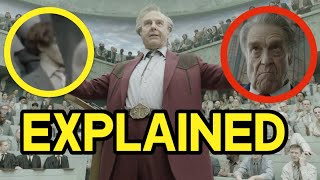
The film opens with Digger Rockwell waking up as his curtains rise on a picturesque estate outside, in a perfect frame designed to look like the proscenium arch of a theatrical stage. That is obviously intentional, as were the shots of the stars and the bubbling methane that came before it. His dying cat, Maggie, defecates and vomits on him in bed while he takes a morning call from an employee, Sandy, who reports that methane buried beneath the permafrost of the glacier they are drilling on has ruptured, sending flames out of the ice and opening a massive crack.
Rather than deal with it, Rockwell prioritizes a vet appointment for his cat. In that short time, the whole ice shelf, the size of a major city, breaks off. His advisers, led by a scientist played by Riz Ahmed, explain that the iceberg is heading toward the North Sea, threatening hundreds of millions of lives in coastal areas across Europe.
That sparks a crisis in which President Thompson, played by John Goodman, his vice president Eddie and various military and policy advisers idiotically debate what to do, in scenes that feel to me like they were lifted directly from Stanley Kubrick's Dr. Strangelove. Do they bomb the iceberg, or wait and pray the winds and currents carry it south to melt? They choose to wait, and not to warn Europe at all.
The twist: Digger is really a play called Fossil Fools
As Rockwell and President Thompson look out the window, the background turns out to be a scale model, and a giant set decorator pops out of a hatch to fix an overturned model tree. This is the big twist, something not at all communicated in the marketing: everything up to this point has been a theatrical production, a play within the play of this movie.
Tom Cruise is actually playing an actor named Curtis, who is portraying a fictionalized version of Digger Rockwell. In the world of the film, Rockwell was a real oil tycoon whose company doomed the planet, leading to an actual environmental crisis that artists in the following decades turned into a play called Fossil Fools. The rights were bought by the real Rockwell's nephew, played by Jesse Plemons, and adapted into a showy new production with high tech screens, dynamic sets and lighting systems, presented to us as an actual movie.
From here the film starts to feel like González Iñárritu's earlier Birdman, or Charlie Kaufman's Adaptation. Curtis is trying to reach his daughter, who is traveling from Jamaica as a category 6 hurricane redirects flights, while the nephew lurks backstage as the play's wealthy funder, feeling guilty over his uncle's actions and offering to help track her down. The production is directed by a character named Hannah, and what we are seeing is a final technical walkthrough before an audience arrives later that day.
Impossible doors and desaturated makeup give the stage game away
Knowing this, it is fun to notice the details. In scenes set in Rockwell's mansion, assistants and other characters come and go through side doors that, given the architecture of the house, could not practically lead to the rooms that seem to lie beyond them. These are impossible doors, the kind you often see in theatrical stage productions.
It also explains the specific costumes, the muted colors and even the makeup. None of this was done with film color grading. It was all part of the set, costume and makeup design, desaturating how the actors and set pieces look so they read as part of a theatrical farce or satire. If you ever see a production of a Molière show, the actors are often wearing makeup that desaturates their faces in the same way.
So the story of Digger, or Fossil Fools, continues as a theatrically presented satire, with world leaders behaving in an intentionally cringey and buffoonish way to serve a thematic purpose. Their staging and movement are meant to be seen as if we were in an actual theater, or seeing something like the filmed production of Hamilton on Disney Plus.
Digger is built on Bertolt Brecht's presentational theater, and it is meant to annoy
The meta conceit of the film is a convention known in theatrical traditions as Brechtian, after the early 20th century German playwright Bertolt Brecht. He established a modern style of production that is presentational to the audience: characters break the fourth wall, text and images are projected on flats and screens, and layered, exaggerated performances, costumes and wigs communicate some overall social or political commentary.
That stood in contrast to representational theater, the traditional form in which the fourth wall is maintained, actors play lifelike characters unaware they are in a play, and the playwright's themes come through more subtly in dialogue, plot and staging. Brecht's attitude was essentially that fascist forces were toppling society and there was no time for subtlety. That might be the alarmism and urgency González Iñárritu and Tom Cruise feel with this story.
Modern Hollywood films, especially comedies, often use absurdist and satirical elements loosely, like Deadpool breaking the fourth wall. But it is rare to see a fully Brechtian theatrical performance filmed as a movie. Even if you understand the concept, the satirical performances, from Cruise's Rockwell to Goodman's President Thompson to Riz Ahmed's noble scientist, are not designed to be pleasant or even entertaining to a film audience. They are meant to offend and to annoy. That is why Brecht was not, and really is not, for everyone, and why as a moviegoing experience this is indeed hard to sit through. As a lover of the theatrical experience, I will say this: "Just because annoyance is the point doesn't mean that we're not allowed to be annoyed."
Why I think a $160 million art house experiment still deserves to exist
I think it is important for Hollywood to experiment with art house projects like this. Do all of these experiments need to be $160 million Tom Cruise productions? No. But would anyone in this industry fund a project to look this good, and would anyone see it, if Tom Cruise did not attach his name and pour his soul into it? Also probably no.
Based on the opening weekend box office, people might not see it anyway. That does not mean it should not have been made, or that there is no virtue in the project.
Mr. Burns, a Post-Electric Play is the more apt comparison for Digger
A more apt comparison for what Digger is would be Mr. Burns, a Post-Electric Play, the 2012 play by Anne Washburn that I have been obsessed with for the past 14 years. It is set in a future America decades after an unspecified apocalyptic event, with survivors around a campfire trying to remember the Cape Fear episode of The Simpsons. They misremember Mr. Burns as the villain instead of Sideshow Bob, because in their society they would probably remember the billionaire in charge of the town's nuclear energy as the villain of the story.
The second act has these survivors restaging the episode as an apocryphal myth, an allegory and a cautionary tale for their current plight. Washburn choosing the 1993 Simpsons episode was itself a brilliant choice, because it parodied Martin Scorsese's 1991 Cape Fear, which adapted J. Lee Thompson's 1962 Cape Fear, which Apple TV just remade into a series this year. All of art is ultimately adaptations of adaptations of adaptations, artists taking these myths and applying them to the current society. Mr. Burns is ultimately a story about myth, adaptation, art reflecting life and the very purpose of pop culture and art in a burning world, just like Digger.
Rockwell's tuna monologue and his speech to Europe's leaders
The rest of the movie plays out as the play within the play. Rockwell's half sister Emma, played by Sandra Hüller, partnered with him to get his money for a climate correcting startup that, we learn, will not work. Rockwell joins the president and his men to watch in horror as Europe suffers catastrophic flooding and Vice President Eddie throws up. I actually wonder how that would have been pulled off on stage in front of an audience.
Rockwell then takes Riz Ahmed's scientist on a private jet to address European leaders, and there is some great dialogue on the flight. Rockwell monologues about the expensive tuna fillets he eats and feeds, mushed up, to his dying cat, bred in a special way by a Japanese expert. The indignant scientist eats the last piece and savors it, only for Rockwell to reveal he has no idea where they actually get the tuna.
The address to the European leaders is one of the film's more riveting scenes. Rockwell argues that despite their protests about the damage to the global climate, the comforts of the industrialized first world, like overnight shipping and global trade, are all made possible by oil. It very much recalls Michael Douglas's Gordon Gekko greed is good speech in Oliver Stone's Wall Street. The furious leaders rage at him, one throwing a shoe the way one was thrown at George W. Bush, but Rockwell wins a number of them over as they chant along musically, while Cruise does a showy dance on a rotating stage and security keeps tackling people trying to attack him.
A radioactive iceberg, and a rehearsal that collapses into a farce versus satire fight
Then another glacier breaks off northern Siberia, and the crisis gets worse because the Russians buried nuclear waste under that permafrost. Alaska, Western Canada and the Pacific Northwest now face nuclear fallout. Rockwell and Thompson plan to bomb the floating ice shelf into chunks, ignoring warnings that each chunk will effectively become its own radioactive bomb that is impossible to contain.
This is where the technical run through breaks down. Curtis cannot get over the fact that, in this history, the president and vice president would not both be aboard Air Force One for this mission. González Iñárritu and Cruise are making fun of how actors and productions research history so heavily that they get hung up on accuracy and adaptation details while ignoring other hypocritical aspects of what they are doing.
Curtis, Hannah and the cast argue over whether they are making farce, meaning pure comedy from exaggerated performances, or satire, meaning higher art where the exaggeration serves a political purpose. Hilariously to me, this is kind of the debate critics and audiences are now having about what Digger is. Kenny interrupts to say it does not matter. All they are doing is giving paying audiences some relief from their polluted world and a place to vent their anger at his uncle. That is really the best he and these artists can do now that the world is broken: retell the myth to help society vent its rage and properly villainize the perpetrators.
Digger's ending sends its audience, and us, out into level four air
The film then jumps to the premiere performance and the play's final act. Digger Rockwell is living with his family and inner circle on one of his oil platforms, losing his mind. His food supply has been raided and all that is left is the frozen corpse of President Thompson. He climbs onto the railing and, with the audience cursing him, jumps into the sea and drowns himself. As the movie goes on we see more and more of the actual mechanisms of the performance. I have to say it is all pretty well designed and really cool, but you do feel a falseness in the fact that it is all funded by the direct financial heir of that destruction.
In the final minutes, Curtis and the cast congratulate each other and the crew, Curtis reunites with his wife and daughter and takes a curtain call. Then a loud tone sounds and a PA announces level four, warning the indoor crowd about the polluted air outside. They routinely strap on gas masks, some of them fancy high tech ones, and head out into a polluted, flooded, dystopian Midtown Manhattan, where unhoused people wade through canals picking up rubbish, protesters throw things at uncaring police armed to the teeth, and drones patrol smoggy skies that mirror the clear starry sky the movie opened with. "There are no more birds, only drones."
Creepily, as the credits roll for us, we hear another chime and level four, for us, the audience, as we leave whatever theater we are in and head out into whatever air quality is waiting outside. That is why, in my social media post reviewing the film, I said people would leave the theater breathless.
It is okay to love Digger or find it annoying, but I admire it and think everyone should watch it
I admire González Iñárritu and Tom Cruise for making a bold art house movie and using their power to get Warner Bros. to make it for an insane $160 million budget, despite the $125 million they say it cost, and to shoot it with one of our greatest cinematographers, Emmanuel Lubezki, in the VistaVision format to showcase the lighting and detail of the theater set. That lets us see how a future heir to billions profited from destroying the world would try to overfund the myth of how the world ended.
So yes, it is okay to love this movie. It is also okay to find it a deeply annoying, self indulgent vanity project with a bummer message delivered somewhat clumsily by filmmakers who do not fully understand the balance and nuances of Brechtian theater traditions or how to translate them to a Hollywood audience. I admire it anyway, and I applaud Cruise, González Iñárritu, Lubezki and the full cast for even attempting it. I hope it encourages filmmakers like Christopher Nolan, Ryan Coogler and Denis Villeneuve to make their own versions of this kind of project.
I think everyone should see it, because "I think there is something beautiful about this movie being the final Warner Brothers film ever made." Paramount's acquisition of Warner Bros. has been approved by a judge, and the company is now part of David Ellison's Skydance conglomerate, as shown by a very creepy reel he posted on Friday claiming a whole bunch of Christopher Nolan movies he had nothing to do with. The studio heads who greenlit Digger, Mike De Luca and Pam Abdy, who also took big swings on incredible movies like Sinners and One Battle After Another, are leaving. Digger is the last Warner Bros. film without Skydance and David Ellison's names on the credits.
While Tom Cruise is chummy with David Ellison, can we not see Kenny Rockwell as the well meaning trust fund heir investing heavily in bloated art to make up for the elders of his family ruining the world? Are we supposed to hate everyone involved here? And none of this is an attempt to curry favor with Cruise: I have never met him.
So where do you land: is Digger a self indulgent farce, or a satire that earns its exaggeration?
Watch the original
@newrockstars · YouTube
Adapted with AI from New Rockstars' video of 3 October 2026 and reviewed by Digital Fox Talent before publication. Editorial standards · Corrections
Also on Digger
6 creators, 12 takes →




More from @newrockstars
All →


Make videos? Your next one could be an article here.
We turn your videos into articles under your name, linked back to the original. You keep 60% of what they earn, non-exclusive, and you can leave whenever you like.
Become a SubPlotter →