The Odyssey ending explained: why Nolan's film is the year's best
My spoiler review of Christopher Nolan's The Odyssey, released July 17, 2026, covering its ending, its messages about men, and its best sequences
 Beyond The Trailer (AI-assisted)21 November 2026Editor: Digital Fox Talent Editorial TeamOn YouTube since 2008 · more than 930,000 subscribers

In my spoiler-free review of Christopher Nolan's The Odyssey, I said that despite the movie being deeply flawed, it was the best movie of the year so far. I even put it in my poster frame. Some people who hadn't seen it asked how a deeply flawed movie could be the best. Once spoilers were fair game, I could explain. The short version is that this film is about something. It's dripping with message, and I felt every one of them.
Someone might ask if this is a Pixar movie. But Pixar's messaging is for all ages. This was very adult messaging, so it hit the hardest. It's the saddest.
I think Matt Damon's third act monologue is where The Odyssey comes together
I think the movie comes together in Matt Damon's monologue in the third act, when Odysseus tells his wife why he didn't come home for years. In short, he had an existential crisis. I thought this was Matt Damon's best chance for an Oscar: probably a nomination, maybe even a win.
Odysseus didn't want to go home. Everyone kept asking him if he wanted to, and he insisted he did, but he didn't. I think realizing that was part of his journey. He went off the rails because he hadn't thought through what would happen after he got those bloodthirsty soldiers into Troy. Then he saw the mayhem, destruction and murder around him and realized he was responsible.
The movie focuses on the idea that civility is not only the cornerstone of civilization but is in the very word itself, which I don't think we talk about much. People say the film benefits from multiple viewings. When you first hear that, you wonder why it isn't good the first time, but I do believe it here, because there's so much layered in.
Why Athena looks like Zendaya, and why there are no gods
There's the talk of Zeus's law, a variation of do unto others as you would have them do unto you. I think the film even uses a version of that phrase. The law is to treat strangers with kindness and respect, and the logic given is that a beggar could be Zeus in disguise. But it's a good law in general, because someday that stranger might be you or a loved one.
On Twitter/X, I saw someone say they were moved by the reason Athena looks like Zendaya. Odysseus witnessed either a woman of Troy or a priestess of Athena beheaded in front of him in Troy, and he was haunted by it. Because the movie is told out of order, I had felt Athena needed to look like Zendaya to him before he went off to Troy. Apparently that was why she looked like that.
So he wasn't seeing a god. There are no gods in this movie, which is an interesting choice. It's a little disappointing for Greek mythology fans, but I think it's very effective, because you don't see gods or god. It's an act of faith. You see god all around you, or sometimes you hallucinate it in the face of a person you saw brutally murdered.
As a Greek mythology fan, I didn't get that the first time. I had thought Athena inserted herself into Troy to show the barbarism of what was happening. I like the other interpretation better, but it wasn't clear to me, and I don't know if I ever would have gotten it unless someone pointed it out. It would be great if it were clearer. But this is Nolan's most artistic film, and great art is open to interpretation. That's one of the cool things about it, in my opinion.
Zeus's law, burying the dead and religion as a third space
Odysseus is fixated on having violated Zeus's law by pretending to give the Trojans a gift that was a trap. Does Zeus's law apply to war? I don't know. I think maybe it gets put on hold for war. But that wasn't the only violation of the gods, and I think Nolan is trying to point out that this is when society starts to fall apart.
Those are bold words about the importance of religion, particularly in the United States with its separation of church and state. Religion has sometimes played a negative part, used to control people. But before abuses of the church cost it many people's faith, it was the third space beyond work and home, where communities worshipped, congregated and socialized. When I wrote this, that space was social media, which isn't a real place. Losing church as a third space has had a profound effect, especially because it hasn't been replaced.
The movie also shows priests murdered in a temple, a cool sequence I forgot to include in my best sequences. Not burying the dead comes up several times, too. His men insist they must bury their dead, and Odysseus wants to run. You understand the urge to flee, but that's why it matters that you don't, or that you take the body with you. If it were easy, it would not have meaning. He keeps saying they'll honor the dead later, and the list grows longer and longer. That's the point.
Odysseus leaves Penelope in a holding pattern
The movie is very much about men and their feelings. Women have our own faults: we love the silent treatment and little tests for men. But men might bury their feelings, and that doesn't mean they don't wrestle with them. Very often men go off to deal with things alone, leaving the women in their lives in a holding pattern, expected to wait without knowing how long.
I guess men don't want to be seen as weak by the women in their lives. But wouldn't it have been great if he'd come home and worked through all this with Penelope? She seems smart, and I think she could have helped. Instead he left her alone for a large chunk of their marriage, worrying about a lot of bad things. It would have been nice if he'd come home, seen a Greek therapist and talked to his wife and son instead of putting them through emotional hell.
I thought it was great that the movie acknowledged that. I don't know if Nolan realizes it's a flaw, but I think he certainly realizes it's something men do. It can take years with guys.
The loss of time, and the final shot of Odysseus and Penelope
One thing that blew me away was how the movie captured the importance of time and the tragedy of losing it. People in ancient Greece didn't live that long, and Odysseus loses 10 plus years, wasting time with his wife and son, and leaving the people of Ithaca without a king. Sometimes that can't be helped, and I guess it couldn't here. Maybe angering the gods was just an excuse he made. It's complex.
I was moved to tears by the final shot of Odysseus and Penelope sailing off together, toward the sunset or the sunrise. Odysseus keeps being told to sail west to honor the dead. A large part of me felt that Odysseus and Penelope did die in the end, leaving their son to rule Ithaca. He had many arrows stuck in him, and I don't think Greek medicine was advanced enough for him to survive. He also never got to know his son, which was very tragic.
Tom Holland's crown, by the way, looked ridiculous. It was such a giant chunk of gold that someone was going to snatch it off his head, particularly since I didn't see much gold in the city.
Sinon and Antinous: the men who go to war and the men who stay
Another incredible element was the depiction of men who go to war versus men who shirk that responsibility. Nolan added the story of Sinon, who takes Achilles' place in the Hades sequence. Antinous drew the short straw and was basically drafted. Sinon, only a child, didn't understand the horrors of war and wanted to take his place. The older Antinous understood it was very likely a death sentence and let him.
I think Odysseus gave Antinous his excuse, seeing he was too scared, by telling him to look after his family and Odysseus's son. Antinous took that time for himself, and Sinon was sacrificed by Odysseus, who never let him in on the plan in case he squealed. Sinon died a pawn. When Odysseus brought back the piece from the draft and shoved Antinous's shame into his mouth as he killed him, that was incredible. Antinous had stolen Odysseus's and Sinon's time, and therefore their lives.
That image was the most striking to me: Odysseus grizzled, gray haired, with a furious beard and broken arrows in his back, killing a pampered suitor in performative leather armor and furs. It looked like something from a painting, a Greek urn or a full page comic book panel. It was some of the greatest visual storytelling I've ever seen.
Christopher Nolan's bro perspective: Agamemnon, Helen and Calypso
As I've said before, Nolan is the bro-est filmmaker ever, which has earned him a legion of male fans and some female fans like me. It's surprising that, working so closely with his wife, he seems to know and care so little about women. But I think he does probably the best job I've seen of capturing the male psyche.
He explores leadership through how Odysseus falls short. He shoots the Cyclops with an arrow, and when his second in command asks why, the answer is basically that the guy is a jerk. He wants to hear the siren song, and one of his men, inspired, takes out his own earwax, isn't tied to the mast and jumps to his death. Still, he got his men out of Circe's pig pen and into Troy. What fascinates me is that Nolan never depicts this male perspective as though he's in on it, so I don't know where he stands.
The best example is Agamemnon and Clytemnestra. Many guys online praised Agamemnon's aura. I thought he looked ridiculous, like a clown. He sacrifices his baby daughter while Clytemnestra watches, and when he comes home she kills him in his bed, doing the deed herself. Later, Jon Bernthal tells this story to Tom Holland. When Telemachus asks if Agamemnon's son killed his own mother, Bernthal's character says he avenged his father, as though the mother meant nothing. I think there was an intentional message there, but I was shocked.
Nolan also added Helen of Troy's face being scarred, seemingly by Jon Bernthal's character, her husband. She runs away to Troy, the war's real motive is control of trade routes, and when he gets her back he scars half her face, one of the few things of value women had in that era. Helen was the only one who ever remembered Penelope. I wonder why Nolan added it. Unless it was meant to show abuse, and I don't think that's how it was framed.
I'm also surprised there's no hint that Odysseus ate the lotus flower or slept with Calypso willingly to avoid going home and facing the mirror. In the book, he was a willing prisoner. When Calypso said seven years, I muttered "Oh boy." It takes two to tango, but Nolan depicted Odysseus totally as a victim. Someone also pointed out that in the original story Odysseus's men go after Circe. I think they start to, and then she defends herself, whereas Nolan makes his soldiers saints. In Troy, women are killed but nobody is shown assaulting them. That's always a big part of war stories, so I'm not sure why he removed it from a film showing how horrific war is.
Penelope's line about the empty throne
It bothered me that Odysseus makes Telemachus tell his mother to choose a suitor without revealing his father is back. Penelope is just as smart as everyone else, so why not let her in on the plan? But Anne Hathaway's Penelope gets a great line: people say Ithaca's throne has been empty for a decade, but she's been sitting in it, and people look at a woman on a throne and see an empty throne. I thought she had an excellent point.
Best sequences: the Trojan horse, the taking of Troy and the Cyclops
The Trojan horse was only okay for me. I couldn't understand why Troy would haul it out of the sand and drag it inside, though I think they saw it as an offering in the name of the gods. If I'd been Troy, I'd have left it on the beach and saved the city.
The taking of Troy was cool. The Trojan soldiers' armor looked flimsy and performative, like theater armor, which reminded me of Japanese puppetry performances. The use of light was stunning: Odysseus drops a lantern as a signal and reveals soldiers standing in the dark, and later a lone lantern is surrounded by moths. It was a surprisingly short sequence, but it captured Odysseus's horror as his men swarmed Troy, killing women and civilians, all over trade routes.
The Cyclops is where I decided the movie was something special. Bill Irwin, probably shot with forced perspective, is wrinkly, gray and pasty, though his eye looked a little CGI. The shot of him casually munching on a man with a dead stare, eating out of boredom rather than hunger, is one of the best in the movie. That's when I realized this was something of a horror movie. The rest felt a little rushed, but it was a very good sequence.
The Laestrygonians, Circe and Hades
The Laestrygonians, giants in metal armor, were apparently done practically with very tall actors. Particularly effective were the moving trees, which I don't believe are in the original text. Hiding things in cuts and pans was perhaps more effective than CGI trees. Most horrifying was Odysseus looking back to see two of his three ships torn apart. I think these cannibal giants are a strong metaphor for men eating other men, and Nolan captured it perfectly.
Circe, along with the Cyclops and the third act fight, I think will be the hallmark sequences. Samantha Morton did a great job. Odysseus hunts a deer, twanging his bow first to give the animal a chance, an honor he didn't give Sinon, and finds a naked man in the grass. His men's horror as they can't stop eating that disgusting stew was sold through acting, and Circe massages them like clay into pigs. I did think it was weird when his second in command insisted they couldn't leave her alive because she's a witch who would do this to other people, and Odysseus argued they had entered her space uninvited. I don't know about this one; I think the better argument would have been not to press their luck and just get out of there.
Hades surprised me, since the coverage didn't give it away. At first the barren desert underwhelmed me, but then soldiers climbed out of the dirt like graves and it was incredible. I loved the casting of the actor who plays the blind prophet. The siren sequence, though, was a letdown: just some ladies on rocks, and you don't even hear their song. Again, they're female characters, and Nolan just isn't that interested in them.
The third act fight against the suitors is stellar
The third act, which I think almost everyone would agree is stellar, sees Nolan use his Batman tools. Odysseus returns disguised as a beggar, and I loved when he was sitting in the back with his face totally engulfed in shadow, looking almost like he might be a god in there. Penelope's challenge is to string Odysseus's bow and hit the target. Robert Pattinson's line that nobody can replace Odysseus, but someone has to because he's dead, was a great line with great delivery. Odysseus can't do it at first, then turns the bow around and succeeds, and Penelope's hope returns.
He fights ferociously for his family, his salvation and, I think, his son's future, knowing he probably won't have one. That's another reason I think maybe he and Penelope die at the end. Some suitors bend the knee and bow out. Logan Marshall-Green's suitor, locked in the weapons room by John Leguizamo's character, knocks a hole in the ceiling and throws weapons down, which created so much tension. Pattinson's Antinous hides and barks orders, just as he wouldn't fight as a boy.
I think it's an incredible film despite its flaws, with so much meaning, and so unique. Nobody captures men quite like Christopher Nolan. When the trailers came out, I called it Barbie for men, and I do feel that's true in many ways.
What other creators are saying
More on Matt Damon →I think The Odyssey is a masterpiece, now Sam's favorite Christopher Nolan film. I predict Anne Hathaway and Matt Damon will definitely get Oscar nominations, and a Leguizamo supporting nod wouldn't be a surprise.
On a technical level this might just be one of the best movies ever made, bringing Nolan's 20-year-old Troy ideas to screen. I don't agree with Emily Wilson's claim that it has nothing to say, and I'm glad Nol
The Odyssey: how Nolan's scrapped Troy movie shaped his Homer →
A first reaction to the epic: stunning visuals, deep characters and a 3 hour runtime that never dragged
A schedule clash with Christopher Nolan's The Odyssey, secret fan research and a scene shut down with Zendaya all trace back to choices Holland made along the way
Watch the original
@beyondthetrailer · YouTube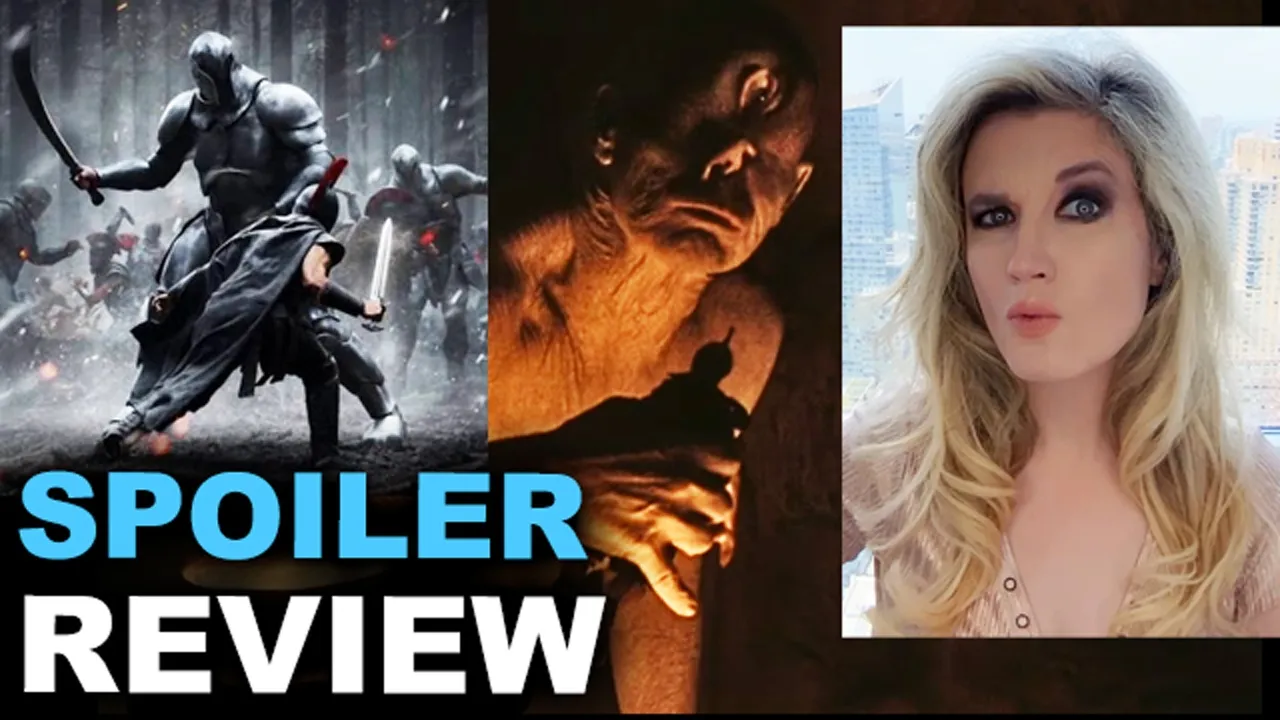
Adapted with AI from Beyond The Trailer's video of 17 July 2026 and checked against the video before publication. Editorial standards · Corrections
More from @beyondthetrailer
All →

Make videos? Your next one could be an article here.
We turn your videos into articles under your name, linked back to the original. You keep 60% of what they earn, non-exclusive, and you can leave whenever you like.
Become a SubPlotter →