Rings of Power: why can't Sauron finish the One Ring?
Fëanor's hammer is not the problem in season 3. The One Ring runs on a fëa, and the soul Sauron pours into it is the thing that eventually destroys him.
 Film Paradise (AI-assisted)20 November 2026Editor: Digital Fox Talent Editorial TeamOn YouTube since 2023 · more than 58,000 subscribers
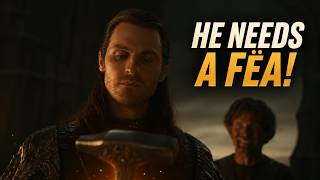
In The Rings of Power season 3, Sauron is shut away in his workshop in Barad-dûr trying to forge the One Ring, and he keeps failing. That's true even with Fëanor's hammer in his hand. The reason is that the One Ring runs on something far stranger than gold or skill: a piece of Sauron's own soul. That piece is the thing that gets him killed.
The Lord of the Rings: The Rings of Power premiered in 2022, with Charlie Vickers playing Sauron. The hammer he swings belonged to Fëanor, the greatest craftsman the elves ever had. Sauron only has it because he murdered its owner, Fëanor's grandson Celebrimbor.
Sauron keeps failing to forge the One Ring in Rings of Power season 3
For two whole seasons, The Rings of Power has been building toward one single scene, and in season 3 it arrives. This is the season where Sauron forges the One Ring in the lava of Mount Doom. The showrunners have said so straight out. They call it their darkest and most dangerous season yet, with no one safe and Sauron finally done hiding and out in the open as the villain.
So you'd think he walks up to the fire, does his evil work and leaves with the One Ring on his finger by the end of episode 1. He doesn't. The show jumps five years into the future and Sauron is still stuck. He's down in his black tower, Barad-dûr, swinging Fëanor's hammer over and over, and the ring keeps cracking apart on him.
The most powerful being left in Middle-earth cannot finish his own ring, and it's driving him mad. He's even being haunted by the ghost of Celebrimbor, the elf he tortured and killed to steal these secrets in the first place. The show is asking one question without ever saying it out loud: why can't Sauron just make the thing?
Losing Celebrimbor and burning the records of Eregion is part of the answer, but only half of it. Celebrimbor's ghost, or whatever that is living in Sauron's head, keeps telling him that what he's missing is not in the fire and not in the gold. It's in Sauron. He has the fire of Mount Doom. He has centuries of skill. And he has Fëanor's own hammer in his fist. That hammer is the first real clue, because of who used to hold it.
Fëanor's hammer and the murder of Celebrimbor
In Middle-earth, there is no bigger name than Fëanor. He was the single greatest craftsman the elves ever produced. He made the Silmarils, the three jewels that held the last light of the Two Trees, and elves and dark lords slaughtered each other over those jewels for hundreds of years. Nobody before him or since has come close.
Follow where that hammer goes. It passed down through Fëanor's family to his grandson, a brilliant elven smith named Celebrimbor. Celebrimbor is the one who forged the rings of power in Eregion, with Sauron standing beside him the whole time, wearing a beautiful face and a fake name: Annatar, the Lord of Gifts. Sauron learned every secret at that forge. Then he turned on them, burned Eregion to the ground and killed Celebrimbor with his own hands.
So look at what the show is putting in Sauron's fist. He's building the most evil object in Middle-earth with a hammer that once belonged to the maker of the Silmarils, stripped off the body of the grandson Sauron betrayed and murdered. Tolkien never put that particular hammer in Sauron's fist. The show chose to, and it chose on purpose.
But none of that is Sauron's real problem. The hammer, even Fëanor's hammer, was never the thing standing in his way.
The nine rings for Men show Sauron already knew a ring of power is a soul trap
Sauron has done this before. Think about the other rings he helped build at that same forge. Three went to the elves, forged by Celebrimbor without Sauron at the anvil, even though the alloy that made them possible was his idea. Seven went to the dwarf lords, and nine went to the kings of Men. Those nine are the ones to keep your eyes on.
Each of those nine rings slowly ate the man who put it on. It pulled his spirit out of the living world bit by bit and dragged it into a cold gray shadow place called the Unseen, until one day there was no man left. There was only a hooded wraith with a sword, bound forever to whatever Sauron wanted. Those are the Nazgûl, the Ringwraiths seen chasing Frodo across the films. The worst of them, the Witch-king of Angmar, started out as a living, breathing king and ended as nothing but a crown, a voice and a will that was not even his own.
Stop and think about what that tells you. Long before Sauron ever lit the fire in Mount Doom, he knew exactly what a ring of power does. It's a soul trap. He had seen nine of them work up close on nine real men. The One Ring is that same trap, except this time Sauron is about to spring it on himself.
What a fëa is, and why the One Ring runs on one
Making the One Ring is nothing like making a sword. You can't heat the gold, hammer it into a circle and grind an edge onto it. What makes the One Ring the most powerful object in Middle-earth has nothing to do with how pretty the gold is or how clean the work is. It's all about what gets sealed inside it, and to understand that you need one Elvish word the show keeps circling without ever saying: fëa.
A fëa is Tolkien's word for a soul. It's the living spirit inside you, the real you, the part that thinks and feels and chooses, sitting inside a body that is only the suit it wears. That soul has a partner. The body has its own name, the hröa. Your fëa is the real you, and your hröa is the flesh it drives around. Pull those two apart and the body dies while the soul keeps living.
In Tolkien's world, not just anybody gets to hand out a soul. When a god jumped the gun and built the dwarves without permission, he could shape their bodies, but he had no power to give them souls. Only Eru could do that, and in the end Eru took the dwarves in and gave them fëar of their own. Sauron, on the other hand, carried a title that says it all. They called him the Necromancer, a master of homeless souls with no bodies left. Nobody in Middle-earth understands souls the way Sauron does, so of course the deadliest object he ever builds would have to run on one.
To finish his master ring, Sauron has to reach inside himself, tear out a piece of his own spirit and his own power, and pour it into the gold, so the ring carries a living piece of him forever. It isn't a weapon Sauron picks up. It's a piece of Sauron himself, poured into a band he can slip on and off his finger. The ring was never waiting on a better hammer. It was waiting on a soul big enough to fill it.
Why only Sauron, a Maia, can pay the price
Only one person in Middle-earth could pay a price that size, and that's Sauron. He was never a man or an elf to begin with. He's a Maia, one of the great spirits who were alive before Middle-earth was even finished being built.
That armored black figure stomping around the show is a costume he puts on and takes off whenever he likes. The real Sauron underneath it is pure spirit. That is exactly why he, out of everyone, can pull this off. He has a massive spirit to spend, and he's willing to burn a piece of it.
Fëanor's name means spirit of fire
Go back to Fëanor's name one more time, because Tolkien buried something in it that is almost too perfect. Break that name open and it means spirit of fire. The fëa, the soul, is right there in it. The greatest craftsman in Elvish history was named after the soul itself.
It goes deeper than a clever name. In Tolkien's world, every soul comes from one place: the Secret Fire, the flame of life that the one god Eru used to make every living thing. A fëa is a spark of that same fire. So when the show films Sauron lifting the spirit of fire's hammer over the fires of Mount Doom to force a soul into gold, every layer of that one shot is saying the same thing. Fire, soul and making are all stacked on top of each other.
It's a beautiful piece of storytelling, but none of it explains the part that hurts him. For that, you have to look at what the One Ring takes out of its maker.
Sauron learned the cost of pouring out his power from Morgoth
Pouring your soul into a ring is not some free power up. It costs you, and it costs you forever. Sauron didn't even invent this idea. He learned it from his old master, the first Dark Lord, Morgoth. Morgoth took his own gigantic power and poured it out into the whole of Middle-earth, into the rock, the dirt, the water and every living thing, because he wanted to own all of it.
In a way, it worked. But it also bled him dry. He spread himself so thin across the world that he ended up weaker than he started, a giant who could barely hold a body together. Sauron saw that whole disaster happen, so he ran the same idea in reverse. Instead of pouring himself into a whole world, he crushed himself down into one small band of gold: smaller, tighter and far more concentrated.
When Sauron pours his will and his power into the One Ring, a huge part of him leaves his body and goes into the metal. He doesn't keep a backup. That power now lives inside the ring instead of inside Sauron. It makes the ring almost impossible to destroy, and it leaves Sauron himself a little hollowed out. Barad-dûr even gets tied straight to the ring, held up by its power, so the tower and the gold become two ends of the same rope. The ring stops being jewelry Sauron owns and turns into a huge chunk of him running at full power, whether it sits on his hand or on somebody else's finger.
To finish the One Ring, he has to take the best part of himself, the core of his own spirit, and lock it away inside something outside his body on purpose, knowing he can never fully pull it back. That's a terrifying thing to do, even for a dark god. And that's exactly why the show can honestly stretch this out and show Sauron sweating and failing for years when the old books just say he made it. The struggle is the real story. The hardest thing in that forge was always Sauron himself.
The One Ring keeps Sauron alive, and then it kills him
This is where it all turns into a trap, one Sauron builds with his own two hands. Because so much of his soul is locked inside the One Ring, his whole life gets chained to it. As long as the ring exists somewhere in the world, Sauron cannot die, because a piece of him is always sitting inside it, waiting to pull him back.
You don't have to take my word for it, because the story shows this happening thousands of years before Frodo is born. At the very end of the Second Age, elves and men band together and throw Sauron down at the foot of Mount Doom, and Isildur cuts the One Ring off Sauron's hand. Sauron's body is destroyed in that fight. By every normal rule, that should be the end of him. It isn't. The real core of him was sitting inside the ring Isildur walked off with, so Sauron's spirit flees, broken but still alive, and hides in the dark for a thousand years, dragging itself slowly back together. His body died and Sauron kept going. That's how you know his soul is sitting inside that gold.
The ring keeping Sauron alive forever sounds like the ultimate safety net. It's actually the knife. Jump to the end of the story: Frodo carries that same ring back to the same fire in Mount Doom, and the gold finally melts. Losing a weapon is the smallest thing that happens to Sauron then. He loses the piece of his own soul he poured into that ring thousands of years earlier, and this time he's finished for good, never able to take shape again. The thing Sauron built to live forever turns out to be the one thing in Middle-earth that can truly kill him.
Every failed attempt in that forge is a god standing at the edge of the hardest choice he'll ever make: working up the nerve to carve out a piece of his own soul, drop it into the gold and bet everything that he survives it. Fëanor's hammer is the easy part. The hard part is the one thing no forge in Middle-earth can hand him, the nerve to give a piece of himself away. And the day Sauron finds that nerve, the day the One Ring is finished, is the same day he seals his own death inside it. He won't understand that until Frodo stands over this same fire and cannot let go, and Gollum carries the ring down into the flames.
What other creators are saying
More on Sauron →I think Smaug wins a straight one on one fight, but Sauron wins the war since he cannot truly be killed and would fall back on manipulation, deception or an orc horde to eventually bring the dragon down.
Tevildo, Tolkien's magical evil cat lieutenant, was eventually rewritten into Thû and then Sauron, and I find him more unhinged and entertaining than his later polished form. I also think his story fits beside Lifeline, since both are about love and courage surviving impossible odds.
Tevildo, Prince of Cats: how Tolkien's evil cat became Sauron →
I believe this evil-forged theme runs through everything here, and I'm convinced Galadriel is wrong that Sauron fled further north, since he's probably hiding in the Southlands. I also think the Southlands may secretly be Mordor's origin, and I'm unsure yet who among Halbrand, Theo, or the Stranger is Sauron.
Rings of Power premiere: what are the hidden Sauron clues? →
After just two episodes, I felt The Rings of Power season 2 had moved past season 1's exposition-heavy setup into real emotion and human connection, with elves manipulated by Sauron's pride-stroking and dwarves drawn back to ring-making, making it more engaging than shows like House of the Dragon.
Rings of Power season 2 review: more emotion than season 1? →
Watch the original
@film_paradise · YouTube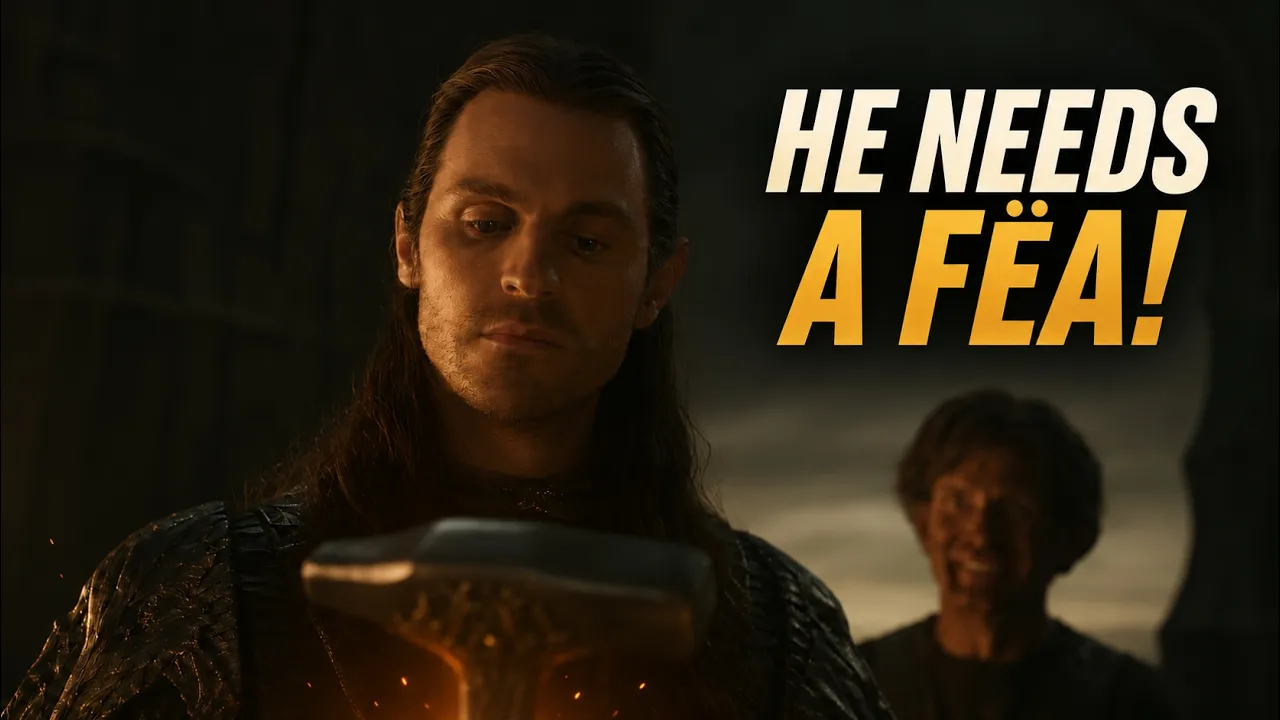
Adapted with AI from Film Paradise's video of 19 November 2026 and checked against the video before publication. Editorial standards · Corrections
More from @film_paradise
All →


Make videos? Your next one could be an article here.
We turn your videos into articles under your name, linked back to the original. You keep 60% of what they earn, non-exclusive, and you can leave whenever you like.
Become a SubPlotter →