How a coding bug in Race and Chase created Grand Theft Auto
From Lemmings and a failed Nintendo deal to Hot Coffee and GTA V, the series began as a bug that DMA Design chose to keep.
 GIQUE (AI-assisted)27 October 2026Editor: Digital Fox Talent Editorial Team

Sometimes "it's not a bug, it's a feature" is a valid statement. It's why the Creeper enemy in Minecraft exists, and it's the only reason Grand Theft Auto exists. The series began as a failed attempt to build a standard top down, 16 bit driving game. It ended up as one of the most lucrative video game series in history.
The first Grand Theft Auto (1997) was developed by the Scottish studio DMA Design. What follows is a brief look at how the series got from that accident to GTA V.
DMA Design, Lemmings and the Nintendo partnership that fell apart
The beginnings of GTA go back to 1987, when DMA Design was founded in Scotland. The studio concentrated on the most popular gaming machines of the time, which were home computers: the Commodore 64, the Commodore Amiga and the Atari ST.
DMA's most famous game was Lemmings, a puzzle game in which you use certain skills to protect stylized lemmings. It was popular enough to spawn several sequels. It also impressed Nintendo enough that the company wanted to work with DMA, and Nintendo asked the studio to make a launch title for the then unreleased Nintendo 64.
Nintendo wasn't impressed with what DMA delivered. That game was Body Harvest, a third person action shooter. It was delayed several times, and Nintendo had issues with its quite graphic content, which clashed with Nintendo's family friendly brand. Between this and the communication problems caused by the English and Japanese language divide, the two companies soon decided to part ways.
How a coding error made the police in Race and Chase aggressive
In 1995, DMA began developing a top down action shooter and driving game called Race and Chase. The idea was simple. What if, instead of playing cops versus robbers, players could play robbers versus cops? Rather than pulling over and ticketing criminals, as in a similar game called APB, players would need to avoid and even run from the police.
Most of the team was inexperienced, and progress was slow. The cops in Race and Chase were supposed to follow you and maybe pull you over. One of the developers made a mistake in the code, and that's not what happened. The AI controlled police were incredibly aggressive, even ramming into the player as if trying to kill them.
DMA decided to capitalize on the coding error and make it a major part of the game. The game was finished and released under a much more appropriate name: Grand Theft Auto.
Liberty City, Vice City, San Andreas and a clever marketing tactic
The playable areas in GTA covered three maps, each loosely based on a specific American locale. Liberty City stood in for New York, Vice City for Miami, and San Andreas for California and Nevada.
The GTA team used a very clever marketing tactic, one that gaming companies still use to this day. Whip politicians and other media personalities into a frenzy about the immoral activities available to children, then sit back and watch all the free advertising roll in.
GTA 2 felt like more of the same, so DMA moved to 3D with GTA 3
The game was popular enough to spawn a sequel, which used the same 2D art style. GTA 2 added enough to justify its sequel status, but DMA wasn't happy with it. The studio felt that GTA had been groundbreaking and that GTA 2 was essentially more of the same.
DMA decided the series needed more dimension, in the most literal sense, and made the move to 3D. The first 3D game in the series, GTA 3, was so well received that it was the best selling game of 2001.
Rockstar North, Vice City and San Andreas
By then DMA Design was owned by Rockstar Games and had changed its name to Rockstar North. The studio then released the 80s themed Vice City, which was so popular that at the time it was the fastest selling game in history.
Rockstar North's next GTA title was San Andreas, which told the story of a gang war from the point of view of a street gang. For the first time, the prevalence of the internet meant that people who weren't directly involved in gaming had heard of the controversy surrounding GTA.
Why the Hot Coffee controversy around San Andreas seems out of proportion
That controversy was Hot Coffee. If a player used the mod, the protagonist CJ could have a very pixelated sex scene with his girlfriend. If you don't use the mod, which doesn't come with the game, the content is inaccessible.
Considering the low quality of the graphics, it's amazing that this controversy still exists today. That's especially true when the graphically realistic Witcher and Mass Effect series are given a free pass for the exact same thing.
GTA 4 was more of the same, and GTA V brought more controversy than ever
Then came GTA 4, which was received in a similar way to GTA 2: not particularly groundbreaking, but more of the same good times.
That brings the story to GTA V, with a bigger map, three playable characters in the single player campaign, a multiplayer component possibly more popular than the main game itself, and more controversy than ever. It's clear that Rockstar North still has the same pioneering spirit it had back when it was DMA Design.
Watch the original
@gique_ · YouTube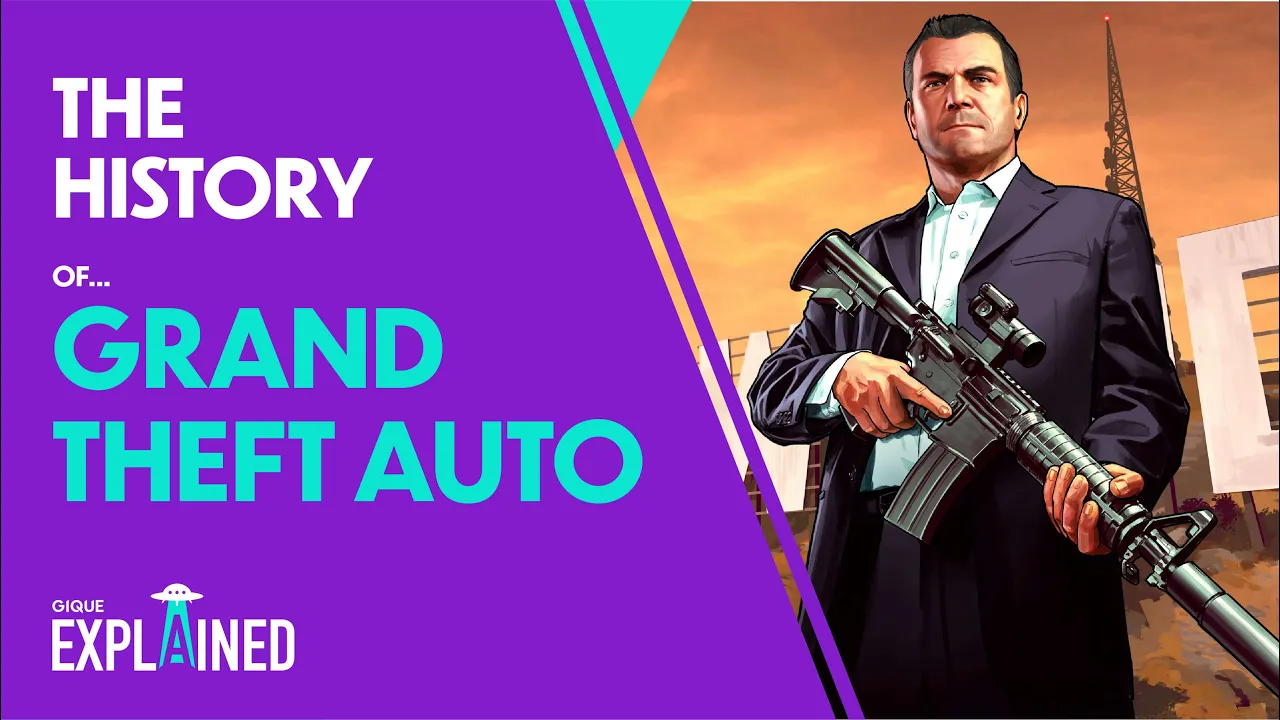
Adapted with AI from GIQUE's video of 11 February 2021 and checked against the video before publication. Editorial standards · Corrections
Also on Grand Theft Auto
3 creators, 4 takes →



More from @gique_
All →


Make videos? Your next one could be an article here.
We turn your videos into articles under your name, linked back to the original. You keep 60% of what they earn, non-exclusive, and you can leave whenever you like.
Become a SubPlotter →