Dark Matter season 2: Dayo Okeniyi on what Leighton represents
The actor behind Leighton explains why his character embodies the dark side of ambition, how the multi-Leighton fight was shot, and the roles that got away
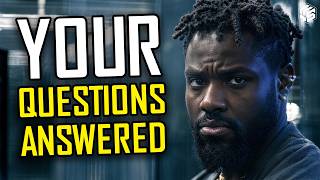
Dayo Okeniyi sees Leighton, his character in Dark Matter, as the embodiment of human ambition, and in his words, to some extent, "the dark side of human ambition." I spoke with him remotely to talk through season two, how he pulled off fighting himself on screen, and the career turns that cost him Get Out and a chance to audition for Star Wars.
Dark Matter premiered in 2024 and stars Joel Edgerton and Jennifer Connelly. Dark Matter is one of my own personal favorites, and the season hit me on several levels. I live in a world of what ifs, and because I work mostly on my own, my mind is constantly wondering about things.
Dayo Okeniyi says Leighton represents the obsessive ambition of humanity
I see the characters this season as standing for particular things. To me, Charlie is someone who had a troubled childhood because of his parents and makes his own decisions to go out into the world and become self-reliant. Jason represents the idea that the grass is always greener on the other side, and then learning to accept that it isn't and that you should appreciate what you have. So I asked Okeniyi what his character represents within that structure.
Okeniyi said each character represents a form or element of the human condition, and for Leighton it's ambition. He was careful to say only "to some extent" that this is the dark side of that ambition, especially for someone who tends to have an addictive personality. Every version of Leighton, he said, pushes past the limits in whatever interests they have.
The altruistic world's Leighton got a joke nickname on set built from the awards he wanted: the BAFTA, Emmy, Grammy, Oscar and Tony. That version cares about sophistication and taste, which is why his wardrobe is so colorful, bright and showy. The original Leighton is driven because he inherited the company from his grandfather, and for someone already addicted to success, everything becomes about balancing the books and getting a return on investment. Then there is the Leighton who reveres the box and will keep revering it to the end. Okeniyi said that version almost sees himself as a Christlike figure, leading people to God, which is the box, or leading them through it. He summed Leighton up as the obsessive ambition of humanity, even at our own expense.
Is Leighton truly altruistic, or is it ego?
I think Leighton shows how the road to hell is paved with good intentions. When he travels the multiverse and reads the newspaper, and then in one world he's invented the computer in a place that doesn't have them yet, it looks like a wonderful invention. We know how that turned out in our reality. He pushes so far that he's almost like Jeff Goldblum's character in Jurassic Park, warning about people who stop asking whether they should do something and focus only on whether they can.
So I asked whether Leighton and his versions are genuinely altruistic, or whether it's ego putting himself at the center of the multiverse. Okeniyi said he thinks everyone feels altruistic in some sense, and that Leighton is simply human. He thinks Leighton is caught in the same thing many tech billionaires are caught in today: they either choose not to see the bigger picture or naively ignore it. He doubts they're naive, and thinks they simply don't want to stop, because stopping to see the bigger picture would slow their progress.
He pointed to Facebook, now Meta, Amazon and Apple as companies that all started with good intentions, bringing people closer and making tools to make life easier, and now we're seeing the fallout. When you dig into the history, he said, you find they knew some of these results would happen and decided to ignore them, or perhaps in some cases were genuinely unaware. He doesn't see it as something inherent. He thinks the Leightons are deliberately trying to do good but, for one reason or another, choose not to sit and think about the consequences.
Where the box-worshipping Leighton goes next, and a possible season three
There's a strong confrontation between the box-worshipping Leighton and Leighton at the end. To me, the box-worshipper shows how, when you get too deep into something, you don't let yourself cut your losses. He would rather hold on than let go, which the characters have done throughout the series: if they learn a relative might be alive in some universe, they go and see. The ending leaves his next destination hanging, so I asked whether he was right and where he's headed.
Okeniyi admitted he felt nervous even discussing it, and stressed the old acting rule that you're not supposed to judge your character, only understand why they do what they do. He understands this Leighton's desperation. When we first meet him, he had already given up his wealth, his family had abandoned him, and he had traveled the world learning mysterious theologies and building his own blend of what religion means. He doesn't want to go back to the leaky dojo or the yoga shop in the mall. He found his place, or what he believes is his place, so he holds on to the pyramid and to what he feels he can do with it.
"We have ideas for what we want to do about his fate," Okeniyi said, adding that, God willing, they'll get the chance to see it through. He thinks Blake and Jackie, the showrunners, have always seen the show as a trilogy, and he hopes they can return for the third season they've hinted at to him. His conclusion: it isn't about altruism, just someone desperately trying to do what he believes is right, unfortunately at the expense of others at times. My own feeling is that this Leighton will eventually come around to Leighton's way of thinking. In episode four or five, I can't remember which, he goes to make peace with Jason, who tells him to get out and threatens to kill him if he sees him again, and I think he'll realize they've gone too far.
How Dayo Okeniyi filmed the fight against himself
I asked what it takes to film a scene where you fight yourself. Okeniyi said reading it on the page is exciting, but arriving on set and realizing you actually have to do it is something else. In season one, they shot a sequence meant for the end credits that never came out and is sitting somewhere in the archives. It was a council of, he's sure, eight different Leightons, including the dust world Leighton, the awards-chasing Leighton and the future world Leighton, each with their own hair and wardrobe. He gave the speech as the original Leighton, eight lookalike actors stood in for eyelines, and every one of them had to learn the speech to match the timing. They did four setups with constant costume changes, and learning nobody would see it was frustrating.
That day taught him there were no shortcuts for season two: learn every scene from start to finish and nail the timing of every move. The final fight gave him nightmares, and he woke up sweating, because he wanted it to feel dynamic enough that audiences wouldn't notice the cuts. In the middle of the fight he grabs a flashlight and hands it to himself, and has to catch it at exactly the right moment for it to cut together.
He gave a big shoutout to his body and acting double, a stage actor from Washington and Chicago who was in every scene with him. The double would play Guru while Okeniyi played the original Leighton, studying his timing and taking notes to hand over when he changed. Over time the double began improvising, and Okeniyi would keep some of those choices when it was his turn, giving the double real authority over both characters at times. He also finds it funny that people aren't connecting the dots on the Guru seen with longer locs in the dream scene and again in the box. He thought that would be all anyone talked about, so he guesses they hid it better than he expected, and said there's something there they're interested in doing.
Improvised lines, Jimmi Simpson and a two day shoot
Okeniyi said the key is a partner who can dance with you, and finishing each other's sentences grew naturally out of the performances. Blake and Jackie encouraged it, though sometimes they didn't even ask permission. In the scene where they interview Jimmi Simpson's character for a job, a comic book line was originally written for the other Leighton, but Okeniyi argued it had to come from Guru, because that Leighton is so calm and composed he'd never crack a joke like that. In the final fight they added similar back and forth about whose father is whose.
The fight took two days, which he called a two day nightmare. Seeing the edited result, he still can't believe it, and says, "That's not me. That's someone else." He feels very lucky to be on a show like this and called it a dream.
Favorite moments from Dark Matter season two
One of my most memorable moments is the beach scene, when a character walks out, sees how perfect the world is, and then the asteroid hits. To me that sums up the box: plenty of positive things at first, then everything spirals out of control.
Okeniyi's picks centered on castmates he rarely works with. He never shares scenes with the Dessen family, but he thinks Jennifer is amazing, a deep performer with an ability to access her emotions that blows him away. He singled out her scene with her father in the last episode and how she plays the trauma of the box. He also loved his one day with the actor in the car chase scenes, whom he adored in Silicon Valley. And he and Laura used to joke that they needed their own spinoff.
Dayo Okeniyi on Get Out, Moonlight and Star Wars
Since the show is about how a small decision changes a life, I asked about his own turning points. He's still amazed his first film was The Hunger Games. He studied design and visual communication and assumed he'd work in advertising, insisting he'd never become an actor because where he comes from, that doesn't happen. A year after moving to Los Angeles he landed The Hunger Games, which led to Vanity Fair and GQ shoots and world press tours. Without that move, he says, he'd probably be at an ad agency.
While on Shades of Blue with Jennifer Lopez and Ray Liotta, his agent said Jordan Peele wanted to talk about his directorial debut, Get Out. A Key and Peele fan, Okeniyi said yes to the offer, but NBC wouldn't release him from his contract. Around the same time, Barry Jenkins met with him about Moonlight, though he was tied to a series and stressed he didn't have the role; they'd only expressed interest and he might still have had to audition.
He also flew to London to audition for J.J. Abrams' Star Wars. Before leaving, David Ellison and Dana Goldberg offered him a role in Terminator over Skype and told him to go ahead. He thinks Disney somehow learned he'd accepted and told him he couldn't be in two franchises at once: turn down the job to audition, or go home. Being from Lagos, Nigeria, he wasn't going to give up that opportunity, so he spent three days in a Mayfair hotel and returned without auditioning. He said John Boyega was brilliant in the role and still wishes they'd done more with his character. The right person usually gets the right job, he said, but there's always the what if. I said that doors open as others close, and that you have to be like Jason and appreciate how things turned out.
Why Dayo Okeniyi isn't going anywhere
Asked about his plans, Okeniyi said he loves storytelling, sci-fi and fantasy, and making things that give people something to follow each week. Thirteen years in, he still can't believe he gets to look Joel Edgerton in the eye and pretend to be someone else. He hopes to take more ownership through producing and directing, has a few projects in development, and called his close friendship and mentorship with Blake Crouch incredible.
He said he doesn't care about AI coming for jobs, the contraction in the industry or big companies buying studios. "People will always need something to follow," he said, because storytelling is part of the human experience. I think people connect with Dark Matter because it pairs wild multiverse ideas with grounded personal stories, like someone deciding all they want is to make a chair, and to me it's a fantastic season.
Watch the original
@heavyspoilers · YouTube
Adapted with AI from Heavy Spoilers' video of 1 November 2026 and checked against the video before publication. Editorial standards · Corrections
Also on Apple TV+
2 creators, 4 takes →


More from @heavyspoilers
All →

Make videos? Your next one could be an article here.
We turn your videos into articles under your name, linked back to the original. You keep 60% of what they earn, non-exclusive, and you can leave whenever you like.
Become a SubPlotter →