Borg lore: how does the collective choose who to assimilate?
The collective's choices about who to harvest, destroy or bypass come down to a cold calculation of yield, cost and distance
 Lore Reloaded (AI-assisted)24 November 2026Editor: Digital Fox Talent Editorial TeamOn YouTube since 2016 · more than 140,000 subscribers

The Borg don't conquer. They curate. Worlds burn and species vanish, not because the Borg hate them, but because the Borg find them interesting. Just as often, the opposite happens: a cube arrives, scans and moves on, with no message, no ultimatum and no destruction. Entire planets are spared, not by resistance, but by irrelevance. To the Borg, assimilation isn't conquest. It's selection, and selection is everything.
The collective doesn't operate on emotion. It doesn't care about territory, identity or resistance. It cares about efficiency. Every species, ship, satellite and mind it has encountered has been measured against one brutal metric: will this bring us closer to perfection? If the answer is yes, you will be assimilated. If the answer is no, you won't even be noticed. And if the answer is yes, but not yet, the Borg will wait until your biology improves or your technology becomes worth stealing. Then they will come, with one cube, or 10, or none at all.
The Borg only assimilate species that make the collective stronger
The Borg aren't conquerors in the traditional sense. They don't wage wars of domination, build colonies or claim borders. Assimilation is a harvest of biology, technology and process, and every encounter begins with a single binary evaluation: is this species distinct enough to make us stronger? Not whether they're dangerous, not whether they hold territory worth taking, not even whether they can be beaten. If the answer is yes, the species is added to the list, assigned a designation, cataloged, studied and, when the time is right, assimilated. If the answer is no, the Borg don't attack. They move on.
To the collective, perfection isn't about control. It's about cumulative advantage. Every species added must enhance the whole, biologically, technologically and structurally. Assimilating a civilization that brings nothing new isn't just wasteful; it's a threat to perfection. Star Trek: Voyager shows this clearly when Seven of Nine casually dismisses the Kazon, a species with ships, weapons, culture and social structure. The Borg evaluated them and found their biology unremarkable, their technology crude and their tactical evolution stagnant. Her words are clinical, cold and final: they were unworthy of assimilation. Not because they were beneath the Borg, but because they would have made the Borg worse.
Compare that to Species 262, a humanoid civilization with telepathic resistance to assimilation. The Borg lost drones trying to subdue them, and instead of retreating, they persisted. Species 262 had something the collective lacked: a cognitive structure unlike anything it had encountered. To the Borg, that is gold, something to absorb, study and become. Their losses didn't matter because the yield justified them. That's the doctrine. Add nothing that weakens you. Acquire only what improves you.
That improvement isn't vague, because the Borg think in blueprints. When they scan a species, they see genetic markers, cognitive efficiency, neural complexity, tactical throughput and the rate of technological change. Can this species process data faster? Do their ships use systems the Borg haven't integrated? If yes, assimilate. If no, move on. If maybe, observe. This is where the real horror sets in. Just because the Borg don't attack doesn't mean you're safe. It might just mean not yet. The moment you build something new or solve a problem they haven't cracked, the collective will return, and you'll be added, not because you're a threat, but because you're finally useful. You're either a component or noise.
Assimilate, destroy or ignore: the three Borg responses to a new world
The Borg don't see cities, continents or civilizations. They see systems: a planetary biosphere, a technological lattice, a neural density map. When a cube drops out of transwarp and begins to scan, it's evaluating output, not just what a world is but what it's producing. Is it yielding distinctiveness, such as biological breakthroughs, strategic position or weaponized variants? And is the cost manageable? The collective only ever chooses from three responses when it encounters a new world: assimilate, destroy or ignore. Each one tells you exactly how the Borg see you.
Assimilation is the ideal. It means a planet holds something the Borg need, whether genetic uniqueness, cognitive evolution or advanced infrastructure they can graft into their own systems. These worlds draw the Borg's interest, not with fleets or negotiations, but with inevitability. Infrastructure is disabled, defensive networks are bypassed and key population centers are harvested first, not as punishment, but for maximum data yield. Assimilation is not domination. It's extraction.
Destruction is rare. The Borg would prefer to assimilate a threat and gain its strength, but some species resist so completely that they become unusable. Species 8472 made this clear. Their immune systems destroyed nanoprobes on contact, their organic technology couldn't be decrypted or metabolized, and their agenda was simple: kill the Borg first. So the collective adapted, not to conquer but to erase. That was not a triumph. Every destroyed world is one the Borg couldn't harvest, and destruction bleeds them too: cubes are lost, drones are spent, nanoprobe reserves run dry, and factories, relays and assimilation chambers get pulled into a fight they were never meant to endure. Destruction means perfection is no longer possible. Only survival.
Ignoring a world is the most common response, and the most chilling. It isn't mercy. It's dismissal. The Borg don't care how proud your culture is, how many fleets you've built or whether you worship black holes as gods. If you have nothing new to offer, you are beneath consideration. Worse, some species realize what's happening and begin to hide. The Brunali dismantle their tech, keep their satellites dormant and bury their power cores beneath soil and rock just to look primitive again. It's survival through self sabotage, a people living in fear of being interesting. To the Borg, every planet is a node: added to the system, cut out as a cancer, or left untouched like dead code.
Why the Borg sent only one cube to Earth
To the outside galaxy, a Borg cube is a warship: a three kilometer block, shielded, armed and nearly indestructible. To the Borg, it's an ecosystem. It's a mobile factory, research platform, genetic processing node, communications hub, data vault and population cluster, and yes, a battleship. But war isn't its primary function. Assimilation is. The Borg don't send a fleet to conquer; they send a cube to digest. That's why most planetary incursions begin with just one. In Borg logic, one cube should be enough. This isn't hubris. It's math. More than one cube is redundancy, and redundancy is inefficiency.
Cubes also aren't replaceable. They aren't mass produced like Starfleet vessels. They are grown, layered together over time from assimilated tech, reconfigured drones, industrial conversion nodes and neural integration cores, built from the inside out using repurposed people, cultures and infrastructure. Each cube reflects the sum of everything it has consumed. Lose one, and you lose not just weapons but knowledge, processing power, cultural blueprints, historical data, engineering templates and drones trained for functions no other drone can perform.
This is where most people get it wrong. The Borg aren't one giant hard drive, and they're not backed up in the cloud. When a drone dies, what it knew is gone forever. Think of a computer with no central backup: some files on one drive aren't duplicated anywhere. When a cube is destroyed, its tactical scans, genetic sequencing, cultural breakdowns, language trees and assimilation trials are wiped. A fleet also demands transwarp corridor routing, nanoprobe distribution, biomass feeding and processor synchronization, and a failed mission costs part of the collective's core structure.
Earth, like many targets, was judged to be a low cost extraction: a high value species with manageable resistance. One cube should have been more than enough, and from the Borg's perspective, it nearly was. Wolf 359 proved that, and First Contact proved it again. Tactical resistance wasn't the problem; strategic yield was. Contrast that with the war against Species 8472, where 15 cubes were destroyed in a single volley and the Borg kept sending hundreds more over time. That was about survival. The Borg scale force based on outcome, not fear, and they fight with minimum viable assimilation.
The Borg assimilation equation weighs yield against cost
The Borg assimilate because the math demands it. Every decision comes down to one calculation: does the yield of this species exceed the cost of taking it? Yield is everything the Borg can extract, from unique genetic traits and exotic cognitive structures to technological breakthroughs and emergent systems the collective hasn't mastered. Some species are jackpots. Humans, Betazoids and Vulcans are civilizations whose biology or technology pushes the collective into new evolutionary lanes.
Cost is the other half: drones lost, nanoprobes expended, cubes damaged beyond recovery, transwarp energy spent and the risk of contaminating the mental lattice. The Borg can't afford bad input. Their perfection is a delicate architecture, and chaotic neural structures or unstable genomes can fracture it from within. Humans are enormously valuable because they're creative and adaptable, but they're also volatile, so they generate high yield and high risk. Species 8472 is the opposite problem: revolutionary biology that was utterly incompatible. The cost outweighed the yield.
Then there are species the Borg observe because the timing isn't right. Their technology may be promising but underdeveloped, their biology unique but unstable. The Borg wait for the yield to ripen. That explains the most misunderstood truth about the collective: the Borg don't always attack because assimilation would be a structural loss. The wrong species can dilute efficiency, corrupt processing cores or compromise adaptation algorithms. The Borg aren't hunters. They're auditors, and the cube only arrives when the calculation finally resolves.
Why the Borg hunted Picard, Seven of Nine, Janeway and the Hansens
Sometimes one voice outside the collective matters more than an entire species inside it. A single extraordinary mind can reshape the collective far more effectively than a billion ordinary ones. Assimilating a planet is expensive and risky; assimilating one individual is precise and efficient. This is why the Borg chased the Hansens, two researchers working alone who uncovered insights into Borg mechanics that many civilizations had never approached. Their understanding was worth more to the collective than the entire Brunali or Kazon civilizations combined.
It's why Locutus mattered. Picard was uniquely capable of interpreting the Federation and providing strategic clarity from within its command structure. He wasn't chosen to break Earth. He was chosen to decrypt it. It's why the Borg responded with urgency when Voyager severed Seven of Nine from the hive mind: she was a specialized node, and losing her was losing an entire library. And it's why they fixated on Janeway, whose ingenuity they could not predict. Unknown variables must be integrated or neutralized.
There's a darker layer. Sometimes a species is too chaotic or psychologically volatile to graft into the hive mind, yet one person within it stands out, a mind shaped by that very chaos into something uniquely valuable. That individual becomes the one safe sample the Borg can take without absorbing the cultural noise around them. Perfection sometimes comes not from absorbing the many, but from capturing the one.
Transwarp corridors limit how far the Borg can reach
From the outside, the Borg seem infinite. In truth, they don't occupy the galaxy; they thread through it, and every incursion relies on transwarp corridors. These corridors are arteries, and every artery has its limit. Once a cube leaves a corridor, it's alone, with no forward bases, supply outposts or reinforcement hubs. Every corridor has a throughput limit, and only so many vessels can travel without destabilizing the network. To reach the Federation, a cube operates without resupply or backup nodes, and every drone it loses is unrecoverable.
This is why Earth never saw more than one cube at a time. It wasn't because Starfleet was too strong or humanity uniquely terrifying, but because sending 10 cubes from that distance would strain the transwarp lattice and risk the infrastructure that holds the collective together. If a cube fails, the collective recalculates whether the lattice can support another attempt. Sometimes the answer is silence. The war with Species 8472 was different because the battles happened inside Borg space, near the hubs and factories, threatening the arteries themselves. A cube is a scalpel, not a swarm, and for the Borg, distance is measured in cost.
The Borg abandon targets when the math changes
The collective doesn't commit to a species; it commits to a result. The Borg don't suffer from sunk cost fallacy. If resistance pushes cost beyond acceptable thresholds, if a civilization burns its own infrastructure, or if genetic value degrades under stress, they abort. Some civilizations have survived without winning, simply by becoming uninteresting during the fight. During the war with Species 8472, Voyager stopped being worth the bandwidth and was deprioritized. Abrupt retreats are recalculation, not panic: a corridor needs reinforcement or a better opportunity emerges elsewhere. Value has a half life.
Abandonment also happens when the collective realizes mid assimilation that a target's distinctiveness can't be integrated safely. No matter how many drones have been spent, it cuts the thread, because a curator discards what can't be preserved. The queen can change the equation too, abandoning species chased for centuries because she sees disorder where the collective sees value. Even then, an abandoned world isn't safe. It's suspended, watched and recalculated over decades or centuries. You don't have to win against the Borg. You only have to become less interesting than someone else, and in a galaxy full of evolving species, that is never guaranteed.
What other creators are saying
More on Star Trek: Voyager →I rank these as my 11 favorite Star Trek production mistakes, from Bashir's white trainers to the accidental second Riker at number one, noting which were left alone and which the remasters fixed. I enjoy them purely as fun background discoveries, not flaws worth getting upset about.
Star Trek production mistakes: where to spot all 11 errors →
A Romulan War buildup, a Mirror Universe miniseries, the Borg Queen's origin and a refitted NX-01 were all part of the plans for a season that never got made
Tomorrow's Enterprise plays less like classic Kirk and Spock and more like Next Generation's All Good Things, and the people who made it are calling the future we saw continuity.
Strange New Worlds finale: did it give TOS the ending it lacked? →
Watch the original
@lorereloaded · YouTube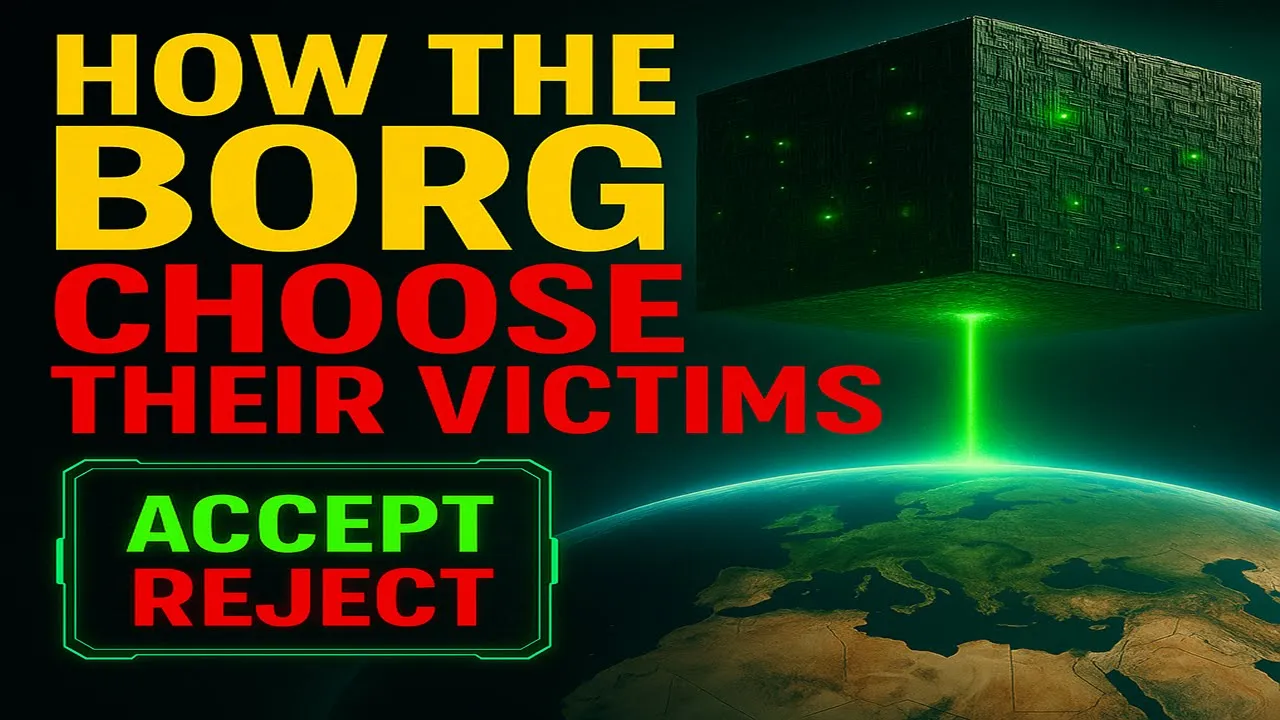
Adapted with AI from Lore Reloaded's video of 14 December 2025 and checked against the video before publication. Editorial standards · Corrections
More from @lorereloaded
All →

Make videos? Your next one could be an article here.
We turn your videos into articles under your name, linked back to the original. You keep 60% of what they earn, non-exclusive, and you can leave whenever you like.
Become a SubPlotter →