New Rockstars' Eric Boss Breaks Down Every Hidden Detail in John Carpenter's Halloween (1978)
From Michael Myers' background cameos to Debra Hill's Samhain research, here is a full walkthrough of what makes the original Halloween tick, nearly 50 years later.
 New Rockstars (AI-assisted)5 September 2026 · Editor: Digital Fox Talent Editorial Team
This is a breakdown of 1978's Halloween, directed by John Carpenter, as part of a weekend watch series looking back at classic horror titles. In many ways, what we consider horror cinema, at least in the slasher subgenre, truly began with this film, and it holds up for the way it upends the safety blanket of suburbia while asking what the boogeyman really means in American mythology.
The plot: a six year old killer returns to Haddonfield fifteen years later
On Halloween night in 1963, in the fictional town of Haddonfield, Illinois, a teenage girl named Judith Myers is stabbed to death after hooking up with her boyfriend, by a killer we only see from their point of view until we realize it is her six year old little brother, Michael. Fifteen years later, Michael escapes from his mental institution while Dr. Loomis, who is well aware of the evil Michael represents, hunts for him. Michael returns to his abandoned family home in Haddonfield and sets his sights on Lorie Strode, who made the mistake of leaving the house key under the mat at her father's request for prospective buyers.
From there, Michael stalks Lorie and the boy she babysits, Tommy Doyle, through a string of creepy sightings around town, some happening so fast that Michael seems to possess a supernatural ability to appear and disappear. While Lorie babysits Tommy, her friend Annie babysits Lindsey Wallace across the street, and the girls plan to bring the kids together so they can meet up with their boyfriends. Michael kills the family dog, then kills Annie after hiding in her car, then kills Bob by pinning him to a wall with a knife, then poses as a ghost before strangling Linda as she tries to call Lorie.
Lorie eventually finds her friends' bodies at the Wallace house, with Annie posed in front of Judith Myers' headstone. Michael tries to kill Lorie, but she flees back to the Doyle house and fights back, though he never seems to die. Dr. Loomis arrives and shoots Michael repeatedly off the upstairs balcony, but when Loomis looks over the edge, Michael's body is gone. The film ends on shots of Haddonfield with Michael's breathing over the soundtrack, and where he goes from there gets picked up in Halloween 2.
Casting, Easter eggs, and the tropes this film handed to every slasher that followed
Every component of this film has become iconic, starting with the casting of Jamie Lee Curtis in her first ever film role, the daughter of Tony Curtis and Janet Leigh, the scream queen of Alfred Hitchcock's Psycho. There is an incidental Easter egg not enough people talk about: in the opening titles, a shot of the jack-o'-lantern shows a fly crawling around its crooked smile, which reads as a callback to the final line of Psycho about a woman who "wouldn't even harm a fly." Michael's mask, meanwhile, was created by painting a 1975 Captain Kirk mask white, enlarging the eyeholes wider than William Shatner could ever open them, and brushing back the hair.
This film established staple elements later cited in movies like Scream: the final girl archetype, the suburban setting, and the unwritten rule that teenagers who have sex get killed, or that you should never say "I'll be right back." There is even a meta layer, since in Scream the characters watch this movie, and in this movie the characters watch Howard Hawks' 1951 The Thing, which Carpenter would ironically remake four years later as another horror landmark. Carpenter shot the film in South Pasadena on a $300,000 budget and grossed $70 million with it, one of the biggest returns on investment of any movie ever, and he composed the haunting score himself.
Michael Myers lurks in the background of nearly every scene before the killing starts
From the earliest minutes, Michael seems to always be watching from somewhere in the background of Haddonfield's streets, even in broad daylight. We hear his breathing inside the Myers house when Lorie drops off the key, then he steps into the foreground as she walks away humming. He appears outside her school window, then disappears after she answers a question about fate, a shot that later echoed in movies like It Follows and Hereditary. He grabs Lonnie after Lonnie bullies Tommy and breaks his pumpkin, then follows Tommy home from school, then drives past Lorie and her friends in Loomis' stolen station wagon, getting agitated when Annie yells "speed kills."
Michael stands behind the hedges in the famous shot as the girls approach, then disappears when Annie rounds the corner. He stares up at Lorie's bedroom from the clothesline, then vanishes again. His station wagon trails Lorie and Annie, and after they pull up to the hardware store and Dr. Loomis arrives, Michael turns onto the main road passing right behind him in what looks like a perfectly timed natural long take with heavy traffic. Minutes before Lorie even reaches the Myers house, walking away from her father, a station wagon is visible in the distant background, and it is hard to tell if that is Michael this early, though the film has already made viewers paranoid enough to assume it is.
The kills escalate from there: Michael watches Annie strip through the kitchen window, knocks over a hanging plant, kills the family dog, locks Annie in the laundry room, then appears and vanishes in the same shot as she leaves the kitchen door open. He stands up behind a parked car, and when Annie returns to her fogged up car after finding it mysteriously unlocked, without questioning how that happened, he pops up in the back seat and kills her. He watches Linda and Bob have sex, rushes from a closet to pin Bob to a wall with a knife, then stands in the doorway wearing a bedsheet and Bob's glasses before strangling Linda with a phone cord. Of all these jump scares, the scariest moment in the whole film is arguably the final one where Michael does not appear in frame at all, after Loomis shoots him off the balcony and his body has vanished.
The sequels tried to explain Michael's motive, but the newest films threw most of it out
Halloween 2 takes place later that same night and reveals that Lorie Strode and Michael Myers are siblings, a backstory that was later retconned. Halloween 3: Season of the Witch is the only film in the series without Michael as the antagonist, since producers wanted to explore an anthology story elsewhere on Halloween. Halloween 4: The Return of Michael Myers transfers his obsession onto Lorie's daughter Jamie, his niece, implying a telepathic link between them, and Halloween 5 and Halloween 6: The Curse of Michael Myers (the one with Paul Rudd) establish Michael as the product of a Celtic cult carrying the curse of Thorn, explaining his apparent strength and immortality because hell will not accept him.
Rob Zombie's 2007 Halloween reimagines Michael's origin as coming from a broken household. But since most of these sequels were later retconned, especially by the 2018 to 2022 trilogy from David Gordon Green, which builds a new continuity stemming only from that first night in 1978 without the sibling bloodline connection, the assumption among most fans is that Lorie was simply in the wrong place at the wrong time, reminding Michael too much of the sister he killed, which is what fueled his lifelong obsession with her.
Carol J. Plover reads Michael as punishing sexual liberation, but Carpenter and Debra Hill reject that
Film scholar Carol J. Plover, in her 1987 media study Her Body Himself: Gender in the Slasher Film, argues that killers in slasher films like Halloween are fueled by what she calls a "psychosexual fury" and amount to a moral scolding of young women for making sexually liberated choices. Under that reading, Michael's defining moment was seeing his sister have sex when she was supposed to be watching him, and killing her for it, so that as an adult, seeing babysitters neglecting the children in their care for similar delights triggers the same code of punishment, which is why he strips down and poses Annie in front of his sister's headstone.
John Carpenter and co-writer Debra Hill have pushed back against that interpretation. Carpenter has said: "It has been suggested that I was making some kind of moral statement. Believe me, I'm not. In Halloween, I viewed the characters as simply normal teenagers." In another interview he said: "The one girl who is the most sexually uptight just keeps stabbing this guy with a long knife. She's the most sexually frustrated. She's the one that's killed him, not because she's a virgin, but because all that sexually repressed energy starts coming out. She uses all those phallic symbols on the guy." Debra Hill added: "There was absolutely no intent for that to be the underlying reason. I was raised a Catholic school girl and what leaked into the script is my Catholic sensibility. It was totally unintentional."
Dr. Loomis calls Michael pure evil, and a deleted scene backs him up
Setting the sexual reading aside, characters in the film, echoed throughout the franchise, have simplified Michael as just pure evil. Dr. Loomis describes examining him as a boy: "I met this six-year-old child with this blank, pale, emotionless face as I realized that what was living behind that boy's eyes was purely and simply evil." A chilling exchange from the original screenplay, cut from the final film, shows Loomis talking to another escaped patient during the institution breakout, then telling a nurse, "He asked me if I could help him find his purple lawn mower," before adding, "It's all right now. He's gone. The evil's gone," showing how other patients at the institution were tortured by Michael's mere presence.
That idea recurs in Halloween 6, where it is established that even hell will not accept Michael, and echoes in the unhinged screaming from other patients in the opening yard scene of the 2018 Halloween.
Debra Hill traced the story back to Samhain and the idea that evil cannot be killed
The idea that you cannot kill the boogeyman came from Debra Hill's research into Halloween's Celtic origins in Samhain, the night of the harvest when bonfires were lit, treats were left out, and the barrier between the living and the dead was said to be at its thinnest. Producer Irwin Yablans and financier Moustapha Akkad reportedly approached Carpenter after he directed Assault on Precinct 13 about a film concerning a killer who stalked babysitters, and some say it was originally going to be called The Babysitter Murders.
In a 2002 interview with The Guardian marking the film's 25th anniversary, Hill explained: "The idea was that you couldn't kill evil and that was how we came about the story. We went back to the old idea of Samhain that Halloween was the night where all the souls are led out to wreak havoc on the living and then came up with the story about the most evil kid who ever lived. And when John came up with this fable of a town with a dark secret of someone who once lived there and now that evil has come back, that's what made Halloween work." Debra Hill can probably be trusted more than anyone on Michael's intent, since the 2003 documentary Halloween: A Cut Above the Rest confirms it was her own hand and arm playing young Michael in that opening long take. She was, literally, the one who did the slashing.
The real fear behind Halloween was America's serial killer panic of the late 1970s
A 2002 academic study by Pat Gill, The Monstrous Years: Teens, Slasher Films, and the Family, argues: "In films following Halloween, suburban and small-town teenagers are put in danger time and time again at home, at school, at camp, and on holiday. These films seem to mock white flight to gated communities... The danger is within. The films seem to say the horror derives from the family and from the troubling ordeal of being a late 20th century teenager." Under that reading, the real boogeyman is the false sense of security suburbia sold Americans in the late 20th century, the idea that families could protect their kids simply by fleeing cities into culs-de-sac and neighborhood watch signs. That illusion, and the danger that refuses to stay buried, recurs in other films like Poltergeist, The Goonies, E.T., and It, and in current nostalgia hits like Stranger Things.
Audiences in 1978 found this so terrifying because the concept of a serial killer, someone who murders three or more people, was entering public consciousness in a big way in the late 1970s and early 80s, as violent crimes started being linked by law enforcement and the media. The Zodiac Killer frightened Bay Area communities through letters and cryptograms published in papers like the San Francisco Chronicle. The Manson family was connected to a string of high profile murders. The summer of 1976 was called the Summer of Sam after David Berkowitz went on a spree he said was driven by voices from his neighbor's dog. The Hillside Strangler terrorized Los Angeles from 1977 to 1978. John Wayne Gacy murdered at least 33 young men in Chicago between 1972 and 1978. Ted Bundy killed dozens of young women and girls across western states from 1974 to 1978. Joseph James DeAngelo, later identified as the Golden State Killer though the dots were only connected in recent years, attacked dozens in California through the 70s and 80s. Killers like these led to the FBI's behavioral sciences division, and in 1981 the New York Times first used the term "serial killer" to describe the Atlanta child killer Wayne Williams.
Lorie Strode is targeted for doing nothing wrong, sealed by a song she made up herself
Lorie Strode is not targeted for any incompetence, any disregard of tradition, or any inherited sin from her family or community. She is not a temptress archetype, she does not wander off the beaten path the way characters do in Evil Dead or The Texas Chainsaw Massacre, she has no traumatic death to mourn the way heroines do in Ari Aster's films, and she is not gaslit the way characters are in Rosemary's Baby and Alien. All Lorie Strode did was exist in a suburb in 1978, do a typical chore, and walk away humming a song within earshot of the wrong guy.
That song is not a real tune, Jamie Lee Curtis made it up on the spot. At a 2014 Beyond Fest Q&A with John Carpenter, Curtis recalled: "At the end, you said, 'Now walk away and finish out the scene singing.' And I remember saying to you like, 'Um, what's the tune of the little song?' And you said, 'I don't know. Make it up.' Now, you have to understand, I don't sing at all. I just don't sing... So, I sang I Wish I Had You All Alone. Horrible." That improvisation became the perfect choice for the character, because it plays as an innocent mistake, with Michael imprinting on Lorie after hearing what sounds like a little love song made just for him, which is part of why she becomes the final girl he pursues.
What ultimately drives the boogeyman in this film is the same thing that has always driven boogeymen: fate, the very word Lorie answers about in her classroom earlier in the film. It is a menace that exists in every hometown to stress test a family's sense of security, and the safer suburbia feels, the more violently shattering it is when that menace inevitably finds its way inside the home.
Why do you think Michael Myers scares audiences just as much in broad daylight as he does at night?
Watch the original
@newrockstars · YouTube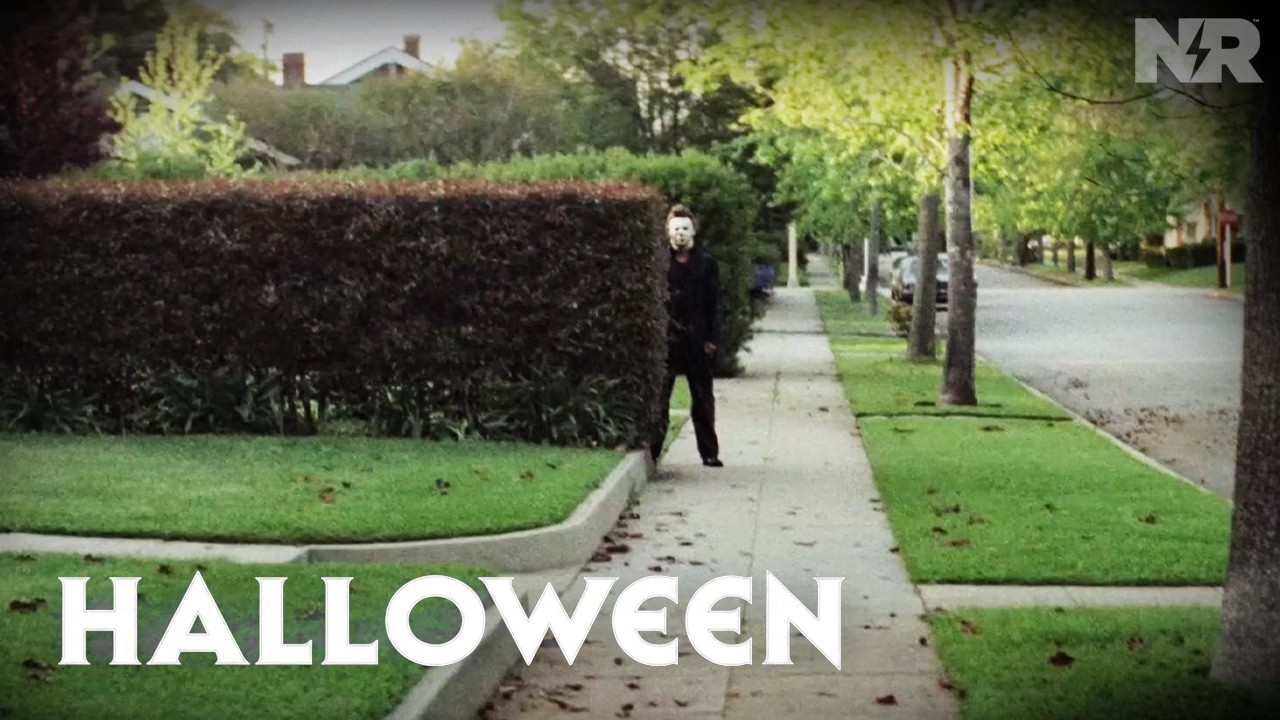
Adapted with AI from New Rockstars' video of 5 September 2026 and reviewed by Digital Fox Talent before publication. Editorial standards · Corrections
Also on John Carpenter
4 creators, 4 takes →




More from @newrockstars
All →


Make videos? Your next one could be an article here.
We turn your videos into articles under your name, linked back to the original. You keep 60% of what they earn, non-exclusive, and you can leave whenever you like.
Become a SubPlotter →