Captain America: The First Avenger: great setup, weak standalone
A troubled road to the screen, a hero built on heart rather than muscle, and a film that leans on its sequels to hold up
 The Gold Man (AI-assisted)21 November 2026Editor: Digital Fox Talent Editorial TeamOn YouTube since 2014 · more than 170,000 subscribers

Captain America: The First Avenger is my least favorite film in the Captain America trilogy. I think that if it were a standalone movie, it would frankly be really bad. But it did an excellent job of introducing audiences to Steve Rogers and setting up the rest of the MCU, and it has aged fairly well because the two Captain America sequels were also really good.
The film was released in theaters on July 22, 2011, with Chris Evans as Steve Rogers, alongside Hayley Atwell and Hugo Weaving. Its road to the screen started more than a decade earlier. The key decisions along the way explain why the character became so popular.
The Captain America movie began development back in 1997
Marvel Entertainment began its first negotiations to make a Captain America film in 1997. Marvel had almost no mainstream presence before 2000. Blade was released in 1998 and was a fairly popular and successful film, but outside of that you'd be hard pressed to find any mainstream Marvel content. The first X-Men movie didn't arrive until 2000. Marvel Comics were popular, but movies are what capture worldwide audiences, so I can't imagine expectations for a Captain America movie were high in the late '90s.
In 2000, Marvel made a deal for Mark Gordon and Gary Levinsohn to produce the film, and writers Larry Wilson and Leslie Bohem were brought on to begin a script. That momentum was squandered when a lawsuit was filed over the ownership rights to Captain America. Those battles persisted until 2003, and afterward there wasn't much of a rush to get this B list character on the big screen.
By 2005, the industry had changed. People may not have been clamoring for Captain America, but the 2000s saw the beginning of the franchise era. Harry Potter was underway and extremely popular, the Star Wars prequels had concluded and were still popular at the box office despite being divisive, and there were Batman, Pirates of the Caribbean, Spider-Man and X-Men. Some were Marvel properties, but Marvel Studios didn't own the rights to Spider-Man or the X-Men back then.
A Merrill Lynch loan and Kevin Feige's shared universe plan
Studios commonly licensed away their characters because they didn't have enough money to make superhero movies alone. Marvel wanted to make its own films in house, but it had no money. That changed in 2005, when Marvel got a loan of roughly $525 million from Merrill Lynch. The plan was to use it to make 10 in studio films. Because Marvel had licensed away most of its popular characters, it had to settle for its B list heroes, and Captain America was on that list.
Marvel Studios CCO Avi Arad and his lead producer Kevin Feige began to plan Marvel's future. Realizing they still had the rights to key members of The Avengers, Feige envisioned a shared universe of heroes, just as Stan Lee and Jack Kirby had done in the comics. As far back as 2006, Feige talked about a series of movies that would one day lead to an Avengers film.
Arad had plans for Captain America early on. He pictured a story where Cap would be placed out of time, exploring how a World War II hero would interact with modern day America, and he hoped the film would be released in 2008. Instead, Marvel began its Cinematic Universe with Iron Man, and the 2007 and 2008 writers' strike delayed the project further.
Iron Man was released on May 2, 2008, and was a huge success. Feige was promoted to president of Marvel Studios and went all in on the shared universe idea. The rest of what we now know as Phase 1 was greenlit: The Incredible Hulk came out shortly after, Iron Man 2 and Thor were greenlit, and Captain America was given a summer 2011 release date. Joe Johnston was brought on to direct, with Christopher Markus and Stephen McFeely writing the script.
Joe Johnston's vision of Steve Rogers as simply a good person
During production, there were many concerns about how a Captain America film would perform in the political climate of the time. Contrary to what most Americans might think, America is not the most beloved place in the world, and there was a question of whether anti-American sentiment would tank the film outside the United States. The character wasn't popular, and even a successful film seemed unlikely to travel well.
Most of the credit for Captain America's success has gone to the Russo brothers, but I think Joe Johnston deserves a lot of credit too. He had a vision for the character that endured through every project Steve Rogers was part of. Johnston said: "Captain America wants to serve his country but he's not this sort of jingoistic American flag waiver he's just a good person." He added that once Steve goes from Steve Rogers to super soldier, "you have to stay who you are on the inside."
That has been the biggest factor behind Captain America's success. It isn't that the character is popular. It's that people love Steve Rogers.
Why casting Chris Evans as Captain America was a strange choice
Maybe the most important part of Steve Rogers is the actor who plays him. Many actors were considered, but the role went to Chris Evans. He was a strange choice for Marvel. He had already played a Marvel superhero as the Human Torch in the Fantastic Four films, and he's great at playing arrogant, cocksure characters, which is pretty much everything Steve Rogers isn't.
Shortly before production began, Joss Whedon came in to rewrite parts of the script. What specifically he rewrote is unclear, but his focus was said to be tying the film more closely to the Avengers movie due the following year. Feige wanted good movies, but looking at this production and the rest of the MCU, it's clear to me that it was more important to him that Captain America be a good character than that The First Avenger be a good movie, because his vision for the character stretched far beyond one film.
A smooth shoot and the effect behind skinny Steve
I can't find anything outlining issues anyone had on set with these Captain America films. Shooting and post production were laid back, and this production concluded relatively easily.
The most interesting part was the technique used to create skinny Steve. Scenes had to be filmed several times: once with a body double, once with Chris Evans in front of a green screen, and once with Evans on set. The MCU isn't known for the most impressive visual effects, and this one doesn't look perfect, but it's still cool learning how it was done.
The First Avenger focuses on developing Steve Rogers and almost nothing else
Most people seem to think this is the weakest of the trilogy, because the other two films are so good. I agree it's my least favorite, but it does many things well. I think the shared universe plan produced a film that focuses entirely on developing its main character. There's nothing special or exceptional here, but there's a wider story in mind for Steve Rogers, and the movie sets that up perfectly.
The film is pretty much a montage of how great Steve Rogers is. The plot isn't interesting, the villain is incredibly weak, only one other character is remotely interesting, and there's no real theme.
Why I would have cut the present day opening
The movie opens in the present, with S.H.I.E.L.D. finding the Red Skull's ship with Captain America in it. Judged on its own, I think it would have been smart not to begin there, because it sets up the expectation that we'll return to the present by the end. Imagine starting instead with the Red Skull's introduction. When Cap slowly wakes up near the end, we might think he was saved and gets to be with Peggy again, until he realizes things are off and steps outside into 2011 New York. That would be a neat twist and add to the heartbreak of not being with Peggy.
Even so, I think it most likely wouldn't work, because of how audiences understood the MCU. In 2011 it wasn't the juggernaut it is today, but most people were probably aware of Iron Man and Thor leading to an Avengers movie. Once Feige announces that, a good chunk of viewers know Steve has to end up in the present, so the twist would surprise very few people. It's like a new Batman movie treating Bruce's parents dying as a twist. Being part of the MCU hurt the film in some ways, but it also let Captain America become the pop culture icon we know.
Steve Rogers is a hero because of his heart, not his muscle
The movie wisely spends a lot of time with Steve before he becomes a super soldier. He repeatedly tries to join the military, girls aren't interested in him, people bully him, and no one takes him seriously except Erskine. That makes us root for him as an underdog. He wants to risk his life for others, and he's smart, kind and loyal.
Maybe the most defining moment is when Erskine asks if he wants to kill Nazis, and Steve answers: "I don't want to kill anyone. I don't like bullies. It doesn't matter where they're from." That perfectly encapsulates Captain America. Later, Erskine asks Steve to promise he'll always remain a good man, which sets up Steve's internal conflict for the rest of his MCU run. Whatever happens in the world, he has to stay that good man, and that desire often puts him in conflict with others.
It's hard to make a super soldier an underdog, but the movie does it by putting Steve on a tour where he's basically a mascot. No one respects him, so he has to earn it rather than be given it for being strong. That's why he goes to rescue the hostages at the Hydra base, proving himself to his peers and the audience. From there, he keeps fighting Hydra, grows closer to Peggy, fights the Red Skull and sacrifices himself. There's no complexity and no real arc, and no moral battle between him and the Red Skull.
The Red Skull and Bucky exist to set up the rest of the MCU
I think the plot is generic and the villain boring because the writers didn't want Steve to face moral dilemmas yet. They knew he would eventually clash with the more morally complicated modern world, so this first film keeps everything as black and white as possible. The Red Skull is terrible: comically evil, with no nuance. If he had deeper motivations, would that take away from Steve's arc in The Winter Soldier, a film all about changing his worldview? Maybe I'm giving the writers too much credit. Regardless, I think there had to be something more complex they could have done with him.
Bucky is another example. He's there as Steve's friend and to add a personal element to the hostage rescue, and then he dies. His supposed death doesn't change this movie or how Steve fights Hydra. Steve is sad for a bit and moves on. Its only relevance is that Peggy remarks that risking his life was Bucky's choice, and Steve says the same to her before sacrificing himself. Bucky is a key part of the next two films, so his death matters to the wider narrative, just not to this movie.
Peggy Carter is the best love interest in the MCU
The only part of The First Avenger that was great purely on its own terms is Peggy. Of all the love interests in the MCU, she's the best. What works is that she sees Steve for who he is. She believed in him before he became a super soldier and didn't treat him any differently afterward. It says a lot that of all the MCU love interests, Peggy is the one who got her own TV show.
Like The Force Awakens, The First Avenger depends on its sequels
The First Avenger reminds me of The Force Awakens. How much someone enjoys The Force Awakens depends on how they view its sequels: love The Last Jedi and The Rise of Skywalker and you'll probably like it, hate them and you'll probably dislike it. The First Avenger leans heavily on the films it sets up, and since most people like The Winter Soldier and Civil War, they look back more fondly on it.
On Rotten Tomatoes, the film holds a 75% audience score. On IMDb it scored 6.9 out of 10, making it the 23rd highest rated MCU movie there.
The First Avenger may not be a great film, and it's probably not even a good one. But you can't judge it without considering where Cap's story goes, and as an introduction to Steve Rogers, it did an excellent job.
What other creators are saying
More on Captain America: The First Avenger →I think Avengers: Doomsday will lean heavily on Captain America: The First Avenger, from Steve and Peggy's house to Howard Stark and a TVA presence watching Steve's timeline jump, and my hope is Steve rescues Bucky from Hydra, though I'm told that would ruin his hero's journey.
The Captain America: The First Avenger callbacks I think Avengers: Doomsday could make →
The Beast is tougher, but I don't think his strength is beyond Cap, and Cap outclasses him as a fighter
Captain America vs. the Beast: Why Steve Rogers Wins the Fight →
Reed Richards gets welcomed to the mound, and a Captain America joke landed hard with us
Reed Richards throws a ceremonial first pitch in an Avengers baseball promo →
A reported Loki scene in Steve and Peggy's home points to three ways a multiversal Avengers team could begin.
Avengers: Doomsday theory: will Loki and Doom both recruit Cap? →
Watch the original
@thegoldman25 · YouTube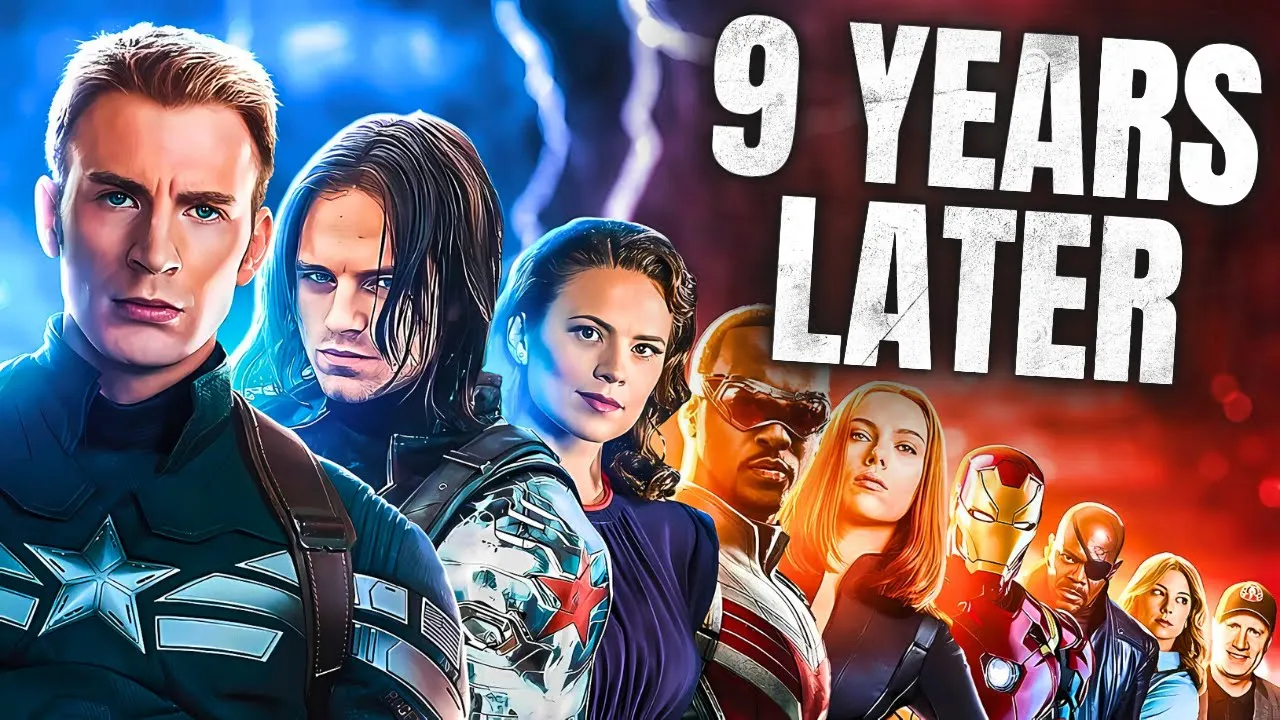
Adapted with AI from The Gold Man's video of 25 January 2025 and checked against the video before publication. Editorial standards · Corrections
More from @thegoldman25
All →


Make videos? Your next one could be an article here.
We turn your videos into articles under your name, linked back to the original. You keep 60% of what they earn, non-exclusive, and you can leave whenever you like.
Become a SubPlotter →