The Odyssey ending: why does Odysseus leave Ithaca?
Odysseus wins back his home, but the film suggests home was never Ithaca, and every victory carries a cost
 Heavy Spoilers (AI-assisted)21 November 2026Editor: Digital Fox Talent Editorial TeamOn YouTube since 2009 · more than 1.6 million subscribers

I think the ending of Christopher Nolan's The Odyssey is perfect. Nolan's epic, from 2026 and starring Matt Damon, Anne Hathaway and Tom Holland, builds to a final act that brings together the film's threads and ties a bow on its central themes. "And I can't stop thinking about it."
It runs two hours and 52 minutes, and the finale builds on everything that came before. Here's why I think it works so well, and what it pays off.
The Odyssey's ending strips away the gods and monsters
On his journey home, which lasts a decade, Odysseus encounters monsters, gods and witches, and spends time on a beach paradise with Calypso. If I'd washed up there after every other island had been a nightmare, I'd probably count my lucky stars too.
The climax strips all of those supernatural elements away. It boils down to a man winning back his family and his home. I think that makes the climax more emotionally cathartic. It honors Homer's telling of the tale while bringing in Nolan's signature preoccupations: time, memory, guilt, identity and the consequences of great actions.
The Trojan horse mirrors the suitors invading Odysseus' home
For most of its runtime, The Odyssey tracks Homer's narrative relatively closely. Odysseus devises the Trojan horse to take Troy, and that somewhat parallels where things end. Just as he invaded the home of others, the suitors have invaded his. They push out his son and his dog and try to take his wife while he's away.
His fleet faces Poseidon's wrath after he blinds the Cyclops. He then encounters the Laestrygonians, who represent the incoming Iron Age, along with Circe, the Sirens, Scylla and the underworld. After seven years stranded with Calypso, he escapes and washes ashore in Ithaca disguised as a beggar, which he uses to scope out his surroundings.
Deception defines Odysseus, from Troy to the beggar's disguise
Deceit is tied to the character throughout the tale. He lies his way into Troy. He escapes the Cyclops' cave by hiding with the sheep, deceives his men when it comes to Scylla, and comes home as a beggar. He even uses the name Sinon to throw off Antinous. Deception is something he constantly uses to draw people in.
An early scene with Telemachus establishes that the best way to fight is to draw your enemy in, then strike when they leave an opening. That's how Odysseus handles the suitors. He lets them push him around and spit in his food. Even when stringing the bow, he doesn't quite hit the marks at first.
That makes the suitors think he's pathetic, and they completely lower their guard. So when he finally plucks the bow, they're overwhelmed by surprise.
Odysseus and Penelope's conversation echoes Oppenheimer
I love the way Odysseus plays things in the buildup. He meets with Penelope, and the pair talk about whether a person can ever really come back. They discuss time and how guilt has kept them apart. Odysseus feels the sacking of Troy may have burned the world, because it destroyed Zeus's law. One is told to treat strangers with kindness, but now people are terrified that strangers could show up at any time and tear down everything they've known.
That shares a great parallel with Oppenheimer: two victors who regret how they won. One of the film's final shots is Odysseus staring at the burning horse, possibly riddled with guilt. Unfortunately, he does say that things will be forgotten. And as we know, we often repeat the mistakes of the past.
In invading Troy, he now faces a form of karma with the suitors. His greatest trick has followed him all the way home. Just as Oppenheimer wasn't let off the hook for the bomb, Odysseus isn't let off the hook for the war. He's also haunted by Athena taking the form of a woman who is beheaded in front of him. He's clearly unsure he can ever be honorable again, and the conversation is about accepting the past and whether the two can move beyond it together.
Athena's pin replaces the bed test from Homer's poem
Penelope then asks about the pin of Athena. She's used it to tell whether people claiming to have seen him are genuine, and he says he never took it off. It shows that the one thing he's held on to these 20 years is her.
This ending is about returning home, but it's also about what home is. Odysseus has strived to reach Ithaca, yet in the end he leaves it. Home isn't Ithaca. Home is what he made with Penelope, and it doesn't matter where they are as long as they're together.
That changes things slightly from the poem, which has the bed test. Penelope asks whether he could move their bed, and he says it would be difficult because it's built around an olive tree, something only he would know. The bed is an immovable symbol of home, fidelity and their connection. The pin works on an emotional level instead, through its tie to Athena and because he could carry it for the whole journey. Nolan often laces his films with objects attached to memory, like the tattoos in Memento or the totem in Inception. The pin is a part of Penelope he can keep with him forever.
The Odyssey asks whether Odysseus and his men are the villains
There's still a darkness in the character. Throughout the film, we hear of people from the sea who go around making a mockery of Zeus's law, and then we realize it's Odysseus and his men. It's a big moment of: "wait, are we the baddies?"
People in Troy would definitely be terrified of them. They show up on islands and take what they want. Even in the Cyclops' cave, with its big bags of cheese, they walk in acting like it's theirs now, and that's seen with Circe and the Laestrygonians too. I do wonder whether they might have started a fight if they'd seen the locals were weaker. They weren't exactly showing up to make friends.
So Penelope wonders whether the man she loved still exists, or whether the war changed him too much. To win her, he has to kill the men vying for her hand and prove he's the man he's always been by passing the test of the bow. It's linked to a party trick from when they were younger, and only Odysseus can string it.
Robert Pattinson's Antinous is a sniveling coward
Penelope calls everyone together for the test, and I love that everyone has a go while the laughter carries on in the background. Antinous is amazing in the scene, insisting he could string it if he wanted to but didn't feel like it. "It's perfectly acted."
I love the little lines throughout about how he'd told people he wanted to go to Troy, but Odysseus wouldn't let him. He's a great villain, and in the end he's a sniveling coward cowering in the corner. I give a lot of credit to Robert Pattinson, because many actors wouldn't accept that kind of role, especially while also playing Batman. In the Fast and Furious films, the stars apparently have it in their contracts that they can't be embarrassed on screen. There's a lack of vanity in this performance.
Antinous is also a nice reflection of Odysseus, who showed up places with his men and took what they wanted, or at least tried to, because they were beaten more than once.
The bow stringing scene and the fall of the suitors
Odysseus finally shows who he is while stringing the bow, and I love the buildup. Penelope walks off, the score's strings pluck away, Odysseus plucks the bow and stops her in her tracks, then he fires through the axes, and there's Mia Goth's reaction. It all works really well.
I love it in movies when someone gets picked on and pushed around, then comes back and beats them all. Superman 2 did that brilliantly, but this goes to the next level. Watching him tear into them while everyone panics is outstanding, and it feels like the perfect crescendo.
It also lets Telemachus prove he's worthy to be king, taking down a suitor while his father fights, a nice passing of the torch from father to son. Lightning crackles in the background, showing Zeus's anger. Some of the suitors simply kneel and submit, having just seen their friend take an arrow through the throat. The film gave Nolan the biggest opening weekend of his career.
Sailing into the setting sun reframes Odysseus' death from the sea
After the fight, Odysseus finds rest in Penelope's arms. He speaks of the punishment he brought on the world by destroying Troy, seeing his deception as a violation of Zeus's law that could be the catalyst for a broader civilizational collapse. From history, we know Rome and the barbarians are coming, and the Laestrygonians represent that unrelenting force that will end their rule. All they have is the time left, which they want to share.
He abdicates the throne for his son, entrusting the future to the next generation, and he and his wife sail the open sea chasing the setting sun. It reflects the possibility of brighter days despite the time they've lost and their past failures.
It also plays off Odysseus' fate in Homer's telling, where his death is described as coming from the sea. Because of the sea people, your mind wanders to those coming for them. But the film reframes it more optimistically: his death from the sea may come from sailing with his wife and dying of old age. The rising and setting sun can represent endings and new beginnings, and it's a powerful thing to end on.
Why the ending of The Odyssey works: glory always has a cost
The ending builds up the film's core message while staying close to the spirit of Homer. In the poem, Odysseus is flawed but rewarded, a mythic hero to aspire to. It doesn't lean into why he's so broken, and the movie deepens who he is. Like Oppenheimer, he's a man broken by his own genius. Troy is his original sin, one that could destroy civilization, because people back then needed the friendship of strangers to build camps, alliances and society. Oppenheimer, in creating a weapon that could destroy humanity, may have done the same.
We could have had a hero triumphantly restoring his kingdom. Instead, the film focuses on the cost of war and what we've lost versus what we should have done. Odysseus and Penelope talked about running away when they were young, but he stuck to his duty, unwilling to defy his master, and followed him into war. Troy fell, but Agamemnon lost his daughter, was murdered by his wife because of it, and never lived with the glory he sought. Helen, the reason they claimed to fight, was scarred too. In seeking glory, you'll lose something, whether your family, your wife or who you are, unless you focus on what matters.
I think the original poem's resolution worked for its time, and the film meets us where we are today. Power corrupts, we unleash things without thinking of the consequences, and heroes are flawed. Look at how we view the soldiers of World War II versus a war like Vietnam and you can see a real shift in how people think about duty, war and cost. Nolan's Odysseus shows that true wisdom comes from accepting failure and knowing when to step aside.
The ending succeeds by uniting identity, home and Odysseus' guilt over breaking Zeus's law, and by giving us a brutal showdown that makes him earn his place at his wife's side. From the plucking of the bow to the shot of the sun, it builds perfectly to those final moments. Odysseus is home at last, and though that's not Ithaca, it is with Penelope.
What other creators are saying
More on The Odyssey →I think The Odyssey is a masterpiece, now Sam's favorite Christopher Nolan film. I predict Anne Hathaway and Matt Damon will definitely get Oscar nominations, and a Leguizamo supporting nod wouldn't be a surprise.
Despite its flaws, I think The Odyssey is the best movie of the year so far, built around Matt Damon's third act monologue, its message that civility underpins civilization, and its unflinching, probably Oscar-worthy portrait of how men bury their feelings and leave the women in their lives waiting.
The Odyssey ending explained: why Nolan's film is the year's best →
A first reaction to the epic: stunning visuals, deep characters and a 3 hour runtime that never dragged
A schedule clash with Christopher Nolan's The Odyssey, secret fan research and a scene shut down with Zendaya all trace back to choices Holland made along the way
Watch the original
@heavyspoilers · YouTube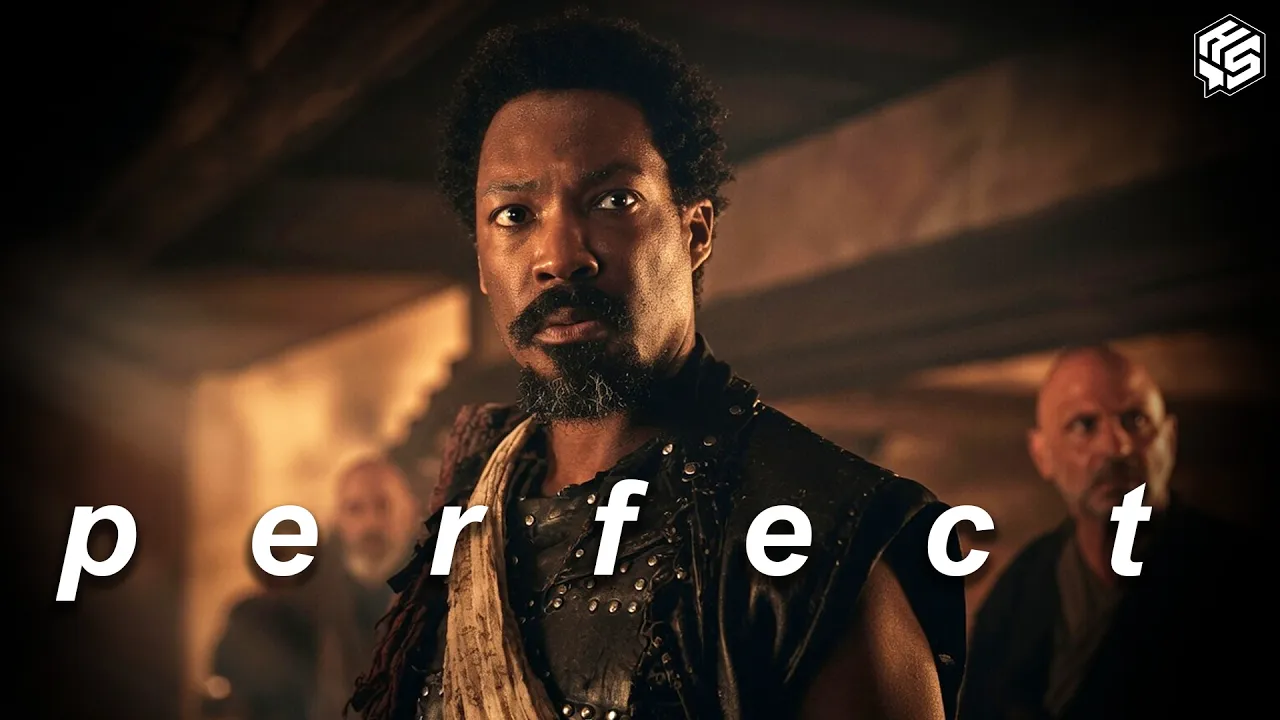
Adapted with AI from Heavy Spoilers' video of 21 July 2026 and checked against the video before publication. Editorial standards · Corrections
More from @heavyspoilers
All →


Make videos? Your next one could be an article here.
We turn your videos into articles under your name, linked back to the original. You keep 60% of what they earn, non-exclusive, and you can leave whenever you like.
Become a SubPlotter →