VisionQuest finale review: why Ultron is trapped in a sitcom
Terry Matalas ends the last Marvel series before Avengers: Doomsday by trapping Ultron inside a sitcom, and the fight is won by a father pulling up a chair.
 Mr. Know-It-All (AI-assisted)11 November 2026Editor: Digital Fox Talent Editorial TeamOn YouTube since 2021 · more than 80,000 subscribers

The VisionQuest finale ends its big fight inside a sitcom, and I think that choice is how VisionQuest finishes what WandaVision started. It's the last Marvel show before Avengers: Doomsday, and I'm giving the finale a 10 out of 10. Ultron is on the couch, there's a theme song, and he looks around at all of it and asks, in effect, really? Is this what Vision thinks is going to work? He asks Vision what he could possibly hope to achieve by holding him captive in a banal simulation, and whether he thinks boring him long enough will make him spare the human race. It doesn't work the way Vision draws it up, and how it fails is the whole point.
Paul Bettany returns as Vision, with James Spader back as Ultron. Terry Matalas wrote and directed this finale himself, and after the finale screening he said something I think is the key to the whole episode: "All good endings touch upon the beginning."
Why Terry Matalas ended VisionQuest with a sitcom instead of a CGI fight
The beginning of this whole story was a sitcom. WandaVision opened as one, in black and white. By its finale the sitcom was gone, and it was two witches and two Visions throwing energy at each other in the sky. Matalas flipped that. He says the big swing was going back to the sitcom instead of doing "a big CGI rock 'em sock 'em, robot."
In his words: "Let's do the Marvel popcorn, and then surprise with a sitcom." So the question for me was why. Why would you end the fight of the season with a laugh track? To answer that, you have to start with the man who thought he had it all worked out.
Virgil Horton, James Spader's man behind the curtain
Virgil Horton is James Spader with a fun mustache. Before the finale, I called it: the man with Ultron's face is Phineas Horton's grandson. I said the first thing a Horton grandson does with a payday is buy back the house his grandfather sold. He wanted the house back. He wanted the name back. Even today, if you mess up badly enough, people still say "You Horton-ed it." It's embarrassing. And he's such a funny character.
The episode opens with Vision and Jocasta dressed in black, standing in his dining hall like servants. He has an iPad. He taps it and their speech glitches. He taps it again and they laugh, on command. Ultron, meanwhile, lives in a tiny desktop hard drive, a little mini HAL 9000 with one red eye. I have that exact drive on my desk. Virgil turns him on long enough to hear Ultron insult him, then switches him off. He says he was going to delete him, but he's just so much fun.
That's a man who deals with his family's shame by owning everything: the house, the woman. He stole materials from the foundation to put Jo in a new body, the body of a goddess, because he wants to be her counterpoint, her god. And the heart he kept promising Vision was Vision's body.
Why Virgil was never the final obstacle for Ultron
Matalas told Collider that Virgil is a "man behind the curtain," in the Wizard of Oz sense. But then he said the thing that tells you what this finale is about. Virgil is "not the final obstacle." Spader's own answer, more or less, was that this is exactly why Ultron beats him.
The second Virgil puts an adamantium bullet through Jocasta's robotic heart, he's not the story anymore. Ultron builds himself a body out of 2 billion nanobots and crushes him. The god of the house is gone in one scene. Matalas told Collider, "It is truly about Ultron, which is what it always needed to be." But knowing it's about Ultron doesn't tell you how Vision beats him. That's the big swing.
UltraVision: the sitcom Vision builds around Ultron's grief
Now there's Ultron with the woman he loved dead on the floor, telling Vision this is exactly what they deserve, and 2 billion nanobots on their way to London. Vision's first move is the Marvel move. They throw a few punches, and it goes nowhere. So Vision turns to Edith and asks how fast they can fold Ultron's mind into a quantum state. They WandaVision him.
The sitcom is called UltraVision. It's about a grouchy old man who has to move back in with his son after his wife dies. Ultron is the dad and Jocasta is the wife. Robert Lopez and Kristen Anderson-Lopez, the same team who wrote the WandaVision themes, wrote the song. Think about what that is. Wanda built her sitcom so she'd never have to feel what she lost. Vision builds one about exactly what Ultron lost, and puts Ultron right in the middle of it.
That came out of the writers' room. Matalas says there was a version of the sitcom built around Jocasta, and about halfway through the writing he stopped it: "No, this has to be about Vision and Ultron." Because that's the show.
The chair, not the sitcom, is what gets Ultron to spare London
Ultron takes the sitcom over anyway. Of course he does. He puts nanobots in Tommy, in Lisa, in Paladin, and now he's the one holding the iPad and pulling the strings. So Vision does the last thing he has. He overheats himself on purpose, holding Ultron there long enough that they both burn. The nanobots reach London anyway, and Vision sits down next to him.
Ultron, in effect, asks his father if that's all he's got. Vision tells him, "And you're not my father. But you are... my something." Before the show came out, Spader called the two of them a "father-son-therapist-psychopath" relationship. That's the whole scene in a few words. Ultron has just lost the only one he loved and is going to take London down with him, and the one he built is done fighting him. Vision is sitting next to him, telling him he doesn't have to go through that alone. That's what gets Ultron to let everybody live. Not the sitcom. The chair.
Grief, fear and the lines from WandaVision and Age of Ultron
The entire series has been about trauma. Every one of these things is a representation of it: Horton's name, Jocasta's body, Vision locked in his own house all season, Ultron in a box on somebody's desk. It all boils down to this scene, because the show says it out loud. Ultron sees right through the sitcom, saying it exists "to process my grief before your core burns out." Then he says, "Grief isn't love, it's fear."
Five years ago in WandaVision, Vision was the one who told Wanda, "what is grief, if not love persevering?" Now Ultron throws that back at him, and Vision doesn't argue. Ultron quotes the line from the forest in Avengers: Age of Ultron, "a thing isn't beautiful because it lasts," and Vision tells him, "I said it to you all those years ago because you were afraid and you thought you were alone. But you weren't then and you're not now."
Billy and Tommy bring Vision back
Vision doesn't come back from that burnout on his own, and the ones who bring him back are the reason the show exists. Paul Bettany put it about as simply as it can be said: "I really want it to be about fathers and sons." And it's not one father and one son. It's two of each.
Tommy can't save his dad alone, so he goes into the water. He connected with his brother when he drowned, which I thought was really cool, so he goes back under. That's funny to me, because the AIs in this show have been living in their own mindscape all season, and now the humans are finding theirs. He meets Billy. We get our Billy. Agatha is there too, just offstage. When Collider asked Matalas whether Ghost Agatha was ever going to come with Billy, he laughed: "I don't know that we could have afforded that." That's a producer's answer, and I respect it, because you never miss her.
The clock on that conversation is Tommy's lungs, plus Billy's line that he's "really bad at portals." That's the setup for the payoff. Vision is burned out, the nanobots are gone, and Tommy tries to jumpstart him, the way he did in the pool in episode 3. He can't do it alone. Then Billy is there. Magic and speed, the two boys bringing their father back together. My boys.
Ultron is the other son, and he's still calling Vision my boy
The episode is called "Forever," and Matalas told TheWrap exactly why: "Family is forever." That's what he says gives Vision the real power to fight that final battle. And Ultron is the other son. Matalas told Empire before the series started that the reason Ultron came back at all was, "we don't have Wanda, and we need someone really strong for Vision to play off of." Ultron is the stand in for everything Vision lost.
So when Ultron calls at the end, not dead because more than a few nanobots made it, Vision isn't surprised. He didn't come looking for him. Everybody gets a second chance, and what you do with it is on you. Ultron does the Louvre joke again from episode 1: take in their chaos in color and shape, or burn them all to ash. Hard to say. 50-50. But whatever he does next, he doesn't want to do it alone, and he thanks Vision, calling him "my boy." So Vision gets his boys back, and the one he told "you're not my father" still calls him my boy.
Paladin, Edith, Lisa and Friday get their endings too
The Visions aren't the only family in this show. The crew got their ending too, and I'm utterly tickled by Paladin and Edith. He wears glasses like the Edith glasses so he can see her. The minute she showed up next to him, I knew she was going to be his new AI companion, and she is. Lisa can talk to machines now, after what the nanobots did to her. One of Paladin's drones shows up powered by DUM-E and U, and DUM-E has his own little outfit.
Then there's Friday. After episode 7, when Ultron threw Friday off that balcony, I said, "I think he expelled her. To protect her." I called it a getaway. In the finale, she tells Vision that Ultron threw her out before Jo was captured, and Vision can't get his head around the idea that Ultron showed her mercy. The answer is yes, and perhaps he learned it from Vision. At the very end, she tells Vision she's proud of him and goes off to do whatever she's going to do. Nobody in this show ends alone, not even the one Ultron threw off a balcony.
Vision leaves his house as Ultron moves into Horton's
The shot that I think tells you what this whole show was about is who walks out of which house. Vision is on his way back to New Jersey from Edinburgh to have dinner with his sons, for once. Before he goes, he says goodbye to his house. That house is his head, and he says it himself: it's time he gets out of his head. He spent enough time in there. I get that.
Ultron walks into Horton's house with a human avatar, clean shaven, totally James Spader, taking the place over. In the first credits scene he's holding a chip. In Age of Ultron, when Tony needs a new AI, he goes through a set of chips. I think they're on the table, to be honest. One of them is labeled Jocasta. He passes on it and picks Friday. That's the chip Ultron is holding. He told Vision he doesn't want to do the next thing alone, and he's standing in that house with her in his hand. Matalas says there's a deleted scene showing she "got out in some nanos," which he cut because "It relieved a bit too much of the drama of the finale."
Doctor Doom, Wanda and The Children's Crusade
The second scene, after more credits, goes back to Doctor Strange in the Multiverse of Madness and Wanda bringing the temple down on herself. The rubble starts to lift, and it's Doom, telling the Scarlet Witch to awaken and that her power will be his. If you read comics, you already know that picture. In Avengers: The Children's Crusade, by Allan Heinberg and Jim Cheung, Billy and Tommy go looking for their mother. In issue 3 they find her in Latveria, with no memory, about to marry Doctor Doom.
Matalas told ScreenRant last month he'd love to adapt that story. Now he has ended his show on Doom standing over Wanda, the night her boys got their father back. He told TheWrap the Wanda conversation in that room was "constant," and the reason she isn't in the show is simple: "When you introduce Wanda again, it needs to be her story." So the grief WandaVision started is finished for Vision. He walked out of the house. For her, it's just getting started.
My verdict: the VisionQuest finale is a 10 out of 10
Matalas stuck the ending like only Terry Matalas can. The whole thing was done perfectly. It was beautifully done, and I'm so in on every piece of it. A man behind the curtain who wasn't the final obstacle. A sitcom written for somebody else's grief. A chair. Two boys and their father. Ultron calling him my boy. And Doom over Wanda, the way the comics drew it.
A show that started with a machine trying to work out who he is ends with him sitting down next to the one who made him, then going home for dinner. Five years ago, a sitcom was where this family hid from its grief. In this finale, Vision pulled up a chair inside one, and then he went home for dinner.
What other creators are saying
More on Ultron →I think the grandson theory is the safer bet because it fixes the age and face problems, but the elder Horton version is the better story, and either way the client is the true source of everything, with his identity reserved for the finale.
This is a four star film that never bored me, with a disjointed rushed first act, underdeveloped Ultron hatred, standout Hawkeye development, an amazing Vision birth scene, and the Hulk versus Hulkbuster fight possibly my favorite sequence.
Avengers: Age of Ultron spoiler review: a four star film with a rushed first act →
I loved Immolation and think people are misreading its final scene. My theory is this Jim isn't really Ultron's buried memory of James Horton but a guilt-ridden fragment of Vision's own subconscious, built from Phineas Horton's fears, which means I don't think Ultron actually killed FRIDAY.
VisionQuest episode 7: is James Spader's Client the real reveal? →
Thanos beats even Final Form Ultron. Strength and durability are a wash between them, but Thanos's energy manipulation, shown by draining opponents' energy, and his overall higher power level, put him above Ultron.
Thanos vs Ultron: does the Mad Titan beat Final Form Ultron? →
Watch the original
@arealknowitall · YouTube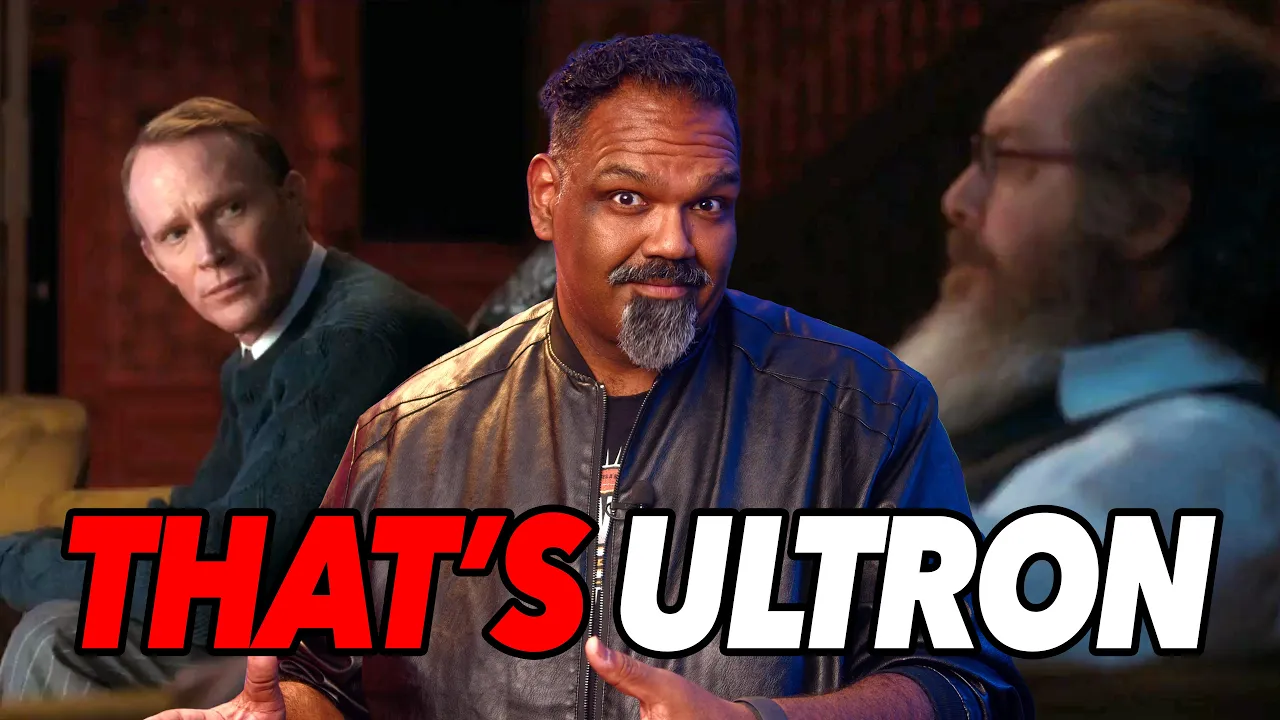
Adapted with AI from Mr. Know-It-All's video of 11 November 2026 and checked against the video before publication. Editorial standards · Corrections
More from @arealknowitall
All →


Make videos? Your next one could be an article here.
We turn your videos into articles under your name, linked back to the original. You keep 60% of what they earn, non-exclusive, and you can leave whenever you like.
Become a SubPlotter →